


Most bedrooms carry too much. The corner chair holds tomorrow's outfit stacked on last week's laundry. The nightstand collects four books, a charger, an old receipt, and a water glass. The closet door hangs open on a visible pile of shoes. None of it feels dramatic; it's just the background hum of a room that has quietly turned into a storage area with a bed in the middle of it. The trouble is that your brain keeps registering that hum after you lie down, and the room you sleep in ends up working against the sleep.
The fix is not decoration. It's subtraction, aimed at what your eyes and nervous system are doing in the last thirty minutes before sleep. A calmer bedroom isn't a matter of taste so much as a matter of how quickly your body is willing to switch off, and most of the changes below take an evening or less to make.
Why a Cluttered Bedroom Keeps You Awake
Sleep begins when your nervous system downshifts, and visual complexity works against that shift. Your eyes don't stop feeding information to your brain just because you'd like them to. A room full of objects is a room full of small signals, each one asking for a little processing to notice and dismiss. A pile of clothes reads as an unfinished task. An open drawer reads as something left undone. Individually these are trivial; together, in the field of view from your pillow, they keep the mind in a low-grade problem-solving mode at the exact moment it should be powering down.
This gets framed as a mood or willpower issue, but it's closer to plumbing than psychology. A busy environment tends to hold you in a mild state of alertness, and alertness is the opposite of sleep onset. That's why the same person falls asleep faster in a clean hotel room than in their own cluttered bedroom: the hotel room offers nothing to keep sorting. The aim isn't a bare cell with nothing in it. It's a room where everything visible has a purpose or a home, and the default state of every surface is clear.
Color and Light Before Bedtime
Warm, low-saturation colors settle the eye faster than cool or vivid ones. Blues and greens can work, but the muted versions, closer to weathered linen than a paint-chip teal, are what calm rooms tend to rely on. Warm whites, soft beiges, and dusty sage greens are dependable. Anything that looks electric in daylight will read as stimulating at night, and a single high-saturation accent wall can undo the effect of an otherwise quiet room.
Light matters more than most bedroom advice admits, and it's cheaper to fix than paint. Overhead fixtures with a color temperature above 3000K push your body clock toward daytime well into the evening. Switch to table or floor lamps fitted with bulbs rated 2700K or lower after dinner, the "warm white" or "soft white" label on the box, and you'll usually feel ready for sleep noticeably sooner within a few days. This lines up with the CDC's sleep hygiene guidance to keep the bedroom dark, cool, and quiet in the hour before bed. Blackout curtains earn their price in any room facing a streetlight or an east window; a $30 panel that blocks a 5 a.m. sunrise will keep you asleep past the point where a bright room would have pulled you awake, whether or not you consciously noticed the light.
The Nightstand Edit
The nightstand is one of the densest clutter zones in the house because it's the last surface you touch before sleep and the first you see on waking. Left alone, it fills with chargers, books, lip balm, old glasses, a water glass, a candle, and it hands you a small jolt of visual noise at both of the moments you least want it.
Three things, maximum: a lamp, a glass of water, and whatever you're currently reading. Everything else goes into a drawer or out of the room. If the nightstand has no drawer, either swap it for one that does or slide a small lidded basket underneath to catch the overflow out of direct sight. Put the lamp on a timer or within easy reach so turning it off never requires sitting up, because the small friction of getting up to kill a light is exactly what keeps people scrolling instead.
Getting Electronics Out of the Sleep Zone

The standard advice to keep screens out of the bedroom is right, but the usual reason given, blue light, is the smaller half of it. The bigger problem is the behavioral loop. A phone within reach at bedtime becomes a phone in hand at bedtime, which becomes forty-five minutes of scrolling that pushes back sleep onset and chops up the first sleep cycle. The light nudges you; the feed is what actually keeps you up.
The practical version: charge the phone in another room. If you rely on it as an alarm, a basic clock costs under $20 and has no social apps on it. If the phone has to stay in the room for genuine safety reasons, turn it face down, silence notifications, and set it out of arm's reach on a dresser across the room. Distance is the enforceable form of willpower, and standing up to check a screen is a much higher bar than rolling over to grab it. Televisions are a harder call: if one's already mounted, moving it isn't always realistic, but if there isn't one in the bedroom, keep it that way.
Bedding and Textiles Without the Pile
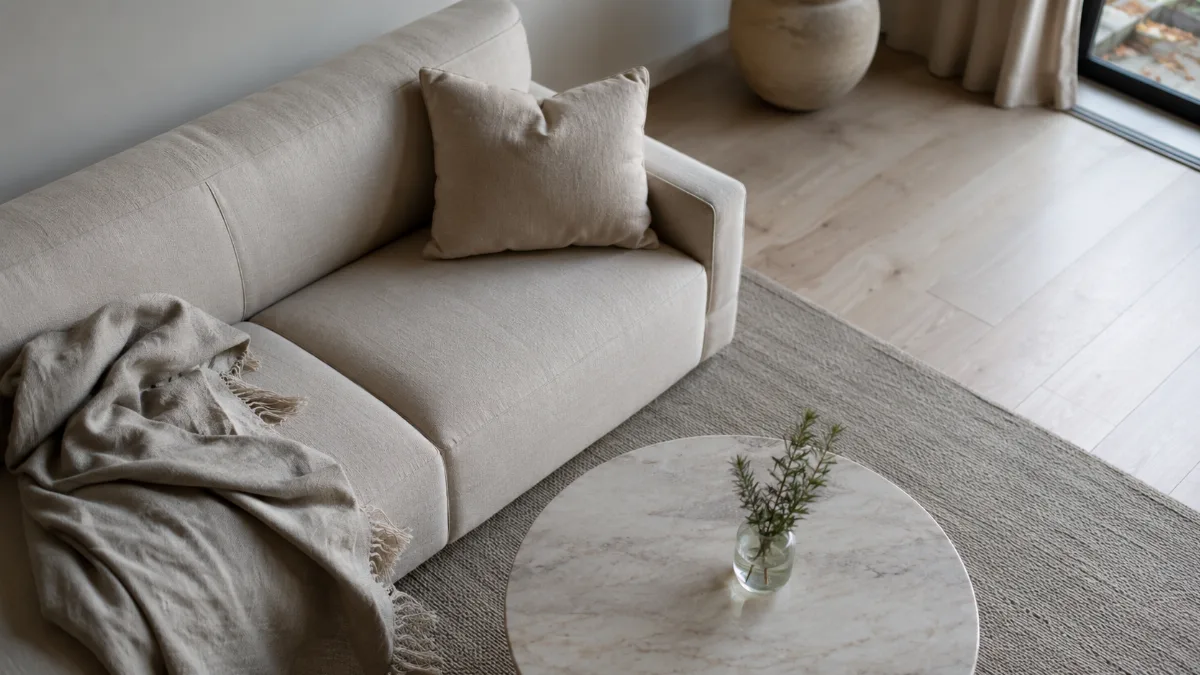
Three or four layers are enough for any bed: a fitted sheet, a flat sheet or duvet, and one extra layer for warmth if the climate calls for it. Pile on more and making the bed becomes a real chore, complicated enough that you skip it, which means the largest surface in the room starts every single day looking disheveled. An unmade bed sets the visual tone for the whole space.
Cap throw pillows at two beyond the ones you actually sleep on, and keep a single throw blanket folded at the foot. These aren't rules copied from a design magazine; they're roughly the minimum that still photographs as "styled" while staying easy to reset in ten seconds each morning. Choosing a tonal palette, all whites, all naturals, or one color in two shades, means you never have to think about whether the pieces match. The eye has nothing to sort, so the bed reads as calm without any effort.
The Weekly 10-Minute Reset
Minimal bedrooms drift. A single week of dressing in a rush and the closet floor looks like the before photo again. A Sunday-evening scan, ten minutes and no more, holds the line. The checklist is short: surfaces clear, clothes either hung or in the hamper, nightstand back to its three items, floor clear. That's the whole thing.
The discipline isn't really in the reset. It's in not letting things pile up past the reset point during the week. An item that's been on the chair for four days gets put away on Sunday; an item that's been there for two weeks has effectively become furniture, and by then it takes a deliberate decision rather than a quick tidy to move it. Catching things at day four is the entire game.
Furniture Layout and the Sight-Line Problem
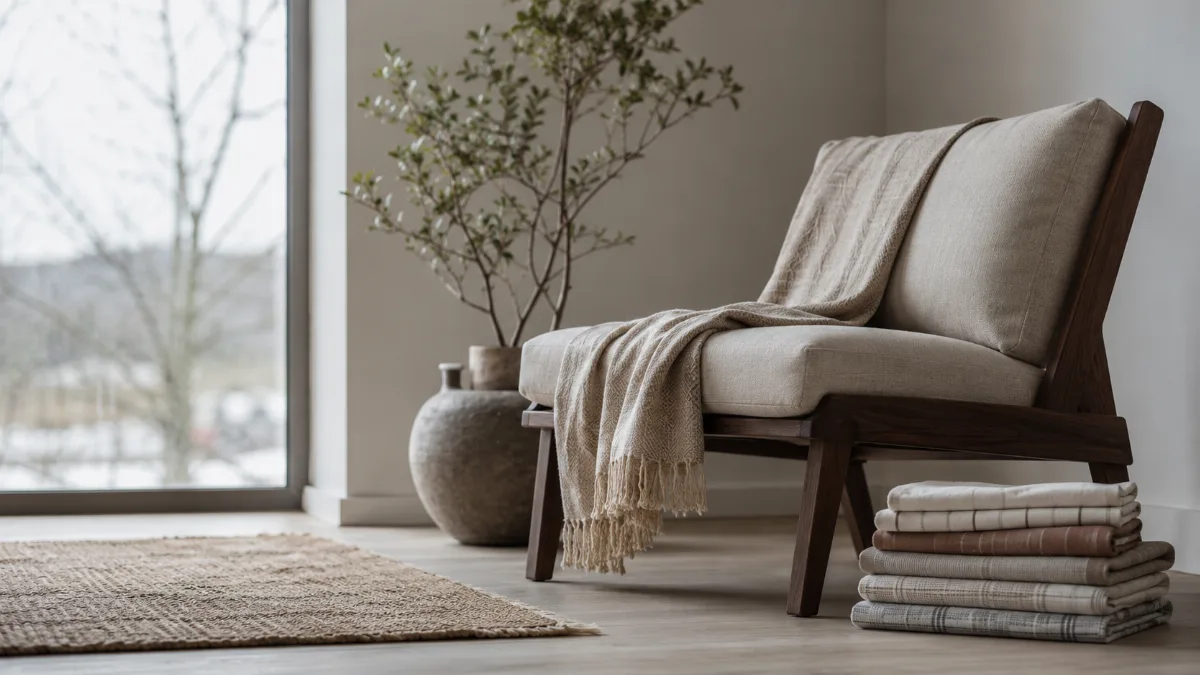
How the room is arranged decides what you see from the bed, and that view matters more for sleep than any other angle in the room. A closet door ajar on visible clothes, a dresser across from the bed stacked with odds and ends, a chair heaped with laundry in the corner, all of these sit in your visual field during the minutes before sleep. You don't have to empty the room to fix it. Turning the bed, moving the dresser out of the sight line, or standing a simple folding screen between the bed and the messiest corner can change what's visible without changing what's there.
Plan the view from the pillow deliberately. Lie down, or stand where your head rests, and actually look around. What's in direct view? Anything visually busy in that quadrant, open shelving, a cluttered surface, a dark screen, is worth handling before you touch the rest of the room. A bedroom doesn't have to be empty to feel calm from the bed. It only has to be calm in the specific directions you're facing when you're most ready to sleep, which is usually one or two walls, not all four.
Minimalism in a Shared Bedroom
A bedroom shared with a partner who organizes differently needs a different approach than one you control alone. Trying to impose your standard on the whole room tends to produce friction rather than calm. Shared minimalism works when you split the room into communal zones and individual ones: usually the bed and the main surfaces are shared territory, and each nightstand is personal.
In practice, agree on what's allowed to live on the shared surfaces, then let each person run their own side however they like. A nightstand that follows your three-item rule doesn't require your partner's to match it. You're improving half the visual field, which beats improving none of it, and it beats a standoff where neither person maintains anything. If you want to keep drifting toward a calmer home overall, the same logic scales up to the rest of the rooms and pairs naturally with a wind-down routine that ends with the bedroom already reset. Start tonight with the nightstand and the phone; those two changes alone shift the view from the pillow more than anything else on the list.
The sleep-room numbers:
| Change | Number |
|---|---|
| Evening lamps | 2700K or lower after dinner |
| Overhead ceiling | >3000K pushes the body clock to daytime |
| Blackout panel | ~$30 blocks the 5 a.m. streetlight |
| Alarm clock | under $20, zero social apps |
| Weekly reset | 10 minutes — minimal rooms drift |



Comments
No comments yet.