
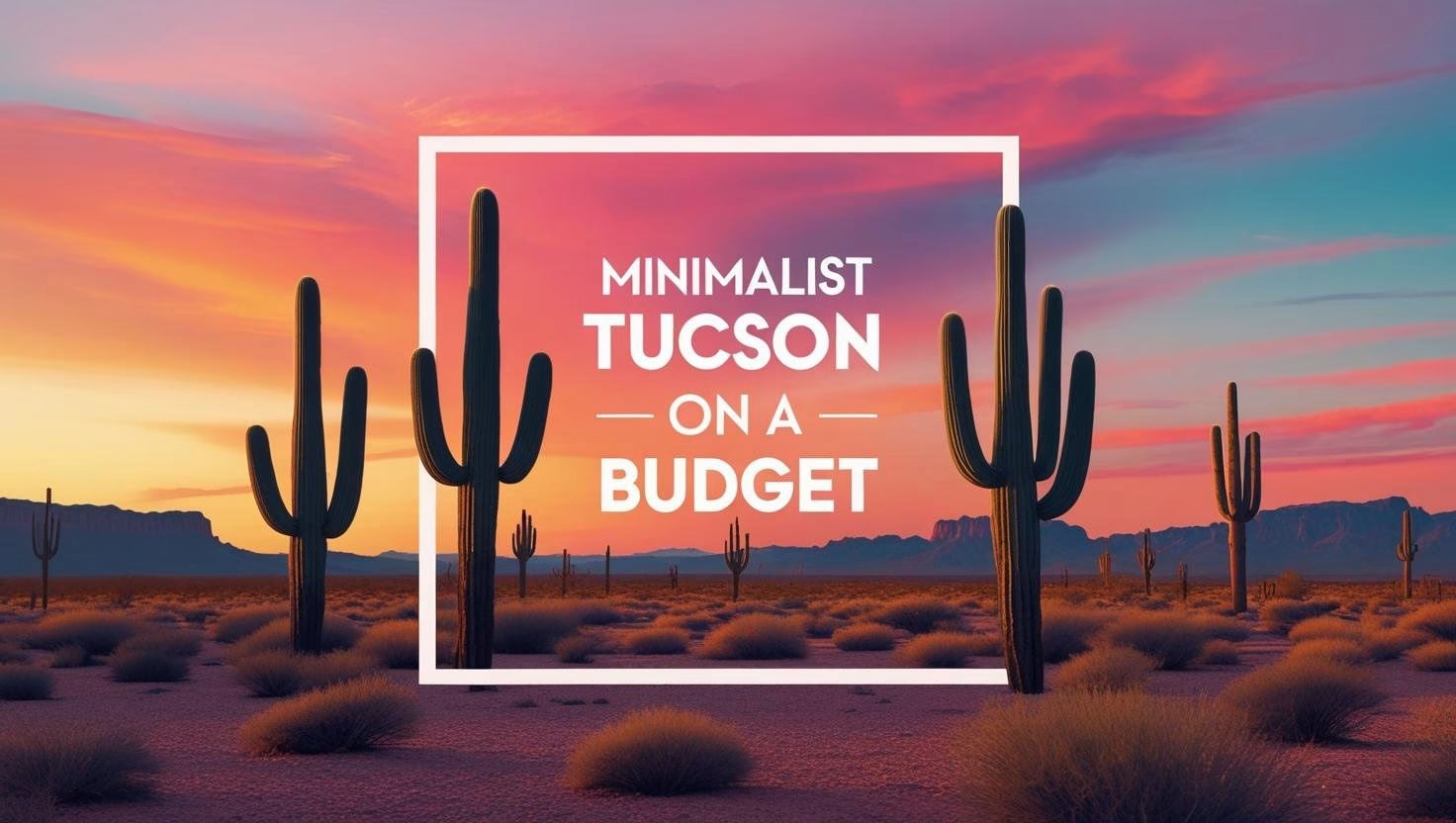

Tucson doesn't perform. It isn't chasing resort status or a nightlife reputation; what it has is roughly 350 days of sun a year, two separate districts of Saguaro National Park bracketing the city, a walkable downtown, and mountains visible from nearly everywhere — the Santa Catalinas to the north top 9,000 feet and hold a small ski area while the valley floor stays warm. For a trip built around public land, almost all of it cheap or free, Tucson is badly underrated.
Saguaro National Park: East and West
Saguaro splits into two districts on opposite sides of town — Rincon Mountain to the east, Tucson Mountain to the west — that function as separate parks. Both are covered by the America the Beautiful pass or a $25 per-vehicle day pass; you can check the current terms on the National Park Service's park directory. The Rincon side has the 8-mile Cactus Forest Loop Drive and dense stands of mature saguaro; a full-grown specimen can top 40 feet, weigh several tons, and soak up as much as 200 gallons of water in a single rainstorm, stored in pleated tissue that visibly swells. The Tucson Mountain side has the shorter, unpaved Bajada Loop Drive and the Signal Hill petroglyphs — a quarter-mile walk to rock art left by the Hohokam between roughly 450 and 1450 CE, with no fee beyond park entry. It also sits next to the Arizona-Sonora Desert Museum, a combined zoo, botanical garden, and natural-history museum that's separately ticketed but genuinely worth a half day if the budget stretches.
Either district rewards early starts. Trailhead lots on both sides fill by mid-morning on cool-season weekends, and the desert itself is far more comfortable — and more alive with birds and lizards — in the first two hours after sunrise than at midday. A day pass bought at one district doesn't transfer, so if you plan to see both, the annual pass pays off after a single visit to each.
Free Desert Trails: Sabino Canyon and Gates Pass

Sabino Canyon, in the Catalina foothills, is free if you walk in — only the shuttle tram and the parking lot cost money. Its trails climb through a green ribbon of cottonwood and willow along a year-round stream that feels nothing like the flats below. The Phoneline Trail runs 4.2 miles up the canyon wall gaining about 1,000 feet; the Bear Canyon Trail reaches Seven Falls, a chain of pools, roughly four miles in. Both are free, both empty out on weekday mornings, and neither needs a reservation. Arrive by bike from central Tucson and you skip the parking fee entirely.
Gates Pass, a few miles west, costs nothing and needs no entry. The pullout at the summit frames the Avra Valley and Kitt Peak beyond, with saguaro forest in the foreground, and it's the sunset spot locals actually name when asked. The surrounding Tucson Mountain Park, a fee-free Pima County preserve, threads trails like the 3-to-4-mile Brown Mountain loop through the desert toward the national park's western district — best walked early or after 4 p.m. in summer.
Mt. Lemmon: A Different Climate in 45 Minutes
The Catalina Highway climbs from the desert floor at 2,400 feet to Mt. Lemmon's 9,157-foot summit in 45 to 60 minutes, for a $10 per-vehicle day-use fee (verify at recreation.gov). The point is the transition: every 1,000 feet of gain is roughly like driving 300 miles north, so you start in saguaro, pass through oak and grassland, and finish in ponderosa pine, all in one afternoon. The summit runs 25 to 35°F cooler than the valley — in July, the difference between 105°F and a comfortable 75°F. Summerhaven, the little community near the top, has a few restaurants, and the Ski Valley area operates a lift in winter and hiking trails in summer.
Sleeping, Eating, and Getting Around
Lodging and food both stay cheap if you lean local. The two campgrounds below anchor the budget end, and the best cheap meals are Sonoran, not touristed — Tucson holds a UNESCO City of Gastronomy designation for a living tradition of Sonoran cooking distinct from the Tex-Mex most of the country knows. The 4th Avenue corridor near the University of Arizona has taco stands, a Saturday farmers market, and a free streetcar linking it to downtown. The signature street food is the Sonoran hot dog — bacon-wrapped, tucked in a bolillo roll with beans, onion, and tomato — sold from stands across the city for a few dollars.
| Destination | Cost to access | Note |
|---|---|---|
| Saguaro NP (either district) | $25/vehicle or ATB pass | Two districts, opposite sides of town |
| Sabino Canyon | Free on foot; parking fee for cars | Shuttle tram is extra |
| Gates Pass & Tucson Mountain Park | Free | Best sunset in the area |
| Mt. Lemmon (Catalina Highway) | $10/vehicle day use | Car required |
| Catalina State Park camping | $20–$35/night | Good base near Sabino Canyon |
| Gilbert Ray Campground | $15–$20/night | First-come, no hookups |
Catalina State Park, north of the city off Oracle Road, is the more developed base — closer to Sabino Canyon and the Catalina Highway, with hookups and a trailhead onto its own canyon hikes. Gilbert Ray, out in Tucson Mountain County Park, is barer and cheaper, first-come and hookup-free, but it puts you a few minutes from the western Saguaro district and the Gates Pass sunset. For a roof rather than a tent, the small downtown hostel runs dorm beds in the $30-to-45 range, close to the free streetcar line.
Sun Tran buses cover the main corridors and the city is genuinely bikeable, but Mt. Lemmon and both Saguaro districts are far easier with a car; basic sedans from the airport counters typically run $30 to $50 a day outside peak periods. If your trip centers on Sabino Canyon, Gates Pass, and 4th Avenue, you can skip the rental entirely and lean on the bus, the streetcar, and a bike.
When to Go
Season decides the trip. Spring, March through May, is peak — saguaro bloom in April and May, temperatures sit at 75 to 95°F, and the desert is green — but rates and crowds run highest. Summer brings the monsoon: triple-digit afternoons broken by dramatic evening thunderstorms, with hiking pushed to before 9 a.m. or after 5 p.m. Fall and winter are the sweet spot for a budget visit — 50 to 75°F, thin crowds, and low rates, with Mt. Lemmon catching snow from November into March while the valley stays warm. Come in the shoulder months and you get the best trails at the lowest prices, which is the whole Tucson proposition anyway.


1 Comment