
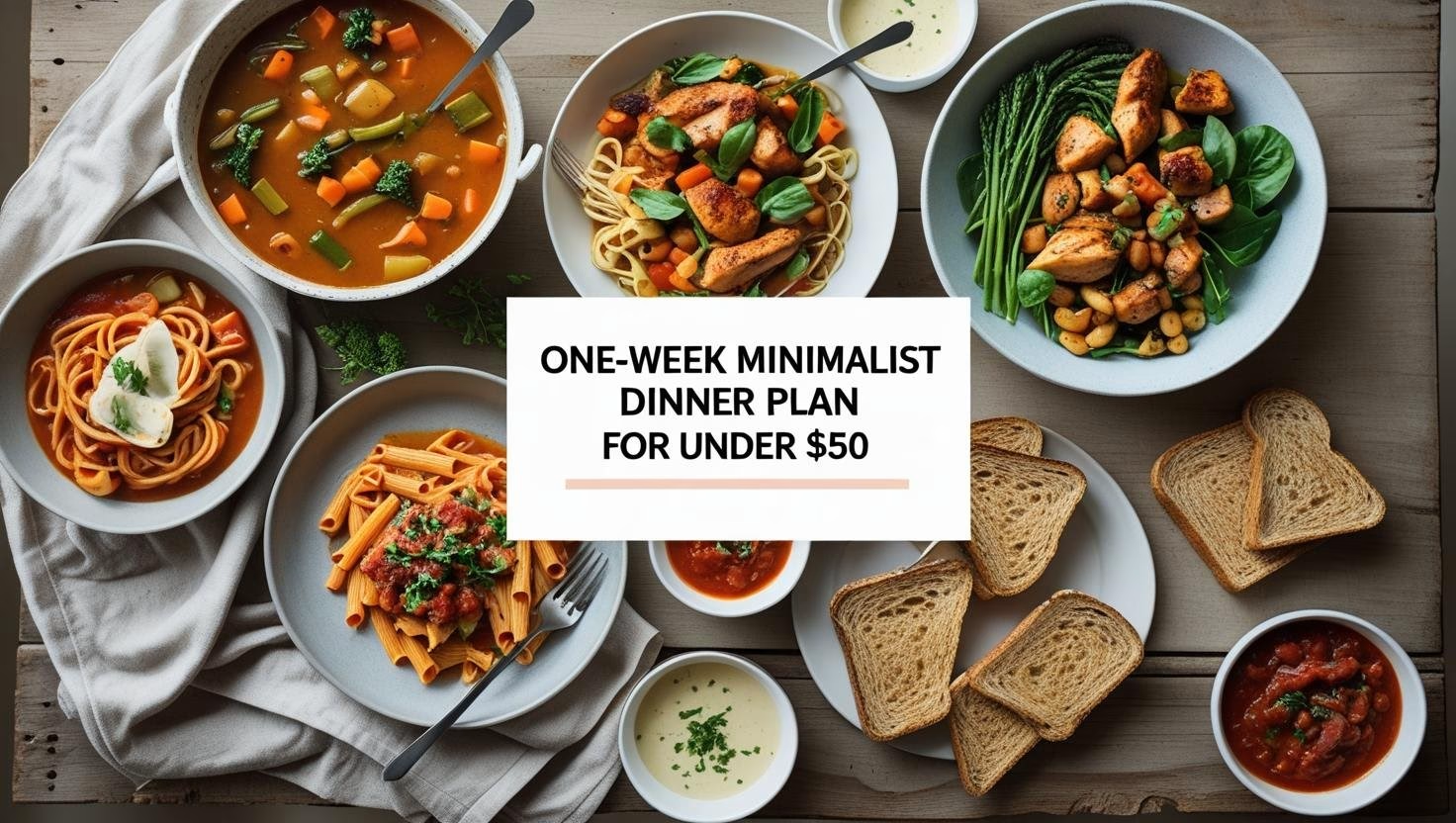

The weekly dinner problem isn't a shortage of recipes — it's ingredient overlap. You buy a bunch of cilantro for one dish, use a tablespoon, and toss the rest by Thursday. You open a can of coconut milk, use half, and let the rest turn in the back of the fridge. A minimalist dinner plan fixes this before you shop: every ingredient shows up in two or three meals, nothing is bought for a single use, and the pantry ends the week lighter than it started. The plan below feeds two adults for seven dinners and targets under $50 at an ordinary grocery store. Scale the quantities up for a bigger household.
The Pantry Foundation
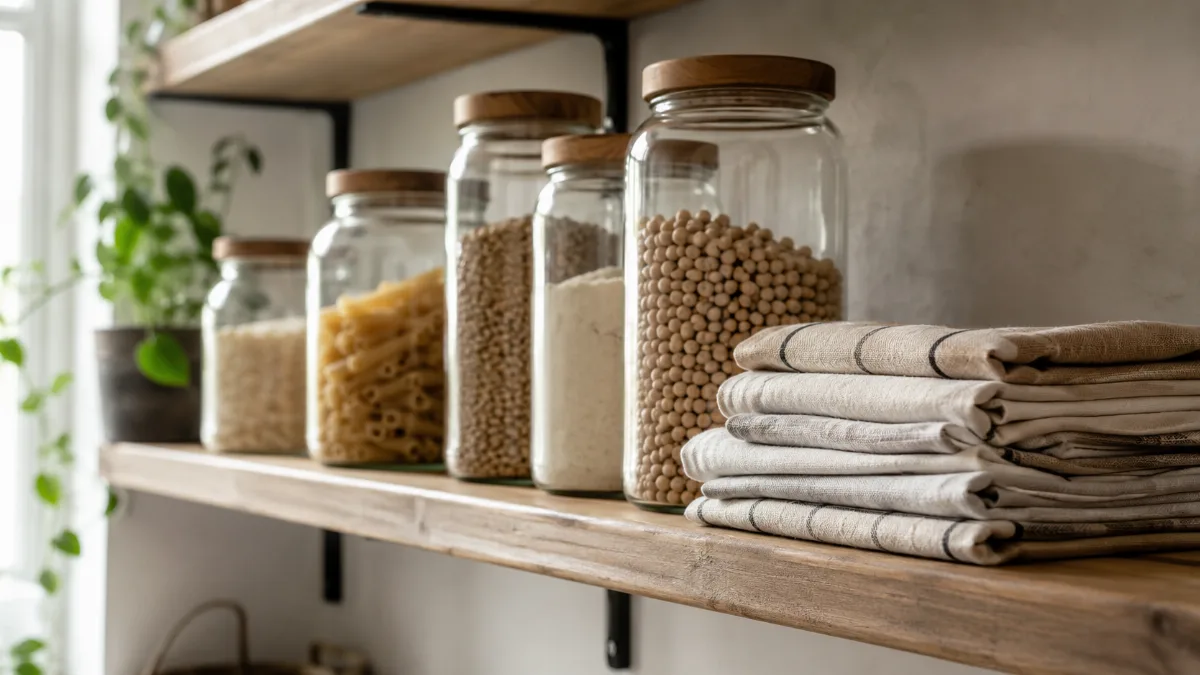
The plan assumes a basic pantry already in place. If yours is bare, add these to the first shopping trip and treat them as a one-time build, not a weekly cost: olive oil, garlic (a head lasts 10 to 14 days), onions, one shape of dried pasta, canned tomatoes, dried lentils, white or brown rice, and the workhorse spices — cumin, paprika, oregano, salt, and black pepper. Everything else the week needs is fresh produce, a few proteins, and the occasional single specialty item. Those staples are the reason the weekly number stays low: bought once, they carry across a month of cooking.
One shape of pasta is a deliberate choice, not a limitation. A single medium shape — penne, rotini, or spaghetti — handles a tomato sauce, an aglio e olio, and a baked dish equally well, and buying one kind in quantity beats stocking four half-used boxes. The same logic runs through the rest of the list: red lentils over three varieties, one all-purpose cooking oil, one chili spice you actually use. A lean pantry isn't just cheaper; it's faster to shop from and simpler to cook out of, because you're never hunting past six things you rarely touch to reach the four you always do.
The Seven Dinners
Monday — pasta with tomato-lentil sauce. A pound of pasta (about $1.50) and two cans of crushed tomatoes ($1.60) simmered with a cup of dried red lentils ($0.60). The lentils melt into the sauce as it cooks, adding protein and body with no detectable lentil texture, and the batch leaves leftovers. Roughly $3.70 beyond pantry items.
Tuesday — fried rice with egg. Day-old rice (cook extra on Monday, or make it for this) hits a hot pan with eggs ($2 for a half dozen), soy sauce, a little sesame oil, and whatever vegetable needs using — frozen peas are fine. About $2.50 for the eggs; the rest is pantry.
Wednesday — chickpea and spinach stew. Two cans of chickpeas ($2), a bag of fresh spinach ($2.50), canned tomatoes, garlic, cumin, and paprika, done in 20 minutes. The chickpeas carry the protein; the spinach wilts into the broth. Serve over rice or with bread. About $4.50.
Thursday — sheet-pan vegetables with white beans. One can of white beans ($1.25) with whatever produce is left from Monday's shop — usually a bell pepper, a zucchini, half an onion — roasted at 425°F for 25 minutes and finished with lemon and herbs. Roughly $3 to $5 depending on the vegetables.
Friday — black bean tacos. Two cans of black beans ($2) cooked down with cumin and garlic, served with rice, a jar of salsa ($2), and whatever tops it — cheese, avocado on sale, a spoon of sour cream. The bean-rice-salsa base is a complete meal on its own. About $5 to $7 with toppings.
Saturday — pasta aglio e olio. Half a pound of pasta ($0.75), good olive oil, garlic, red pepper flakes, and parsley. The simplest pasta there is and the most satisfying done right: medium heat, garlic cooked to fragrant but not colored, and a cup of pasta water to pull it into a sauce. Essentially pantry-only, under $1.
Sunday — clearing-out soup. Whatever's left — a can of beans, the last lentils, an egg cracked in at the end — plus the final vegetables, stock or water, and seasoning. This isn't a recipe so much as a method for emptying the fridge before the next shop. Under $2 in new ingredients. For more detail, it is worth checking the USDA's MyPlate meal-planning guidance.
The Week-One Shopping List
Fresh: a bag of spinach ($2.50), a bell pepper ($1), a zucchini ($1.50), a head of garlic ($0.75), a lemon ($0.75), fresh parsley ($1).
Pantry adds: a pound of dried pasta ($1.50), two cans of crushed tomatoes ($1.60), two cans of chickpeas ($2), two cans of black beans ($2), one can of white beans ($1.25), a half dozen eggs ($2), a jar of salsa ($2), a bag of red lentils ($2).
That comes to about $21.85. Add an avocado ($1) and a block of cheese ($3) for taco night and you're still comfortably under $30 — well inside the $50 target, with room for a splurge. The rice, oil, onions, spices, and standing pasta all come from the pantry baseline and don't touch the weekly figure.
Prices vary by region and store, so treat these as a realistic template rather than a promise — canned beans that are $1 at a discount grocer can be $1.50 at a pricier chain, and produce swings with the season. The structure holds regardless: a short list, heavy on shelf-stable staples, with fresh produce kept to what several meals will actually use. Buying the beans and tomatoes in a store brand rather than a name brand alone usually keeps the whole run under budget even where prices run higher.
Cooking Smart Across the Week
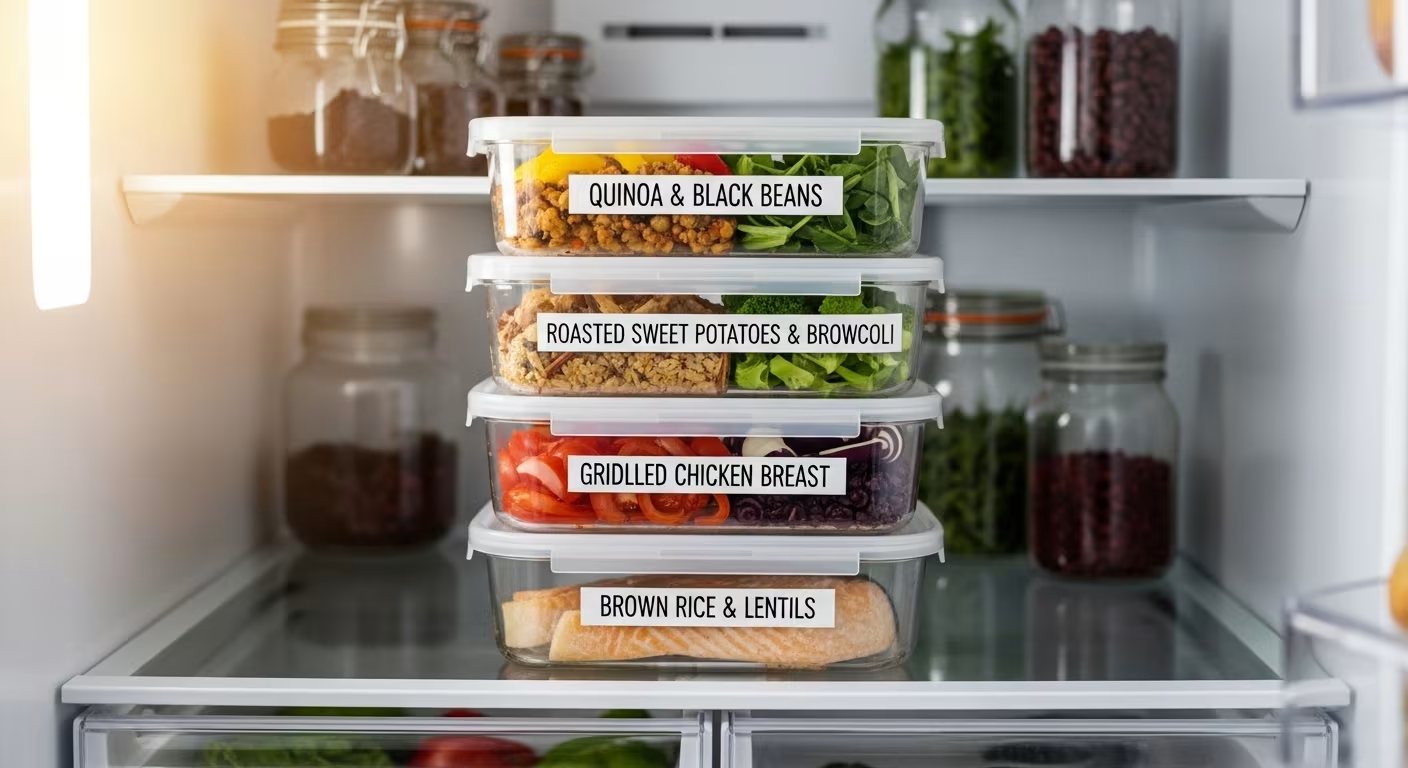
The plan gets easier if a little of the work moves to one sitting. Cook a double batch of rice on Monday and Tuesday's fried rice is already halfway done; day-old rice fries better than fresh anyway, since the grains have dried out and won't clump. Open both cans of tomatoes at once and the extra keeps in the fridge for the Wednesday stew. Rinse and bag the spinach when you get home from the store, and it's ready for both the stew and, if any survives, a handful thrown into the Sunday soup.
None of this requires a dedicated meal-prep afternoon. It's the difference between starting each dinner from raw ingredients and starting a step or two in — ten minutes of overlap on Monday that pays off across three later nights. The meals themselves are deliberately forgiving: the sheet-pan vegetables take whatever's in the drawer, the soup is defined by leftovers, and the pasta nights need almost nothing beyond the pantry. That flexibility is what lets the plan survive a week that doesn't go to schedule.
Why the Overlap Holds the Budget
The overlap is what makes the plan repeatable rather than a one-off stunt. Spinach, chickpeas, and canned tomatoes each appear in more than one dinner. The eggs cover fried rice and back up any meal that wants extra protein. One lemon finishes both the sheet-pan vegetables and, if you like, the pasta. Nothing gets bought for a single recipe and then abandoned, which is precisely where a normal week leaks money. By the second week the list is shorter because the pantry is already stocked; by the fourth, the weekly spend drops again, down to fresh produce and that week's protein.
Scaling for Your Household
For four adults or a family of four, double everything; the cost scales close to linearly, landing the week under $100 instead of $50. For one person, cook the lentil and chickpea dishes at full size — both freeze well or become weekday lunches — and trim the pasta portions. Building a pantry from nothing runs $30 to $50 up front, but that's a one-time outlay that replenishes monthly, not weekly, so it never lands on a single grocery bill. For the staples worth keeping stocked, see our pantry essentials list.
Leaning on Leftovers
Two of the seven dinners are built to consume what the others leave behind. Tuesday's fried rice runs on Monday's extra rice; Sunday's soup exists specifically to clear the fridge. Designing in those two leftover-driven meals cuts the total cooking for the week and closes off the usual source of food waste — the partial ingredients stranded at week's end. That's the structural payoff of an overlapping plan: by the time Sunday's pot is simmering, almost everything you bought has already done its job, and the next week starts clean.
Sample nights, costed:
| Night | Beyond-pantry cost | Note |
|---|---|---|
| Lentil-tomato pasta | ~$3.70 | pasta $1.50 + tomatoes $1.60 + lentils $0.60 |
| Fried rice night | ~$2.50 | day-old rice + half-dozen eggs |
| Whole week | under $50 for two adults | pantry staples are a one-time build |

Comments
No comments yet.