


Slow living is usually sold as a look: a farmhouse kitchen, a loaf of sourdough proofing on the counter, an afternoon with nothing scheduled. That picture makes the whole idea feel like it belongs to people who already have money, land, or a life without a job. The picture is aspirational and mostly useless, because the actual principle underneath it costs nothing and fits inside an ordinary weekday.
The principle is doing fewer things with full attention instead of many things with divided attention. Someone eating breakfast while scanning email and mentally rehearsing the morning is technically eating breakfast, but the experience is nothing like sitting at a table with only the food and ten quiet minutes. The second person is doing one thing. The first is doing three things badly and finishing none of them.
What Slow Living Actually Means
Pace is not really the point. Working through a full inbox in a focused 30-minute block and then closing the laptop is a slow-living move, even if the typing is fast. Leaving email open all day as a background hum, checking and half-answering every few minutes, is not, no matter how unhurried each individual reply feels. The difference is structure: tasks handled in sequence and finished, versus tasks stacked on top of each other and never quite closed.
That reframing matters because it removes the excuses. A slower day does not require moving to the country or quitting a demanding job. It requires deciding what gets your attention and when, then protecting those decisions from the constant pull to do everything at once.
Why the Hurry Persists

The feeling of being rushed rarely matches the actual size of the to-do list. Plenty of people who feel chronically behind are not overcommitted so much as understructured. A day with no clear priorities, no transitions between activities, and no clean endings produces the sensation of hurry because nothing is ever fully done and the next demand is always half-present.
Hurry also hardens into a habit of attention. After weeks or months of partial rush, the state persists even when there is nothing to rush toward: meals get eaten in five minutes with no deadline anywhere, a free evening feels vaguely wrong, rest registers as a detour from productivity rather than part of it. That pattern is harder to undo than the calendar that created it, because it has become the default setting rather than a response to any specific pressure.
Subtract Before You Add
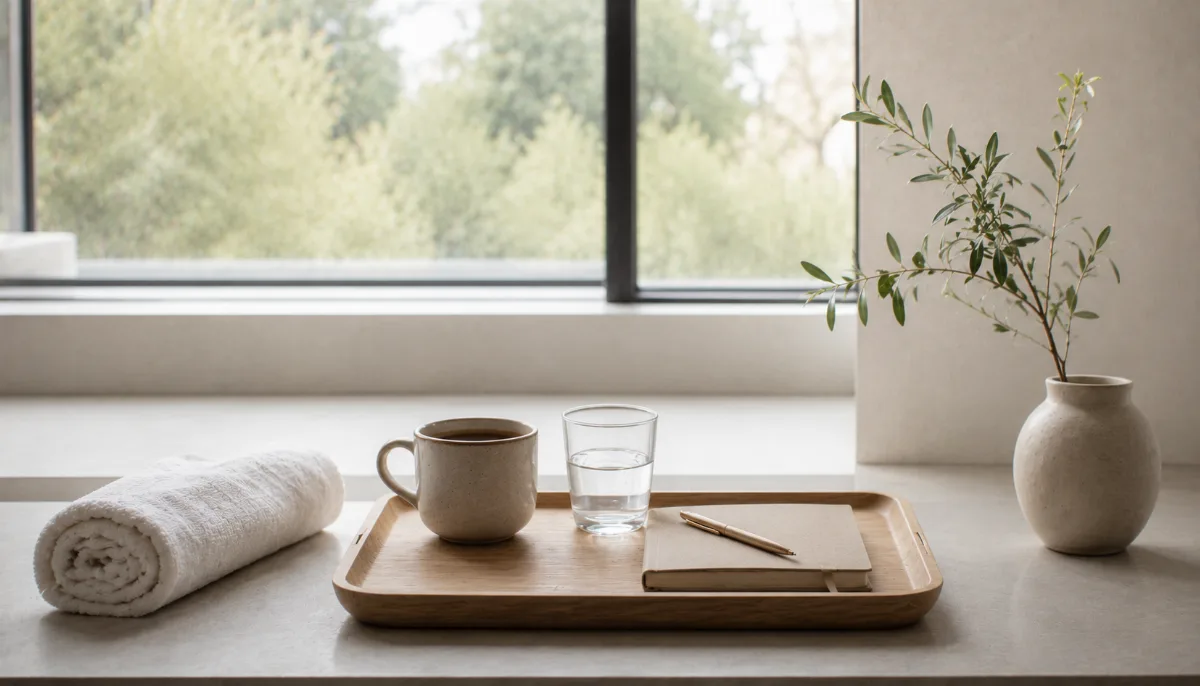
Most slow-living advice starts with additions: a morning routine, a meditation habit, a gratitude journal, some new practice layered onto the day to inject calm. These help, but they are the second step, not the first. The more effective opening move is deciding what to cut.
A week of honest observation usually exposes the reliable sources of the fractured feeling: the over-booked Tuesday, the standing commitment accepted out of obligation two years ago, the evening that dissolves into two hours of scrolling, the volunteer role that quietly outgrew its value. Removing one significant source of chronic hurry changes the day more than ten new calm-inducing rituals stacked on an already overfull schedule. The rituals also work better afterward, because there is finally a structure that can hold them.
Two habits protect that room once it exists. A short transition between activities costs almost nothing: two to five minutes to stand up, refill a water glass, or step outside before the next task begins. Without it, a meeting ends and the next one starts and the whole day reads as one unbroken stretch of demand. The interval lets attention reset instead of dragging the last task into the next one.
Slow living usually gets attempted as an addition — a morning ritual, a new practice — which produces a fuller schedule than before. Subtraction first is the order that works. Concretely: cancel one recurring commitment this month, decline the next invitation you would have accepted out of obligation, remove one app that consumes time without returning anything, and leave one evening a week with nothing planned.
The measurable target is margin between commitments. Aiming for 15 to 30 minutes of buffer between scheduled items removes most of the day's hurry, because the hurry rarely comes from the activities themselves — it comes from arriving at each one already late from the last.
Meals and Margin as Anchors
Meals are the easiest anchor because they already happen three times a day. A sandwich eaten at a table with the phone in another room for ten minutes is a slow meal; the food does not need to be elaborate and the sitting does not need to be long. What separates it from a meal eaten in front of a screen is single-task attention, nothing more. Three of those a day build a reliable rhythm the rest of the day can organize around. If you want to dig deeper, the American Heart Association's Healthy Living guidance is a good starting point.
Margin is the other anchor: unscheduled time that is not pre-assigned to anything. Most calendars have none, so the unexpected demands that always arrive turn into time debt, and the debt is what makes everything feel rushed. A few hours a week left deliberately empty absorbs those surprises and quietly changes the texture of the days around it. Protecting that empty space takes the same skill as protecting focused work, since the instinct is to fill it the moment it appears. The practical side of holding that line is covered in our guide to how to say no and set boundaries.
The Adjustment Takes Longer Than Expected

Slowing down after a long stretch of constant rush is uncomfortable at first, and that surprises people. A nervous system tuned to continuous stimulation reads the absence of it as restlessness rather than rest. The first couple of weeks of a quieter pace can feel too quiet, a little empty, shadowed by a sense that something important is being missed.
That discomfort is not a signal to speed back up. It is the gap between two steady states, and it passes. The home helps or hinders the crossing depending on how it is set up: screens kept in one room instead of glowing in every room, a stretch after work before any screen goes on, an activity that uses the hands rather than the eyes, such as cooking or a short walk. None of it is mandatory. It is a set of options that offer what passive scrolling cannot, which is genuine rest from the work of processing information. Start by cutting one recurring source of hurry this week, and add the calmer practices only once there is space for them to land.
The first two to three weeks of a slower pace usually feel worse rather than better. Unscheduled time reads as unproductive, and the discomfort is strong enough that most attempts end here. It typically settles after about a month, at which point the same empty afternoon reads as rest rather than waste.
One measurement helps during that period, because the change is easy to lose track of: at the end of each week, note how many evenings were unscheduled and how many meals were eaten sitting down without a screen. Both numbers move before the feeling does, which is useful evidence when the impression is that nothing has changed.
Slow is a shape, not a speed:
| Move | Number | Point |
|---|---|---|
| Focused inbox block | 30 minutes, then closed | that IS slow living |
| Buffer between items | 15–30 minutes | hurry lives in the transitions |



Comments
No comments yet.