
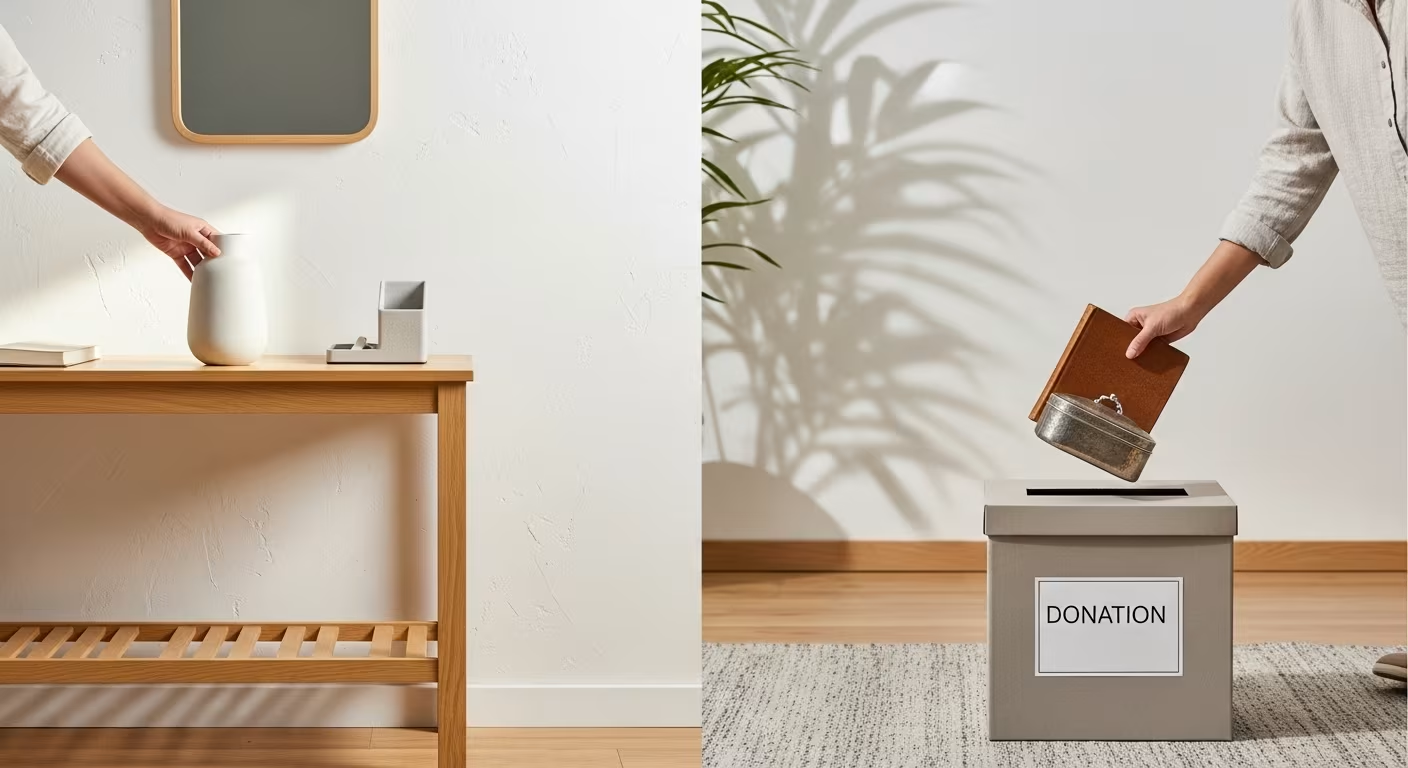

Why Clutter Comes Back After You Declutter
Decluttering without changing what comes in is like bailing a boat while ignoring the leak. A thorough session clears the accumulation, the years of objects that arrived without intention and stayed without assessment, but it does nothing to the conditions that produced them. If the same buying habits, the same automatic acceptance of gifts, and the same reluctance to release continue afterward, the pile rebuilds on the same schedule it built the first time.
The one-in one-out rule works on the leak rather than the water. It is a single commitment: every item that enters the home, whether bought, gifted, borrowed, or otherwise acquired, is matched by an item that leaves. A new pair of shoes comes in and an old pair goes out. A new saucepan arrives and a tired one is released. The total quantity of things you own stays level, holding at whatever the last declutter set it to instead of quietly climbing past it again.
Applying It Across Categories
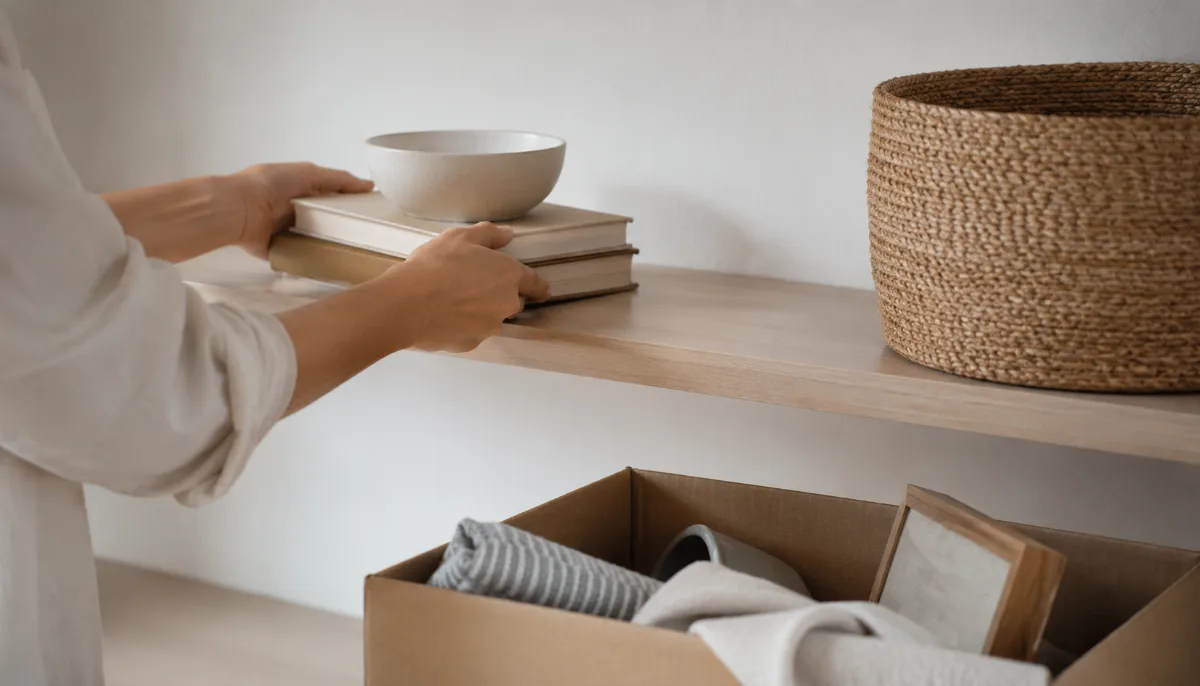
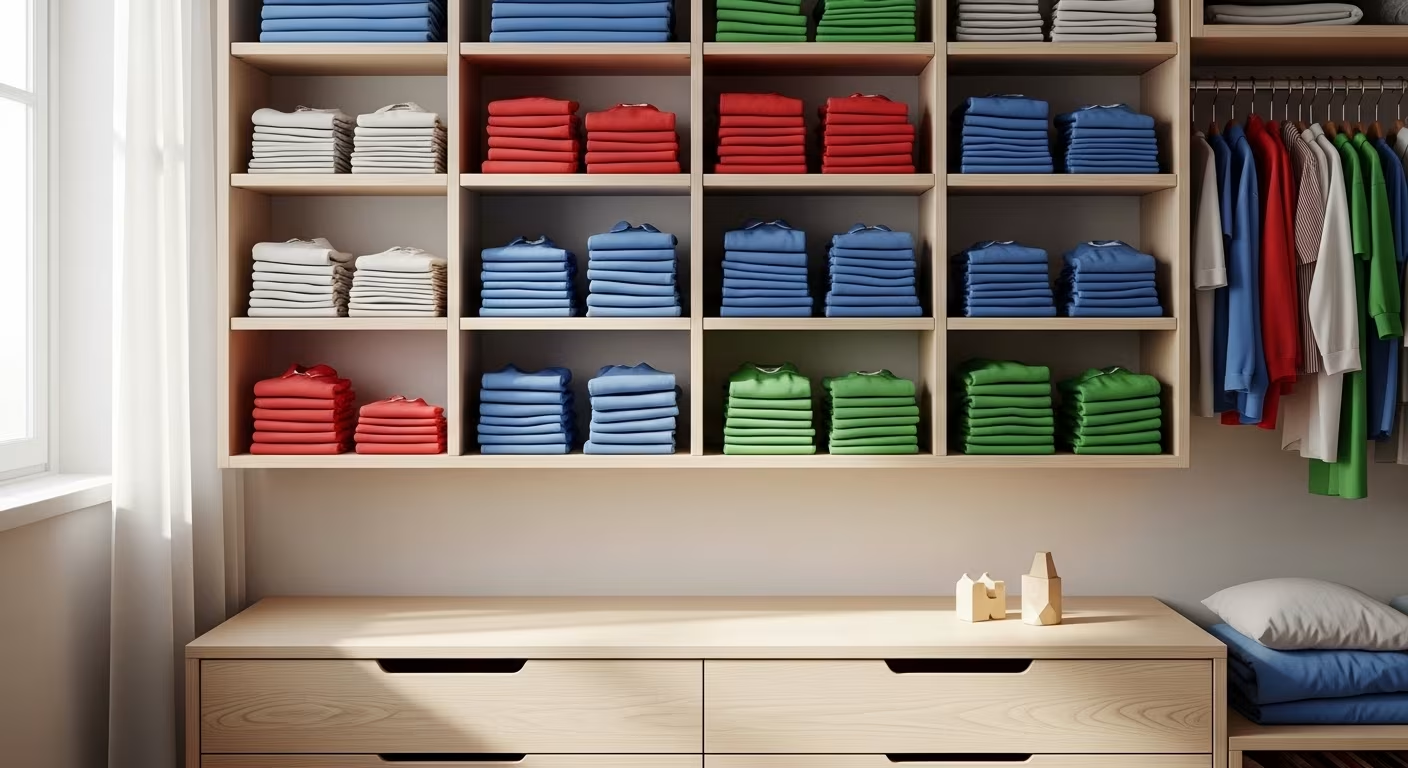
The rule lands most naturally when applied by category. Clothing is the usual starting point because additions there are frequent and visible: a new shirt comes in, an older one goes out. The same logic extends to books, kitchen equipment, toys, beauty products, and any other category the household actively adds to. Much of this echoes Oklahoma State University Extension.
Categories with slower turnover run on a longer cycle rather than a different rule. Furniture, large appliances, and outdoor gear are acquired rarely, so the exchange happens rarely too: a new sofa means the old sofa leaves, not that a second sofa joins the room. A replacement dishwasher means the old one goes, rather than a spare appearing in the garage. The principle holds whether the swap happens weekly or once every few years; only the frequency changes.
Decide at the Point of Purchase
The rule is far easier to keep when it operates before the item enters the home rather than after. Asking "what leaves when this comes in?" while still in the store produces a more honest read on the purchase than asking it once the thing is already sitting on the counter. If nothing in the existing category feels ready to go, that hesitation is useful information: the purchase itself may be worth reconsidering.
This does not mean every purchase needs a matched release lined up in advance. Consumables, food, and straightforward replacements for broken or used-up items work differently, a $12 bottle of shampoo replacing an empty one does not require a ceremony. The rule applies to durable goods that will hold permanent space: clothing, equipment, decor, furniture, the categories where accumulation is gradual and where things persist indefinitely unless something deliberately pushes them out.
A useful test at the register is to name the specific item that will leave, not just the category. "A book will go" is easy to say and easy to ignore; "the paperback on the third shelf I have not opened since I finished it" commits you to an actual object. If you cannot picture the specific thing leaving, the honest reading is usually that nothing in that category is ready to go, and the new item would be a genuine addition rather than a replacement, which is exactly the moment the rule is meant to catch.
The One-Out-First Variation
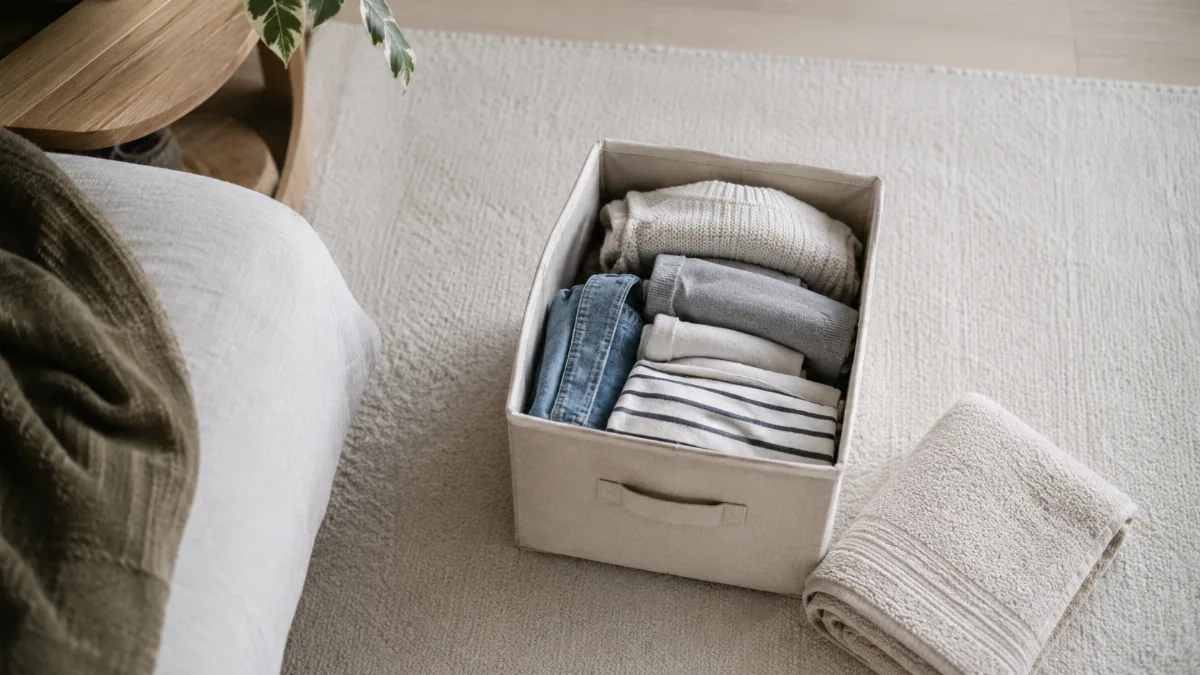
A stricter version is one-out-first: the existing item leaves before the new one arrives. This closes the loophole where both items sit in the home at once "for now" and the temporary overlap becomes permanent through simple inertia.
It is especially effective for clothing and accessories, where the handoff from old to new is routinely delayed because the old item still technically works. The worn jacket you are replacing feels like it has life left, so it lingers in the closet beside its replacement, and a year later both are still there. Donating the old jacket before the new one ships removes the option of keeping both, which is otherwise the default outcome whenever two versions of the same thing coexist.
Gifts and Children's Belongings
Gifts complicate the rule, because declining one or releasing a newly received present can feel like ingratitude. The most effective response is prevention: a low-key conversation with the people who give you the most, steering them toward experiences, consumables, or specific things you actually need. It works better with some relatives than others, but the request is far easier to make before an occasion than to explain after an unwanted item has already arrived.
When gifts come in regardless, the rule still holds. A present that genuinely fills a need or brings real pleasure stays, and the thing it replaces leaves; a present that fits neither is easier to pass along when the household already treats assessment as normal rather than treating every incoming object as automatically permanent. Children's belongings are a version of the same challenge, because the main acquirers are usually not the child but parents, grandparents, and relatives who are not thinking about any limit. The same proactive gift conversation applies. For children old enough to take part, the rule can be made explicit and age-appropriate: when a new toy arrives, the child chooses one to pass on, which teaches the logic directly and hands them genuine agency in the trade.
Making It a Household Habit
The rule works best as a shared household standard rather than one person's private discipline imposed on common space. If one member practices it faithfully while others keep acquiring without releasing, the shared closets and shelves fill anyway, and the practitioner's effort is quietly cancelled out by everyone else's additions.
The most persuasive way to bring others along is demonstration, not a house meeting. Pointing to a closet that has stayed organized for six months on one-in one-out, when it used to need a major overhaul twice a year, makes the case better than any explanation of the principle. Over time the exchange stops feeling like a rule and becomes the ordinary way the household handles new things, holding the decluttered state in place with a fraction of the effort that repeated big cleanouts demand. Our guide to preventing clutter from coming back covers the wider set of inflow habits that reinforce it.
Deciding Where the Outgoing Items Go
The rule only works if the "out" half is easy, because friction on the exit is what quietly kills the habit. If releasing an item means an open-ended project, driving somewhere, listing it for sale, deciding among options, the released thing tends to sit in a bag by the door for months, which recreates the clutter the rule was meant to prevent. The fix is to decide the default destination in advance so the choice is already made when an item leaves.
A simple three-way split covers most cases. Anything with real resale value, a barely-worn coat, a working small appliance, goes to a single chosen channel, whether that is a local consignment shop or one resale app you already use, not a rotating cast of them. Everything usable but not worth the effort of selling goes straight to a donation bag that lives in the closet, dropped off whenever it fills. Broken or unusable items are discarded or recycled immediately rather than being stored while you decide. Keeping a donation bag permanently open turns each release into a ten-second act instead of a task, and a task deferred is a task that reverses the rule.
Seasonal Clothing and the Spending Filter
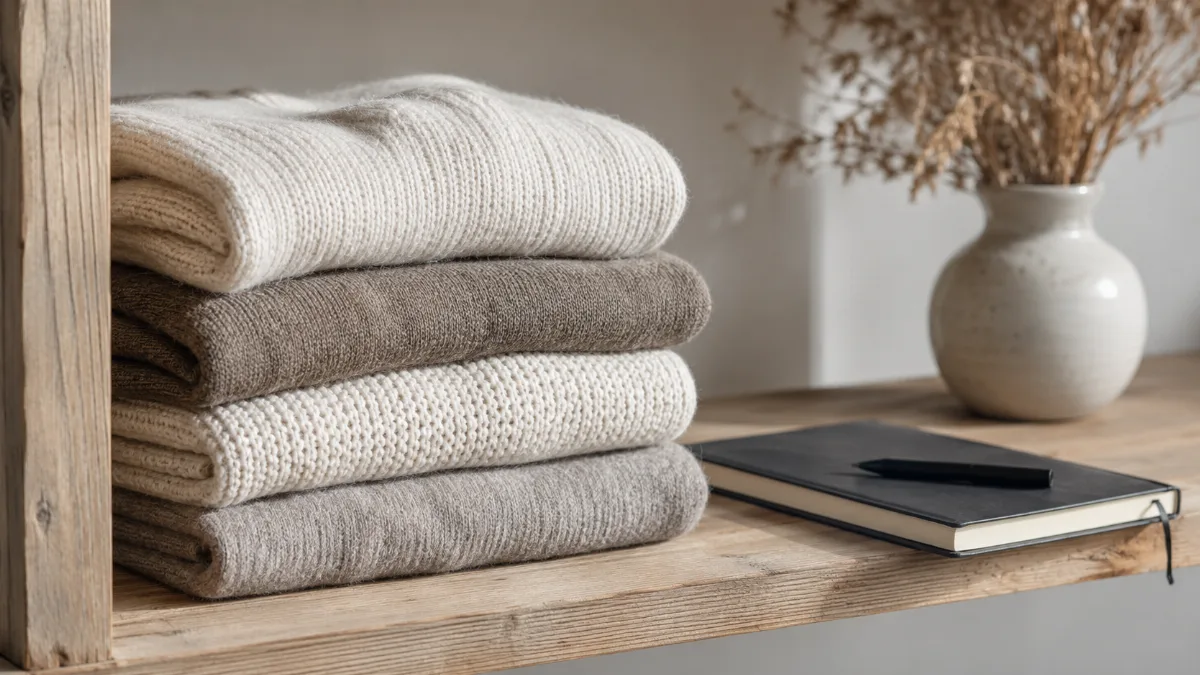
For clothing, many households find a seasonal rhythm easier than an item-by-item swap. At the start of each season, new pieces come into the wardrobe, and at the same time an equal number from the previous season are assessed for release. This keeps the wardrobe at a steady size across years without demanding a decision every single time one shirt is bought.
The quieter payoff shows up after a few months: the rule doubles as a spending filter. A shirt looks appealing on the rack, but the question of which existing shirt would have to leave to make room for it strips away the automatic yes. Making the exchange cost visible, that something you already own has to go, before the new item is bought turns many purchases that felt necessary in the moment into ones you walk away from. The rule that started as a way to keep clutter out ends up keeping money in, which is often the benefit households come to value most.
What the rule covers and skips:
| Category | Rule applies? |
|---|---|
| Clothing, gadgets, decor, books | yes — one in, one out |
| Consumables and like-for-like replacements | no — the $12 shampoo refill is not an “in” |
Comments
No comments yet.