


What Screens Do to the Last Hour
Two mechanisms work against sleep in the hour before bed, and they compound. The first is light: the blue-weighted glow of a phone or laptop suppresses melatonin, the hormone that tells the body sleep is coming, effectively pushing the internal clock later. Someone scrolling until the moment they set the alarm is asking the body to fall asleep before it has been given the biological signal to start.
The second is content. News, group chats, an autoplaying next episode — these hold attention on purpose. The mind that was engaged, mildly stimulated, or quietly agitated right up to lights-out does not switch instantly into the settled state sleep needs. The two effects together produce the familiar "tired but wired" evening: the body is done, the brain is not.
The delay is not trivial. People who stop screens an hour or two before bed generally fall asleep noticeably faster than people who scroll until the light goes off, and the difference is largest in the early part of the night — exactly the stretch where the deepest, most restorative sleep is meant to happen. Lose the front of the night to a wired brain and the whole night's quality drops, even if the total hours look the same on paper.
What the Routine Is Actually Replacing

Most evening screen time is not chosen for its content. It is the default way of filling the gap between the end of the day's obligations and sleep — the path of least resistance when you are too tired to decide on anything better. The show, the scroll, the fourth check of the same three apps: rarely deeply wanted, usually just there.
A screen-free routine puts something deliberate in that gap. It does not need to be aspirational — no elaborate tea ceremony, no hour of journaling. It needs to be genuinely restful and doable on the nights when the day has wrung you out, because those are the nights the routine either holds or collapses.
Three Activities That Reliably Work
The activities that help share one trait: they lower mental activation while still giving the mind somewhere to rest, so it does not default to lying in the dark rehearsing tomorrow.
Gentle movement. A ten-minute walk after dinner or a few minutes of light stretching releases physical tension and marks the shift out of the active day. Keep it gentle — a hard workout in the two hours before bed can push sleep later rather than earlier.
Reading on paper. A physical book or a non-backlit e-reader engages the mind at a pace that supports drowsiness instead of fighting it. Fiction tends to work better than nonfiction, because a story pulls you along without generating the plans, worries, and to-dos that a business book or an article reliably kicks up.
Light preparation for tomorrow. Setting out clothes, glancing at the calendar, or writing down the one task circling in your head closes the open loops that otherwise stay active in the background. A task written down releases its claim on your attention; a task left open keeps a low hum of cognitive load running while you try to sleep. Five minutes with a notepad often does more for sleep onset than any amount of trying to force the mind to quiet down, because it addresses the cause rather than the symptom.
What these three share is that none of them demand willpower once they are set up. You are not resisting an urge; you are doing something mildly pleasant that happens to be incompatible with staring at a bright rectangle. That distinction is why they outlast a vague resolution to "use the phone less" — they replace the habit rather than merely forbidding it.
A Simple Wind-Down Timeline

A routine is easier to keep when it is anchored to the clock rather than reinvented each night. The sequence below assumes an 11 p.m. bedtime; shift every time to fit your own. The point is not the exact minutes but the fixed order, which removes the nightly decision about when to stop.
| Time before bed | Action | What it addresses |
|---|---|---|
| 90 minutes | Last screen off, phone on charge in another room | Melatonin suppression from blue light |
| 60 minutes | Tidy up, set out tomorrow's clothes, note one open task | Open loops and morning friction |
| 45 minutes | Dim overhead lights, switch to a lamp, brew a caffeine-free tea | Environmental cue that wind-down has started |
| 30 minutes | Gentle stretching or a short walk | Physical tension |
| 20 minutes | Read fiction in bed under warm light | Mental activation and bedtime rumination |
The Transition Signal
The most reliable part of any evening routine is a single consistent trigger: one specific action, taken at roughly the same time, that marks the switch from active evening to wind-down. Dimming the overhead lights and moving to a lamp works well. So does brewing a particular tea or putting the phone on a charger in the hallway. These small acts follow the same logic laid out in most standard sleep-hygiene guidance: a stable pre-sleep cue trains the body to expect sleep.
The signal matters because deciding when to stop requires willpower every single night, and willpower is lowest exactly when the day was hardest. An automatic environmental cue asks for none. A household that dims the lights and pockets the phones at nine has a far easier time winding down than one relitigating the question at eleven.
When Everyone Else Is Still Scrolling
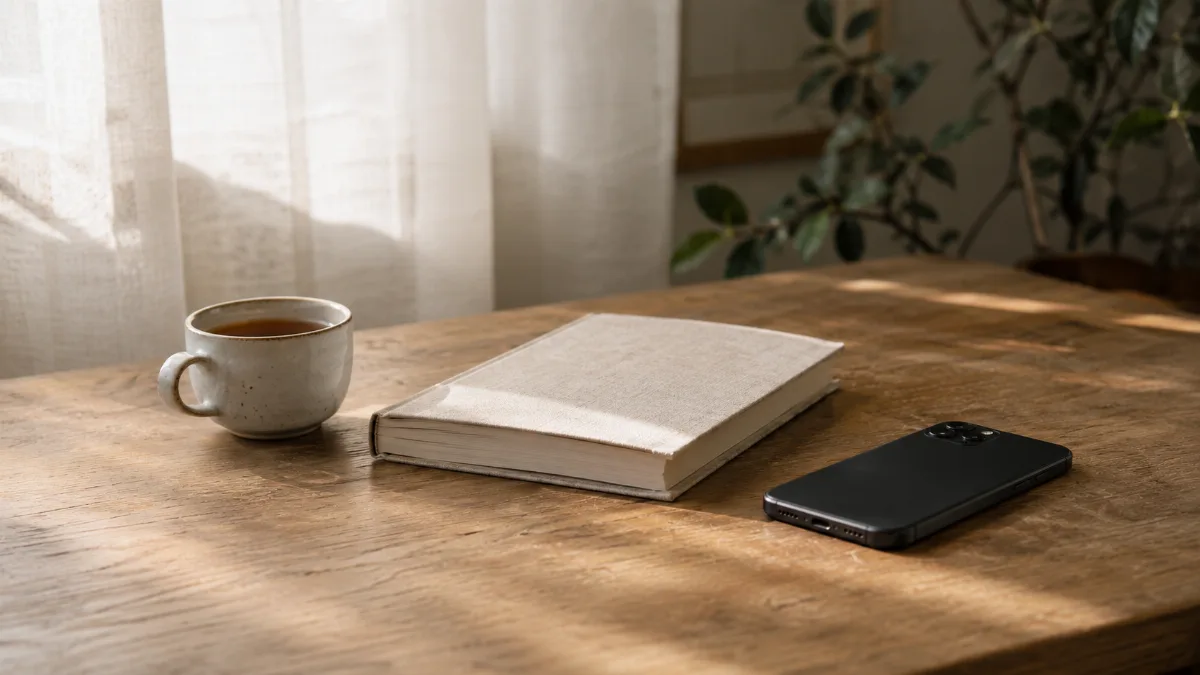
In a shared home where a partner or roommate keeps screens on in the evening, an individual routine gets harder but not impossible. Practical workarounds: do the wind-down in a separate room for the last thirty minutes, wear blue-light-blocking glasses if you are staying beside someone else's screen, or negotiate a shared screen-off time that serves both people's sleep. The reduced light exposure and lower stimulation still accrue to whoever implements the routine, regardless of what the rest of the household does.
Easing In, and What Changes
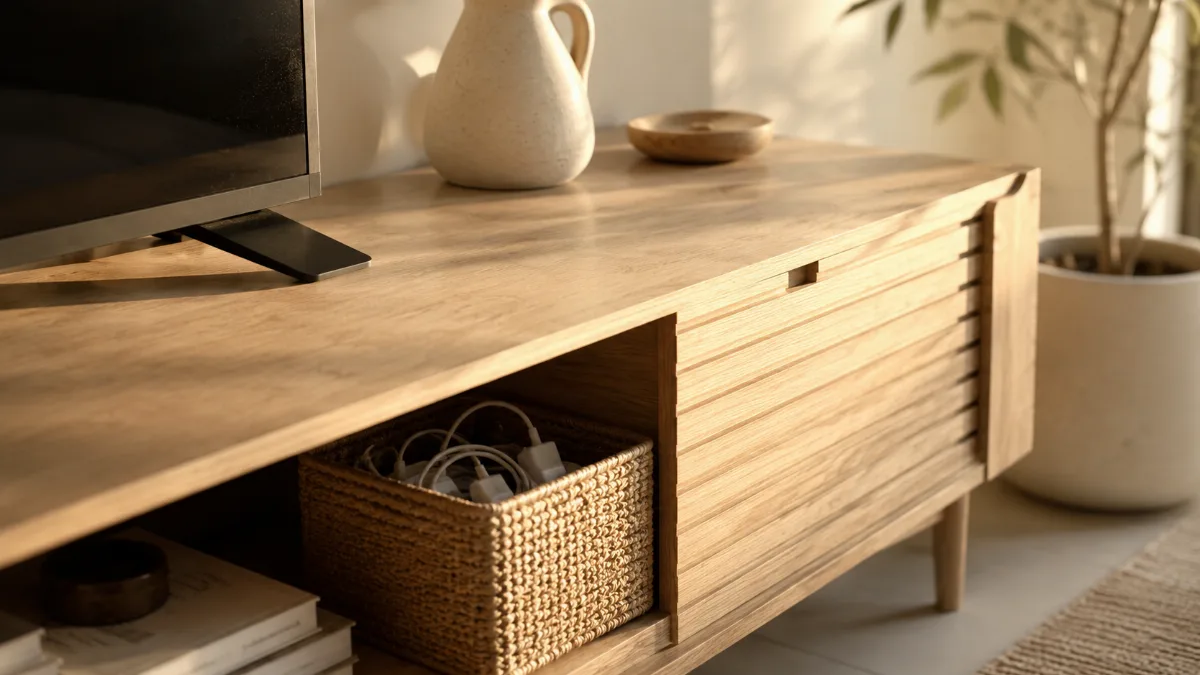
For deeply habitual screen users, cutting everything at once rarely holds. Move the cutoff earlier by thirty minutes and hold it there for a week or two, then move it another notch. Each increment frees a little more time to be filled by the alternatives that fit your household, letting them settle into genuine habits rather than feel like deprivation.
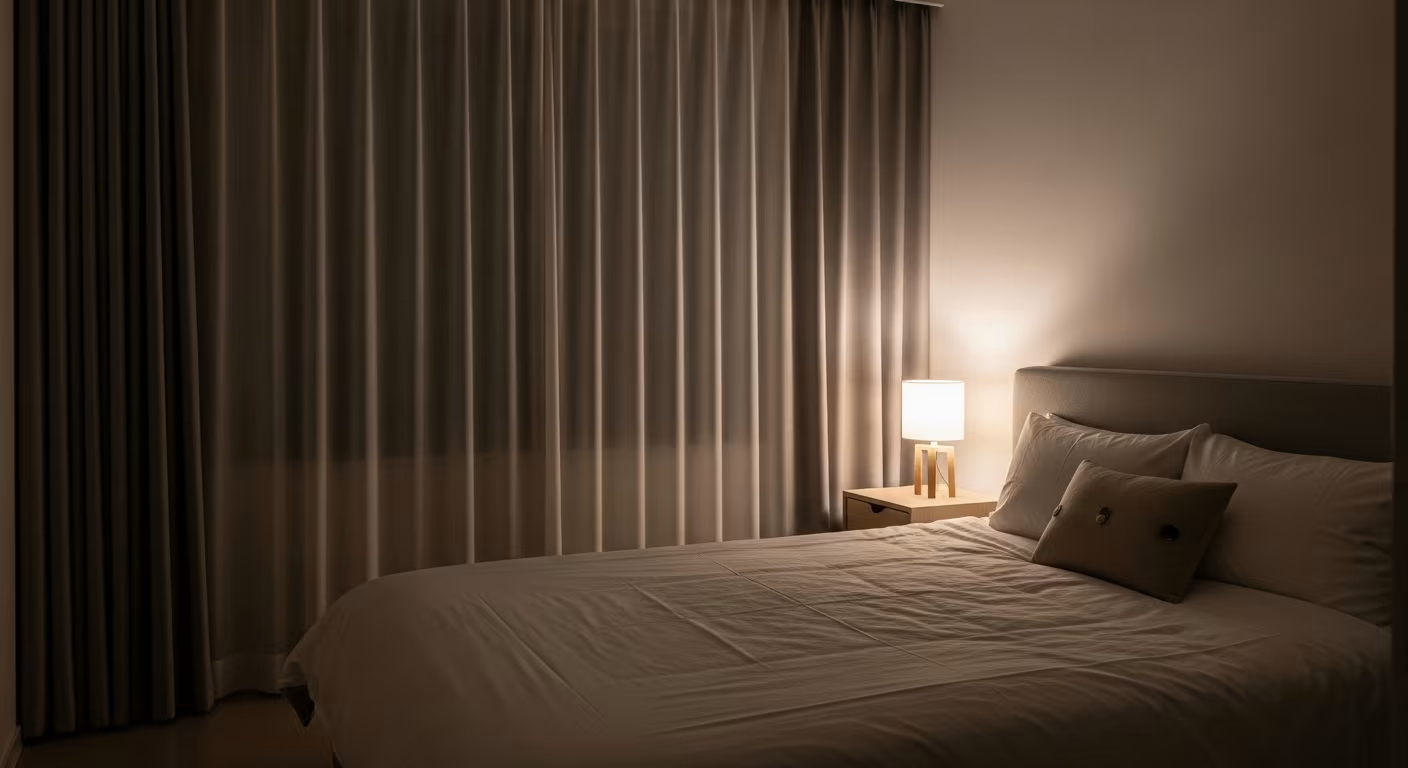
After two to four consistent weeks, the change usually shows up as falling asleep faster, waking more rested, and a less brutal mid-afternoon slump. Much of that comes from better sleep architecture — more time in the restorative stages — rather than simply more hours in bed. Poor sleep also accumulates as debt, a deficit that compounds until chronic fatigue feels like a normal baseline; people who have run on that baseline for months often do not remember what genuinely rested feels like until it returns. For the room-level factors that support this in parallel, see our guide to minimalist bedroom design for better sleep, and the broader public-health case for why sleep quality matters beyond hours logged.


Comments
No comments yet.