

The car feels like unlimited luggage space, and that is the first trap. Packing for a flight, the size limit does the disciplining for you. Packing a trunk that swallows everything, there is nothing to push back against the entire closet and the "just in case" mentality that fills it. A road trip that stays cheap and light starts with the same restraint you would bring to a carry-on, even though the car could hold three times as much.
What to Pack and What to Leave
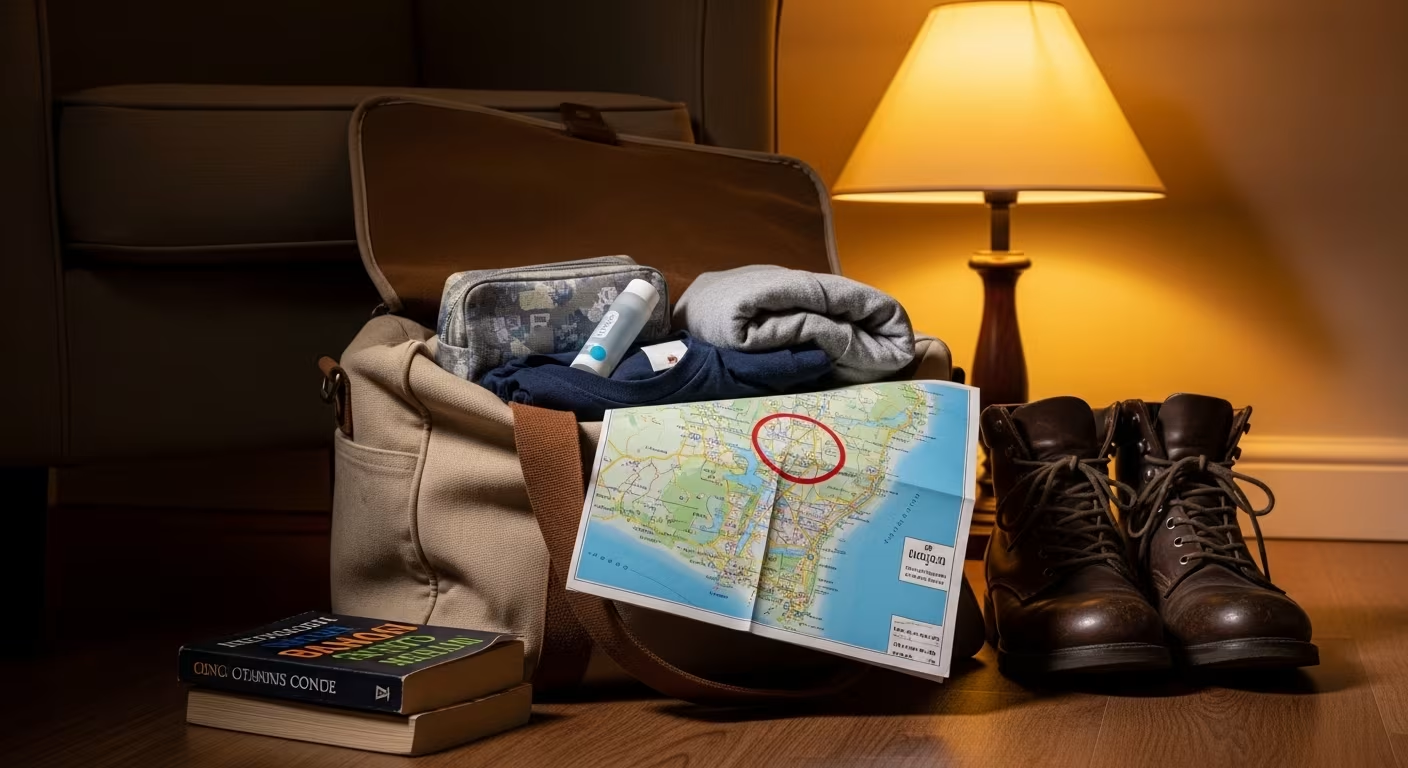
The road-trip wardrobe works like any travel wardrobe: versatile pieces that layer, repeat without looking repeated, and can be rinsed in a sink and worn again. The car actually lets you carry a small bottle of travel detergent for that, which means a 10-day trip needs fewer clothes than instinct suggests, not more. Beyond clothing, a road trip genuinely needs car-maintenance basics — jumper cables, a tire pressure gauge, a small emergency kit, much of which may already live in the car — plus phone navigation with a paper map as backup for dead-signal stretches, and a first-aid kit sized for reasonable probability rather than every imaginable scenario.
What comes along out of habit and rarely earns its space: multiple pairs of shoes for occasions that will not happen, activity gear for activities not actually on the itinerary, more reading material than any driving day leaves time for, and a full kitchen's worth of cookware packed on the theory that you might find a cabin with a stove. Each of those is a decision to make once, at home, before the trunk fills up on its own.
Organization inside the car pays off more than raw capacity. Two or three soft duffels beat a stack of hard suitcases because they flex into odd trunk spaces and compress as the trip empties them. A single bin for everything you reach for daily — chargers, snacks, sunscreen, the first-aid kit — keeps the cabin from turning into a floor of loose objects by day three. The bag you access every night goes on top; the one you open once, at the bottom. That five-minute loading discipline saves the nightly ritual of unpacking the whole trunk to find one thing.
The Cooler Strategy
The cooler is the single most effective budget tool on a road trip. Three restaurant meals a day for a family of four run $80 to $150. The same three meals pulled from a cooler with grocery-store stops run $25 to $40. Over ten days that gap is $550 to $1,100 — often more than the fuel bill.
The approach is simple. Load the cooler at home from your own groceries at home prices: eggs, sandwich makings, fruit, cheese, crackers, yogurt, enough for the first two or three days. A good 100-quart cooler with a block of ice or dry ice holds temperature for three to five days. Every second or third day, stop at a grocery store instead of a restaurant — a 20-to-30-minute detour that resets the cooler for another stretch. The goal is not camp cooking; it is cold storage. Sandwiches, fruit, pre-made salads, and snacks do the work, and any hot meal at a campfire or electric hookup is a bonus rather than a requirement. In summer, block ice outlasts cubed, dry ice outlasts both, and keeping the cooler shaded and closed extends every kind of ice considerably.
A Minimal Camp Kitchen
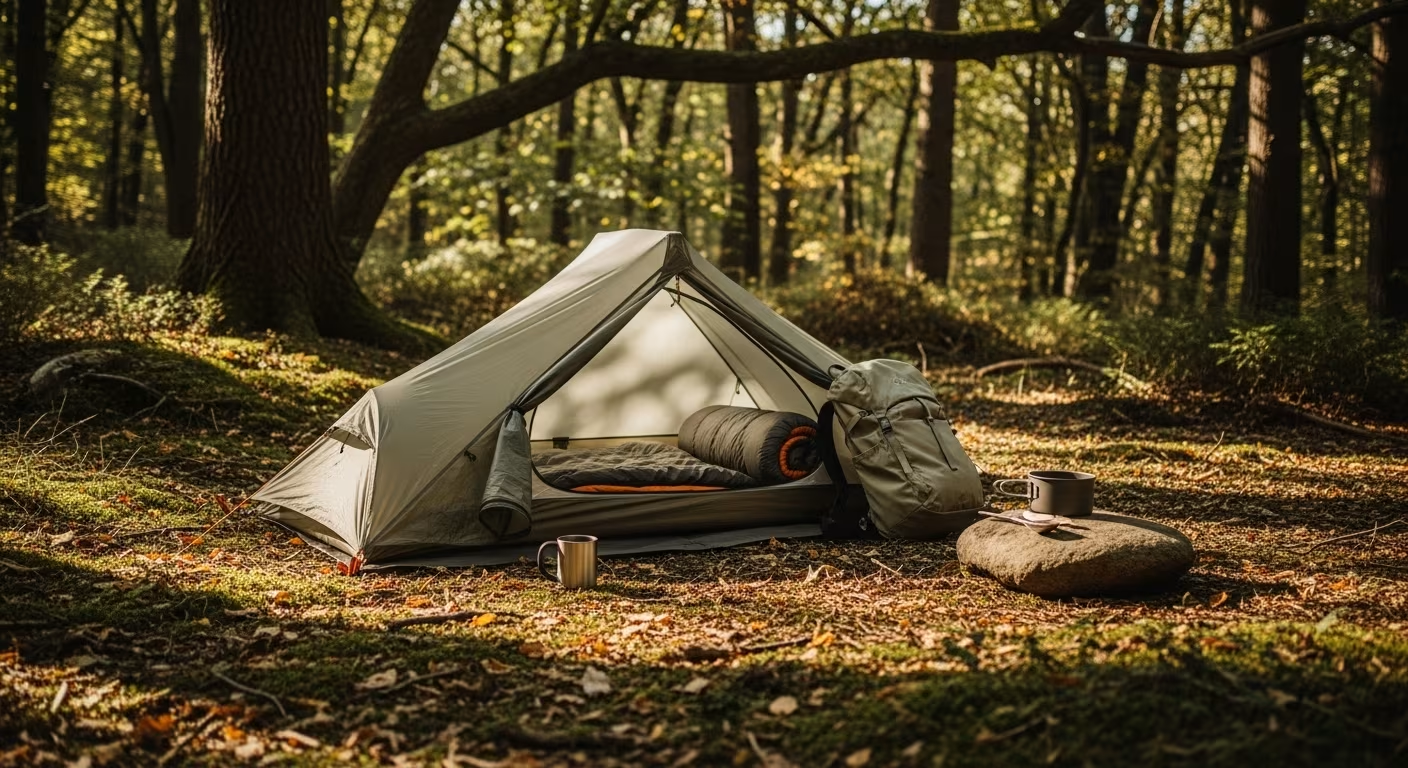
If any of your nights involve camping, a small cooking kit turns cooler groceries into hot meals without dragging the whole kitchen along. The genuinely useful set is short: a single-burner propane stove, one pot and one pan, a sharp knife, a cutting board, and a set of plates, bowls, and utensils sized to the group. A small jug of water covers cooking and washing up where a spigot is not close. That kit fits one bin and handles pasta, eggs, one-pan dinners, and morning coffee — which is most of what anyone actually cooks on a road trip.
The temptation is to pack for the meals you imagine rather than the ones you will make. A camp griddle, a second stove, specialty cookware, and a full spice rack all sound useful at home and stay in the bin the entire trip. Salt, pepper, oil, and one or two favorites cover the seasoning that matters. As with clothing, the honest filter is recent history: if it did not get used on the last camping trip, it does not earn cargo space on this one.
Overnight Options and Their Real Costs

Hotel rooms are the easy, expensive default. Each alternative trades cost against convenience differently, and a mixed approach usually beats committing to any single one.
| Overnight option | Typical cost per night | Trade-off |
|---|---|---|
| National park campground | $15–$35 | Books months ahead; needs gear and setup time |
| State park campground | $15–$35 | Easier to book late; quality varies, read reviews |
| Dispersed public land (BLM/forest) | Free | No facilities; needs self-sufficiency |
| Budget motel chain | $60–$80 | Real bed, shower, outlets; no camp setup |
| Mid-range hotel | $120–$200+ | Convenient, but the biggest lodging cost |
National park campgrounds are the sweet spot when you can get them, with the park experience itself as the point of the trip. State parks see less demand and book closer to the date at similar prices, though quality swings widely enough that reviews are worth the few minutes. Dispersed camping on BLM or National Forest land is free and legal across millions of acres in the western US — a flat spot, maybe a fire ring, nothing else — but you check the specific agency's rules first. Budget motels earn their place for one or two mid-trip nights when a real bed and a charging outlet are worth $60 to $80. A realistic 10-day trip might run four nights camping, three in budget motels, and three with friends or family along the route. The mix is personal; the principle is choosing it deliberately rather than defaulting to hotels.
Gas: The Math and the Mitigation

Gas is the largest trip-specific cost for most road trips, and the formula is worth running before the route is final: miles driven ÷ vehicle MPG × current gas price. That single number is where the biggest budget decisions live. Over 2,000 miles at $3.50 a gallon, a vehicle getting 30 MPG instead of 20 saves roughly $117. Trimming 200 miles off the route saves about $35. Holding a steady 55-to-65 MPH instead of 75 improves efficiency 10 to 15 percent, worth another $20 to $40 across a typical trip.
Fuel-price apps like GasBuddy flag the cheapest stations in any area, and in states with large price gaps — California versus Nevada, for instance — timing a fill-up across a state line is a genuine strategy rather than a gimmick. None of these moves is dramatic on its own, but stacked across ten days they add up to the difference between one budget category and the next.
A short pre-trip maintenance pass protects the fuel math and everything else. Tires inflated to the door-jamb pressure gain a few percent in efficiency and wear evenly over a long drive, a fresh air filter helps an older engine breathe, and topped-off oil and coolant head off the roadside failure that erases an entire week's savings in one tow. Removing a roof box or empty bike rack you are not using on a given leg cuts drag that quietly costs miles per gallon at highway speed. Ten minutes in the driveway is cheaper than any repair on the road.
Planning the Route for Cost

Route choice moves the total more than most people expect, and the cheapest route often is not the most direct one. Driving through national park country usually adds miles over a straight highway line between cities, but the camping infrastructure replaces hotels — and the lodging savings frequently more than cover the extra fuel. Four nights of park camping at $20 to $30 easily beats four budget-motel nights along the faster equivalent route.
Tolls are the quiet line item. Some corridors, especially through the Northeast, accumulate $50 to $100 in tolls on a path that merely looks faster on a map. A toll calculator — the free tier of TollGuru covers most US routes — puts the expected toll cost next to the time saved so the comparison is honest before you commit.
Booking Campgrounds Before They Fill
Popular national park campgrounds book out months ahead. Showing up without a reservation at Yellowstone, Acadia, or Zion in peak season reliably produces a "campground full" sign and a scramble for alternatives after a long day of driving. Book as early as you can — the federal recreation.gov reservation system opens most sites six months out — and hold backup plans in reserve: overflow campgrounds outside the park boundary, or National Forest sites nearby that tend to have more room.
First-come, first-served sites still exist as a share of most campgrounds, often 20 to 40 percent of total capacity. Arriving before noon in low-to-mid season regularly secures one; high season rarely leaves that window open for long. Shoulder-season timing sidesteps much of the reservation pressure altogether, and a spring or fall trip often trades a few degrees of comfort for a far calmer booking process.
Putting the Numbers Together
The pieces compound. A trip that leans on the cooler for most meals, camps four or five nights, drives an efficient route at a steady speed, and books its key campgrounds early can land at a fraction of the cost of the same trip run on restaurants and mid-range hotels — without feeling like a sacrifice. Start with the two biggest levers, meals and lodging, since together they usually outweigh fuel and tolls combined. Lock those down first, and the rest of the budget tends to fall into place on its own.
See also: 25 budget travel tips and minimalist travel packing list 2026.

Comments
No comments yet.