
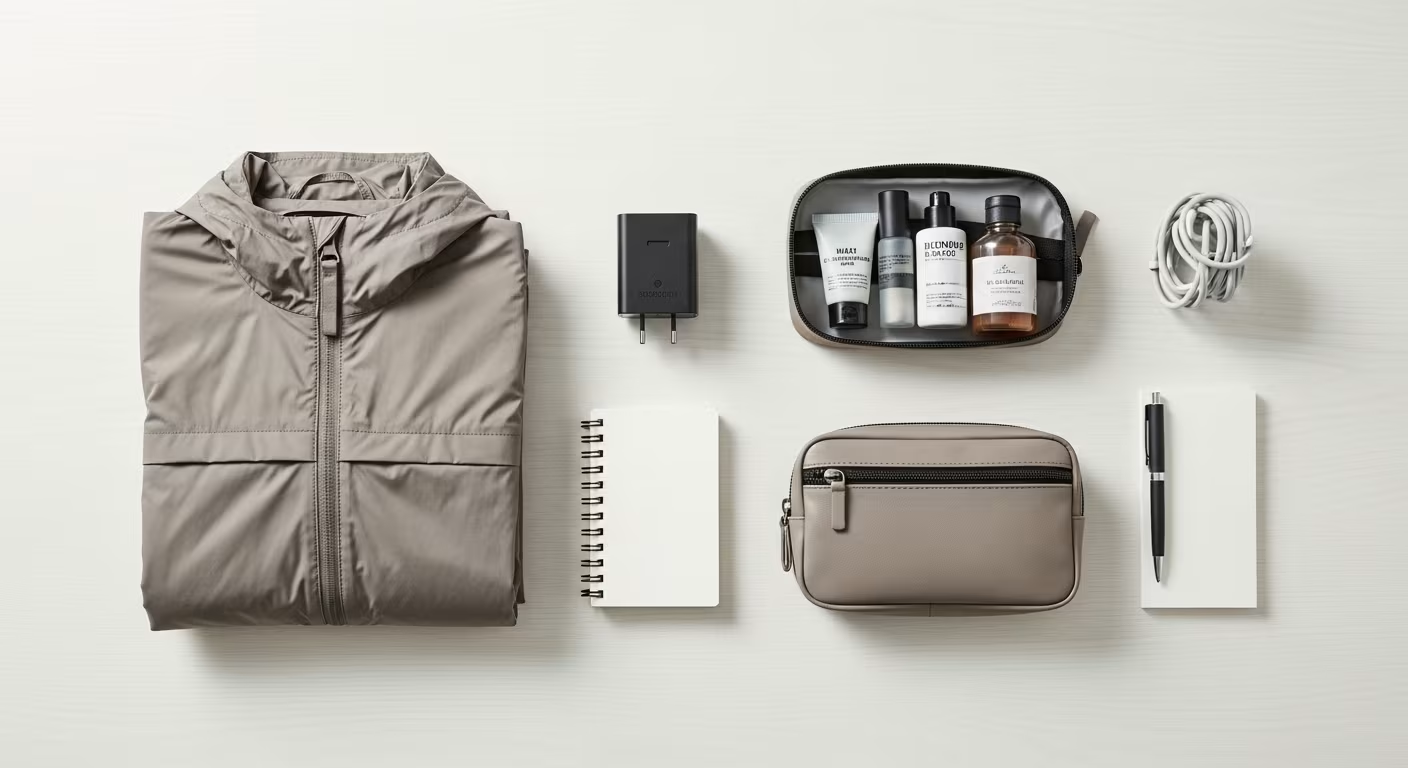

The Principle: Versatile Over Specialised
Gear companies profit from convincing travellers that every scenario needs its own equipment: a waterproof pack for trails, a different pack for the city, a rain cover, a dedicated organiser for each category of item. Minimalist travel gear runs the other way: a small set of well-chosen, versatile items handles most situations more efficiently than a large collection of specialised ones.
The test for any piece of gear is whether it earns its weight by doing a job nothing already in the bag can do. A packing cube organises clothing but adds weight and volume without making anything more usable; a flat stuff sack does the same job for almost no space. A dedicated travel umbrella is beaten by a rain jacket that also handles cold and wind. Ask that question of every item and the kit shrinks on its own.
The Bag and the Three-Layer Wardrobe

The bag is the most consequential decision, because it caps the volume of everything else. A pack in the 26 to 35 litre range meets the carry-on size limits most airlines enforce while holding enough for a trip of any length once clothes are washed en route. Worth prioritising: a clamshell opening for easy access, internal compression straps, and a profile that drops into an overhead bin. Extra external pockets mostly add weight and fuss. A darker bag hides dirt and draws less attention on city streets. Fit is worth testing before a trip rather than at the gate: load the bag to its real travel weight and wear it for an hour at home, which shows whether the straps dig in, whether it rides too low, and whether the size honestly clears the airline's sizer, a cheaper lesson than a forced gate-check fee.
Clothing is built around three layers, each usable alone or in combination, which together cover a wide temperature range:
| Layer | Example | Handles |
|---|---|---|
| Base | Merino wool t-shirt | Warm weather; worn most, resists odour for days |
| Mid | Packable down or fleece | Cool conditions; compresses into its own pocket |
| Outer | Lightweight hardshell | Rain and wind; covers most bad-weather situations |
A merino base layer becomes the most worn item in the kit because it regulates temperature and can go several days between washes, which matters when washing frequency is higher than at home. The mid layer adds warmth without bulk. A packable shell over both handles the large majority of wet and windy conditions, where a heavier waterproof parka would be warmer but far less versatile across climates.
Footwear and Technology
Footwear is the heaviest thing most people carry, so it deserves care. Two pairs cover nearly everything: one everyday walking shoe and one dressier option. Choose a daily pair that also passes in a casual restaurant and you often drop the second entirely. Versatile trail runners handle city walking, day hikes, and most casual settings; simple loafers or dress shoes add the smarter option. Wear both in before the trip, because blisters from fresh footwear are among the most common travel problems. The weight gap between shoe choices is larger than it looks: leather boots can run close to a kilogram and a half while trail runners come in under half that, which makes the everyday shoe the biggest single weight decision in the kit after the bag itself. When both pairs are coming, wear the heavier one through the airport and pack the lighter.
A minimal tech kit covers communication, navigation, and documentation without excess. A smartphone does all three for most travellers, a portable battery buys emergency power, and one universal adapter covers the electrical standards you will meet. A laptop or tablet is worth carrying for remote work or a long trip with real productivity needs; for a leisure week, the phone usually suffices, and an e-reader carries a library in the space of one paperback. Cables multiply fast, so a single multi-device charging cable and a small pouch keep the tech section light and untangled.
Health, First Aid, and What to Leave Behind
A small first aid kit covers the likely situations. Blister plasters are the highest-use item on any walking-heavy trip. Pain relief, antihistamines, and something for digestive upset handle the common minor complaints. Prescription medication, plus a small backup supply, belongs in the bag you keep with you, never in checked luggage, and anyone who wears glasses or contacts benefits from a backup pair, since replacing eyewear at the right prescription abroad is slow and sometimes impossible. Sunscreen and insect repellent can be bought on arrival in the formulation that suits the climate, which also keeps liquids out of the bag.
The clearest sign a gear item does not belong is that it covers a scenario that has never actually occurred on your past trips: a travel clothesline never once strung up, a lock whose hostel days are behind you, a second pair of walking shoes for conditions that never arrived. Packing cubes fall into the same category for most people. Clothes rolled straight into a well-chosen bag stay accessible and organised without them; the one genuine exception is a small pouch for cables, which really does prevent tangles.
Weight as the Real Constraint
Total packed weight is the clearest measure of how well a kit has been edited. A carry-on under about seven kilograms loaded rides comfortably in overhead bins, on public transport, and over long walks; one at ten or more becomes a burden you feel by the end of every travel day. Weigh the packed bag before each trip and note any increase from the last one, and the extra weight forces an honest decision about whether the addition was worth it. Small weights add up faster than any single item suggests: a spare charger here, a second novel there, a just-in-case jacket, none heavy alone, but four or five together are the difference between a bag you forget you are carrying and one you feel by mid-afternoon.
The best kit is not assembled once and frozen. After each trip, note what went unused and what you wished you had carried. Unused items leave before the next departure; genuine gaps get filled deliberately. Over five to ten trips this turns a generic packing list into a kit calibrated to how you actually travel: lighter, more specific, and more reliable because it is built from experience rather than anticipation.

Comments
No comments yet.