
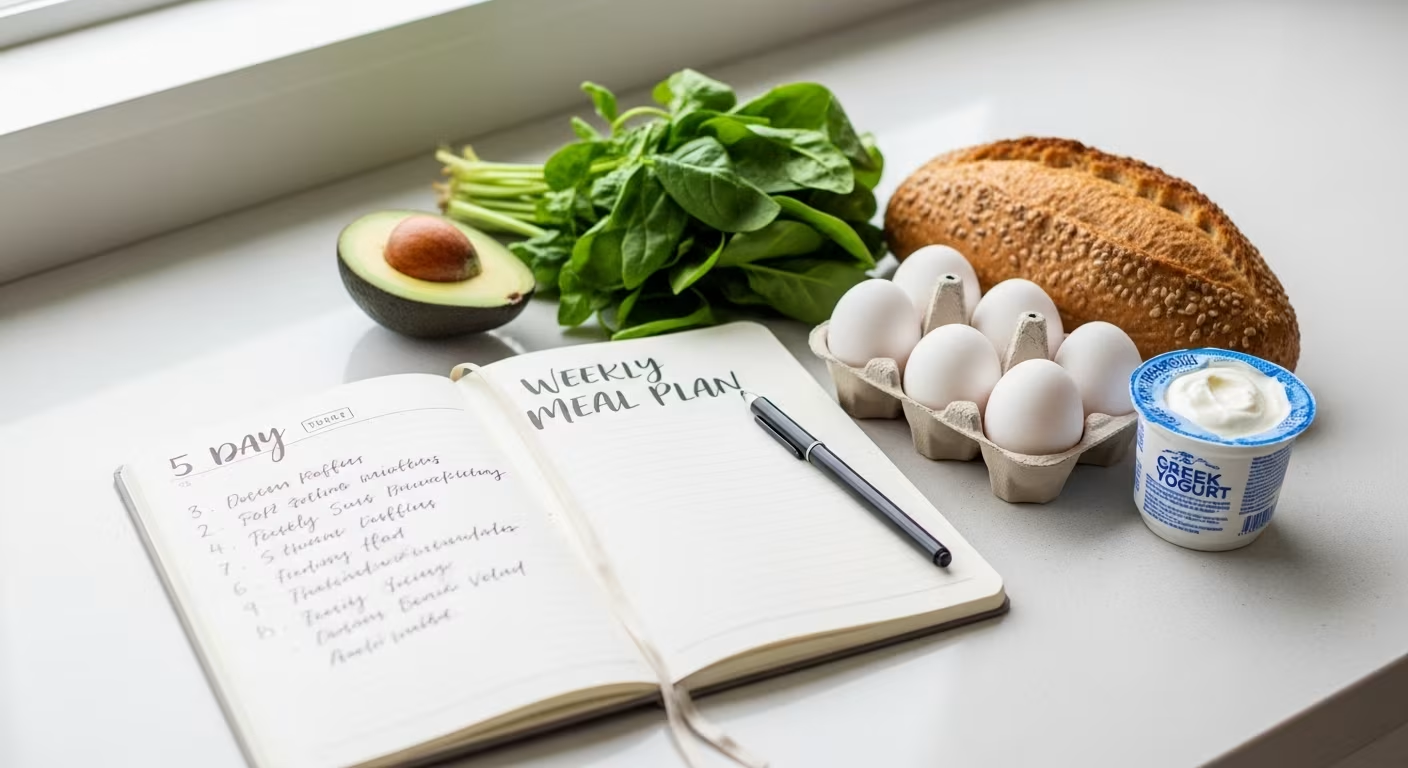

Meal planning has a reputation for being more work than it saves, and the standard version earns it. Plan seven dinners in detail, buy a separate ingredient list for each, follow every recipe to the letter, and the whole structure tends to collapse by Wednesday. The planned meal no longer sounds good, one ingredient still hasn't been touched, and Friday needs a special trip for a single item. The problem isn't planning. It's planning around recipes instead of around groceries.
A minimalist meal plan flips that order. It buys a short list of ingredients that show up in several meals, then assembles dinners from what's in the kitchen rather than marching through a fixed recipe schedule. Fewer items, less waste, lower cost, and far fewer decisions made at 6 p.m. on an empty tank. For a deeper reference, see the University of Nebraska's food-storage guidance.
Build the week around overlap, not recipes
The core move is buying ingredients that repeat. The same pack of chicken thighs anchors Monday's sheet-pan dinner and Thursday's rice bowl. One bunch of kale goes into Tuesday's pasta and Wednesday's scramble. A can of white beans covers Monday's side and Friday's soup. Each item earns its place by appearing at least twice, which is what keeps the shopping list short and the crisper drawer from turning into a compost bin.
In practice, pick three or four proteins, two or three starches, and four or five produce items for the week. That's the whole palette. Everything you cook is a recombination of those purchases, so a $10 to $14 pack of chicken thighs stretches across two dinners instead of one, and the half-bunch of greens that usually wilts unused gets a job on purpose.
The overlap also quietly caps the grocery bill. A recipe-driven week fills the cart with one-off items (a jar of a specific paste, a herb you need a teaspoon of, a vegetable that only appears in one dish) and most of them get used once and forgotten in the back of the fridge. Buying for reuse means nearly everything in the cart is spoken for at least twice before you leave the store, which is why the same dollar amount feeds more nights.
A five-dinner week that reuses everything
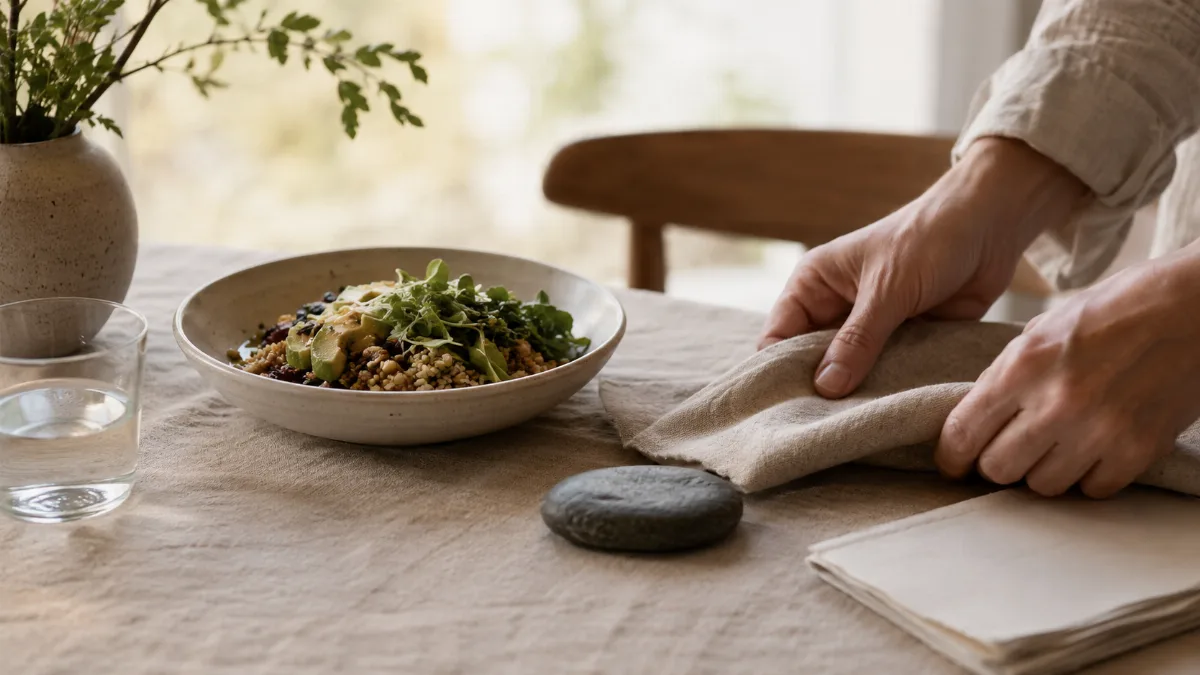
Here is a concrete week for one or two people, built entirely on overlap. Nothing on it is bought for a single meal.
| Day | Dinner | Ingredient it reuses |
|---|---|---|
| Monday | Sheet-pan chicken thighs, sweet potato, green beans | Chicken thighs (again Thursday) |
| Tuesday | Pasta with garlic, olive oil, white beans, wilted greens | Greens (again Wednesday), beans (again Friday) |
| Wednesday | Egg scramble with onion, pepper, leftover greens, toast | Bread (again Friday) |
| Thursday | Rice bowl with Monday's chicken, cucumber, avocado, sesame | Chicken cooked Monday |
| Friday | White bean and tomato soup with bread | White beans, bread |
The full shopping list runs to about fourteen fresh items: chicken thighs, eggs, sweet potato, green beans, greens, cucumber, avocado, bell pepper, and onion, plus pasta, rice, bread, canned white beans, and canned tomatoes. Garlic, olive oil, and stock are already in the cupboard. Five dinners, one modest cart, and no ingredient that appears exactly once.
Plan for the nights you won't cook

Most households don't actually cook five nights running, and a plan that pretends otherwise breaks fast. Assume two or three nights of real cooking, one or two of leftovers, and a night or two of takeout or a pantry assembly that doesn't need a recipe. Planning three or four dinners you'll genuinely make beats planning seven you won't, and it keeps the fridge from filling with ingredients bought for meals that never happened.
This is where the overlap earns its keep. If Thursday falls apart, Monday's leftover chicken slides to Saturday, the beans meant for Friday's soup cover a quick pasta instead, and nothing spoils because every ingredient had more than one possible job. The written plan is a shopping framework, not a contract. The meals can shuffle freely across the week without a single wasted purchase.
The pantry that keeps the plan flexible
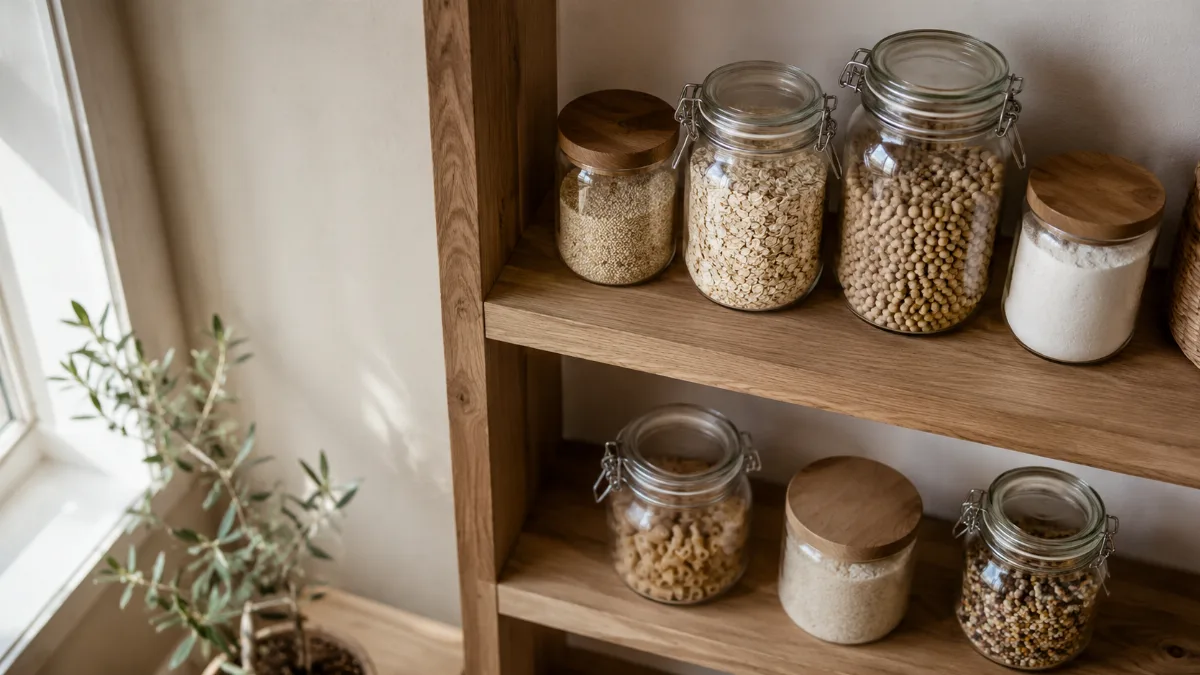
A short, dependable pantry is what lets the whole system bend instead of snap. Olive oil, garlic, canned tomatoes, dried pasta, rice, canned beans, and a decent stock cover the gaps on the night the plan changes. When Tuesday's dinner needs to become something else, these staples supply a full meal without a second trip to the store. That is the practical difference between a flexible plan and a fragile one. Twenty reliable staples used every week beat a cupboard of two hundred items where only twenty ever get reached for.
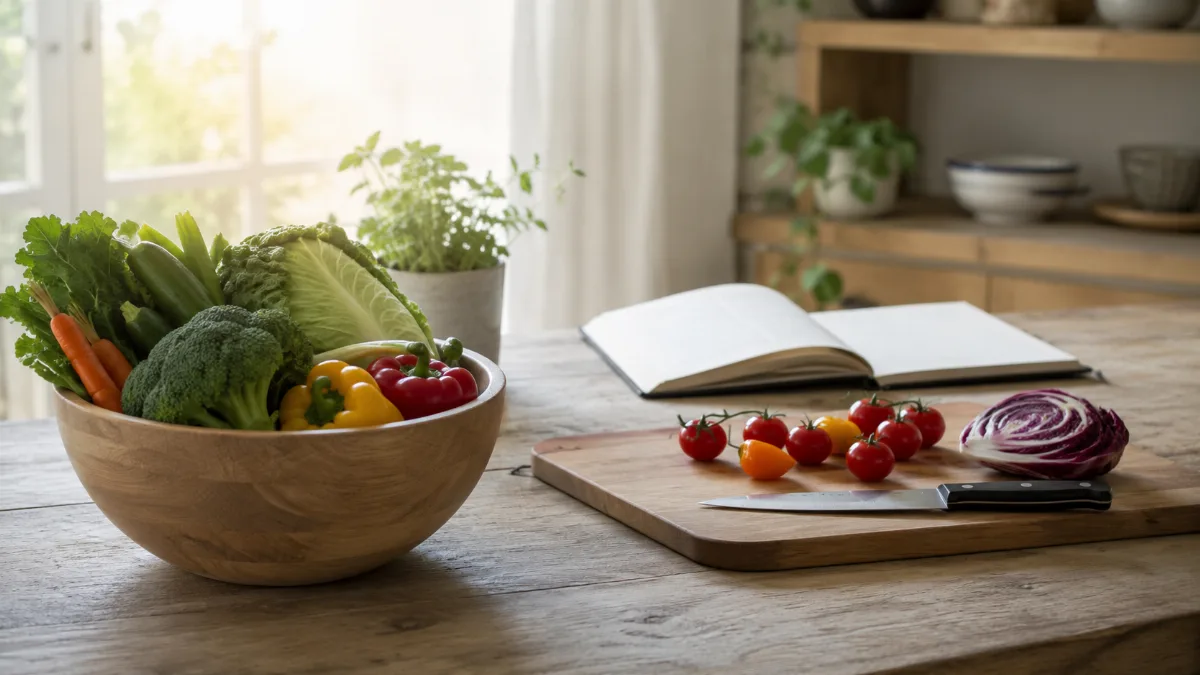
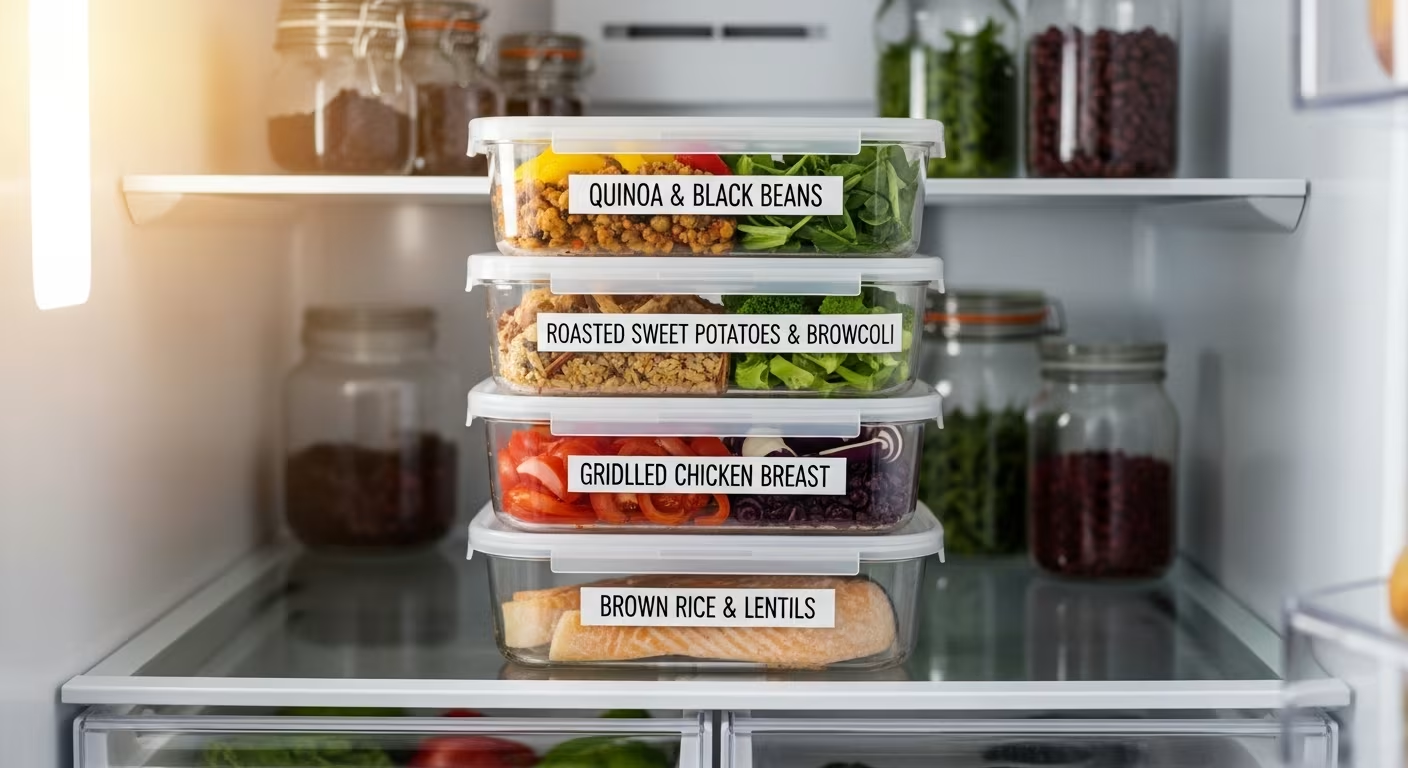
Batch cooking is optional but pairs well with this approach. Cook a large pot of rice or a tray of roasted vegetables on Sunday and two or three weeknight dinners become fifteen-minute assemblies rather than cook-from-scratch jobs. Keep the batch to bases (grains, roasted vegetables, a double portion of protein) rather than complete meals, so the same components can be combined differently each night instead of becoming the identical leftover dinner four times.
The real payoff isn't the recipes; it's deleting the daily "what's for dinner" question. That decision, made tired at the end of the day, is the one that reliably ends in takeout or a single-item grocery run. A plan for even three or four dinners answers it in advance, back when you had the energy to answer it well. Start with next week's proteins, pick two that can each stretch across two nights, and build the short list outward from there.

Comments
No comments yet.