
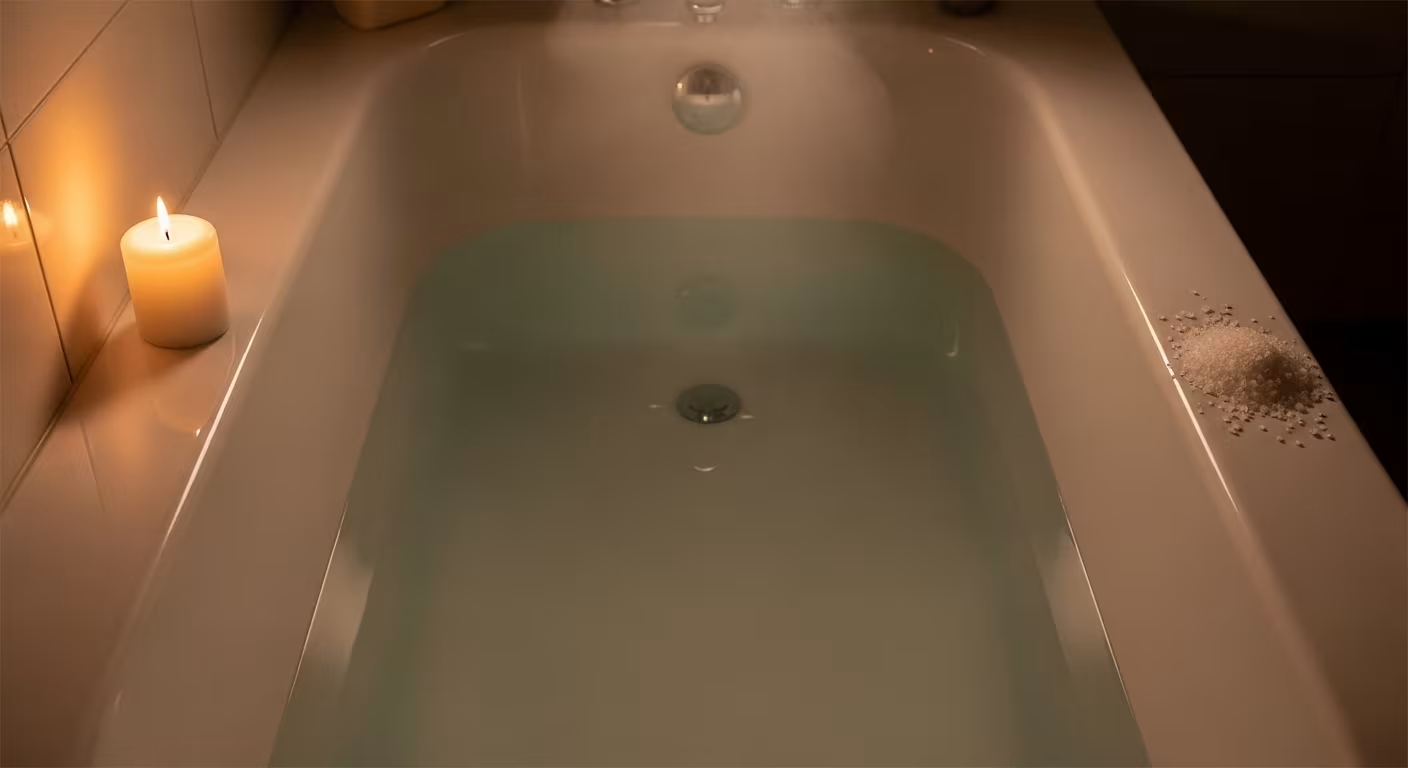

A bath taken as a ritual rather than as hygiene accomplishes something different. The water temperature, the duration, the absence of other things competing for your attention — these conditions exist briefly and are available to most people without any expenditure. Most people use the bath to get clean and leave. The ritual version is a deliberate, bounded period of rest that uses the same infrastructure for a different purpose.
The Physiological Case for Warm Baths
Warm water immersion has documented physical effects that are relevant regardless of any spiritual framing. Warm water at roughly 104°F causes blood vessels to expand, lowering blood pressure temporarily and improving peripheral circulation. The muscle relaxation that follows full-body warm water immersion reduces the kind of low-grade tension that accumulates in the neck, shoulders, and lower back during desk work and commuting.
The sleep benefit is the most consistently documented. Body temperature follows a predictable cycle tied to the circadian rhythm — it drops in the evening as the body prepares for sleep. A warm bath one to two hours before bed raises body temperature briefly; as the body cools back down after leaving the bath, it mimics and reinforces the natural pre-sleep temperature drop, making it easier to fall asleep and improving the quality of initial sleep stages. This effect is well-supported in the research on thermal comfort and sleep.
What Makes It a Ritual Rather Than a Routine
The difference between a bath and a bath ritual is primarily about attention. A routine bath involves thinking about other things while the bath fills and while you're in it. A ritual version involves choosing to be in the bath rather than being in the bath while somewhere else mentally.
Practically: phone left outside the bathroom, or at minimum, face-down on the other side of the room. Something to look at or listen to that you've chosen deliberately — music, a podcast, silence. A temperature and duration that's specific enough to feel like a decision rather than a default.
The framing matters because it changes what the experience produces. A bath taken while scrolling through a phone produces the same physical effects on the body. It doesn't produce a mental rest. The ritual version does both.
Temperature and Duration
The research on thermal baths generally uses water between 100°F and 104°F. Above 104°F increases cardiovascular stress, particularly for people with heart conditions. Cooler than that — in the 98-100°F range — is comfortable for longer soaks and still produces muscle relaxation and the sleep-timing benefits. Most household water heaters are set to 120°F, which requires mixing with cold water to reach a comfortable bath temperature.
Duration of 20 to 30 minutes is sufficient for the full physical effect. Longer isn't proportionally better — after 30 minutes, the temperature benefit plateaus, and the additional time is simply time in the water.
What to Add (and What's Optional)
Epsom salt is the addition most commonly associated with bath rituals. Magnesium absorption through the skin is disputed in scientific literature — the evidence that soaking in Epsom salt produces meaningful magnesium supplementation is not strong. The benefit, such as it is, is primarily the salt's effect on water quality and the ritual meaning it carries for some people. It's optional.
Essential oils dissolved in a carrier oil and added to the bath create a mild aromatherapy effect from the steam. Lavender is the most commonly used for relaxation purposes; eucalyptus for respiratory effects. A few drops in a tablespoon of carrier oil (olive oil, almond oil) is sufficient. Essential oils added directly to water without a carrier don't disperse evenly and can cause skin irritation in concentrated patches.
A bath pillow, bath tray, and other specialty accessories are widely marketed and entirely optional. The bath itself produces the effect; accessories are environmental choices.
Creating the Conditions for an Actual Rest

Lighting is the variable that changes a bath environment most significantly. A bathroom lit by standard overhead lighting — the kind that's convenient for applying makeup or examining a wound — is the wrong light for rest. A bath with the overhead light off and one lamp or candle lit changes the room entirely. The lower light level reduces visual stimulation and helps the nervous system shift toward a parasympathetic state more quickly.
Music or absence of sound both work, depending on preference. What doesn't work for the ritual purpose is content that demands active attention and response — a phone call, a video that requires watching, a conversation. The bath is one of the few contexts where doing nothing is the correct thing to be doing.
Frequency and Realistic Expectations
A bath ritual twice per week produces meaningful cumulative benefit for sleep quality and stress management in people who otherwise have limited downtime. Daily is fine if the schedule permits; less frequent works too. The frequency that's sustainable is the correct frequency.
The realistic expectation is not dramatic transformation but a reliable period of genuine rest with measurable sleep benefits on nights when it's used. That's a more modest claim than bath product marketing tends to make, and it's also more honest. The bath doesn't fix systemic exhaustion, relationship stress, or overcommitted schedules. It produces a reliable 25 minutes of actual stillness in circumstances where that's otherwise difficult to achieve, and it makes the subsequent sleep easier. That's the actual value.
The Products That Do and Don't Matter
Bath products are marketed as essential components of the ritual, but the ritual doesn't depend on them. A basic bath is effective with nothing added. What changes the experience isn't product variety — it's the conditions around the bath: the light, the temperature, the absence of other demands.
If bath products are meaningful to you — a particular scent, a preferred texture — one or two items used consistently are more ritualistic than a collection of options that requires deciding each time. The act of choosing produces cognitive load; consistency removes it.
One bath product used deliberately each time becomes associated with the ritual and reinforces the transition into rest mode. Ten products used interchangeably don't.
Adapting When a Full Bath Isn't Available
Not every household has a bathtub. A shower can produce some of the same benefits with different constraints — standing rather than immersed limits muscle relaxation, and the duration is typically shorter. For the sleep-timing effect, a warm shower taken one to two hours before bed still produces the temperature rise and subsequent drop that supports sleep onset, even without full immersion.
If the goal is specifically deep muscle relaxation, a foot bath — a basin of warm water at the right temperature — addresses the portion of the body that carries significant tension (feet, calves, ankles) without requiring a bathtub. This is a genuinely useful adaptation rather than a compromise, because foot immersion draws blood flow to the lower extremities and produces noticeable whole-body relaxation that is disproportionate to the relatively small area of skin involved. A basin, hot water from the kettle mixed with cold, and twenty minutes produces a meaningful portion of the full bath benefit at any location — and requires no dedicated plumbing at all.

Comments
No comments yet.