
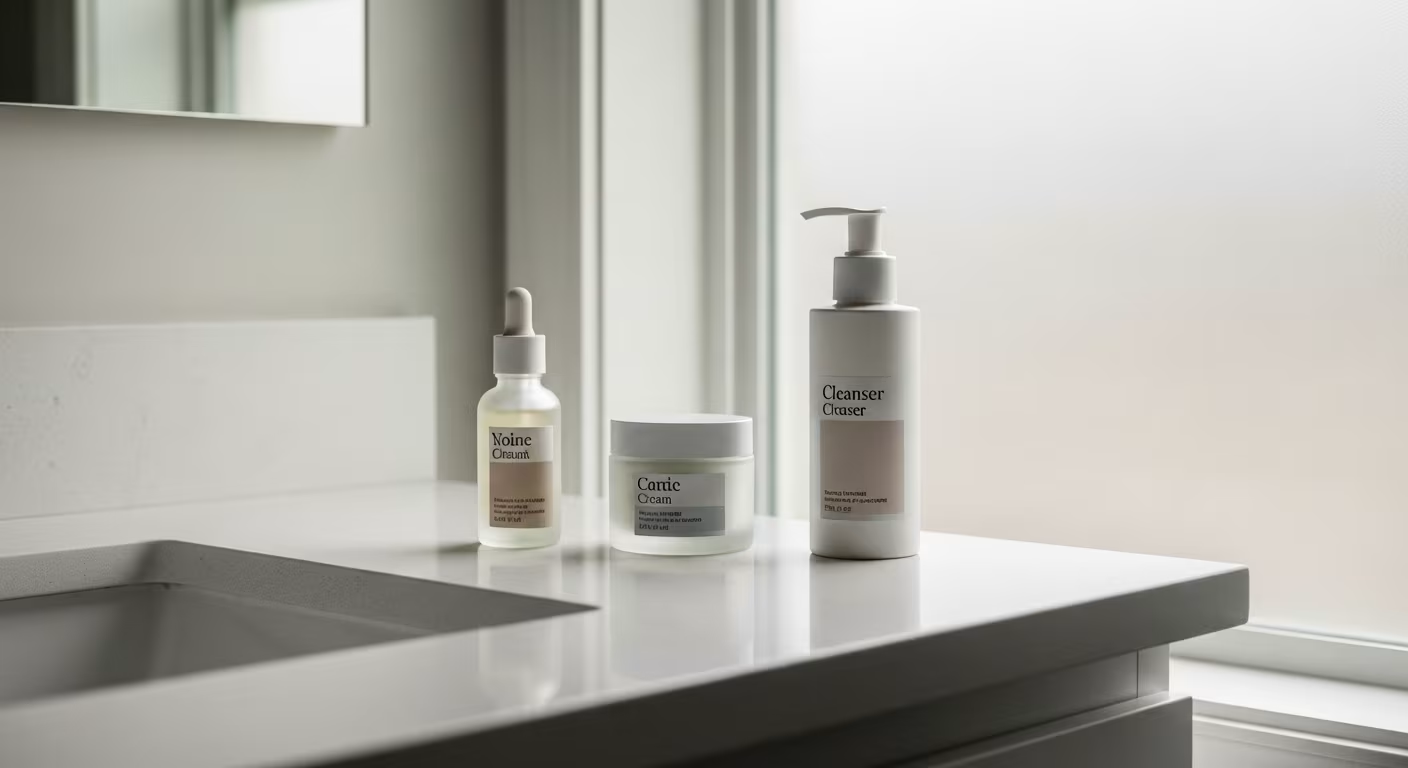

Why Three Steps Cover Most Needs
The skincare industry's economic model depends on selling products beyond what skin actually requires. Serums, toners, essences, exfoliants, eye creams, and targeted treatments multiply the steps in a routine and the products on a shelf. Dermatologists' consensus on what most skin actually needs for health and appearance is considerably simpler: cleansing to remove impurities, moisturizing to maintain barrier function, and SPF protection to prevent UV damage.
These three steps address the primary mechanisms by which skin is damaged and the primary conditions required for its health. Everything else addresses specific conditions — active acne, hyperpigmentation, specific signs of aging — rather than the baseline that healthy skin requires. For skin without active conditions requiring targeted treatment, the three-step routine is genuinely sufficient.
The practical benefit of a shorter routine is adherence. A three-step routine is completed in under five minutes. A seven or ten-step routine requires substantially more time and mental overhead, and is more likely to be abbreviated or skipped when time is short. Consistent adherence to a simple routine produces better outcomes than inconsistent adherence to an elaborate one.
Step One: Cleansing

Cleansing in the morning serves a different purpose than cleansing at night. Evening cleansing removes makeup, sunscreen, environmental pollution, and the accumulated sebum of the day — all of which genuinely require removal. Morning cleansing removes what accumulated overnight: sweat, sebum secreted during sleep, and any residue from nighttime skincare products.
For most people, a gentle, low-pH cleanser used in the morning is sufficient. Cleansers that are too stripping — many foaming cleansers and traditional bar soaps — remove more than the surface impurities and disrupt the skin's acid mantle, which is part of its protective barrier. Stripping cleansers trigger increased sebum production and can worsen rather than improve most skin concerns.
Some people with dry skin or skin that does not accumulate significant sebum overnight find that water alone is sufficient for morning cleansing, reserving cleanser for the evening routine. This is not inadequate skincare; it is appropriate adaptation of the routine to what the skin actually needs.
Step Two: Moisturizing
Moisturizer maintains the skin's barrier function by supplementing its natural oils and providing ingredients that attract and retain water in the skin's outer layers. The primary active ingredients in effective moisturizers — humectants like glycerin and hyaluronic acid, emollients like fatty acids, and occlusives like petrolatum that seal moisture in — are found in products across a wide price range.
The price of a moisturizer correlates poorly with its efficacy. Simple drugstore moisturizers containing well-established barrier-supporting ingredients often outperform expensive alternatives in comparative studies. The active ingredients that produce results are well known and not proprietary; what expensive formulations typically offer is aesthetic experience — texture, scent, packaging — rather than meaningfully better skin outcomes.
Choosing a moisturizer appropriate for skin type matters more than choosing a specific brand. Oily skin generally needs lighter, non-comedogenic formulations. Dry skin benefits from richer formulations with more occlusive ingredients. Sensitive skin benefits from fragrance-free formulations with minimal ingredient lists. Getting this match right makes more difference than the specific products chosen within each category.
Step Three: SPF

UV exposure is the primary external cause of premature skin aging, including wrinkles, loss of elasticity, uneven pigmentation, and increased skin cancer risk. Daily SPF application, including on overcast days and during indoor work near windows, is the single most effective intervention available for preventing these changes over time.
SPF 30 provides adequate protection for most people in most circumstances — it blocks approximately 97% of UVB radiation. SPF 50 blocks approximately 98%, a meaningful difference only in high-UV conditions like extended outdoor activity. The common assumption that higher SPF numbers provide proportionally higher protection overstates the difference between SPF 30 and SPF 50 in ordinary daily use.
Mineral sunscreens — using zinc oxide or titanium dioxide — and chemical sunscreens both provide effective protection when applied properly. The primary determinant of protection is application amount: most people apply less than the amount needed for the labeled SPF. A teaspoon of product for the face, applied to all sun-exposed areas, is the standard recommended amount.
Choosing Products That Work

Skincare products work across a wide price range. The active ingredients that produce genuine skin benefits — niacinamide, retinoids, vitamin C, hyaluronic acid, glycerin — are available in effective concentrations in both affordable and expensive formulations. The ingredient list, not the price or the brand, determines a product's potential effectiveness.
Reading ingredient lists and understanding what the primary actives are is more useful than relying on marketing claims. Skincare marketing can describe almost any ingredient in compelling terms, but the actual concentration and specific form of the active ingredient determines whether the product will produce the claimed effect.
Patch testing new products before full adoption prevents the common problem of introducing a product that causes irritation and then not knowing which addition in a routine caused the problem. Introducing one new product at a time and waiting two to three weeks before adding another allows the skin to respond and makes the cause of any reaction identifiable.
Maintaining Consistency Over Months
Skincare results develop over months rather than days or weeks. Most active ingredients — retinoids, vitamin C, even consistent SPF — produce their most significant visible effects over six to twelve months of consistent use. The expectation of rapid visible transformation, which skincare marketing encourages, is responsible for much of the routine-switching that prevents people from accumulating the consistent product exposure that produces results.
A three-step routine maintained consistently for six months produces better outcomes than a six-step routine changed every two months based on new products or trends. Consistency is the variable that produces results, not product novelty or routine complexity.
What Not to Expect from Simple Routines

A three-step routine maintains healthy skin; it does not reverse significant existing damage or treat active conditions. People with active acne, rosacea, hyperpigmentation, or significant signs of aging seeking to address these specifically will benefit from targeted products beyond the three-step baseline. The baseline keeps healthy skin healthy and prevents future damage through consistent SPF application; it is not a treatment protocol for existing conditions.
Dermatologist consultation is appropriate for persistent or significant skin conditions. Over-the-counter products marketed for specific concerns — acne treatments, anti-aging serums, brightening products — vary significantly in their evidence base. A dermatologist can recommend specific ingredients in appropriate concentrations for specific conditions with more precision than product packaging provides.
The three-step approach also clarifies which additional products might genuinely be warranted. Someone who has used a simple routine for three months and identifies a specific remaining concern — persistent dryness, early signs of sun damage, mild hyperpigmentation — can then evaluate targeted additions against that specific need rather than adopting products in response to marketing for concerns that may not apply to their skin.
Adapting the Routine to Seasonal Changes
Skin's moisture requirements change with seasons and climate. A moisturizer appropriate for summer in a humid climate may be insufficient for winter in a dry one. Adapting the moisturizer weight and the amount used seasonally, rather than maintaining a fixed routine regardless of conditions, keeps the three-step approach responsive to what the skin actually needs.
SPF formulation also affects whether people use it consistently. A mineral SPF that leaves a white cast may be avoided in daily use even by someone who understands its importance. A lightweight formulation that integrates easily into the rest of the routine is more likely to be used consistently than one that is logically appropriate but experientially unpleasant. Testing several options to find one that is genuinely comfortable to wear every day produces better long-term SPF adherence.



Comments
No comments yet.