
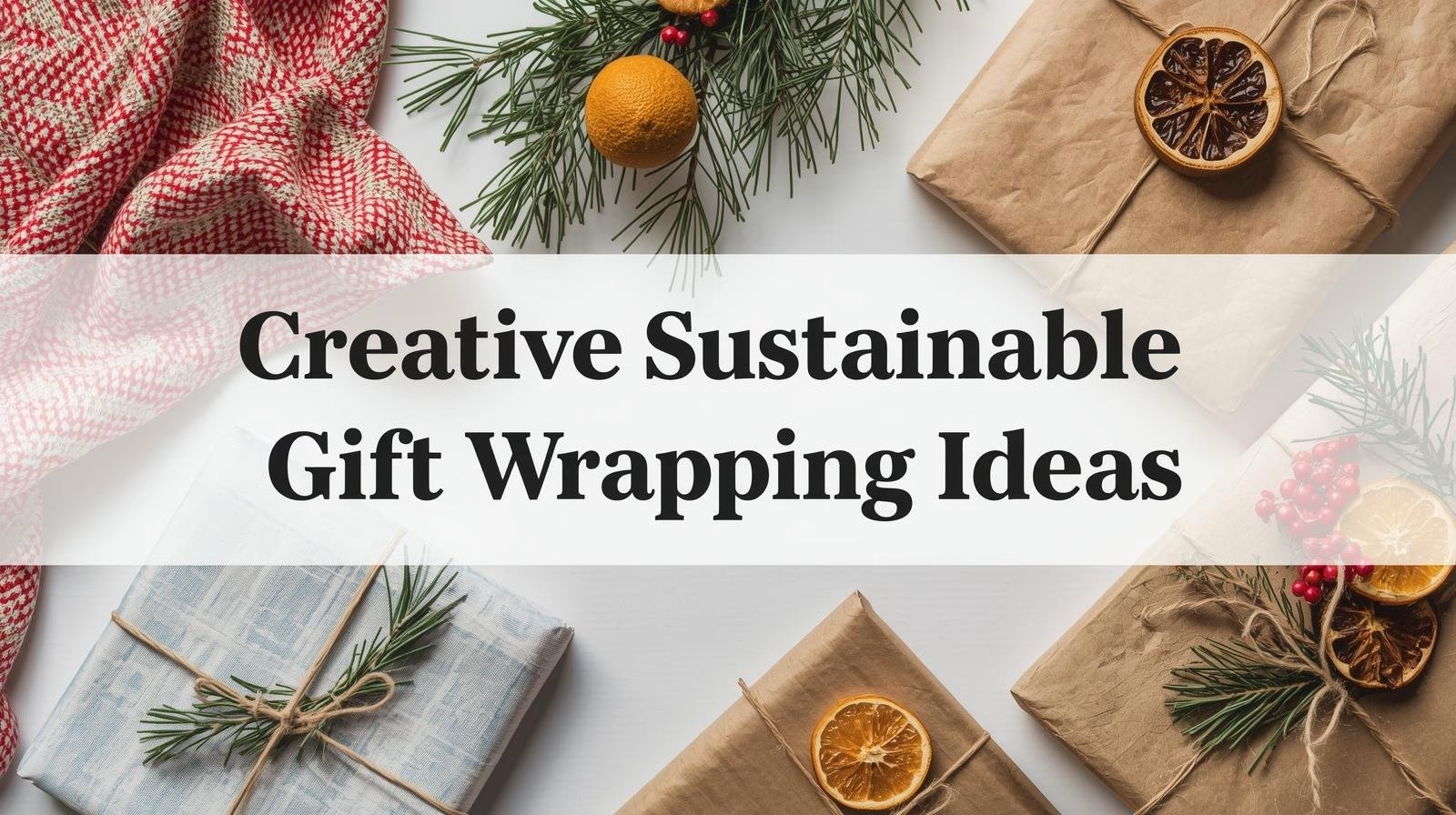

Decorative wrapping paper has a short career: chosen, cut, taped, torn off in about ten seconds, and thrown out. Much of it cannot be recycled at all — foil paper, glitter paper, and most heavily printed papers are composites that get sorted straight to landfill no matter which bin they start in. Estimates of the extra wrapping paper and shopping bags discarded across the US holiday season run into the millions of tons, and almost none of it survives past the morning it is opened.
The alternatives are not a sacrifice. Most of them look better, cost less over a few years, and quietly solve the "where are the scissors and tape at 11 p.m." problem at the same time.
Furoshiki: The Fabric Wrapping Method
Furoshiki is a Japanese technique that wraps a gift in a square of cloth. One piece of fabric — a cotton bandana, a linen napkin, a scarf, a square cut from a bolt — wraps most gifts securely without tape or scissors, ties different ways to suit the shape, and becomes part of the gift, because the recipient keeps the cloth.
Three sizes cover almost everything. A 50cm square handles small gifts like books, small boxes, and bottles. A 70cm square takes medium gifts — folded clothing, a few small items grouped together. A 90cm square manages large or awkward shapes. Pre-cut fabric squares from a fabric shop are cheap, often a few dollars each, and scarves, tea towels, or cloth napkins already in the house do the same job for nothing.
The basic wrap takes about a minute: centre the item on the cloth, bring two opposite corners up and over, and tie them in a knot on top. That is the whole method — no tape, no cut edges, wrinkle-resistant, and structurally sound. Knot the remaining two corners and you have carrying handles. There are more elaborate folds for bottles and odd shapes, but the simple knot wrap covers most rectangular gifts on its own.
The one adjustment worth knowing: for a bottle, stand it in the centre, gather the fabric up around the neck, and tie it off — the same knot, done vertically. For something soft with no fixed shape, the cloth simply hugs it, which is where fabric beats paper outright. Paper needs a box to wrap a jumper neatly; a cloth does not care whether there is a box underneath. Once a household keeps a small stack of squares by the wrapping drawer, furoshiki stops being a technique to learn and becomes the default that happens to also be reusable.
Brown Kraft Paper and Natural Decoration
Plain brown kraft paper — the unbleached kind sold in rolls — is fully recyclable, compostable, and cheap by the roll, often under $10 for enough to last a season. It is also a better surface to decorate than most printed wrapping paper. Write names straight on it in marker, press a rubber stamp along the edge, tuck in a dried leaf or a sprig of rosemary from the garden, and tie it with natural twine or a ribbon saved from an earlier gift.
The look — brown paper, twine, a bit of greenery — reads as intentional rather than grabbed off a shelf, and it photographs well. None of it needs craft skill; marker lettering and a sprig of herb are forgiving techniques. Newspaper works too for anyone who will not mind the presentation, or as an inner layer under something more decorative. The one thing to avoid is glossy magazine pages, which carry the same recycling problems as foil wrap.
Reusable Boxes, Tins, and Bags
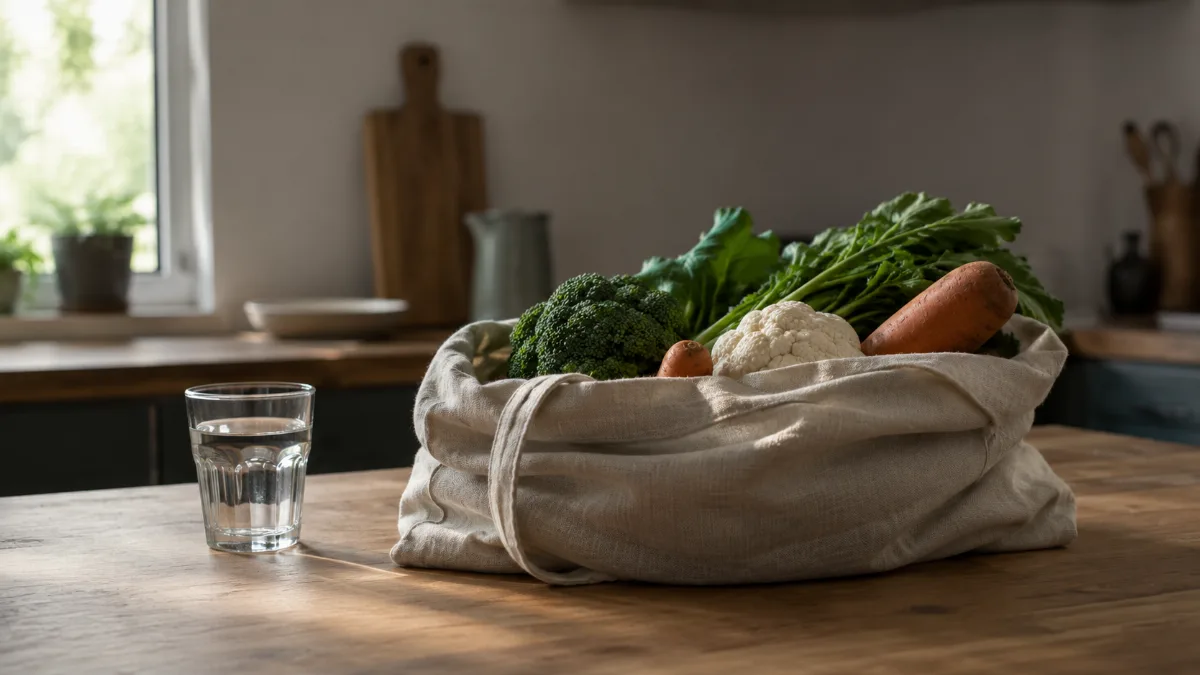
A gift in a tin or a good box is really two gifts: the thing inside and the container. Cookie tins, sturdy boxes, small wooden crates, and quality fabric bags circulate through families and friend groups for years. Someone receives a gift in a nice tin, keeps the tin, and the next year sends something back in it. The container earns its keep many times over.
This only asks for a small, slowly built supply. The habit worth forming: when a gift arrives in a good box or bag, keep it, and when a quality tin comes into the house from a food gift or a nicely packaged purchase, keep that too. Within a year or two most people have more than they need for their own gifting, at no extra cost. For anything that genuinely will not fit a box or bag — a large or awkward item — the furoshiki cloth covers it without needing more storage.
What to Do With Wrap You Already Have
The sustainable response to a half-used roll of conventional wrapping paper in the closet is not to throw it out. Use it. The resources that made it are already spent; binning it and buying something greener just doubles the waste. Reduce first, then replace as things run out — the same order that applies to switching over bathroom or cleaning products.
Wrapping paper you receive can often be reused if it is opened carefully: lift the tape rather than tearing, fold the sheet flat, and store it under a bed or in a closet. Conventional paper in good condition usually survives two or three more wraps before it is no longer presentable, which is two or three rolls not bought.
Tissue Paper and Bags: The Hidden Offenders
Tissue paper — the coloured filler stuffed inside gift bags — is usually too thin and too coated to recycle. It also crushes down to almost nothing and does nothing but decorate. The substitutes are easy: shredded paper from a home shredder is free, useful, and keeps for years; dried moss or leaves suit a natural look; fabric scraps make a more substantial filler that can go back in the drawer afterward.
Gift bags themselves are reusable as long as they are not torn. A paper bag in good condition that goes back into the gift rotation pays for itself several times before it finally gives out. The single most effective change here is to switch bags and tissue for reusable fabric bags, or to skip the filler layer altogether — most adults do not need a gift wrapped inside a layer, inside a bag, inside a box.
Why Most Wrapping Paper Can't Be Recycled

Most wrapping paper fails recycling even when it lands in the right bin. Foil paper, glitter-coated paper, and metallics are composite materials — fibre mixed with plastic or metal — that contaminate paper streams and get pulled out to landfill. Even plain matte paper, if it is heavily taped, often goes the same way. A quick check helps: the scrunch test. Ball the paper up, and if it springs back open it is likely too mixed to recycle; if it stays scrunched, it is probably plain enough for the paper bin. The EPA's guidance on which common household materials are actually recyclable draws the same line.
Tissue paper has the same problem at a smaller scale. Most coloured tissue is too thin and too coated to be accepted, so it is effectively single-use with no second life. Shredded office paper or fabric scraps fill the same gap and then either compost or go back in the drawer instead of the bin.
Matching the Wrap to the Gift
Each method has gifts it handles best, and knowing which saves the late-night improvising. Books, boxes, and bottles are quickest in a small furoshiki square or a length of kraft paper. Soft or awkward items — a jumper, a bundle of small things — go easily in a medium cloth, which forgives shape in a way that paper does not. Food gifts belong in a tin or a reusable box that becomes part of the present. Anything genuinely large is simplest in a big cloth or a kept gift bag rather than a fight with a roll of paper and a dispenser of tape.
The point is not to own one wrapping system but to keep two or three low-waste options on hand so the right one is always within reach. A drawer with a few fabric squares, a roll of kraft paper, some twine, and a small stack of saved tins covers essentially every gift a year throws up, from a paperback to an oddly shaped kitchen gadget.
Ribbon, Twine, and the Small Extras
The decoration on a gift is often where the least recyclable material hides. Plastic curling ribbon, adhesive bows, and glitter tags are all effectively single-use and non-recyclable, and they add up quietly across a season of presents. The low-waste swaps cost little and last for years: a spool of natural jute or cotton twine, fabric ribbon that gets untied and saved rather than cut, and tags cut from last year's cards or from a scrap of the kraft roll.
Saving ribbon is a habit more than an expense. A length of fabric ribbon, untied carefully rather than snipped, comes back around gift after gift, and a small box or tin to keep the saved ribbon and twine in is what makes the habit stick — otherwise the good ribbon disappears into a drawer and gets forgotten. The same tin can hold the saved tags, the sprigs of dried herbs, and the rubber stamp, so the whole wrapping kit lives in one place and the late-night search never happens.
Making the Switch Gradually
The common mistake with sustainable wrapping is buying a whole new kit of "eco" supplies while a closet full of conventional paper sits unused. The old supplies are resources already spent; using them up first beats replacing them. A better order: finish what is on hand, then replace the highest-volume items as they run out. Most homes lean on the same two or three things — a roll of paper, some tissue, a handful of gift bags. Swap each as it goes: a fabric square for the roll, shredded paper for the tissue, a kept tin or box for the bag. The change happens over a few months with no waste and no upfront outlay.
If the budget allows a small head start, three things cover the most common situations and last for years: a set of four to six fabric squares or reusable bags, a roll of brown kraft paper, and a ball of natural twine. Between them they handle nearly every gift that comes up in a year, and none of them ends the season in a bin.
Furoshiki sizing:
| Square | Handles | |
|---|---|---|
| 50 cm | books, small boxes, bottles | |
| 70 cm | folded clothing, grouped small items | |
| 90 cm | large and awkward shapes | |
| Kraft paper | fully recyclable + natural decoration | — |

Comments
No comments yet.