
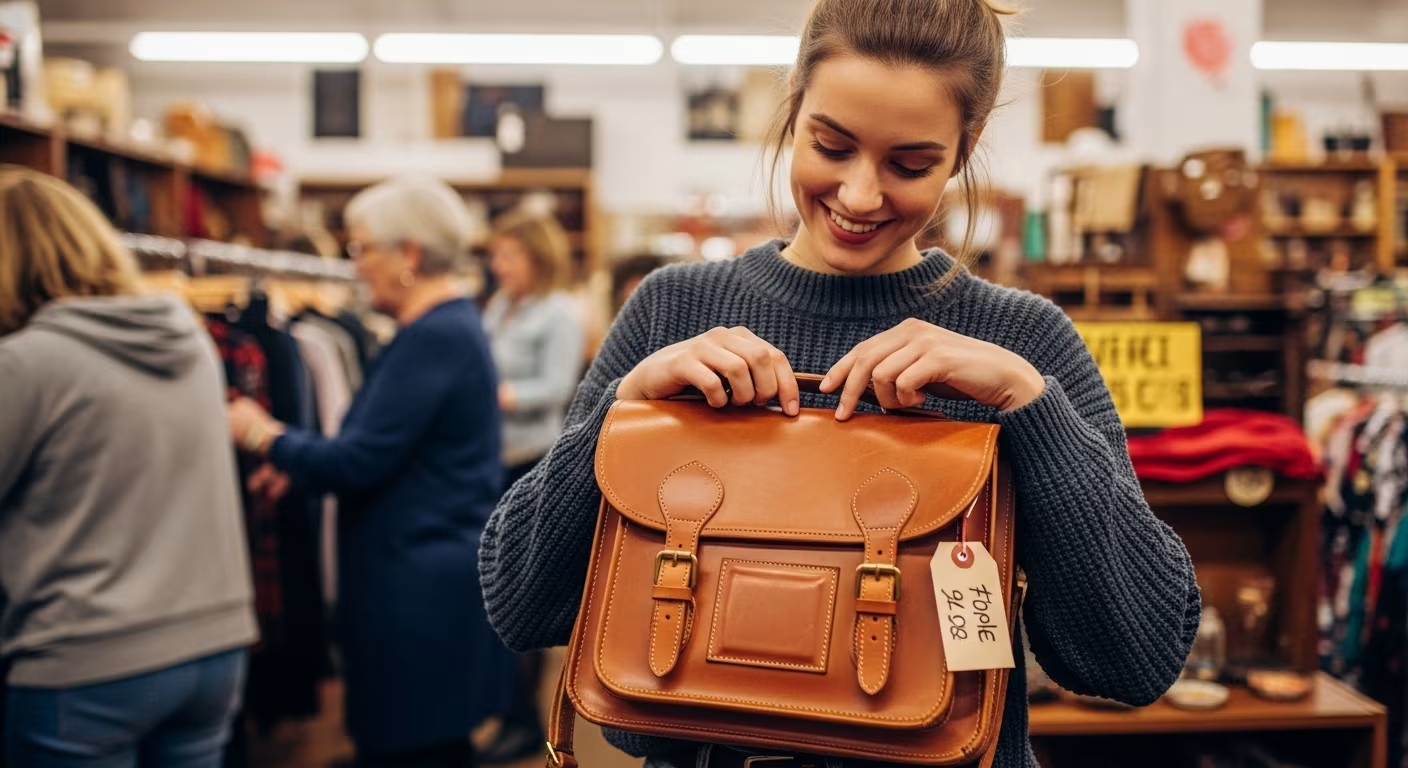

The promise of thrift shopping — quality items for a fraction of retail — is real, but most people never see it delivered, and the reason is method rather than luck. A store full of donated goods rewards a very different approach than a store full of new stock, and the shoppers who come home with a $12 wool coat or a $6 cast-iron pan are usually the ones who walked in knowing exactly what they were hunting for.
Why Thrift Shopping Fails for Most People
The most common failure is browsing without criteria: wandering the aisles with no specific need, picking up whatever looks interesting, and buying things that then join the pile at home. It produces inconsistent results because a thrift store carries what was donated, not what you happen to want. The right item for a vague wish may or may not be on the racks today.
So one good visit gets followed by three empty ones, and the empty visits are read as proof that thrifting is unreliable. It is not unreliable — it is unfiltered. A reliable approach starts with a concrete list of what you actually need, a working sense of what good condition looks like in each category, and the patience to search across several visits and platforms instead of expecting one trip to deliver everything.
Start With a Specific List

Deciding what you need before you walk in changes the whole experience. A specific list might read: a wool winter coat, size medium, in a neutral color; a solid wood dresser roughly 90 to 120 cm wide; a leather belt in brown, 3 cm wide; a cast-iron skillet. Each entry carries enough detail to make a snap judgment at the rack rather than a fresh agonizing decision in front of every shelf.
The list works as a filter, not a shopping order. In a regular store you search for an item and find it; in a thrift store, inventory is unpredictable, so the list tells you what to notice and what to walk past. "Long-sleeved linen or cotton shirt, medium or large, any neutral color, no staining or wear at the collar" is far more useful than "shirt." Keep it on your phone, and update it after each find — remove what you covered, add new gaps as they appear. Over time it becomes an accurate map of what your wardrobe and home actually lack.
Learn What Good Condition Looks Like

The core skill in thrift shopping is condition assessment — knowing which wear is cosmetic and repairable versus which means the item is finished. What counts as a dealbreaker changes completely from one category to the next, so it helps to carry a quick mental checklist:
| Category | What to check | Dealbreaker |
|---|---|---|
| Clothing | Seams, stress points, zipper, buttons, stains | Structural seam failure or fabric worn through |
| Wood furniture | Joints, drawer glides, surface finish | Wobble from failed joints; damaged laminate |
| Books | All pages present, spine, smell | Water damage or a mold smell |
| Cast iron | Surface rust (cleans up and re-seasons) | Deep pitting or a cracked pan |
| Stainless cookware | Flat base — set it on a counter, look for rocking | Warping that won't sit flat |
| Electronics | Powers on and does its core job | No power, or can't be tested before buying |
None of this requires expertise, just a habit of looking in the right place for each type of thing. A minute of checking is the difference between a bargain and a broken object you paid to bring home.
Clothing and Fabric: The Detailed Checks
Clothing rewards close inspection because the price is so low that a small flaw can still leave you ahead. Open stitching along a seam can be resewn; a structural seam that has torn through the fabric usually cannot. Thinning, pilling, or worn-through patches at the elbows, seat, or underarms mark the end of a garment's life. Front-facing stains are generally permanent, and underarm yellowing on white fabric is very hard to reverse. Check that zippers run cleanly and buttons are present and secure.
Fiber matters as much as condition. A natural-fiber garment — wool, linen, cotton, cashmere — in sound structural shape can outlast several fast-fashion replacements even with a little visible wear, which is exactly why quality secondhand clothing is such good value. A merino sweater or a wool overcoat that would run well over $100 new often sits on a charity-shop rack for a fraction of that, priced the same as the acrylic sweater beside it. Read the care label as part of the check: a "100% wool" or "100% linen" tag flags the pieces worth a second look, while a blend heavy in polyester or acrylic is usually the item someone donated because it pilled or lost shape within a season.
Fit is the other reason to try things on rather than trust the size tag. Sizing has drifted over the decades and varies by brand, so an older garment labeled medium may run smaller or larger than a current one. Since returns are rarely an option secondhand, the fitting room is where a bargain proves itself — a coat that fits and a coat that almost fits are very different purchases at any price.
A garment can be assessed in about 60 seconds if you know the order. Seams first: pull gently at the side seam and look for loose threads or puckering. Then the armpits and collar for thinning, discolouration or deodorant damage — the two places wear shows first and the two hardest to repair. Then zips and buttons: run the zip fully and check for a spare button. Then hold the fabric to the light to find pinholes and thinning. Finally the fibre content label — natural fibres and dense weaves survive resale better than thin synthetics.
Two checks are worth doing before buying rather than after: pilling on the surface indicates a fabric that will keep pilling, and a stretched-out neckline or cuff will not recover in the wash. Both are permanent, unlike stains, which frequently come out.
Furniture, Books, and Kitchen Gear
Furniture is where the secondhand savings are largest and the quality gap is widest, because solid wood pieces from decades ago were built better than most new flat-pack equivalents. Check the joints — a loose joint in a real wood frame is often a simple glue-and-clamp fix, while a wobble in a particleboard piece usually is not. Solid wood surfaces can be sanded and refinished; damaged laminate cannot. Test every drawer, and press on upholstery to feel for collapsed foam, which is harder to judge than a fabric that just needs recovering.
Books come down mostly to water: wavy pages, discoloration, or a musty smell are the primary disqualifiers, while pencil notes and a worn spine are minor. Kitchen gear is one of the best secondhand categories of all. Cast iron with light surface rust cleans up and re-seasons like new, which is why a rusty Lodge or vintage pan is a find rather than a pass; deep pitting or a crack is the only real dealbreaker. Enameled pieces like Le Creuset and old Pyrex glass turn up regularly at a small fraction of retail. For knives, look for a sound blade and a tight handle — a dull edge re-sharpens, but a cracked blade or loose handle does not.
In-Person Versus Online: Match the Channel to the Item
Physical thrift stores are best for categories where you need to handle the item to judge it — clothing, furniture — and where prices are lowest. Goodwill, the Salvation Army, and independent charity shops usually price by category rather than by brand, which is exactly why a well-made piece from a good label often costs the same as a low-quality one beside it. Estate sales and garage sales push prices even lower and face the least competition for tools, furniture, and household goods, at the cost of more time spent hunting.
Online resale suits specific searches and brand-name hunts, and categories you can judge from photos — books, particular appliances, known models. The platform depends on what you want: Poshmark, Depop, and ThredUP for clothing; Facebook Marketplace and OfferUp for furniture and general household goods; eBay for collectibles and specific items. A saved search on a resale platform quietly tracks a hard-to-find item for weeks so you can wait for the right price instead of settling.
Timing helps in person, too. Many charity shops restock the floor on a regular cadence and rotate tags by color to move older stock, so asking a clerk which day new inventory lands and when the color-tag discounts run can turn a random visit into a targeted one. Shopping in wealthier neighborhoods tends to surface better-quality donations, and the end of a season is when people clear out the opposite season's clothing — winter coats appear in spring, and that is when they are both cheapest and least picked over. If you want to dig deeper, ENERGY STAR is a good starting point.
Pricing Across Resale Channels
Secondhand pricing follows a pattern worth knowing. Charity shops price by broad category, so prices are low and consistent but turnover is unpredictable and the quality floor is uneven — you do the sorting. Curated resale shops filter and price more carefully; you pay more, but damaged items are weeded out before they reach the floor and your browsing time drops. Online platforms vary the most, with the same item ranging from below thrift-store pricing to near full retail depending on the individual seller's expectations.
Matching the channel to the purchase is what makes secondhand shopping fast instead of frustrating. An urgent, cheap, hands-on need points to a charity shop; a specific brand or model at a fair price points to a saved online search you let run in the background.
Knowing the typical discount off retail for each channel prevents overpaying, which is the most common thrift disappointment:
| Channel | Typical price | Best for |
|---|---|---|
| Charity shops | 10 to 25% of retail | Books, basics, kitchen items, unpredictable finds |
| Consignment stores | 30 to 50% | Brand items already authenticated and checked |
| Online resale apps | 25 to 50% | Specific items you can search by name and size |
| Estate sales | 10 to 30% | Furniture, tools, kitchenware in quantity |
| Free listings and curbside | 0% | Furniture you can collect the same day |
The channel should match the item, not the habit. Searching for one specific thing works online where you can filter by size and brand; discovering things you did not know you wanted works in person, where filtering is impossible. Using the wrong channel for the goal is why thrifting feels like a waste of time to some people and a treasure hunt to others.
Patience Is the Real Skill
Everything else supports the one skill that actually makes thrifting work: patience. The specific item you need may not appear on the first visit or the first search. The person who keeps a running list, checks platforms regularly, and drops into a couple of stores over a month reliably finds what they need — at a steep discount and with far less environmental cost than buying new. See our guide to sustainable shopping for the broader buying framework thrift fits inside.
The secondhand find takes longer to surface than the new one, but it costs less and carries a lighter footprint. Trading time for money and impact is the fundamental deal thrifting offers, and it pays best for the shopper willing to let the search run rather than forcing a result today.

Comments
No comments yet.