


The Morning Reactivity Loop
The first thing most people do after waking is reach for the phone. Email, social media, news, messages — the content varies but the shape is identical. Before a single deliberate thought about the day ahead, attention gets handed to whatever arrived overnight from other people and other contexts.
This is not a small habit. The first minutes after waking are a genuinely different state — a stretch of unusual openness in which whatever enters attention tends to set the tone for what follows. Filling that window with notifications, comparison, and other people's demands sets a reactive tone that can hold for hours. And it compounds: the more often the phone is the first thing you touch, the more firmly the brain ties waking to checking, until reaching for it feels as automatic as reaching for a glass of water — done before any decision gets made.
What a Phone-Free First Hour Changes

The difference between a morning that starts with the phone and one that doesn't isn't mainly about productivity. It's about the quality of attention available for the first tasks of the day, and about who sets the agenda for that attention. A morning that begins without the phone begins with what's already in your own mind — what you remember from yesterday, what today holds, how you feel, what matters to you — instead of with what matters to other people and other systems.
Over a week or two, the shift becomes noticeable in a specific way: mornings feel longer. Not because more time exists, but because the time that does exist gets used with presence rather than processed in a reactive fog. Most of the friction comes from a handful of the phone's bedroom jobs, and each has a simpler replacement.
| What the phone does in the bedroom | Simpler replacement |
|---|---|
| Wakes you with an alarm | A basic alarm clock — cheap, no notifications |
| Tells you the time overnight | The same clock, no glowing screen |
| Handles a possible urgent message | Charge it in the next room; genuine emergencies are rare |
| Fills the first quiet minutes | Coffee, a short walk, a few written notes |
Building the Phone-Free Window
The real obstacle isn't motivation, it's proximity. A phone charging beside the bed gets reached for before you're fully awake, so the fix is architectural rather than a matter of willpower. Charging it in another room is the single most effective change: when it isn't within arm's reach, it can't be checked before you get up, and the act of getting up breaks the automatic sequence. Most people find the pull to check is strong for the first few days and clearly weaker after a week.
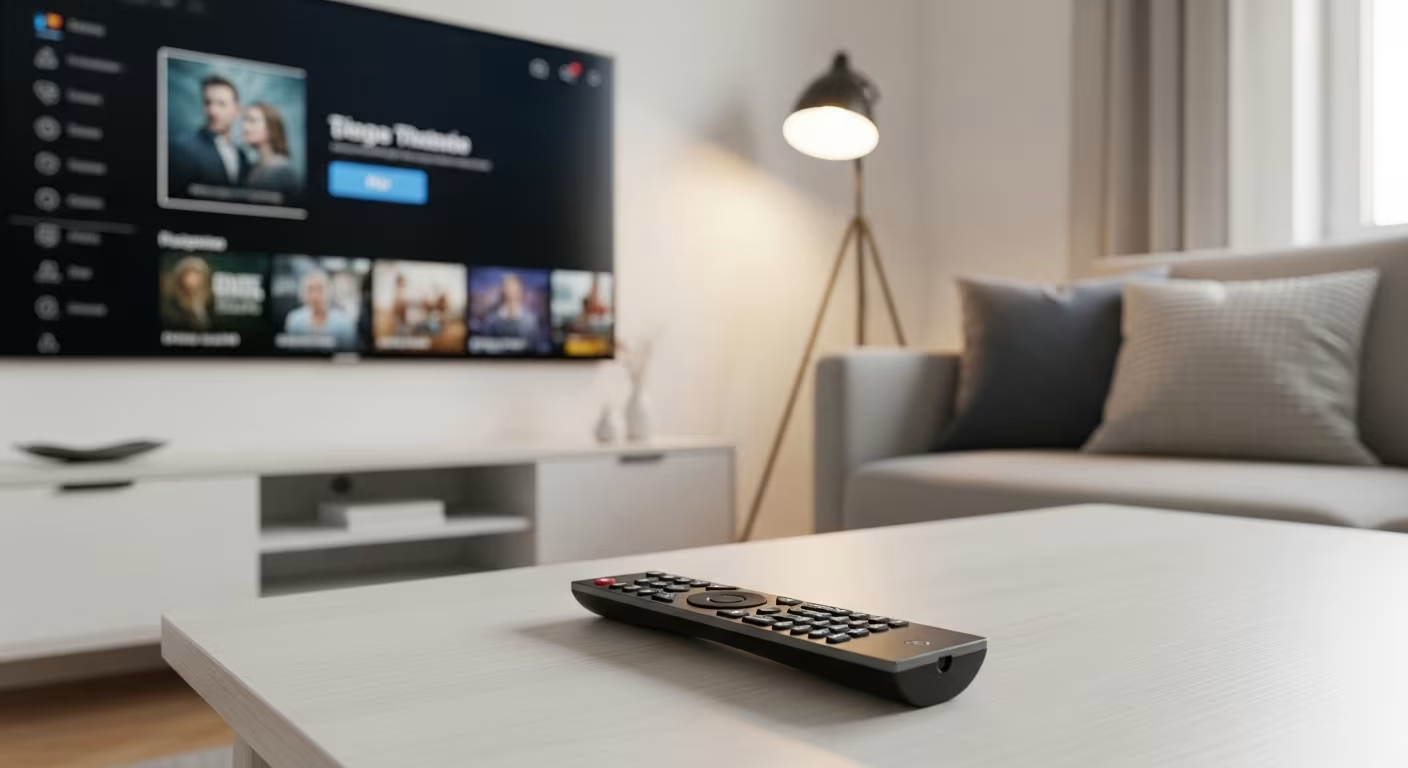
A basic alarm clock takes over the one job the phone was supposedly needed for in the bedroom. It costs a few dollars, needs no charging, produces no notifications, and does exactly that one thing. With the alarm handled, the phone has no remaining reason to spend the night on the nightstand.
Starting at 60 minutes fails for most people. A 15-minute window that holds every day beats an hour that collapses on day three, and it can be extended by 5 minutes a week once it is automatic — reaching 45 to 60 minutes in about two months without any single step feeling difficult.
Three mechanics remove most of the friction. Charge the phone in another room, which addresses the reach-for-it reflex before it happens rather than after. Buy a separate alarm clock, since "I need it for the alarm" is the reason the phone stays on the nightstand. And decide the night before what the window is for — coffee and a book, a walk, stretching — because an undefined window gets filled by the phone regardless of where it is charging.
Filling the Time, and Handling the Resistance

The habit holds better when there's something to move toward, not just something to move away from. A loose morning structure — making coffee without distraction, sitting quietly for ten minutes, reading a few pages on paper, writing a short note about the day, or taking a brief walk — makes it far more durable than trying to fill the time with nothing. The specific activity matters less than its character; anything done with full attention produces a different starting state than the fractured attention of checking. The point is to begin the day in a chosen direction rather than a reactive one, which is also the spirit behind a calmer daily routine.
Most people hit real resistance in the first week, and it shows up as practical worry: what if something important arrived overnight, what if someone needs me? Test it against the record. Over the past year, how often did anything requiring an immediate response actually land between midnight and 7 a.m.? For most people, almost never. The urgency is a product of the habit, not the frequency of real emergencies. Telling the few people who might need you that you check messages after 7:30 rather than the instant you wake sets expectations without meaningfully reducing your availability — and almost everyone finds it completely reasonable once they hear it. It is worth cross-checking against NIH News in Health.
It helps to expect the resistance rather than be surprised by it. The first two or three mornings, the hand will reach for a phone that isn't there, and there may be a low hum of feeling out of the loop. That feeling is not a signal that something is wrong; it's the habit registering its own absence, and it fades on roughly the same timeline as the impulse to check — strong at first, noticeably quieter within a week. Naming it in advance takes most of its power away.
Making It Stick

A common reason phone-free mornings collapse after a strong start is that they're framed as deprivation — a thing removed — rather than a new way of beginning. The more durable framing defines what the morning is for, not just what it excludes. A morning built around one or two consistent practices — a short walk, a few written lines, a cup of coffee made and actually tasted — is far steadier than one defined only by the absence of a screen. The phone-free window gives the chosen practice room to exist; the practice gives the morning its shape. After two or three weeks the pattern stops requiring an active decision each day and simply becomes what mornings are.
The change often gets noticed by the household before the person who made it. A partner used to someone distracted and half-present through the first hour tends to register the shift to calm and attentive before you do. That's not a reason to perform it, but it's worth knowing the effect reaches past you: the quality of morning interactions changes when one person in them isn't quietly attending to a screen. The phone still gets checked eventually. The only question is whether it happens before or after the morning has had a chance to begin on your own terms.
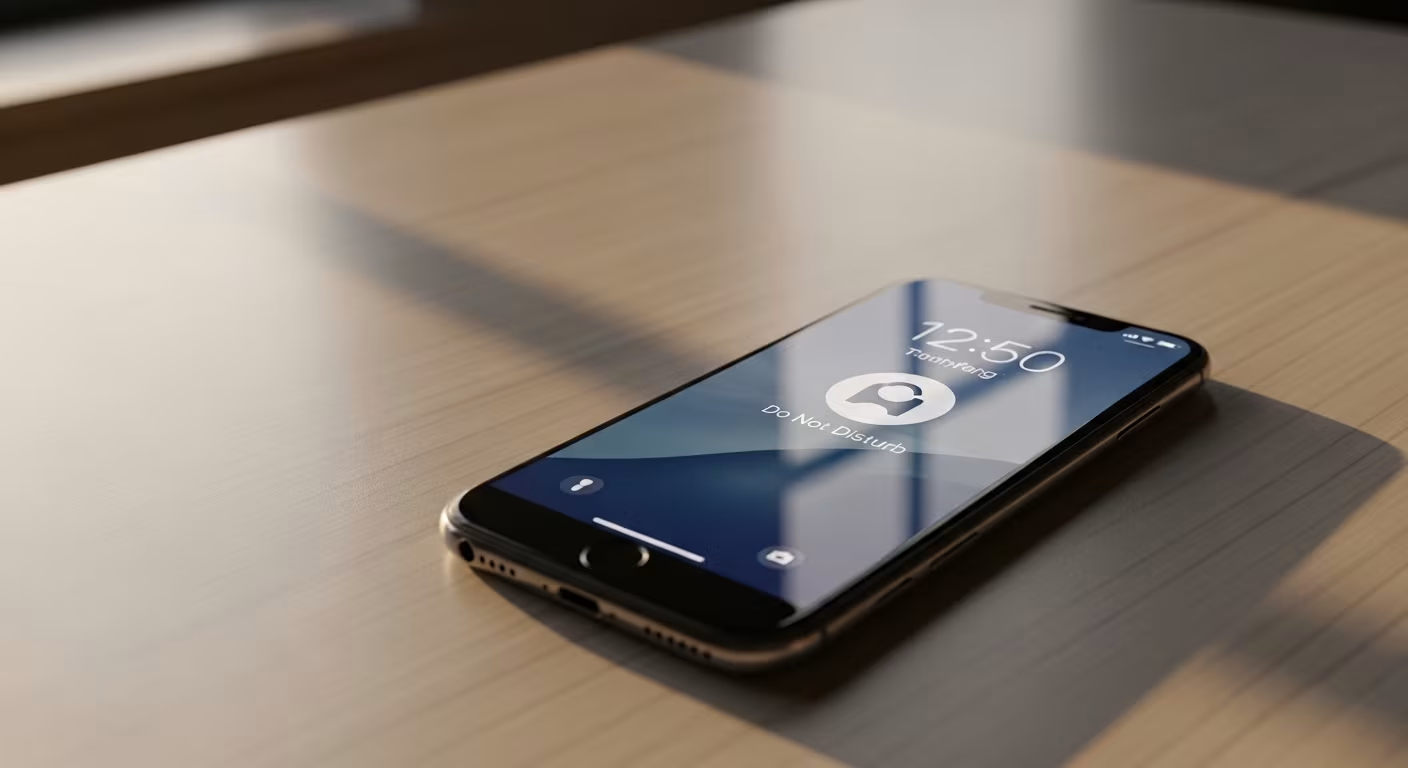
Two settings support the habit rather than relying on intention. A scheduled focus or bedtime mode that runs from bedtime until the end of the window means notifications do not arrive during it — visible notifications are the main reason the window breaks. And moving the most-checked apps off the home screen adds a search step, which is enough friction to interrupt an automatic action.
Expect an adjustment period of about 2 weeks. The first few mornings tend to feel oddly long, which is the point: the window is returning time that was previously consumed without registering, and the discomfort is the sensation of that time becoming noticeable again.

Comments
No comments yet.