


The Real Shift: From Volume to Timeline
Sustainable shopping is not a greener version of the same shopping behavior. It is a different relationship to buying altogether. Ordinary consumer shopping organizes itself around volume, frequency, and novelty — more things, more often, newer. Sustainable shopping organizes itself around durability, genuine need, and infrequent replacement.
The change is not mainly about which brands to reward or which labels to scan for. Those matter at the margins. The primary variable is how often you buy at all, whether each purchase meets a real need, and whether the item is built to last long enough to justify having been made. An expensive, ethically produced jacket bought and discarded within a year does more harm than a moderately made one kept for a decade. Time in use is the number that dominates every other factor.
The Waiting Practice

The single most effective practice is putting time between wanting something and buying it. A waiting period — thirty days for significant purchases, twenty-four to forty-eight hours for small ones — separates impulse from need better than any rule about brands or budgets. Most impulse wants fade once the urgency behind them drains away. The item that felt essential in the store or the checkout flow usually feels optional a month later, and the one still genuinely wanted after thirty days is far more likely to be a real need than a reaction to a good display or a well-timed ad.
The wait does a second job: it makes room for research. Thirty days is enough to compare options, read reviews spanning more than the first week of ownership, check secondhand sources, and identify the version that actually fits rather than the one that happened to be in front of you. A keep-a-list habit helps here — note the wanted item and the date, and revisit it when the window closes. Most lines on that list quietly expire, which is the point.
A delay scaled to price does most of the work: 24 hours for anything under about $50, 7 days from $50 to $200, and 30 days above that. Keep the intended purchase on a written list with the date added. The list itself becomes the evidence — most people find that a large share of items are no longer wanted when the waiting period ends, which is more persuasive than any rule.
Two conditions make the delay hold. Remove saved payment details from the sites you buy from most, since one-click checkout exists specifically to close the gap the delay is creating. And unsubscribe from retailer emails, which are timed to produce urgency during exactly that window.
What "Better" Actually Means
"Better" in this context means durability and repairability first, not prestige or price. A well-built garment that can be mended and worn for fifteen years beats an expensively branded one whose proprietary construction can't be serviced. A tool with replaceable parts beats a cheaper one that becomes landfill the moment a single component fails.
In clothing, the signs of durability are concrete: natural fibers or high-quality blends, finished seam allowances, buttons anchored with a shank or generous thread, patterns that match across seams, and reinforcement at the stress points — shoulders, underarms, waistbands. Turn a garment inside out and these are visible in seconds. In household goods, look for metal over plastic where the stress is high, reviews that speak to longevity over several years rather than first impressions, available spare parts and repair support, and a warranty the company actually honors. These checks take a minute and predict which purchase you'll still be using when the cheaper alternative has been replaced twice.
Secondhand as the Default

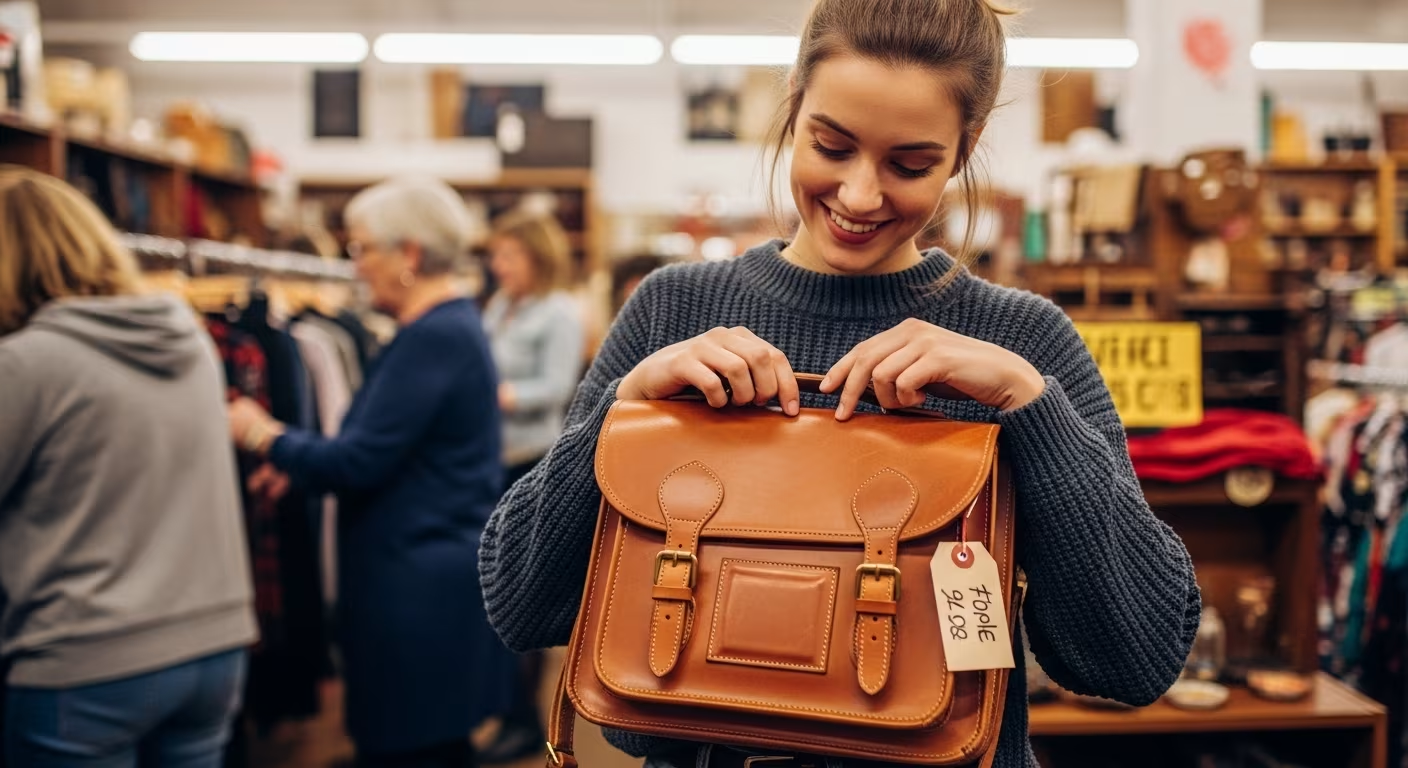
Before buying new, check the secondhand market for the category. Buying used skips the entire production cost of a new item — the raw materials, the manufacturing energy, the shipping — and extends the life of something already made. Some categories reward this reliably: tools, furniture, kitchen equipment, sporting goods, musical instruments, and certain clothing (denim, wool, outerwear) all show up in quantity, in good condition, at steep discounts from new.
The search that works is targeted, not hopeful. Identify the specific makes or models known to be durable, then search resale platforms for those exact items rather than browsing generically and waiting to be inspired. A saved search for two or three specific models will surface a good buy far faster than scrolling categories, and it keeps the purchase anchored to something you already decided was worth owning.
The Use-Case Audit
Before any significant purchase, state the specific use case out loud. Not "I might need this" but "I will use this in these circumstances, at this frequency, for this purpose." That single sentence filters genuine needs from aspirational ones with unusual reliability.
Most purchases that end in regret or disuse would have been caught here. The camping gear bought for the trip that never happened. The appliance for a cuisine cooked twice. The exercise equipment acquired optimistically and used rarely. Each would have failed an honest audit of actual planned use. The audit also sets the right specification: a tool for occasional light use doesn't need professional-grade construction, while one for daily heavy use does. Matching the purchase to the real use case — rather than the fantasy version of your life — produces better-suited items at more appropriate prices, and fewer of them.
Repair Before Replacement

The audit includes repair as an option before replacement. Most items that feel done need only maintenance or a minor fix: a device whose battery can be swapped, a garment with an opened seam, a shoe with a resoleable sole, a chair with a joint that needs re-gluing. The repair economy — cobblers, tailors, electronics shops, furniture specialists — exists in most cities and often costs less than replacing the item. The decision tree is short: can it be repaired, and is the repair cost-effective against replacement? If both are yes, repair. Building the reflex to ask before you shop is what keeps a fixable item out of the bin. It also compounds over time — the shoes resoled twice, the coat rezipped, the blender given a new gasket all quietly push the next purchase years into the future, which is where the real reduction in consumption comes from. A small kit of basics at home extends this further: a needle and matching thread, a bottle of fabric glue, spare buttons, and a tube of shoe adhesive handle a surprising share of everyday failures without a trip to any specialist at all.
Repair is usually cheaper than the replacement and frequently faster than shopping for one. Typical examples worth knowing: resoling good shoes costs a fraction of replacing them and can be done several times; replacing a laptop battery or a phone screen extends a device by years; furniture joints re-glue with wood glue and clamps; clothing repairs — a seam, a zip, a button — are among the cheapest interventions available.
Two resources make this practical. Repair cafés operate in many towns as free volunteer-run sessions for small appliances, clothing and bicycles. And most manufacturers publish spare parts and service manuals, while independent repair guides cover a large number of consumer devices step by step — enough that a screen replacement is a realistic 40-minute job rather than a specialist one.
Shopping Less Often
Beyond the quality of any single purchase, cutting shopping frequency cuts the total opportunity for impulse buying. Consolidate trips instead of making frequent small ones. Shop for specific needed items rather than browsing. Remove the friction-free purchase paths — saved cards in apps, one-click ordering, the retailers whose emails exist to manufacture occasions to buy. Each removed shortcut adds back a small pause, and pauses are where unnecessary purchases die.
The pattern that results: buy less often, weigh each purchase, default to secondhand, buy better when buying new, and use what you own until it is genuinely worn out. Held consistently, that pattern reduces the footprint of consumption more than any brand or material choice made inside a high-volume buying habit. It is worth cross-checking against the GSA's Sustainable Facilities Tool.
A Personal Condition Guide for Secondhand
The most common reason a secondhand purchase disappoints is fuzzy standards going in. Resale platforms use condition labels — excellent, good, fair — but sellers apply them inconsistently, so the label alone tells you little. Writing your own standards down removes the ambiguity. For clothing, note in advance which flaws you can accept and which you can't: fading at stress points might be fine in casual denim but not in a dress shirt; pilling on a sweater's body might be a dealbreaker while pilling at the cuffs is fine if you roll them. Deciding this before you shop shuts down the in-the-moment rationalizing that talks you into the wrong item.
For footwear, sole condition is the check that matters most. Upper leather can usually be cleaned or restored; a worn-through sole cannot. Inspect thickness at the ball and heel and confirm the insole is intact — excellent uppers over a dead sole are not a good buy at any price. And know the categories to skip secondhand entirely: items with safety functions (bicycle helmets, car seats, climbing harnesses), where invisible degradation is the risk, and technical sportswear whose moisture-wicking or waterproof properties may already be washed out even if it looks fine. Knowing where used makes sense and where new is worth the cost is what makes the whole approach durable rather than a phase you abandon after one bad purchase.
The price-scaled delay:
| Price | Wait |
|---|---|
| Under ~$50 | 24 hours |
| $50–$200 | 7 days |
| Above $200 | 30 days |
| Plus | check spare parts + repair guides before buying |

Comments
No comments yet.