

What the Rule Actually Does
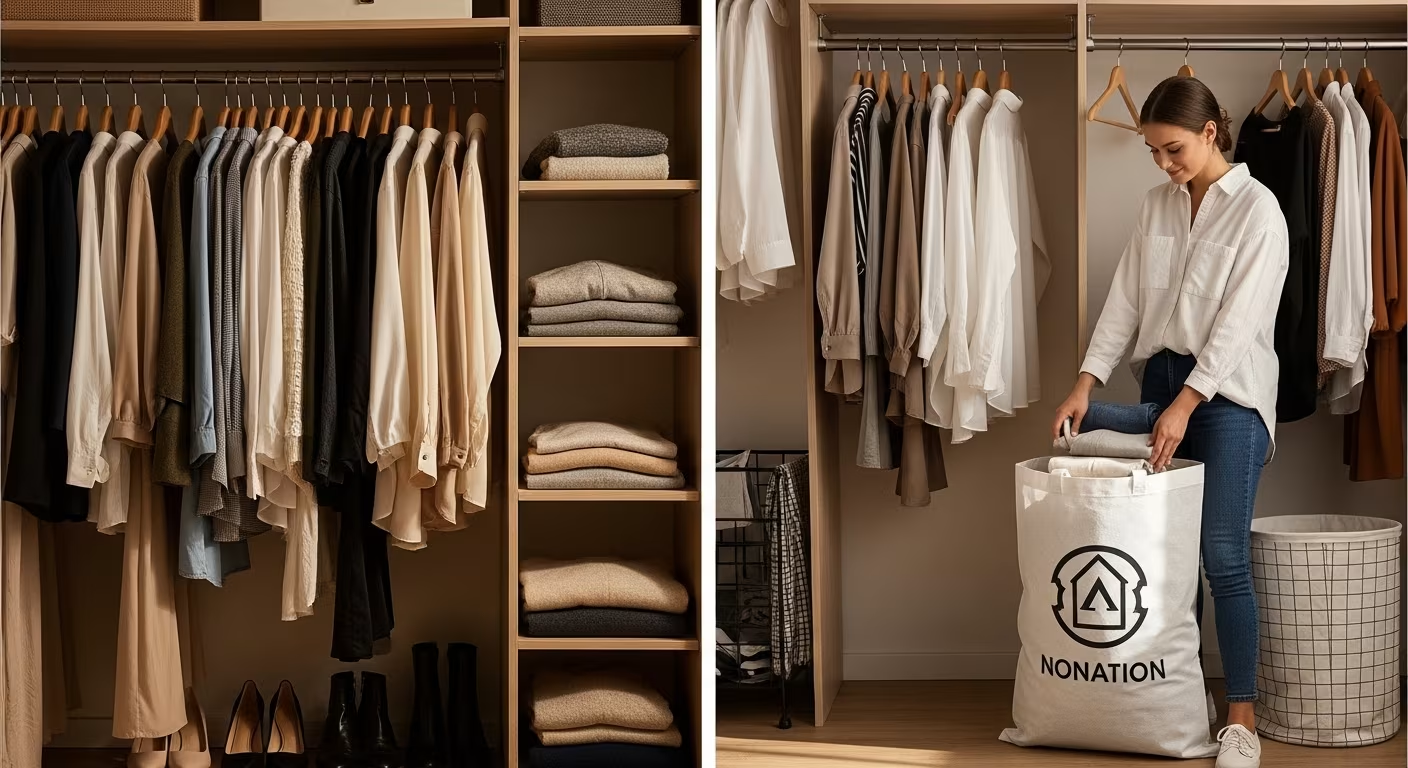
The one-in-one-out rule does exactly one thing: it caps a category at its current size. Something new comes in, something already there goes out, and the total never climbs. The slow creep that fills most homes (the drawer that gets a little fuller every month, the closet that takes a little more effort to navigate every year) simply doesn't happen when every arrival is matched by a departure.
What makes the rule stick is that it needs almost nothing. No tracking app, no bins, no labeled system, no weekend set aside. It asks a single question at the one moment that actually controls accumulation, the point of acquisition: what leaves when this arrives? Most households never ask it. Things arrive as purchases, as gifts, as free items grabbed from a giveaway pile, and things leave only when a decluttering session eventually happens. The gap between arrival and departure can run years. One-in-one-out collapses that gap to zero.
Applying It Category by Category
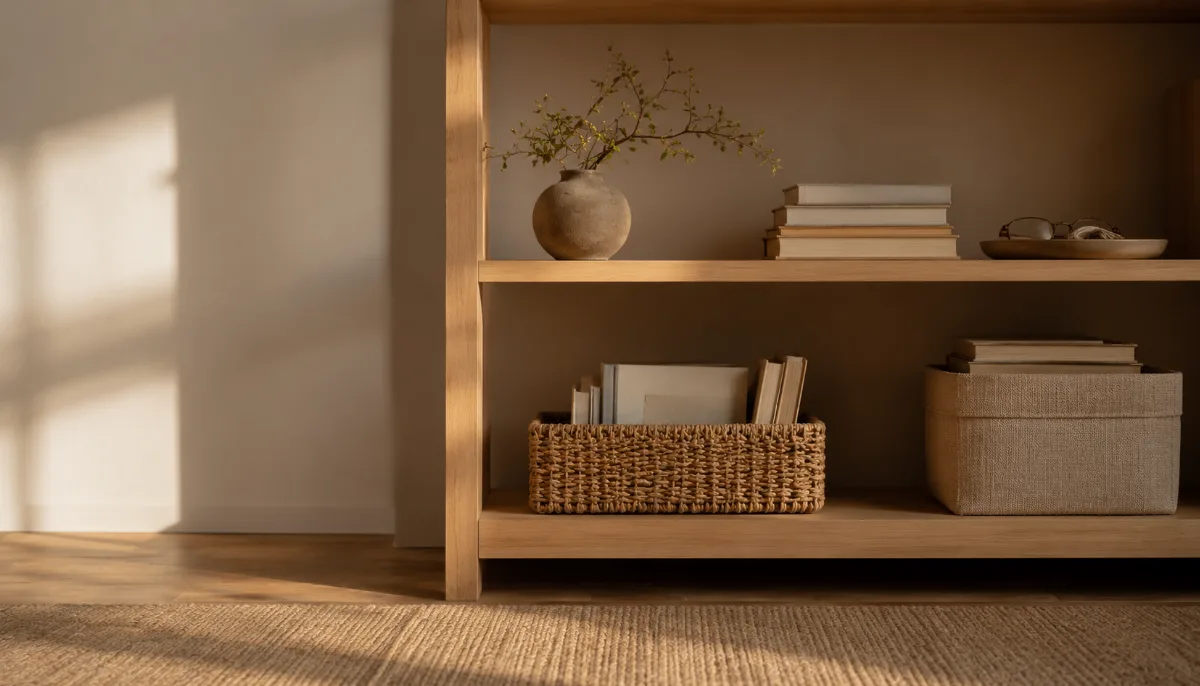
The rule works best applied within a category rather than across the whole house. A new shirt releases an old shirt, not an unrelated gadget. A new skillet releases an old skillet. Swapping across categories quietly lets one grow while another shrinks, which defeats the point: you want each type of thing held at a size that fits your actual use. For a deeper reference, see University of Missouri Extension.
Some categories are easy entry points. Clothing is the classic starting place because the swap is obvious and the category size stays flat: buy one T-shirt, retire one T-shirt. Books work the same way, and so do kitchen tools, bathroom products, and kids' toys, which multiply fast without anyone noticing. The rule matters most, though, in the slow-turnover categories where each item is bulky, such as furniture, appliances, and large equipment. Applied to furniture, one-in-one-out means the new sofa doesn't cross the threshold until the old one is sold or hauled off. That takes real timing, but it heads off the classic trap where the old couch stays "just for now" and lives in the basement for three years.
A concrete way to run it: pick two or three categories where accumulation actually bothers you rather than trying to police everything at once. For most homes those are clothing, mugs and glassware, and children's toys, because all three arrive constantly and rarely get a deliberate cull. Set a mental ceiling for each (say, twelve everyday mugs for a family of four) and let the rule hold that ceiling. When the fourteenth mug shows up from a work event, two go to the donation box the same week. The ceiling isn't sacred, but naming it turns a vague "we have too many mugs" into a decision you can actually execute in thirty seconds at the cabinet.
The rule works differently depending on how fast a category turns over, and applying one version everywhere is why it usually gets abandoned:
| Category | Version that works |
|---|---|
| Clothing | Strict one-in-one-out, same type — a shirt for a shirt |
| Books | One-in-one-out, or a fixed shelf limit instead |
| Kids' toys | One-in-two-out, applied before birthdays and holidays |
| Kitchen tools | Strict, and by function rather than by count |
| Consumables | Exempt — food, toiletries and cleaning supplies |
| Sentimental items | Exempt, with a fixed container limit instead |
The two exemptions matter as much as the rules. Applying the rule to consumables produces nonsense, and applying it to sentimental items produces resentment; a single labelled box per person with a hard size limit handles that category better than any in-out arithmetic.
Gifts and Free Things: The Hard Case
The rule gets awkward around gifts and freebies, because a gift carries the weight of the relationship behind it. A present you'll never use still feels like a referendum on the person who gave it, and letting it go feels like a comment on them rather than a decision about your shelf space. The reframe that helps: keeping an unused gift in a drawer for years is not gratitude, it's a storage choice. The giver wasn't hoping their gift would sit boxed and forgotten. Passing it to someone who will actually use it honors the gesture more than warehousing it does.
One practical tactic softens the gift problem before it starts: a low-drama holding period. A gift you're unsure about goes into use or into a labeled box for a set stretch, say three months. If you never reach for it in that window, it moves on with far less guilt than an on-the-spot decision would carry, because you've given it a fair trial rather than an instant verdict. That small buffer respects the relationship and your shelf space at the same time.
Free items are the same dynamic in a lower key. Because they cost nothing, they read as pure gain, but they still occupy space and demand upkeep. The tote bag from the conference, the extra mug from a promo, the hand-me-down blender you already own a version of, each one earns the same question a purchase would: what goes out to make room for this? The honest answer for most freebies is that nothing should come in at all, which is the cleanest version of the rule.
When One-In-Two-Out Makes More Sense
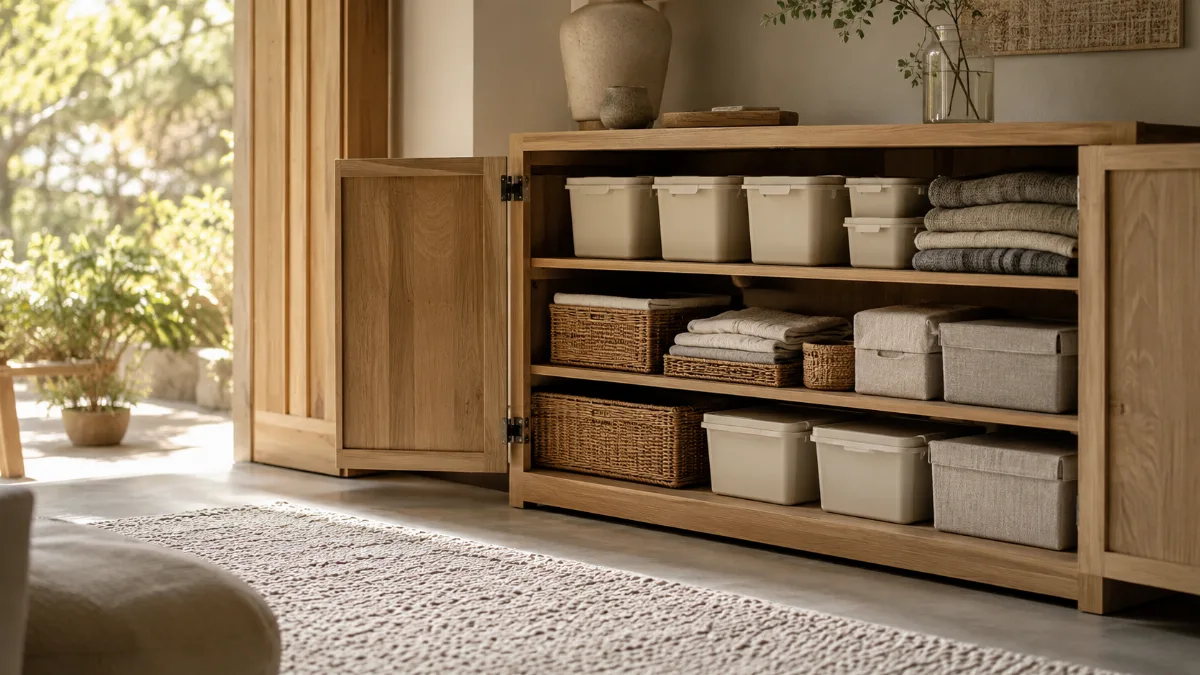
If you've just finished a decluttering pass and still feel over-supplied, run one-in-two-out for a while: two items leave for every one that enters. The total shrinks over time instead of holding steady. This is the setting for a household that's on the right track but hasn't hit a size that feels genuinely right yet. A reasonable stretch is a season or two, long enough to reach your target, then you downshift to plain one-in-one-out as ongoing maintenance. The switch matters: one-in-two-out is a reduction tool, not a permanent state, and treating it as forever tends to tip into a different kind of anxiety.
The Rule as a Buying Filter
The rule's most underrated benefit shows up before anything enters the home. Asking "what will I release if I buy this?" attaches a real cost to a purchase, and that cost isn't just money. If the honest answer is "I'd get rid of the one I already have," you've turned an impulse into a direct comparison: keep the current version, or buy the new one and let the current one go. That comparison usually exposes the truth, which is that the pull toward a new version of something you already own is driven by novelty or a good ad, not by any real gain in function. The current jacket works fine; the new one is just newer. Because the cost of storing one more thing is invisible at the register, the rule makes it visible and stops purchases that would otherwise happen on autopilot. See our guide to mindful purchasing habits for the broader approach to managing what enters the home in the first place.
The rule does its most useful work before the purchase rather than after. Naming what will leave — the specific item, not the category — turns an abstract decision into a concrete one, and roughly half of intended purchases stop there because no item comes to mind.
Adding a delay strengthens it further, scaled to price: 24 hours for anything under about $50, a week for $50 to $200, and 30 days above that. The delay costs nothing and works on the mechanism most purchases rely on, which is the gap between wanting something and needing it being filled immediately.
When the Rule Feels Too Rigid
Sometimes a strict one-for-one swap is plainly wrong. A new baby genuinely requires more of certain categories. A new hobby needs equipment with no equivalent to trade away. A real upgrade in one area justifiably expands it. These exceptions are legitimate, and the rule should bend for them. The principle underneath isn't that category sizes must be frozen forever, it's that they should change on purpose rather than by drift. Growing a category because your life actually changed is a decision; growing it because stuff arrives and nothing leaves is just accumulation wearing a justification.
The test for any exception is a single honest question: am I expanding this on purpose, with a clear reason, or am I just not applying the rule right now? That question separates a real exception from the rationalization that lets a good habit quietly erode without you ever admitting it slipped.
Built into daily life, one-in-one-out stops being a rule you consciously enforce and becomes reflexive, the "what goes out?" question firing automatically the moment something new shows up. That's also where the second-order benefit lives: every item released to a new owner through donation, secondhand sale, or a direct handoff displaces a purchase that person might have made new. Across millions of households, that's a real reduction in demand for new goods. It isn't why most people adopt the rule (they adopt it because their drawers stay closed), but it's a genuine bonus that compounds at scale.


Comments
No comments yet.