
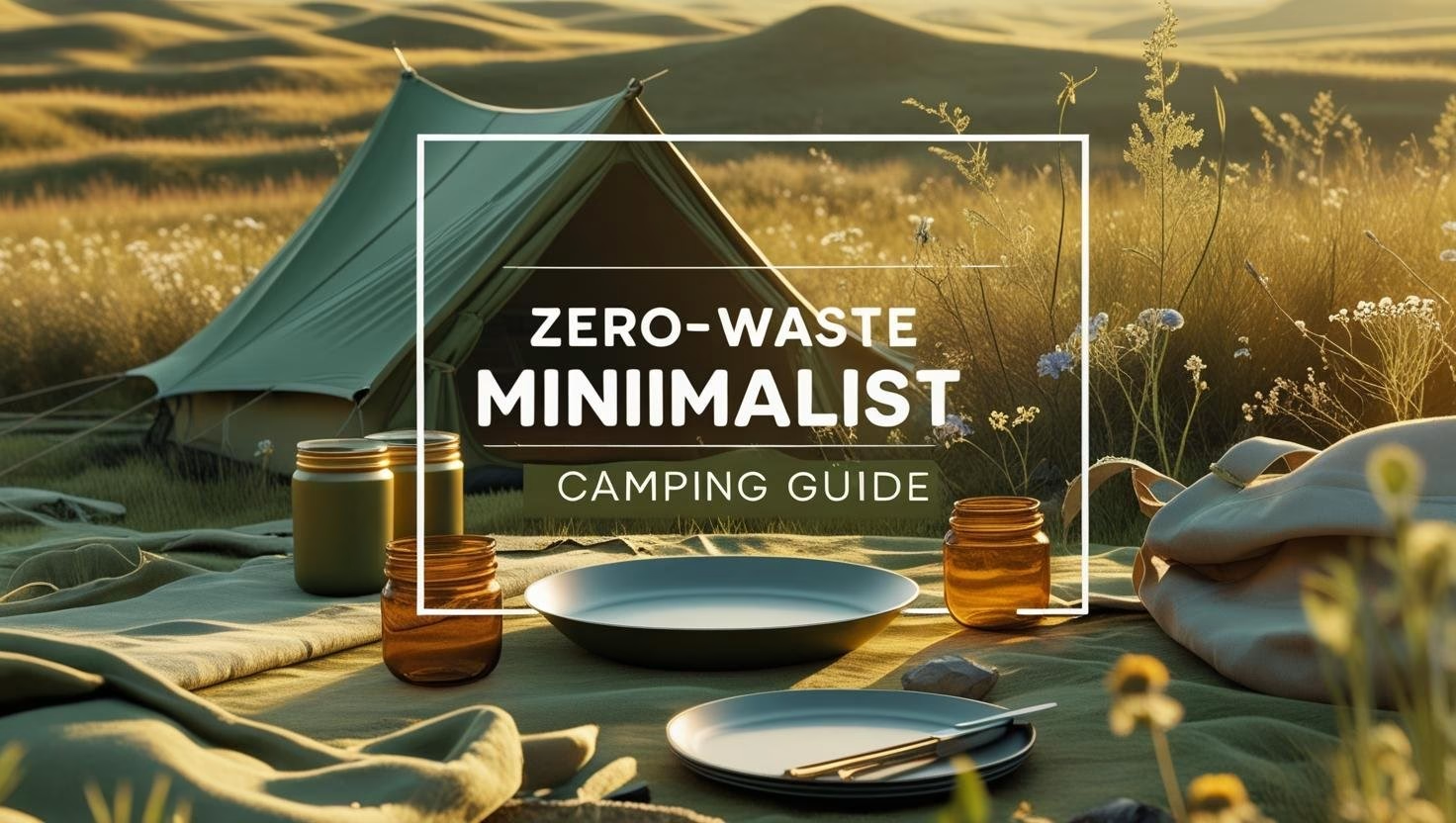

A typical camping trip generates more waste per person than the same number of nights at home. Single-use plates, plastic forks, disposable cups, individually wrapped snacks, grocery bags pressed into service as trash liners, wet wipes: the pile is real, and it is obvious the moment you have to carry it back out of a backcountry site. That reframes the whole problem. Zero-waste camping is not a matter of conviction; it is a packing problem, solved before you leave the driveway. Swap the disposable defaults for durable gear once, plan the food so its packaging never comes, and most of the waste category disappears in advance.
Reusables That Replace Disposables
The core swaps pay for themselves within a season or two and weigh less than the disposables they replace. Paper plates cost about $8 a pack and never stop costing; two to four enamel or stainless plates run roughly $15 once and last for years at about a quarter-pound each. Plastic cutlery gives way to a single titanium spork, around 3 ounces and effectively indestructible, or a small stainless utensil set. Paper towels become a stack of flat-pack cloths or an old cotton t-shirt cut into rags, rinsed and dried between uses. The table below covers the standard exchanges.
| Disposable default | Reusable swap | Approx. weight / cost |
|---|---|---|
| Paper or plastic plates | Enamel or stainless plates (2–4) | ~0.25 lb each / ~$15 set |
| Plastic cutlery | Titanium spork or steel utensil set | ~3 oz / $10–20 |
| Paper towels | Flat-pack cloths or cut-up t-shirt rags | Negligible / near-free |
| Disposable trash bags | Reusable nylon stuff sack for trash | ~2 oz / $8–15 |
| Single-use fire starters | Flint striker or beeswax-and-shaving starter | ~2 oz / $5–15 |
None of these ask you to carry more. A titanium spork and two enamel plates take less space and weight than a stocked pack of paper plates, and the fire striker outlives every plastic-wrapped fire cube you would otherwise buy and discard.
Planning Food So the Packaging Never Comes
Most camping waste comes from food packaging rather than gear, so the highest-leverage move happens in your kitchen before departure. Pre-portion at home into reusable containers instead of bringing full-size packaged goods that shed wrappers all trip. Trail snacks go into a silicone bag or small tin rather than a box of individually wrapped bars. Oats, nuts, and dried fruit measured and combined at home collapse three separate packaging sources into one breakfast with none.
Whole produce needs no packaging at all: apples, oranges with the peel on, whole carrots, a head of cabbage, all transport well and leave only compostable scraps. A pound of pasta or rice decants into a reusable bag with cooking instructions written on a card if you need them. The Leave No Trace principle of pack-in, pack-out applies to food scraps as much as to wrappers. Fruit peels, nutshells, and coffee grounds left at a well-used site are not "natural" in that context; they alter the ground and draw wildlife. Everything organic goes into the trash sack or, where permitted, a designated backcountry container.
Campfire Management: Clean and Safe Are the Same Practice
Fire mistakes, improper extinguishing, accelerant, ash piles left at unmarked spots, do environmental damage well beyond litter, and the zero-waste practice turns out to be the safe one. Use only existing fire rings; do not build new ones or scatter the ones already there. Burn wood fully to ash before you put the fire out, since partially burned wood smolders and smokes afterward and leaves carbon material that decomposes far slower than complete ash.
Extinguish by pouring water directly on the ash and stirring with a stick until the hiss stops and the residue is cold to the touch. "I think it's out" is not a standard; the National Park Service recommends holding a hand over the ash without touching it and treating any felt heat as a fire that is still burning. Charcoal briquettes produce far more ash and chemical residue than wood and are banned in some backcountry areas, so if you bring a portable charcoal grill, bring a metal container to pack the cold ash out rather than dumping it.
Water Without the Plastic
Single-use plastic bottles are the most visible camping waste and the easiest to eliminate. A 32-ounce Nalgene or similar hard-sided bottle covers drinking water from a spigot or a treated source and lasts for years. For backcountry water from streams and lakes, a filter removes the need for any packaging at all. A Sawyer Squeeze ($30 to $40, confirm current price) threads onto a standard pouch and filters to 0.1 micron, adequate for protozoa and bacteria in most US backcountry, and its manufacturer rating of 100,000 gallons makes it effectively a decades-long purchase.
Iodine tablets and other chemical treatments weigh less and cost less per trip, but they generate small packaging waste and leave a taste some people dislike. Water weight is also the single largest factor in pack weight, so plan your sources along the route, using a mapping tool's water layer or a ranger-station report, and filter at each one rather than hauling a full day's supply from the trailhead. Filtering as you go keeps base weight down and cuts the number of bottles bought and thrown away to zero.
Dishwashing and Cleanup at Camp
Camp cleanup is where good intentions leak the most waste, usually through a roll of paper towels and a squirt bottle of scented dish soap. Both are avoidable. A two-basin system does nearly all of the work with no disposables: one basin of hot water with a few drops of biodegradable soap for washing, one of clear hot water for rinsing. Scrape food residue into the trash sack first so it never enters the wash water, wash with a reusable cloth or a small scrub pad, rinse in the second basin, and air-dry on a mesh sack rather than a stack of paper towels.
Greywater, the leftover wash and rinse water, needs its own discipline, because dumping it in one spot draws animals and leaves a soapy scar. Strain out any food particles into the trash, then broadcast the water widely across durable ground at least 200 feet from any stream, lake, or spring; in a developed campground, use the designated utility sink or greywater dump instead. Keep soap use minimal, since even biodegradable soap only breaks down properly when it is dispersed in soil rather than poured into water. Most camp dishes come clean with hot water and a cloth alone, and the soap is there for the greasy pan, not the whole set.
A single microfiber or cotton cloth, rinsed and hung to dry between meals, replaces an entire trip's worth of paper towels for both dishes and spills. Pack two so one can dry while the other works, and wash both at home between trips rather than carrying a fresh roll each time. It helps to cross-check ideas like these against Recreation.gov's trip-planning tools.
Toiletries and Personal Care
This is the category most people forget to plan, and standard toiletry packaging adds up fast. A single 2-ounce bottle of biodegradable Castile soap handles hand washing, dishwashing, and camp bathing for about a week. Solid shampoo and conditioner bars skip the liquid container entirely and outlast their bottled equivalents per use. A menstrual cup or reusable period products serve any camper managing a period in the backcountry, packing out far lighter than the disposable volume a bear canister would otherwise have to hold.
Toilet paper is packed out as standard practice: a small zip bag keeps used paper separate until you reach a trailhead with trash access. Where burying is allowed, and you should check the specific park's rules, the cathole method, 6 to 8 inches deep and 200 feet from water and trails, handles paper that is single-ply, unscented, and unbleached.
Choosing a Low-Impact Campsite
Not every site carries the same environmental cost. Drive-up sites at high-use campgrounds concentrate impact in one already-hardened spot; staying on those established surfaces keeps the footprint from spreading. In the backcountry, Leave No Trace favors durable surfaces, bare rock, gravel, dry grass, snow, and existing impact areas, because pitching a tent on undisturbed vegetation kills what grows under the footprint even for a single night, and the recovery runs long. Group size matters too: the LNT guideline is 10 or fewer people in most areas, with some designated wilderness holding to lower limits, since larger groups widen trails, compact soil, and expand campsite impact past what the land recovers from quickly.
Turning the Swaps Into a Repeatable System
The reason zero-waste camping fails for most people is not gear; it is that they rebuild the kit from scratch every trip and default back to disposables under time pressure. Fix that once. Keep the reusables, the spork, the enamel plates, the trash stuff sack, the soap bottle, the filter, packed together in a dedicated bin so the low-waste setup is the fastest one to grab, not a project. Before the next trip, refill the Castile bottle, top up the decanted staples, and rinse the trash sack, and the whole system resets in ten minutes. Start with a single swap on your next outing, the plates or the water filter carry the most obvious payoff, and add the rest as each one proves it earns its place in the bin. For the habits that carry over from the trail to daily life, see our guide to a zero-waste kitchen and our sustainable gift-wrapping ideas.


Comments
No comments yet.