
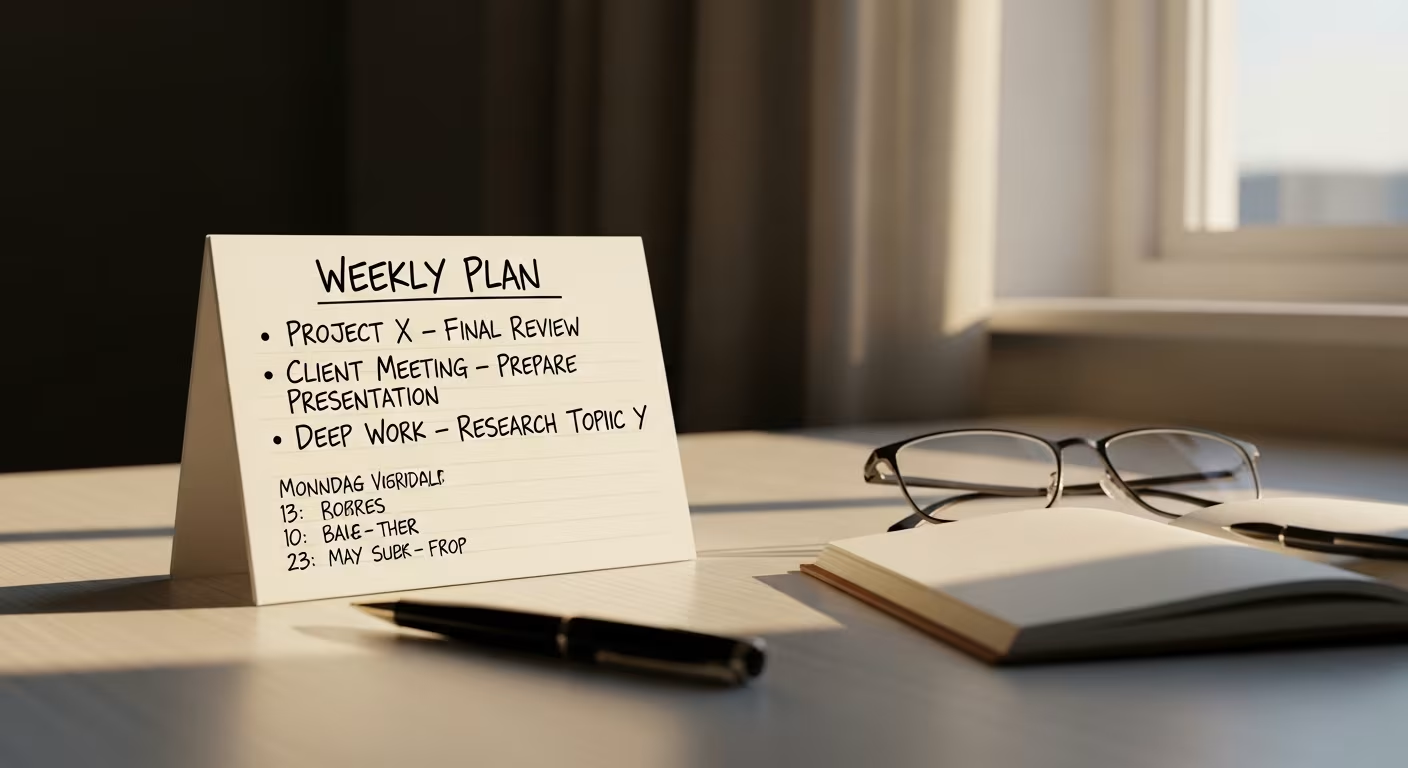

Planning has the same accumulation problem as any closet. The elaborate system — color-coded categories, three review tiers, a capture workflow with tags and contexts — takes a weekend to set up and then charges rent every week just to stay current. By the first genuinely busy stretch, the maintenance cost outruns the value, and the whole apparatus gets quietly abandoned. What survives a hard week is not the most complete system. It is the shortest one.
The version below assumes an ordinary schedule: a job, a household, a handful of recurring commitments. It takes fifteen minutes on a Sunday and about ninety seconds each morning. Nothing here needs an app, though a single note on your phone or a paper index card works fine.
The Fifteen-Minute Weekly Review
One review, three questions, done in the same fifteen minutes each week. That is the entire system.
First: what are the two or three things that would make this week a success? Not the full inventory of everything that could happen — the short list of outcomes that will feel like real progress if they land and like a stalled week if they do not. Draft the tax return, finish the client proposal, take one parent to the doctor. Two or three items, no more. This list is the anchor every later decision points back to.
Second: what is already on the calendar? Look before you add. Most overcommitted weeks happen because someone planned their priorities against a week that was already three-quarters full of meetings, a dentist appointment, and a Friday obligation they forgot about. The calendar is not a wish list — it is a record of time already spent. Reading it first tells you how many discretionary hours actually exist, which is usually fewer than it feels.
Third: what carries forward from last week? Name the unfinished items out loud on the page instead of letting them ride in the back of your mind. The proposal that slipped, the email you never sent, the return you meant to drop off. Written down, they either get scheduled or get dropped on purpose. Left mental, they generate a low background hum of "something's undone" that follows you into Monday.
Fifteen minutes covers all three when the list stays this short. Everything past this point — habit trackers, project boards, someday-maybe files — is optimization. Genuinely useful for people who enjoy planning, entirely optional for everyone whom simplicity serves better.
The Ninety-Second Daily Version

The daily layer is even leaner: each morning, name the one thing that has to happen today for the day to count. Not the to-do list — the single item that makes the day productive regardless of what else does or does not get done.
That one priority works as a tiebreaker. When two tasks want the same 2 p.m. hour, the day's priority wins. When a meeting runs long and the afternoon compresses, the priority is the thing you protect and the rest is what you let slide. A day that ends with the one thing done is a good day even if a dozen smaller items rolled over.
Most people find that naming one priority and defending it produces more finished work across a week than grinding down a ten-item list in order. Focus beats coverage. The long list feels responsible and delivers less.
Capture Only What You'd Otherwise Forget
Systems bloat at the capture stage — the belief that every task, idea, and stray obligation has to be logged somewhere before it evaporates. Comprehensive capture demands either an elaborate filing structure or constant tending of the pile you have collected. It helps to cross-check ideas like these against the American Psychological Association's research on stress and wellbeing.
Selective capture is the alternative: write down only what you would genuinely lose or act on. A task with a real deadline and a clear owner earns a spot. The vague "I should look into that someday" thought does not, and parking it in a system just creates something else to review. For most people the tasks that truly need writing down fit on one short list that needs no categories at all. Write it, do it, cross it off.
Scheduling Beats Listing, and Slips Don't Count
The one habit that moves the needle is treating a priority as a time commitment rather than an intention. A priority with an actual hour blocked in the calendar gets done far more reliably than one that merely sits on a list. Block the two or three weekly priorities before the week fills in around them; a goal that needs three hours gets three hours reserved, not three hours hoped for. This broader practice of deliberate choice — applied to time the same way it applies to possessions — is covered in the guide to intentional living and choices that matter.
Every system gets skipped. Weeks happen where no review gets done, no daily priority gets named, and the work just runs reactively. The right response to a missed week is to run the review the next week — not to treat the gap as proof you need a bigger, stricter system. This is where a short practice quietly wins: a single fifteen-minute review resets it no matter how many weeks lapsed, while the elaborate setup left untended for a month may never get rebuilt at all. Durability comes from being easy to resume, not from being impossible to break.
The whole system, timed:
| Piece | Time | Content |
|---|---|---|
| Sunday review | 15 minutes | three questions, same time every week |
| Q1: success list | 2–3 outcomes, no more | the anchor for every later decision |
| Q2: read the calendar first | before adding anything | discretionary hours are fewer than they feel |
| Q3: carry-overs | schedule or drop on purpose | unwritten items hum in the background |
| Each morning | ~90 seconds | a note or an index card — no app required |



Comments
No comments yet.