
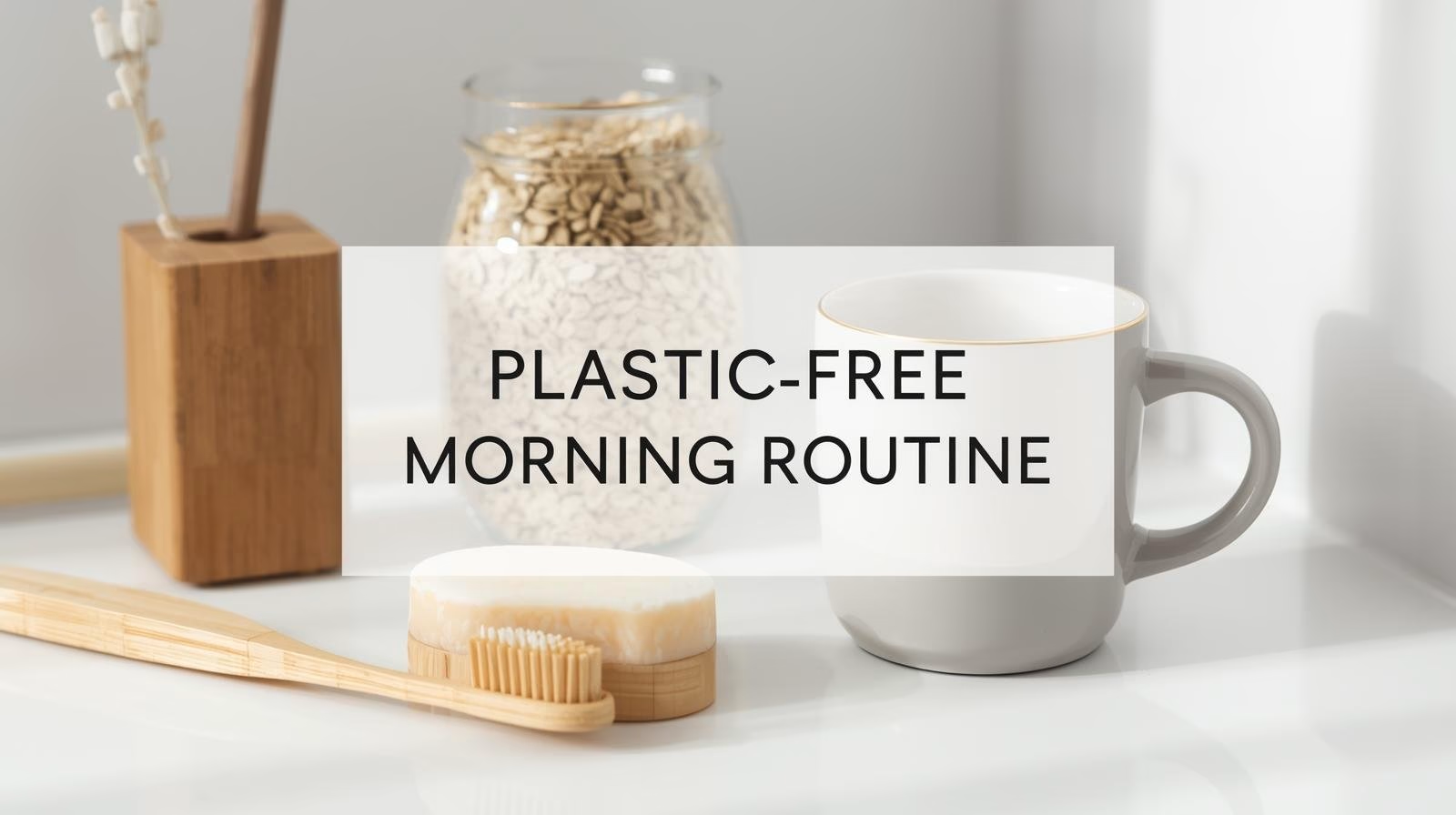

Between the alarm and the front door, an ordinary morning quietly produces plastic: the toothpaste squeeze, the shampoo pump, maybe a disposable razor, a coffee pod, a granola bar in its wrapper, the film off something grabbed on the way out. No single moment feels like it counts. Added together, they are most people's largest daily contact with plastic, and nearly all of it has a workable alternative.
This is not a push for a zero-plastic morning by next week. It is five sources ranked by how much they contribute, tackled in an order that survives contact with a real weekday.
Start in the Bathroom
Room for room, the bathroom holds the highest density of plastic in the house. Shampoo and conditioner bottles, body wash, a soap pump, toothpaste, toothbrush, disposable razor — most people meet all of it before breakfast.
The method that sticks is one swap at a time, made as each product runs dry. Do not bin a half-full bottle to feel virtuous; use it up, then replace the empty with the lower-plastic version. A shampoo bar runs about $8 to $12 and lasts roughly as long as two or three bottles. A bamboo toothbrush, toothpaste tablets or a tube from a brand that actually recycles, a bar of plain soap in place of body wash, a safety razor with replaceable blades instead of the cartridge kind — each one slots in as the old product finishes. Done this way, the whole bathroom converts over three to six months: slow enough to test each replacement before you commit to it. The shampoo bar is the single swap worth a warning, since some hair takes a week or two to adjust as it rebalances. Everything else changes over with no learning curve at all.
Two smaller items round out the room. Deodorant now comes in cardboard tubes or refillable metal cases instead of the twist-up plastic stick, and the switch is a straight one-for-one. Floss is the sleeper item: standard picks and the plastic-spool kind are pure throwaway plastic, while silk or corn-fibre floss in a small glass dispenser refills from a card and skips the container entirely. Neither is dramatic on its own, but they are the sort of daily-use plastic that never crosses anyone's mind.
Sort Out the Coffee
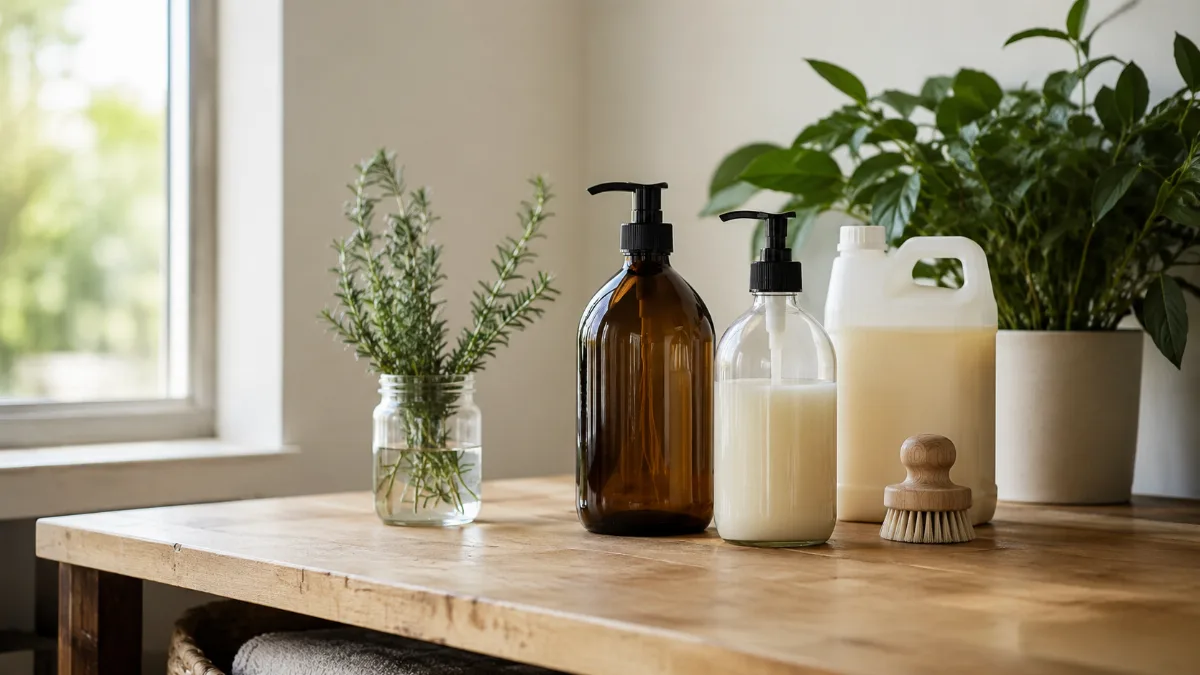
Single-serve pods are among the worst per-cup offenders going. Each one is a sealed cup of plastic or aluminium wrapped around maybe 10 grams of coffee, and at roughly 50 to 80 cents apiece the daily habit adds up in money as fast as it does in waste. If a pod machine runs your morning, start here.
A refillable pod fits the machine you already own and takes coffee from a bag you choose — same routine, no new appliance. A French press, a stovetop moka pot, or a pour-over drops the pod apparatus entirely and usually makes a better cup for less per serving. The foil bag bulk coffee comes in is a rounding error next to a year of individual pods: fewer, bigger packages beat many tiny ones every time. Tea drinkers have a parallel fix — a lot of tea bags are sealed with a little plastic, and loose leaf with a metal infuser sidesteps it. The infuser lasts years.
Rethink the Grab-and-Go Breakfast

This one varies most by household, so the principle beats any fixed menu: the more processed and single-portioned the breakfast, the more packaging it burns per calorie. A wrapped granola bar, a yogurt in its own plastic cup, a juice in a single bottle — all high-packaging formats. Oats from one big bag, yogurt from one big tub, fruit eaten whole — the same food, a fraction of the wrapping.
The version that works on a rushed Tuesday is to move the effort to Sunday. Overnight oats portioned into glass jars keep from Sunday through Wednesday. A dozen hard-boiled eggs sit ready in the fridge for the week. A bag of granola in a bowl replaces the individual bars. None of it costs morning time; it trades fifteen minutes on the weekend for five plastic-free breakfasts. ENERGY STAR's product guidance is a useful outside reference here.
Build a Leave-the-House Kit
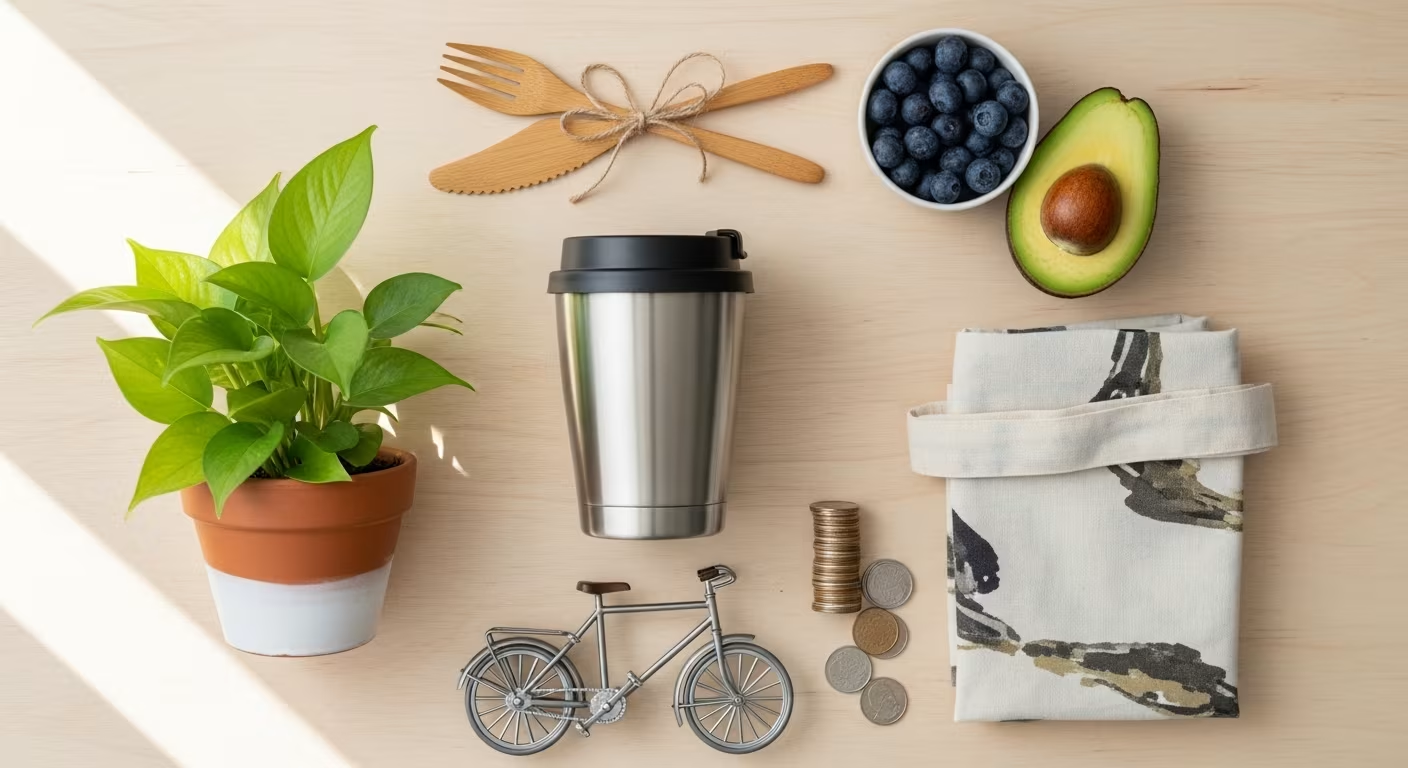
Most of the morning's remaining plastic gets picked up on the way out: a carrier bag at the shop, a plastic fork with a bought lunch, a single-use cup if coffee happens out. The fix is gear you carry, not willpower you summon at the counter. A tote on the same hook as the car keys handles the bag. A small set of reusable cutlery in the bag handles the fork. A reusable cup handles the cup — and plenty of cafés knock a few cents off for bringing your own, so it pays for itself over a few months.
All of it is a one-time setup. Put the items by the door, drop them in the bag once, and they leave with you every day without another thought.
Bring the Household Along
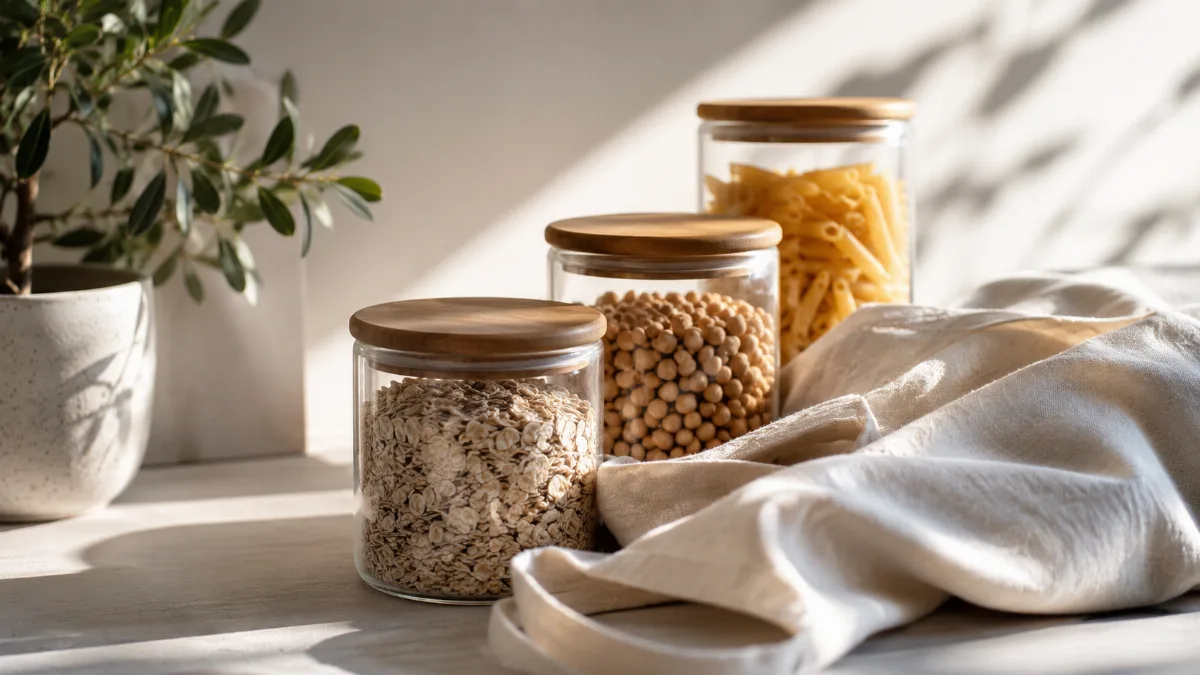
A solo routine is easy. A house full of people at different levels of interest is the harder case, and pushing it as a cause tends to backfire. The changes that spread on their own are the ones that cost other people nothing: a refillable pod loaded in the machine, the tote hung where everyone passes it, oats bought in a bag instead of packets. Nobody has to sign up; the low-plastic option is just the one that is already there.
The swaps that ask someone to accept a new product or learn a new step — the bamboo brush, the shampoo bar — stay personal. Offer, do not require; show it working rather than argue for it. Most people will try the easy version of something once they have watched it work for someone else. If you make only one change from this list, make it the coffee pod, for anyone running a pod machine. The per-cup plastic cut is immediate and lands every single day.
See also: zero-waste bathroom swaps in order and the morning minimalism routine.
What "Plastic-Free" Actually Means
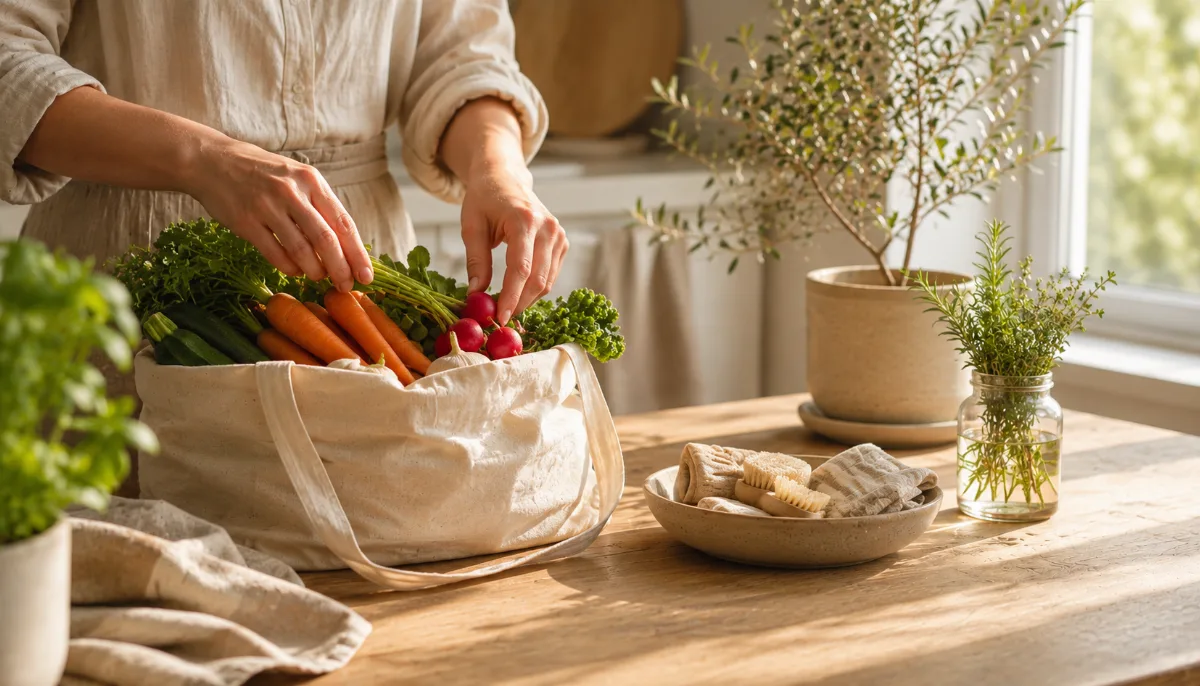
A plastic-free morning is not a plastic-absent one, not at first and probably not ever. Prescriptions, contact lenses, certain foods, some medications arrive in plastic with no real substitute, and that is fine. The target is discretionary plastic — the packaging on things where a working alternative genuinely exists. Buy less overall, buy the bigger format when plastic is unavoidable, and pick the lighter-packaged option when there is a choice. A large tub of yogurt beats ten little cups; a block of deli cheese in paper beats the same cheese sealed in a zip bag. None of that needs a special product — it is a different pick among what is already on the shelf.
If you want to see the change, count the plastic items that leave the house in one week and jot the number in a phone note — not to judge it, just to know it. Count again three weeks on. A number that has dropped means the habits took. The trap is turning the count into the point and refusing a genuinely needed item because it came in plastic. The aim is a steady, moderate reduction over time: not zero, not perfection, and not a running anxiety about every wrapper.
Two swaps, priced:
| Swap | Number | Note |
|---|---|---|
| Shampoo bar | $8–$12 | lasts like 2–3 bottles |
| Coffee pods | 50–80¢ per ~10 g of coffee | a sealed cup of plastic around each dose |

Comments
No comments yet.