

Start With an Honest Look at Your Own Bin
Most plastic-free advice opens with a product swap list — bamboo toothbrush, reusable bag, bar soap — aimed at plastic that is visible but often low-volume. The more useful starting point is looking at what actually fills your recycling and trash. For most households the same categories sit at the top: food packaging (produce bags, snack wrappers, bread bags, takeout containers), personal care bottles (shampoo, conditioner, body wash, lotion), beverage containers (water bottles, juice cartons, coffee pods), and cleaning-product bottles.
Those four account for the bulk of a home's plastic by volume, which makes them the highest-priority targets. Starting there, rather than with the swaps most prominent in plastic-free marketing, produces the most reduction for the least effort. A bamboo toothbrush is a fine change; it just moves a few grams a year, while the produce aisle and the shower move far more.
Food Packaging: The Largest Category
Food packaging is the dominant plastic source for most people, and most of it can be avoided through purchasing choices rather than buying special plastic-free products. Buying produce loose instead of pre-bagged eliminates the produce bag and the clamshell in one move — most items sold packaged are available loose at the same store, and the weight sticker goes straight on the fruit.
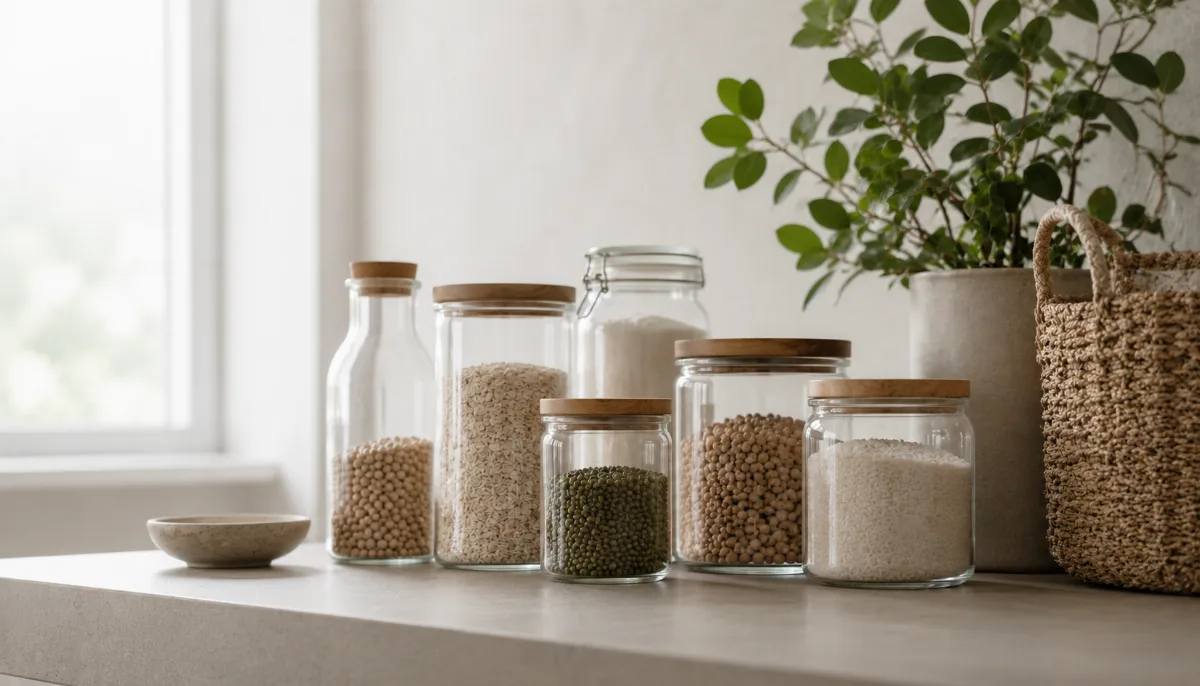
Bulk bins cover another whole category. Grains, legumes, nuts, dried fruit, coffee, and often spices can be bought into your own containers: mason jars for anything that needs to stay dry, cloth bags for the rest. Many stores let you tare the container weight at the bulk section so you only pay for the food. And buying bread from a bakery in a paper bag replaces one of the most common plastic items in the house — a cloth bread bag or a bread box keeps a bakery loaf good for several days.
Takeout and snacks are the harder edge of this category. A stack of reusable containers left in the car or a bag covers restaurant leftovers and, at some counters, the meal itself. Snack packaging is tougher — much of it is multilayer film that no program recycles — so the realistic move is buying the snackable version of a bulk item, portioning nuts or dried fruit into a reusable pouch rather than buying single-serve bags. None of this has to happen at once; picking the two or three grocery items you buy most often and switching just those removes a surprising share of the weekly plastic on its own.
Personal Care: Fewer Bottles, Bought Less Often
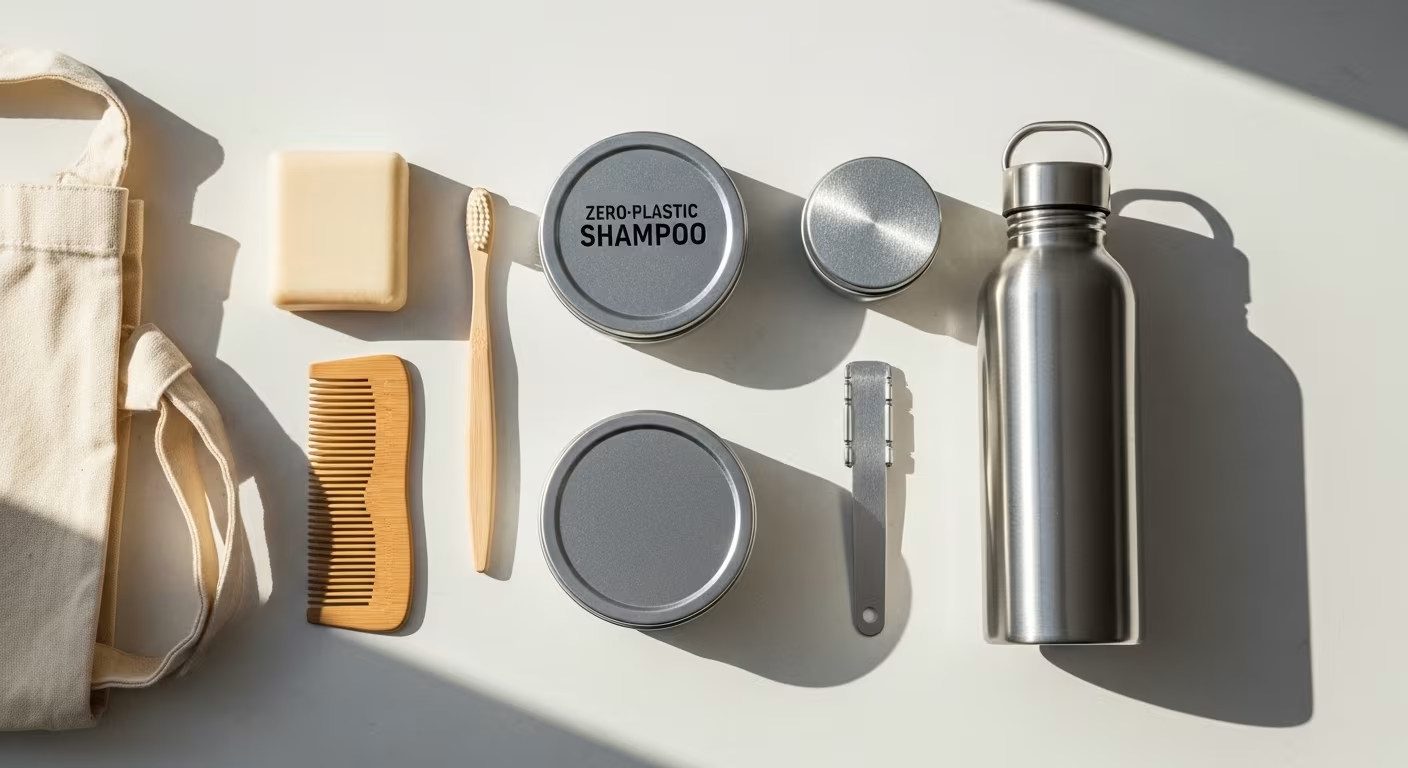
Personal care products come in plastic bottles and get repurchased constantly, which makes them a high-value target. A shampoo bar, usually around $10 to $15, removes bottles from the shower and often outlasts two or three liquid bottles because there is no water weight to dilute it. Most brands now sell bars tuned for specific hair types, which removes the rough adjustment period the early versions were known for.
A solid soap bar replaces the pump bottle for hand soap and body wash; a soap dish that drains keeps it from going soft and stretches its life. Where a product is only sold as a liquid, refill stations and refillable-pouch systems cut the packaging dramatically. The most durable move of all is consolidation: a single unscented castile soap, such as Dr. Bronner's, can serve as body wash, hand soap, and a base for household cleaner, retiring several separate bottles at once. A safety razor is the same logic — around $20 to $30 up front, then blades at roughly ten cents each instead of $2 to $4 cartridges.
Beverages: One Bottle Replaces Hundreds
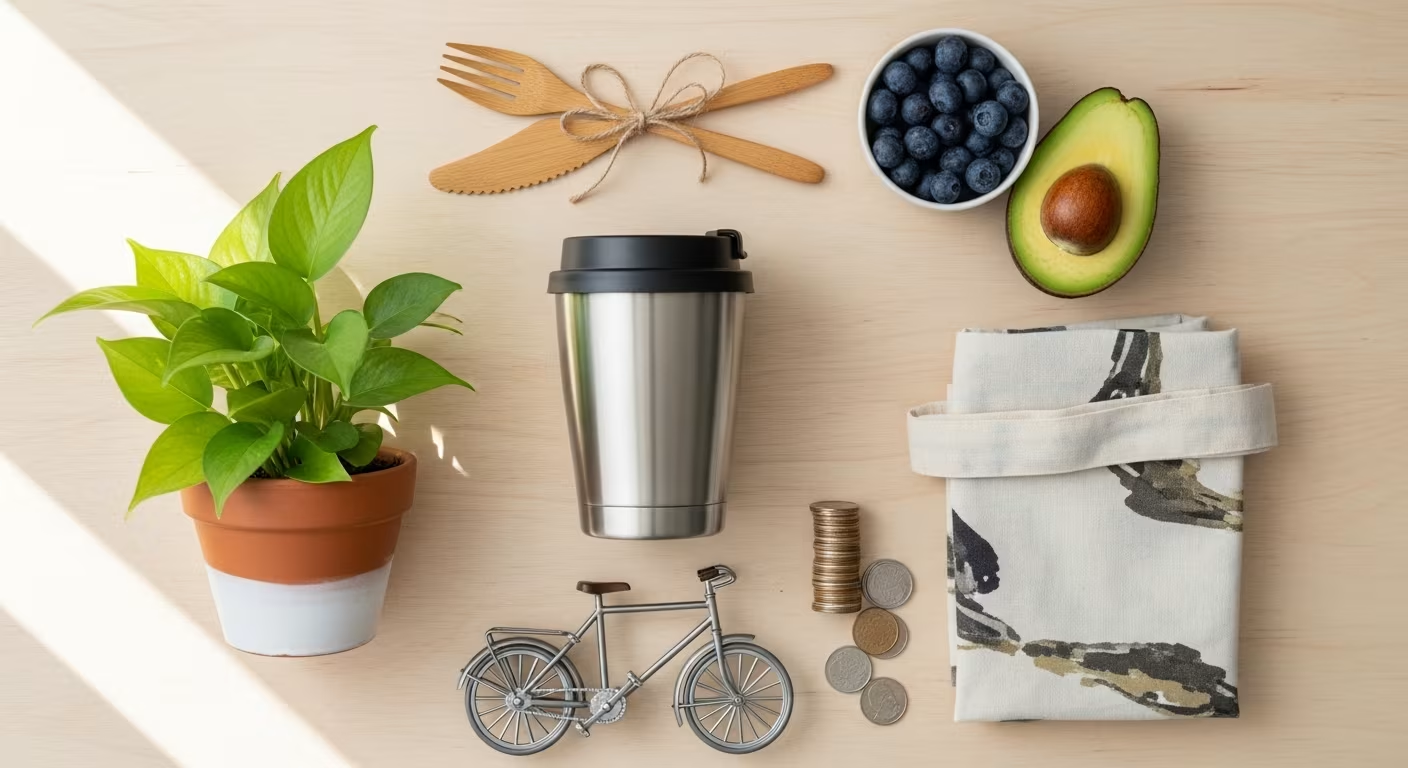
Switching from disposable to reusable drink containers pays off fast because beverages are a daily habit. A reusable water bottle ends single-use bottle purchases entirely and typically pays for itself within a week. A travel mug replaces disposable cups, most of which are plastic-lined rather than the pure recyclable paper they look like.
Where packaging cannot be avoided, choosing glass or aluminum — both recycled more consistently than plastic — shrinks the plastic share of what comes home. For households that drink a lot of fizzy water, a countertop carbonator like a SodaStream, with its refillable CO2 cylinder and glass or reusable bottles, eliminates a steady stream of bottles and cans. Coffee pods are a similar story: a refillable pod or a simple French press retires a daily source of small mixed-material plastic that curbside programs rarely accept.
Cleaning Products: DIY and Refills
Cleaning products are the third big plastic category for most homes. Simple mixes of vinegar, baking soda, and castile soap replace most sprays and scrubs with ingredients that arrive in cardboard boxes or glass jugs instead of plastic bottles. When a store-bought cleaner is the better choice, the EWG's Guide to Healthy Cleaning lists formulations screened for safer ingredients. See our own guide to eco-friendly cleaning products for the specific recipes.
For jobs where DIY does not cut it, concentrated refill systems — dissolvable tablets or pouches dropped into a reusable spray bottle — carry the same cleaning power in a fraction of the packaging. A single sturdy spray bottle refilled from tablets can outlast a dozen disposable bottles bought over the same period.
Handling the Plastic You Can't Avoid
Some plastic still arrives no matter how the shopping changes: medical packaging, a handful of foods with no real alternative, the padding and mailers from online orders. The goal is not zero incoming plastic, which is not realistic for most households, but a sharp reduction concentrated in the highest-volume categories, plus sensible disposal of the rest.
That means knowing what your local system actually takes. Soft plastics — bags, film, bubble wrap — are usually rejected by curbside bins but accepted at many grocery-store bag collection points, so a bag-of-bags by the door that gets emptied on the weekly shop keeps them out of the trash. Rigid plastics rinsed and empty recycle reliably in most areas, and metal lids from glass jars are recycled separately in many programs. A quick check of your municipality's list is worth more than guessing, since "wish-cycling" the wrong items can contaminate a whole batch.
Progress, Not Perfection
Treated as all-or-nothing, plastic-free living collapses into the same perfectionism paralysis as any other total sustainability goal. The workable framing is progressive reduction: name the largest categories, work through them one at a time, and measure against where you started rather than against a flawless endpoint. A household that clears plastic from its three biggest categories — food packaging, personal care, and beverages — cuts the large majority of its plastic waste, and the modest remainder can be handled over the following months rather than all at once.
The economics reward patience too. Bars, refills, bulk staples, and a safety razor cost a little more up front and less over a year, and the biggest habit changes accumulate across months, not days. The meaningful reduction already made is worth more than the perfect version still out of reach.
Swap math:
| Swap | Upfront | Ongoing |
|---|---|---|
| Shampoo bar | $10–$15 | outlasts 2–3 liquid bottles |
| Safety razor | $20–$30 | blades ~10¢ vs $2+ cartridges |
| Carbonator (fizzy-water homes) | one countertop unit | refillable CO2 replaces bottle cases |
Comments
No comments yet.