
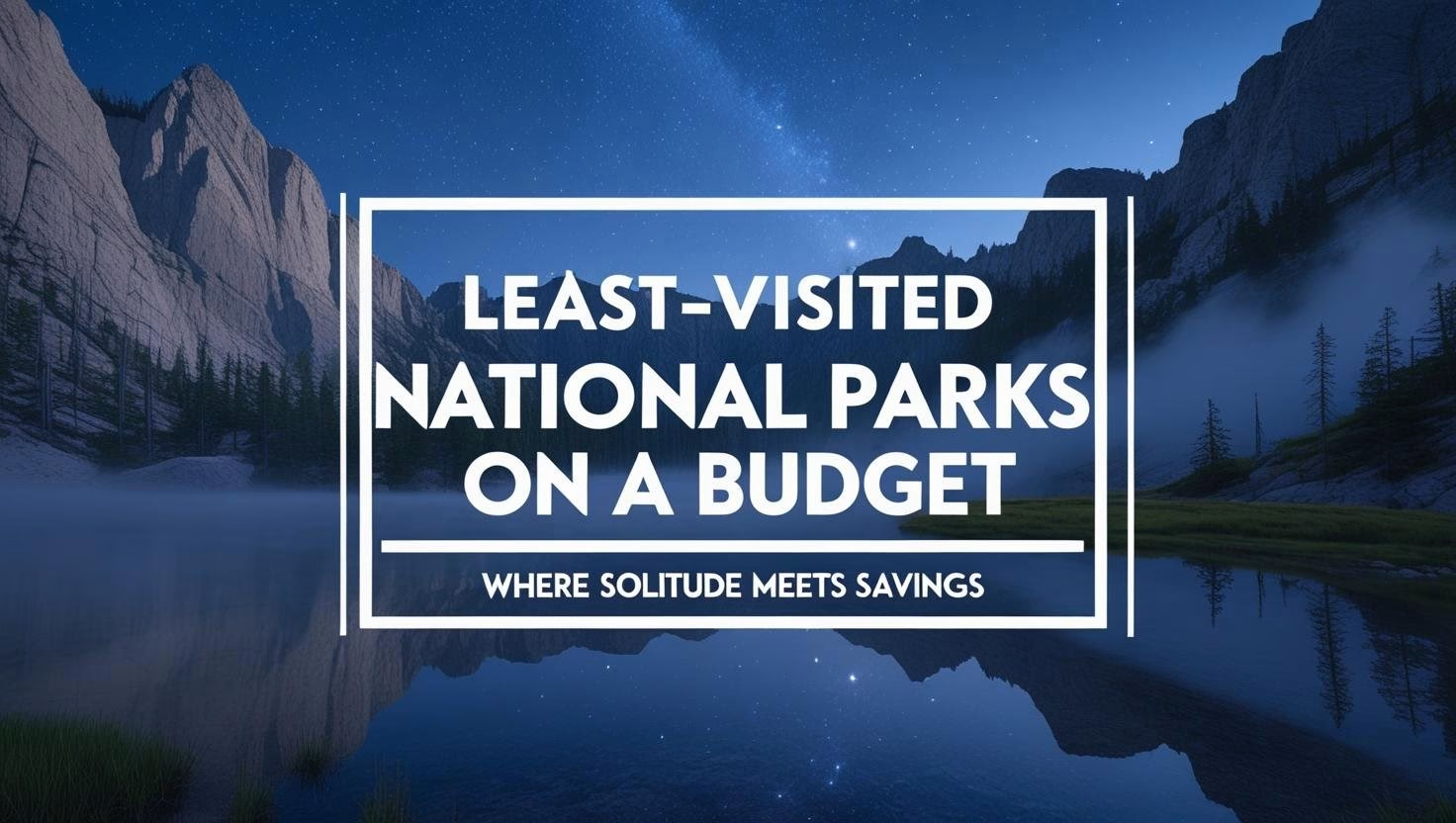

Yellowstone's Grand Prismatic overlook fills its parking lot before 7 a.m. in July. Yosemite Valley wants lodging reservations six months out. The Grand Canyon's South Rim, at peak season, is a traffic jam with a view. None of that is a secret. What gets less attention is the other side of the system: of the country's 63 designated national parks, roughly 50 draw a small fraction of the crowds — the same $35 entrance fee, or an America the Beautiful pass, the same trails and rangers and campgrounds, and, often, a summit or a lakeshore entirely to yourself.
Why the Overlooked Parks Are Worth It
Low-visitation parks aren't consolation prizes. For the specific thing each one does, they frequently beat the famous names. Great Basin National Park in eastern Nevada logged around 145,000 visitors in a recent year; Yellowstone cleared 4.8 million. For that scarcity you get bristlecone pines over 4,000 years old — among the oldest living things on Earth — the formations of Lehman Caves, and a Wheeler Peak summit at 13,063 feet, all without a shuttle, a timed-entry permit, or a six-month reservation. You can browse the National Park Service's full directory of designated national parks and sort for the ones you've never heard of; that list is where the quiet is.
The mechanism is simple. Low visitation means the friction machinery never gets built: no reservation portals, no shuttle buses to reach a trailhead, no lottery for the marquee feature. You arrive, you set up, you walk. The tradeoff is distance and thin services, which is exactly what keeps the numbers down.
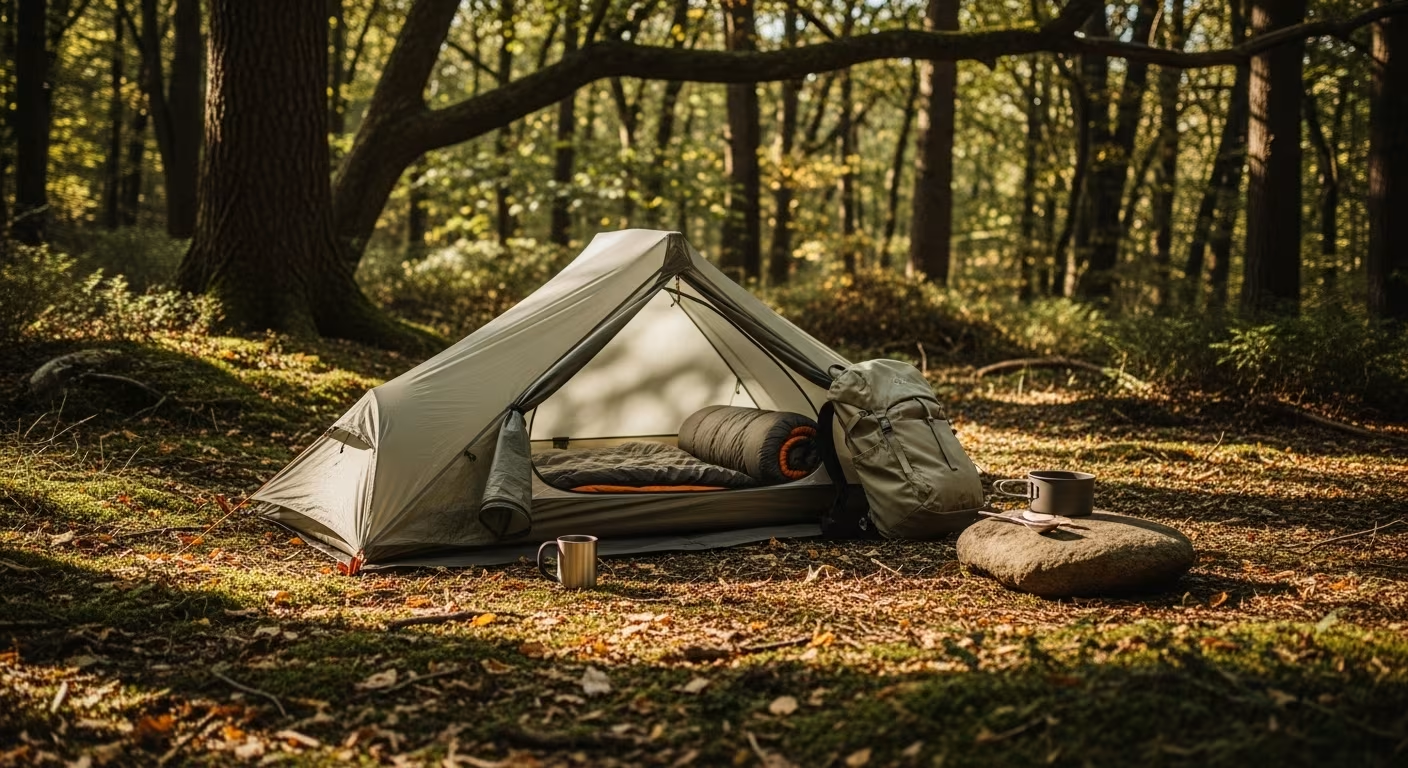
There's a budget dimension too. The crowded parks push their costs onto you sideways — a gateway-town motel at peak rates because the campground booked out in February, a $200 flight change when the timed-entry permit doesn't line up, a restaurant meal because the one general store is mobbed. At the quiet parks those costs mostly evaporate. Camp for $15, arrive without a reservation, and cook from a cooler, and the trip runs a fraction of what the same days cost at a marquee park. The entrance fee is identical; almost everything around it is cheaper.
Great Basin, Nevada: Remote by Design

Great Basin is a 14-hour drive from Los Angeles and about 7 from Salt Lake City, and that inconvenience is the whole point — only people who actually want to be there make the trip. The Wheeler Peak Scenic Drive climbs to 10,000 feet over 12 miles. The Alpine Lakes Loop, a 2.7-mile trail past two high lakes, routinely shows no more than a handful of other hikers. Lehman Caves tours run several times a day and need no advance booking in the shoulder months of May, June, September, and October.
Developed campgrounds run $15 to $20 a night and stay available through most of the summer on a first-come basis. Baker, the tiny gateway town, has only basic services, so bring food, and expect no cell coverage across most of the park. Great Basin is also one of the darkest places in the continental United States — a designated International Dark Sky Park — and on a clear, moonless night the Milky Way reads as a solid band overhead. Those aren't inconveniences to plan around; they're the reason to come.
Guadalupe Mountains, Texas: The State's Highest Point, No Lines

Guadalupe Mountains National Park in far West Texas holds Guadalupe Peak, the state's highest point at 8,751 feet. The summit trail is 8.4 miles round trip with about 3,000 feet of gain and real exposure near the top — and there is no permit system. You show up, sign the trail register, and climb. On a clear day the summit looks down on El Capitan's limestone prow and out across the Chihuahuan Desert.
The park draws roughly 200,000 visitors a year, most of them bunched into a few autumn weeks when the maples in McKittrick Canyon turn — a genuinely rare desert-mountain display of fall color. Outside that window, especially March through May and again in September, the trails go quiet. The Pine Springs campground runs about $8 a night on recent schedules (confirm at recreation.gov), and backcountry permits are free. There are no hookups and little shade, so this is a park you come to for the walking, not the amenities.
Pair it with a detour and the case gets stronger. Carlsbad Caverns is only about an hour's drive across the New Mexico line, so a single trip can bank a summit hike and a descent into one of the country's great cave systems. Water is the one thing not to improvise on here: the Guadalupe Peak trail has none, the desert sun is unforgiving above the tree line, and the standard advice is a full gallon per person for the climb. Wind is the other constant — exposed campsites and ridgelines can gust hard enough to flatten a poorly staked tent.
Isle Royale, Michigan: The Island You Have to Earn
Isle Royale reaches you only by ferry or seaplane — from Houghton or Copper Harbor in Michigan's Upper Peninsula, or from Grand Portage, Minnesota — and the crossing runs anywhere from 45 minutes to six hours depending on where you start. That single constraint holds annual visitation under 30,000, among the lowest of any national park, and it's why the park closes entirely each winter, roughly November through mid-April. The people who do come tend to stay for days rather than hours.
The island is pure wilderness: no roads, no cars, a trail network linking backcountry campgrounds around the shoreline and through the interior. It's also the site of the longest-running predator-prey study in the world, tracking the island's wolves and moose for more than six decades, so wildlife is often the main event. Seeing a wolf is never guaranteed, but the possibility — on foot, in true backcountry — is a categorically different experience from watching bison from a car window. Budget the ferry or seaplane fare separately from the entrance fee; the transportation is the real cost here, and the payoff is multi-day routes that barely see other people.
North Cascades, Washington: The American Alps

North Cascades National Park is among the least-visited parks in the contiguous states despite sitting within three hours of Seattle. Two things keep it empty: Highway 20, the only road through, closes for winter, and the park's glaciated, near-vertical terrain is harder to reach than the gentler trails in the surrounding national forest. The park holds more glaciers than any other in the lower 48 — several hundred of them — which is exactly why the peaks look like the Alps and earned the "American Alps" nickname.
The Cascade Pass trail, 7.4 miles round trip with about 1,800 feet of gain, is the signature hike and a plainly better experience than anything at the crowded parks a few hours south. The parking lot fills on summer weekends, but the trail itself rarely feels packed because the climb spreads people out across the grade. Backcountry camping needs a permit from the visitor center or by contacting the park directly — a simpler, more available system than the reservation lotteries at the marquee parks.
The season here is short and worth planning around. Snow can linger on the high trails into July, and Highway 20 typically doesn't fully reopen until late spring, so the practical window runs from roughly July to early October. Within it, the Diablo Lake overlook along the highway is a free, five-minute stop that delivers the park's postcard view — an unreal turquoise lake, colored by glacial rock flour, ringed by peaks — without any hiking at all. That combination of a demanding signature trail and a drive-up showpiece makes North Cascades an easy add-on to a Seattle trip that most visitors never think to make.
The America the Beautiful Pass: The Budget Mechanism

The single highest-leverage budget decision in national-park travel is the America the Beautiful Annual Pass, $80 a year (confirm at store.usgs.gov). It covers entrance at every federal recreation site — national parks, monuments, recreation areas, national forests, and Bureau of Land Management land. Since a single park's entrance fee typically runs $25 to $35 per vehicle, two visits in a year already pay for the pass, and any road trip stringing several sites together makes it a clear win. Great Basin, Guadalupe Mountains, Isle Royale, and North Cascades all honor it. Just remember what it doesn't cover: camping fees and ferry fares are separate, so those still belong in the trip budget.
Timing: When the Quiet Holds
The quiet parks reward flexible timing, and they forgive rigid schedules too. At popular parks, the difference between a Tuesday and a Saturday arrival in July is the difference between a campsite and a two-hour wait; at these, most sites stay open regardless of the day. The sharpest tool is the shoulder season. Great Basin in late September, Guadalupe in April, North Cascades in early October — each pairs decent weather with almost no company, and often with lower campground demand. Even the busiest window at a low-visitation park tends to feel like an average weekday at a famous one, so you can travel when it suits you rather than when a reservation system allows.
Planning Logistics for Remote Parks
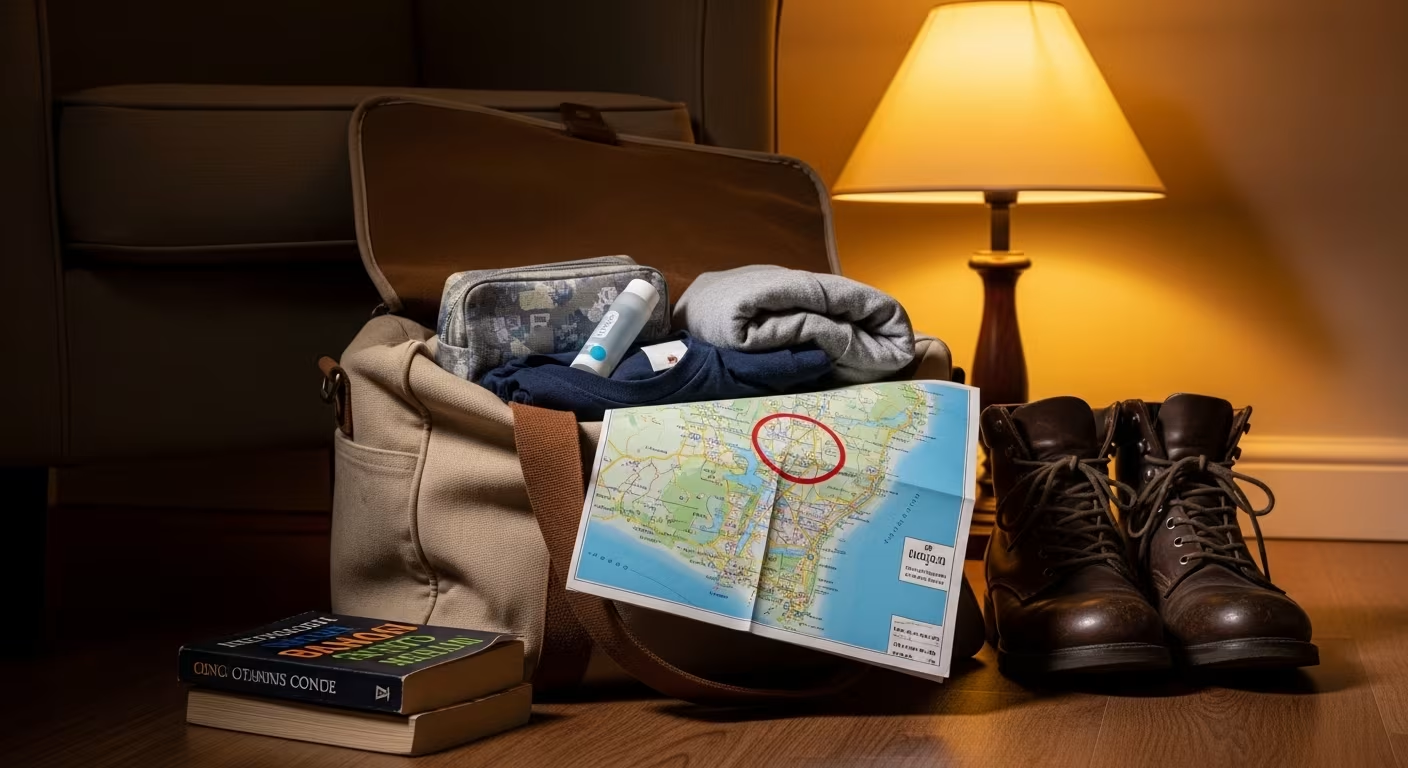
Two practical realities separate these parks from the drive-up variety. First, connectivity: cell service is sparse to nonexistent across most of them. Download offline maps before you arrive — the specific park's trail map from the NPS site, plus offline coverage in your mapping app of choice — because you will not be pulling up directions at the trailhead. Second, supply lines: food and fuel near these parks range from minimal to absent. The standard move is a cooler stocked with three to four days of food, bought at the last real town before the park, which also happens to cut per-day food costs well below restaurant-dependent travel. Come in with a full tank, a full cooler, and downloaded maps, and the remoteness stops being a problem and becomes the entire appeal.
The scarcity math:
| Park | Number | What you get |
|---|---|---|
| Great Basin, NV | ~145,000 visitors/year | bristlecone pines over 4,000 years old |
| Yellowstone | 4.8 million+ | parking lots full before 7 a.m. |
| The system | 63 parks, ~50 lightly visited | the crowds cluster in a dozen |
Comments
No comments yet.