


Bathroom clutter builds through a chain of individually sensible decisions. You buy a replacement shampoo because the bottle is getting low, then finish and re-buy the old one before the new one is needed, and now two are open at once. Hotel travel sizes pile up in a drawer. Samples from a beauty counter or a subscription box sit unopened. A well-reviewed serum joins the shelf without pushing anything off it. Each purchase made sense on its own; the sum is a counter and cabinet holding fifteen to twenty products for one person's daily routine — when that routine actually uses seven to ten.
Let the Daily Routine Decide What Belongs
The most useful sorting tool is your own routine, written down in order. What do you actually reach for every morning and every night? For most people the morning is a face wash, a moisturizer, a deodorant, a hair product or two, and toothpaste. The evening routine is a cleanser, one or two treatments, and toothpaste again. That core — seven to ten items — is what earns the counter and the front of the most reachable shelf. Everything else is organized around it, one tier back.
| Category | Example items | Where it lives |
|---|---|---|
| Daily core | Face wash, moisturizer, deodorant, toothpaste, one hair product | Counter or front shelf |
| Weekly / occasional | Exfoliant, mask, nail kit, styling tools | Cabinet, second tier |
| One backup each | The next bottle of a staple you actually finish | Under the sink |
| On trial | Samples, a product you are testing | A single small bin, reviewed monthly |
| Expired / abandoned | Old sunscreen, a product that caused a reaction | Out |
Clear the Counter First
The single change with the biggest payoff for the least effort is clearing the counter down to the daily core plus a hand soap. Backups go under the sink. Weekly products go in the cabinet. Anything you are still deciding about goes in a holding bin, not on the counter. This takes fifteen or twenty minutes and produces a visual shift far larger than the amount of stuff you moved — a counter with four products and a soap reads as calm, while the same counter with a dozen products and a scatter of small objects reads as busy, no matter how nice the products are.
A clear counter also does you a quiet favor at cleaning time. Every bottle left standing is something to lift, wipe under, and set back down; a surface with two or three items gets wiped in one pass. The friction you remove is not only visual — it is the small daily tax of working around objects that do not need to be out. If bare feels too stark, allow one exception: a single tray that corrals the core products reads as intentional rather than cluttered, and it moves as one unit when you clean.
Backups, Expiry, and the Products You Forgot You Owned
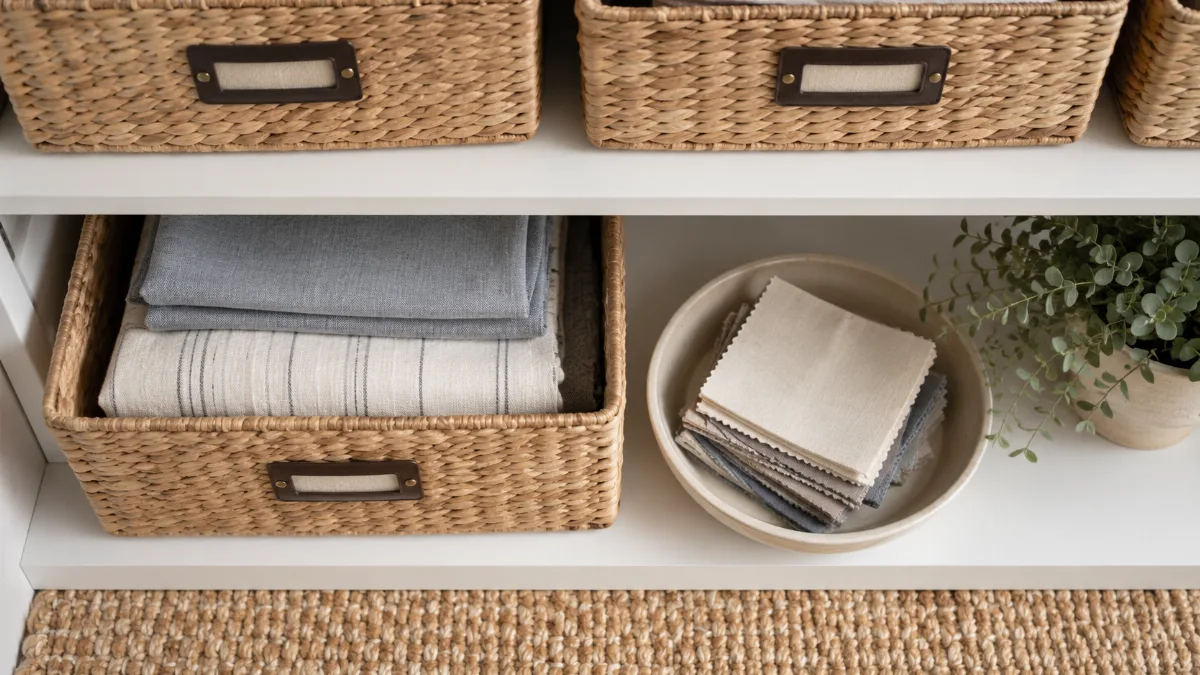
Keeping a backup is smart household management right up until it multiplies. The trouble starts when you buy the next bottle before the current one is close to done — then the backup gets its own backup, and three of the same product are open before any one is empty. Hold one backup per staple, stored away from the in-use bottle, and buy the replacement only when the current one is genuinely running low, not a month ahead.
Then run an expiry pass, because most cabinets are hiding dead weight. Sunscreen degrades and carries a date — the tube from two summers ago is not protecting anyone. The moisturizer that caused a breakout and got shoved to the back. The styling product for a haircut you no longer have. Checking dates on sunscreen, medications, and skincare and pulling anything untouched in six months typically clears a real chunk of a cabinet without costing you a single thing you actually use.
Skincare and the Zoned Shared Bathroom

Skincare accumulates through a particular loop: a new product joins the routine alongside the old ones instead of replacing any, then gets quietly set aside — not thrown out — when the results are unclear. A few months of that and you own three moisturizers, two serums, and a couple of cleansers, while your real routine runs on three or four of them. The fix is a deliberate audit: name the three to five products you use consistently and that do what you expect, and release the rest. The goal is not the smallest possible number — it is keeping only what earns its place. Oregon State University Extension is a useful outside reference here.
In a shared bathroom, multiply all of this by the number of people and add the complication of mixing. The cleanest system gives each person a defined zone — a shelf, a drawer, a section of the cabinet — that holds their routine. Zones stop one person's collection from creeping into another's, and they make overcrowding visible: when a zone stops closing, that is the signal to edit it, instead of letting it spill into the next shelf over.
Storage Products and Linens, in That Order
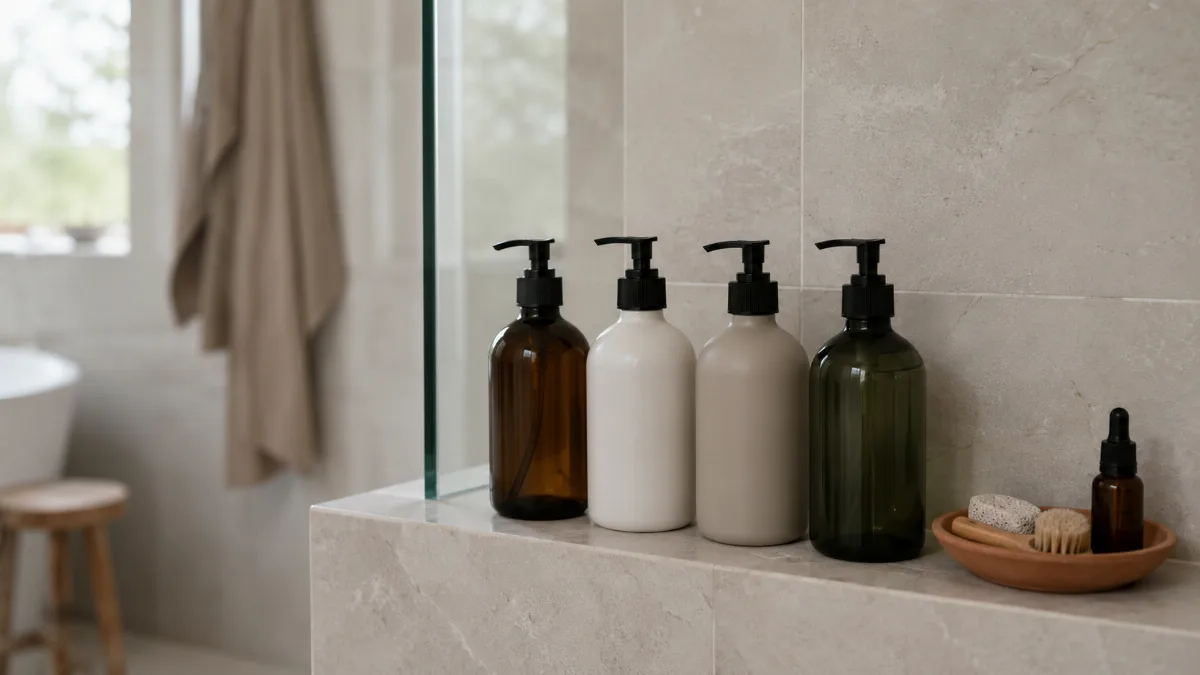
Drawer dividers, under-sink baskets, and counter caddies are genuinely useful — on a collection that has already been cut to size. Applied to an over-full cabinet, they just arrange the excess into neater rows. Reduce first, then add the organizer that keeps the reduced set in order. A divider for a trimmed drawer of daily items is a real improvement; the same divider over twice the products is the same problem with better posture.
Linens deserve their own quick pass, because they hoard in a pattern all their own: old towels get replaced but not retired, towels arrive in sets when you needed one, and guest towels stockpile well past how often guests actually come. A useful rule of thumb for one or two people is two bath towels each in rotation, plus one guest set — anything past that is usually storing the past rather than serving the present. Count what you actually use in a normal week, keep a sensible margin for visitors, and retire the frayed and mismatched to the rag bin. That alone frees the cabinet space the daily-use items should have had all along — and a bathroom stocked to its real routine is faster to use and easier to reset every single day.


Comments
No comments yet.