
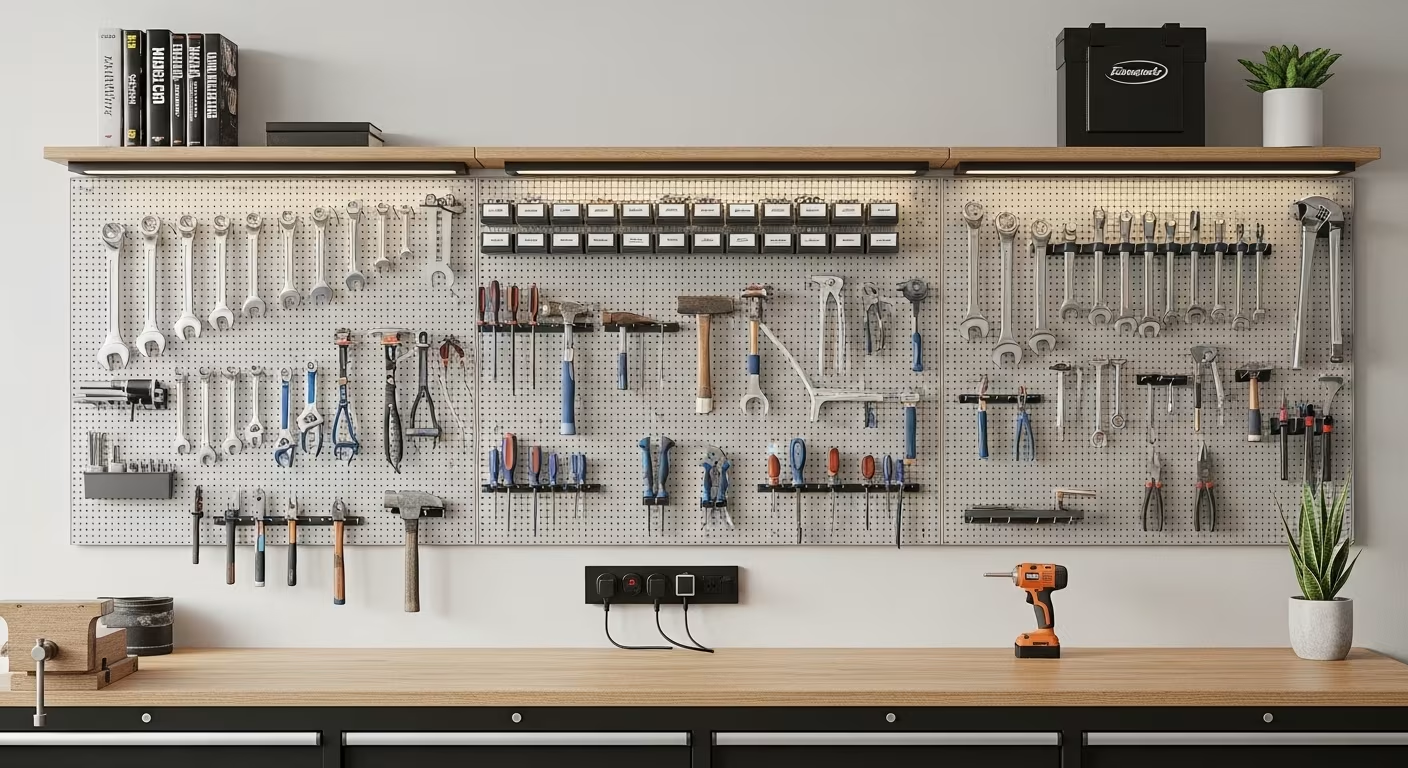

A two-car garage gives up roughly 400 square feet of floor and a full wall of vertical space, and most households never park a single car in it. The garage drifts into being the house's overflow warehouse instead. The minimalist fix is not more shelving — it is removing what the garage is not actually being used for, then organizing only what genuinely remains. Buy the storage first and you build a home for the accumulation; sort first and you build storage for a right-sized garage.
Why Garages Become the Default Overflow
The garage becomes overflow storage because it is large, unfinished, and not a living space, so the standard applied to it drops well below the standard for interior rooms. Items that would never be tolerated in the living room pile up in the garage without producing the same discomfort. The exercise machine bought with good intentions, the moving boxes never fully unpacked, the furniture from a previous phase of life that did not fit the current home — all of it migrates out here and stays indefinitely.
The cost is a garage that cannot do its main job: sheltering a vehicle. A garage where parking means threading between stacked bins, or where one bay is permanently blocked by storage, is being run as a warehouse at the expense of a $30,000 asset sitting in the weather outside. Naming that trade-off honestly is usually what motivates the whole project.
The Initial Sort: Categorize Before You Organize
Garage organization begins with a categorization sort, not with a shelving purchase. Buying racks before you know what the garage truly needs to hold produces storage sized to the current mess rather than to a lean, organized garage.
Pull everything into the open and place it into clear categories: tools and hardware, sporting and outdoor gear, seasonal items, automotive supplies, gardening equipment, and a final group for things that belong elsewhere in the house or should leave entirely. The sort reveals the real scope of what the garage holds and which categories are large enough to earn a dedicated section. A single weekend afternoon usually covers this pass for a standard two-car space, and it is worth doing in one continuous block so the full inventory is visible at once rather than judged bin by bin.
What Should Leave the Garage Entirely
The most important step is releasing what is neither used nor needed. The garage collects these items more readily than any room in the house because the bar for keeping them is lower — there is always more space. But space is not a reason to keep something; use is. When the only argument for an item is that it fits, that is the argument for letting it go.
Categories that commonly should leave: exercise equipment used fewer than once a month, furniture from previous homes with no specific planned future use, gear from hobbies that have been abandoned, and anything kept speculatively because it "might be useful someday" with no concrete use in mind. A useful test for the speculative pile is the replacement-cost question — if the item vanished and you needed it later, could you rebuy or borrow it for under $30 or so? If yes, the years of stored square footage almost never justify keeping it. Clearing these before organizing what remains leaves a garage whose entire contents are either in active use or genuinely seasonal, a fundamentally different situation from organizing the full pile in place.
The half-empty paint cans, dried-out chemicals, and dead batteries that collect on garage shelves are their own category, because they cannot simply go in the household trash. Leftover paint, motor oil, solvents, and old batteries are household hazardous waste, and most municipalities run a drop-off site or a periodic collection day for exactly these items. Bagging them for a single trip to that site clears a shelf that tends to grow untouched for years, and it removes the one part of the garage inventory that is actively deteriorating. Handle this group early — it is pure subtraction with no keep-or-release deliberation attached.
Assign Zones Once the Sort Is Done

With the contents reduced to what will actually stay, zone organization gives each category a defined area. Tools and hardware get one zone, ideally beside the workbench. Sporting gear gets another, ideally near the garage door for loading. Seasonal items are placed by access frequency: holiday decorations touched once a year go to the highest, least-reachable spots, while seasonal sports gear used several times a year stays lower and closer.
Plan the zones on paper before buying anything. Knowing the tool zone needs about six linear feet of wall at workbench height, or that bikes need a four-foot clear run of wall, lets the shelving serve the plan instead of the plan bending around a generic unit you already bought. The table below shows how the categories from the sort typically map onto zones and storage types.
| Zone | What it holds | Storage type | Access position |
|---|---|---|---|
| Tools & hardware | Hand tools, power tools, fasteners | Pegboard + workbench drawers | Workbench height, prime reach |
| Sporting & outdoor | Balls, bats, camping gear, bikes | Wall brackets + open shelving | Near the garage door |
| Seasonal | Holiday decor, off-season sports | Lidded bins on overhead racks | Highest / least accessible |
| Automotive | Oil, fluids, cleaning supplies | Closed cabinet | Away from living-space wall |
| Gardening | Long-handled tools, hoses, pots | Vertical hooks + a bin | Nearest the exterior door |
| Car-support | Reusable bags, kids' activity gear | Hooks + one shelf or bin | Directly by the car door |
Wall and Ceiling Storage for Frequent Items

Wall-mounted storage for tools, sporting gear, and garden tools keeps everyday items reachable without eating floor space. A pegboard panel — typically $20 to $40 for a starter kit — gives flexible, rearrangeable homes for hand tools. Horizontal wall brackets hold bikes, ladders, and long-handled tools for a few dollars per hook. Overhead ceiling racks, usually $80 to $150 each, swallow bulky seasonal boxes and camping gear entirely, freeing the floor below.
This is the garage version of using vertical space in a small apartment: move storage off the floor and the floor comes back for vehicles and real work. A garage with organized wall storage and a clear floor feels close to twice as usable as one holding the same contents in floor stacks, even though nothing was thrown away beyond the sort. Keep the wall at eye level to shoulder height for daily-use items and reserve the ceiling and the very bottom shelf for the things touched a few times a year.
One caution on overhead racks: they are the easiest place for the old habits to return, because anything lifted out of sight stops being evaluated. A bin hoisted to the ceiling in January is exactly the bin that goes another two years without inspection. The defense is to reserve overhead space strictly for the genuinely seasonal — the holiday decorations, the camping gear, the winter sports equipment that has a real annual cycle — and to keep it out of bounds for the "deal with it later" pile. If a bin lands overhead with no known contents and no season attached, that is a signal the sort was left unfinished, not a storage win.
The Car-Support Zone Most Garages Neglect

One zone most plans overlook is car-related storage: the items that ride in and out of vehicles regularly but need a home between trips. Reusable shopping bags, the kids' after-school sports gear, beach or outdoor equipment that moves seasonally — these belong in the garage zone closest to the car door, making the handoff from vehicle to storage and back as short as possible.
A designated car-support zone near the vehicle entrance breaks the habit of these items being carried into the house and dumped in the entryway. It needs no elaborate system: a simple row of hooks and one shelf or bin directly by the door does the whole job, and it is the zone that most directly keeps garage clutter from spilling into the living space.
Labeling and the Seasonal Audit
Garage systems degrade when items are not returned to their zones after use. The primary defense is clear labeling: bins and shelves marked by category make the correct return spot obvious to every member of the household, not just the person who built the system. A $10 label maker or even painter's tape and a marker is enough — the point is that returning an item takes no thought.
A seasonal audit, once in spring and once in fall, checks what the garage holds against what is actually being used. Anything that did not come out of storage during the past season becomes a release candidate; anything used often but stored badly becomes a candidate for better storage. The audit takes under an hour and prevents the slow re-accumulation that otherwise returns an organized garage to its previous state within a year or two.
Rotating Seasonal Equipment
For garages holding seasonal sports or outdoor gear, a rotation system keeps the space functional year-round: off-season items move to the least accessible positions while current-season items come forward to the reachable ones. Do the rotation as the season turns. As winter ends, skis and sleds move to the back of the overhead racks while bikes, garden tools, and furniture covers come down to accessible wall positions. This lines up with University of Missouri Extension.
This twice-yearly swap takes less than an hour when the system is already labeled, and it produces a garage where the currently needed gear is always within easy reach instead of buried behind the season just ended. That is the real payoff of the whole approach: not a garage that photographs well once, but one that stays parked-in and workable through every season because less is stored, everything has a zone, and the floor stays clear.



Comments
No comments yet.