
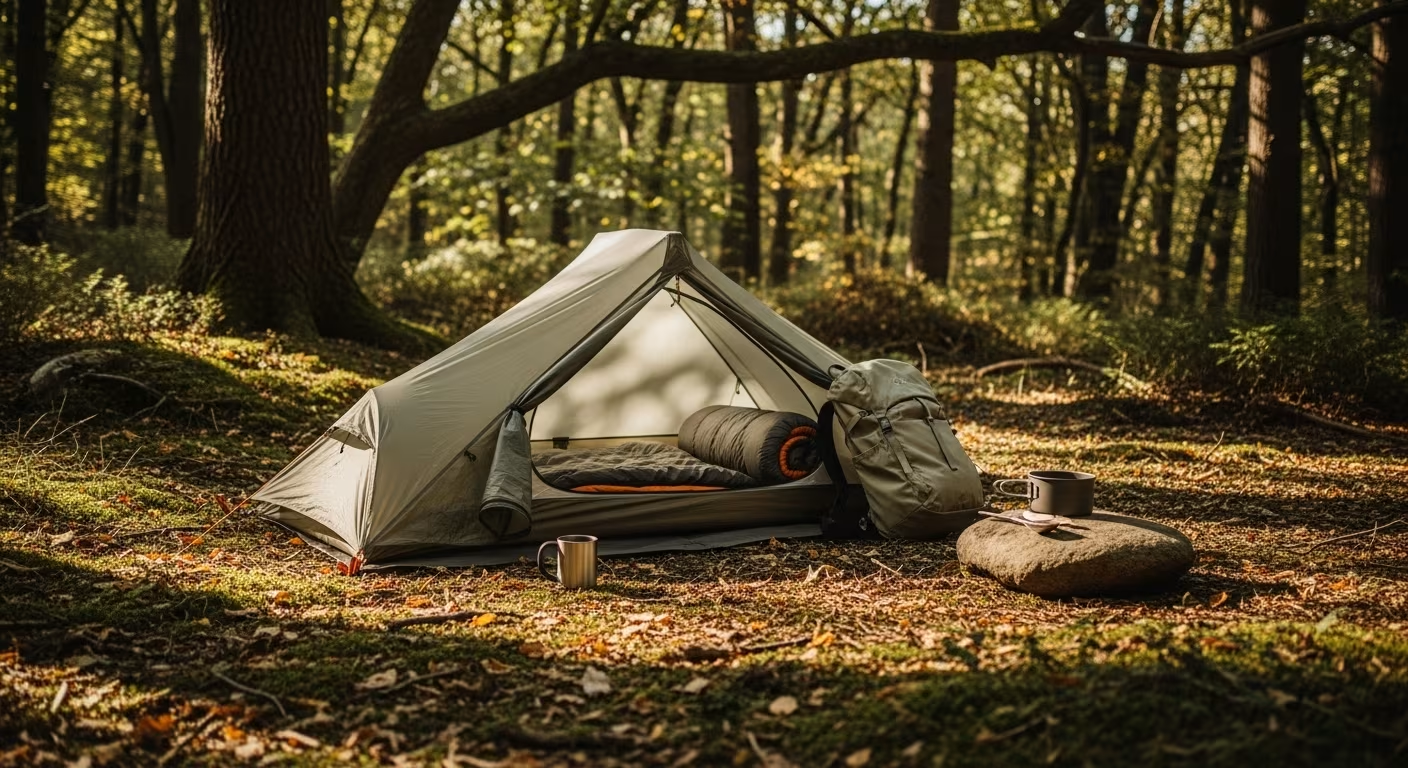

Camping sits in an odd spot relative to minimalism. It's already an exercise in reduction — you leave behind most of the possessions and infrastructure of daily life and get by on a small carried set — and yet the gear market pushes constantly the other way: more specialized equipment, more comfort at camp, more kit for scenarios that won't happen. Minimalist camping is mostly the discipline of resisting that pull.
The payoff for resisting it is concrete. A lighter pack sets up faster, reaches campsites that require a walk to get to, and puts less gear between you and the actual landscape. The way to build one is to sort everything into four categories and address each with as few items as possible.
The Four Core Categories
Everything a camping trip genuinely requires falls under shelter, sleep, cooking, and safety. Nail those four with minimal, well-chosen gear and the rest is comfort — not wrong to bring, but optional rather than core. A camp chair weighs about a kilogram and a log serves the same purpose; a camp table is heavier still, and the ground or a flat rock is the default it improves on. The table below is the whole framework at a glance.
| Category | Job it does | Minimal core kit | Common optional add-ons |
|---|---|---|---|
| Shelter | Stay dry and out of the wind | Single-wall tent, or tarp and bivy, plus pegs | Double-wall tent, footprint, extra guylines |
| Sleep | Hold body temperature overnight | Bag rated to conditions, insulating pad | Pillow, liner, second pad |
| Cooking | Boil water and prepare food | 900ml pot, canister stove, spork, water treatment | Second pot, mug, camp table |
| Safety | Navigate, signal, treat injuries | Map, compass, headtorch, whistle, small first aid kit | Locator beacon, expanded first aid |
Shelter and Sleep: Where Not to Cut Corners
Shelter is the one category where minimizing weight and cost can backfire. A shelter that fails in rain leaves everything else in the pack wet, which turns a trip into a safety situation, and one that fails in wind provides no protection from the cold the wind creates. A well-chosen single-wall tent or a tarp-and-bivy combination covers most conditions at lower weight than a conventional double-wall tent, and a tarp pitches in many configurations, though it needs attachment points a freestanding tent doesn't.
For sleep, match the bag's rating to the expected overnight low with roughly five degrees of margin — colder-rated bags just add weight you carry for nothing. The pad matters more than people expect: its insulation, not its cushioning, is the point, because cold ground pulls heat from the body faster than any bag can replace without something underneath. A closed-cell foam pad is the lightest option; an inflatable one trades a little weight for real comfort and warmth.
Cooking and Water
A single 900ml pot handles solo camping — boiling water for drinks and dehydrated meals, and simple one-pot cooking — with a canister stove, fuel, and a lighter completing the setup, and utensils reduced to a spork and a folding knife. Camp food doesn't need to be elaborate to be good: oats with dried fruit for breakfast, a tortilla with nut butter at lunch, a rehydrated meal at dinner. Calories, warmth, and few dishes are the variables that matter, not culinary range.
Where stream or lake water is the supply, treatment belongs to this category. Tablets are the lightest but slow, typically needing 30 minutes before the water is safe to drink; a squeeze filter is faster and flows on demand; a UV purifier is fast and light but depends on batteries that fade in the cold. The right pick is trip-specific — tablets for a fast-and-light overnight, a filter where you'll refill often from clear streams. Carrying whichever one suits the conditions, rather than all three, is the minimalist move.
Fuel is the quiet weight sink here. A small 100-gram canister boils water for roughly a weekend of solo meals, so a matching stove and a single canister usually cover a two- or three-night trip without carrying a spare "just in case." Weigh the canister before you leave to gauge what's left rather than packing a fresh one out of habit.
Car Camping Versus Backpacking
Minimalism in camping runs on a spectrum. Car camping lets the vehicle absorb the weight, so a comfortable sleep system, a roomier tent, and a proper camp kitchen are all reasonable when the car is ten meters away. Here minimalism just means bringing only what you'll actually use rather than the whole garage.
Backpacking is where weight becomes a hard constraint, because every gram rides on your body the whole trip. A kit around 8 kilograms including food and water counts as reasonably light; getting it down to 5 changes the character of the hiking noticeably. The four categories are identical in both cases — what shifts is how brutally you weigh each item against the pack. If you want to dig deeper, the U.S. Fish & Wildlife Service is a good starting point.
Weather, Safety, and Leave No Trace
The minimum viable kit moves with the forecast. A stable, warm, dry summer night needs less shelter and less bag than the same spot in the shoulder season. Underestimating overnight cold is the most common preparation mistake — night temperatures at altitude drop faster and further than most people expect, which is exactly why the five-to-ten-degree margin on the sleeping bag earns its place. On the safety side, a map and compass are only worth carrying if you've practiced with them before you need them; otherwise they're false security. Knowing how to navigate matters more than owning the tools.
A minimal kit aligns naturally with Leave No Trace: less to manage, less to carry in and out, and lighter access to the remote places where low impact matters most. Pack out all waste including food scraps, camp on existing surfaces, and cook on a sealed-canister stove rather than an open fire — most areas now restrict fires in dry conditions anyway, and the stove removes the impact entirely while weighing less than the time spent gathering wood. Start with the four-category list, cut each one to its core, and let the landscape rather than the gear be the thing you actually came for.
Comments
No comments yet.