

Why Souvenirs So Often Disappoint
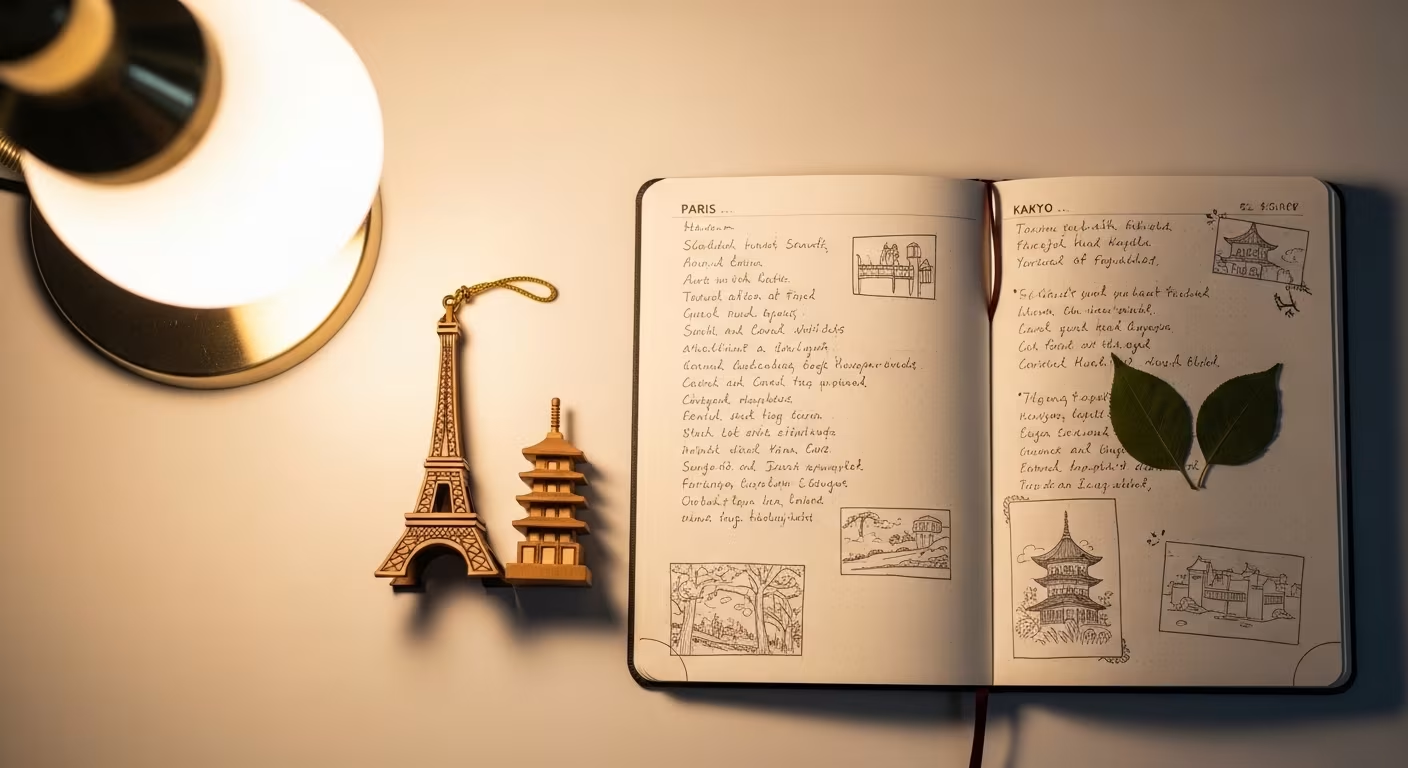
Buying something at a travel destination is a genuine impulse — a physical object promises to tie a memory to something you can hold. But most souvenirs fail at that job within a year of getting home. The miniature Eiffel Tower goes in a drawer. The fridge magnet joins twenty others. The hand-painted bowl gets used once and shelved. The memory it was meant to anchor fades at the same rate as memories anchored to nothing at all.
The problem is not buying souvenirs; it is buying objects whose only job is to represent an experience. Those items carry meaning only through their link to the trip, and that link weakens with time and distance. A year later the object is still there but its meaning has thinned to the point where it mostly just takes up space.
Consumable Souvenirs

The cleanest answer to souvenir clutter is choosing consumable things that carry a place's character without becoming permanent objects. Local food and drink — preserved goods, spices, coffee, tea, a regional spirit, olive oil, chocolate — bring the destination's flavor into the kitchen and then disappear through use over weeks or months. the FAA's traveler guidance is a useful outside reference here.
A $6 spice mix from a Marrakech market, used in cooking across three months, builds more connection to that trip than a ceramic tagine bought at the same stall and parked on a shelf. The spice actively folds the trip into daily life; the tagine becomes background furniture. The one constraint is getting consumables home: liquids are limited in carry-on, and perishables invite customs questions. Within those limits, dry goods, sealed products, and a bottle of regional spirit travel reliably.
Photographs as the Primary Memory Object
A well-chosen photograph does what a physical souvenir attempts, and often does it better, because it captures a specific moment, place, or face rather than a generic stand-in. A photo of a market in Oaxaca is more personal than a small painted animal bought at that same market.
The catch is selection. Most travel photography piles up without curation — thousands of images rarely revisited because scrolling them is too much effort. A single editing session after each trip, cutting hundreds of shots down to thirty or fifty and having them printed or bound into a small photo book, creates a souvenir that actually gets used: looked at, shared, tied to specific memories rather than a vague sense of the place. Printed photographs also age better than most trinkets — a framed print from a trip ten years ago carries far more weight than a keychain from the same week.
The photos worth keeping are usually not the postcard shots of famous landmarks, which are better documented by professionals and easy to find anywhere. The keepers are the specific and the personal: the people you traveled with, the meal on the table, the ordinary street where something small happened, the light at a particular hour. A short photo-book service will turn a curated set into a bound volume for roughly the price of a couple of gift-shop trinkets, and unlike the trinkets it holds a whole trip rather than one forgettable moment. The discipline is doing the edit within a week of getting home, while you still remember which images matter and why.
Functional Items Worth Buying
Some travel purchases genuinely earn their keep as useful objects. A textile with a real job — a well-made scarf, a linen tablecloth, a piece of clothing that fits and suits the wardrobe you already wear — does double duty, getting used regularly while quietly recalling where it came from each time.
The test is simple: would you use this if it had no travel association at all? If yes, it earns a place in the bag and at home. If the honest answer is no — if it only appeals because of where it came from — it is headed for the clutter pile. Regional craft that genuinely beats what you can get at home is the other clear case. A Japanese kitchen knife bought in Kyoto might simply be a better knife than anything on offer locally, justifying itself on the merits with the souvenir value as a bonus.
Experiences as the Souvenir
The highest-return spend in any destination is usually an experience rather than an object. A cooking class in Chiang Mai, a neighborhood walk with a local guide, a concert, a football match — these leave memories far more vivid and durable than anything on a gift-shop shelf.
The economics tend to agree. A memorable experience often costs about the same as, or less than, a significant physical purchase: a cooking class that runs the price of a handwoven rug leaves a deeper impression and takes up no space in the bag or the home. There is a social dividend, too — an experience is usually shared with the people you traveled with, which anchors it in memory more firmly than an object bought alone ever manages. Documenting the experience rather than an object reinforces the whole approach — a journal entry, a voice memo, a quick sketch, anything that captures how it felt builds a richer record than a keepsake alone.
The One-Item Rule for Physical Souvenirs
For travelers who still want a physical keepsake without the accumulation, a one-item rule per trip simplifies every decision: a single object, chosen deliberately, with a real connection to the trip rather than to the nearest gift shop.
The constraint forces the best choice to surface. Limited to one item, you consider it more carefully and pick from everything encountered across the whole trip rather than grabbing something at the last airport stall. The object chosen under that pressure is the one most likely to still feel worth having five years later. It also shifts the spending toward one considered piece rather than a scattering of cheap impulse buys that individually feel harmless and collectively fill a drawer.
Write It Down While It's Fresh
Some experiences produce memories that photographs simply miss — the smell of a spice market, the sound of a particular street, the heat or humidity, the taste of a specific dish. These sensory details fade faster than visual ones, and no photo captures them. A few sentences about what a place felt like, what surprised you, what you ate, what the light was doing at a certain hour, added alongside a photo collection, builds a far richer record than images alone. Voice notes recorded on the spot take almost no time and can be transcribed later; a small notebook used for one or two observations per day reads completely differently years later.
Most people cannot sustain a full travel journal, and that is fine. The workable version is smaller: a photo caption with one sentence beyond the place name, or a note-app entry tapped out on the train between stops. Those small additions turn a visual archive into something closer to an actual account of the trip.
Buy at the End, Not the Beginning
When a physical souvenir is worth buying, buying it near the end of the trip rather than the start serves two practical purposes. First, anything bought early has to be carried and protected for the rest of the trip, adding weight and risk. Second, the end-of-trip view is clearer about which items genuinely stood out from the whole experience versus which merely looked appealing in the moment of a market or shop.
A ceramic bought on day two of a ten-day trip, then guarded in luggage for eight more days, is a very different commitment than the same ceramic bought on the final afternoon. The last-day purchase is also a more settled reflection on what the trip actually meant, rather than a reaction to the novelty of first arrival. Give the decision until the end, and the object you bring home is far more likely to keep its meaning.
The souvenir test:
| Souvenir | Cost | What it does |
|---|---|---|
| Marrakech spice mix | $6 | three months of cooking = a living memory |
| The shelf object | more | dusted, then forgotten |
| Rule | consumable or usable beats displayable | — |

Comments
No comments yet.