

The Case for Regular Short Trips
A single two-week holiday delivers a concentrated dose of travel and then leaves fifty ordinary weeks on either side of it. Weekend getaways spread across the year work differently: a smaller change of scene, more often, with almost no recovery cost. You leave on Friday and you're back Sunday evening in time to sleep in your own bed before work, which is the opposite of the jet-lagged wreckage that follows a long-haul trip.
The thing that stops people isn't money or time so much as perceived hassle — finding somewhere to stay, packing, sorting transport, all for forty-eight hours. Every one of those steps can be reduced to near-zero effort, and once they are, a weekend away stops being a project and becomes a decision you can make on a Friday afternoon. The rest of this piece is about draining the friction out of each step until that's true.
Choosing a Destination
Distance is the variable that makes or breaks a weekend. A destination two hours away by car or train leaves you most of Friday evening plus all of Saturday and Sunday actually there. Push that to five hours each way and you've spent roughly twenty hours in transit to gain a day and a half — the math stops working, and the trip starts feeling like a commute with a hotel attached. Two to three hours is the sweet spot for a two-night trip — far enough to feel like somewhere else, close enough that the going and coming don't eat the weekend.
The fastest way to remove the choosing step is to keep a rotating short list of places inside that radius: a coastal town, a small city with a different character than yours, a stretch of hills or forest, a village with one specific draw. Four or five known options mean the "where should we go?" conversation takes minutes instead of an evening. And a weekend rarely needs deep research — a place to sleep, one or two things to do, and somewhere booked for Saturday dinner is enough of a plan to leave on. Everything else gets discovered on arrival, which is half the point.
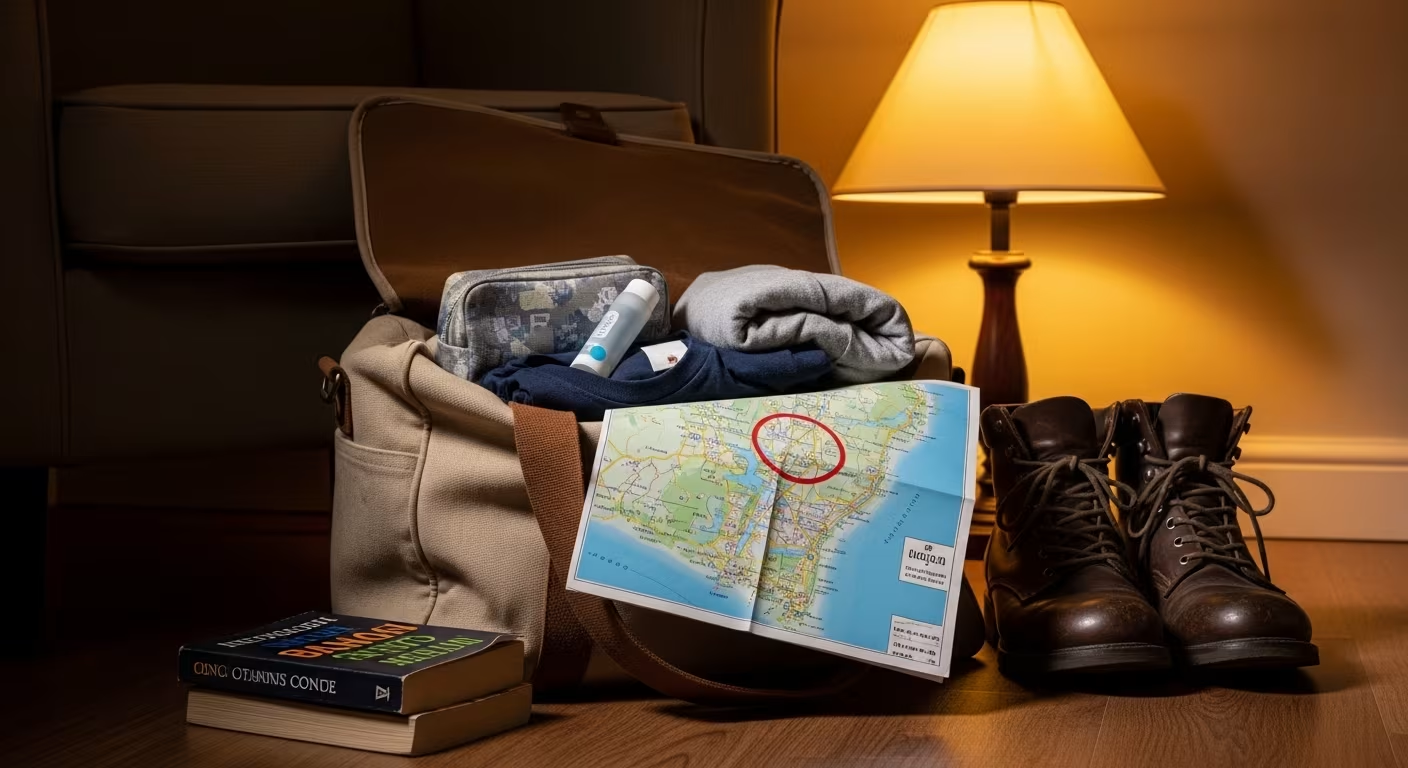
Travel time is the variable that decides whether short trips keep happening. A useful ceiling is 2 to 3 hours door to door: at 90 minutes each way, a Saturday morning departure still leaves most of the day, while a 4-hour drive consumes a full day of a two-day trip and the trip stops feeling worth it.
Drawing a circle at that radius around home and listing everything inside it — towns, coastline, national parks, cities — usually produces 15 to 20 options, which is more than a year of monthly trips. Keeping that list written down is what turns "we should go away sometime" into a decision that takes 5 minutes.
Packing for Two Days
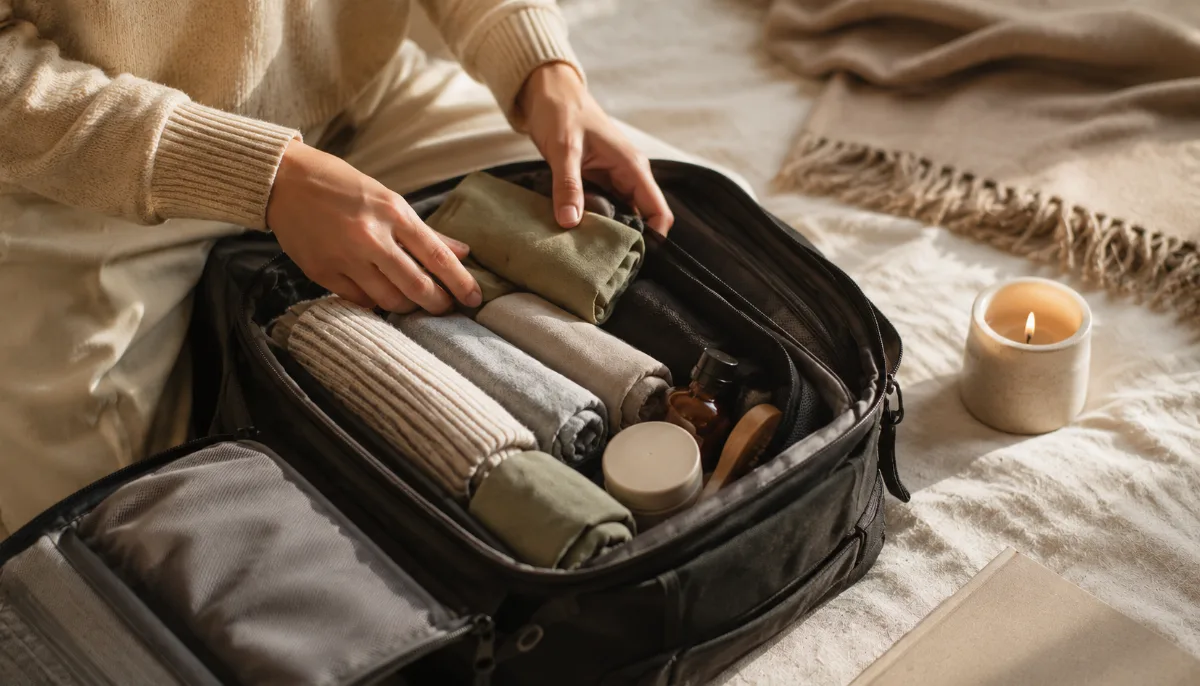
Two days needs far less than most people pack for it. Two outfits cover the weekend if the clothes you travel in count as one of them, plus something to sleep in and maybe a warmer layer. That fits a 15- to 20-liter daypack with room to spare, and a soft bag beats a roller case for a short trip on every measure: faster through a station, easier on a bus, no boot-loading ritual, nothing to check.
Toiletries are where a weekend bag quietly bloats. Miniatures or solid formats — a bar of soap, a shampoo bar, a travel deodorant — stay under any liquids limit and take almost no space, and most accommodation supplies soap and shampoo anyway, which removes even that. The realistic packing time for a repeat weekend traveler is about fifteen minutes, and getting it there is most of what makes the habit stick.
A two-night trip fits one small bag per person, and writing the list once removes the packing decision permanently. Per adult: 2 tops, 1 spare bottom, underwear and socks for 3 days, 1 sleepwear set, 1 layer for warmth, toiletries in a pre-packed bag, phone charger, medication.
Two habits make this repeatable. Keep a duplicate toiletry bag permanently packed so it never needs assembling — the single largest source of pre-trip friction. And wear the bulkiest items (coat, boots) rather than packing them. For families, one bag per person with each child carrying their own works better than one large case, since it removes the unpacking bottleneck on arrival.
Planning the Minimum
A good weekend plan is one fixed point and a lot of open space around it. The fixed point might be a Saturday dinner reservation, a specific hike, or a museum that needs a timed ticket — a single anchor the rest of the days arrange themselves around. Overplanning kills the exact thing a short trip is for: the unhurried hour somewhere unexpectedly good, the change of direction because something looked interesting down a side street. A minute-by-minute itinerary converts a weekend into a task list you're behind on by Saturday lunch.
Where you stay does most of the transport planning for you if it's central. Walking distance to most of what you'll do removes the need to figure out local buses or parking, which is worth paying a bit more for on a trip this short — the premium buys back time you'd otherwise lose to logistics. On a two-night trip, an extra twenty or thirty on a well-placed room can save an hour of transit each day, which is a good trade when you only have two days to spend.
Making It Regular
The real value isn't any single trip; it's the habit. A getaway every four to six weeks keeps a low, steady supply of new scenery running through the year, and it's the frequency, not the grandeur, that does the work. Making it habitual means driving the planning cost down to almost nothing: the standing destination list, the fifteen-minute pack, and a fixed template — book a bed, book one thing, sort the trains — that turns arranging a weekend into an evening's task rather than a weekend's worth of research.
Booking a little ahead for popular dates removes the last-minute scramble and, usefully, creates commitment. A non-refundable deposit on a room a month out is a small amount of money that quietly converts "we should go away sometime" into an actual trip on an actual weekend. The intention alone rarely survives a busy month; the booking does.
Saturday and Sunday Rhythms
Most short trips settle into a natural shape: Saturday is the active day — the hike, the exploring, the main meal out — and Sunday runs slower, a late breakfast, a short walk, and heading home before evening. That rhythm fits the working week, which pushes you to be back in time to reset before Monday. Leaning into it rather than fighting it makes the weekend feel longer than it is.
Leaving Friday evening instead of Saturday morning is the highest-return trick available: it adds half a day at the destination for the cost of one slightly later dinner. A short evening drive or an after-work train reaches many places in time for a late meal, and you wake up already there on Saturday rather than spending the morning getting there.
Building a Running List of Destinations
The biggest recurring barrier is the blank page when a free weekend arrives and you have to think of somewhere from scratch. A running list solves it permanently. Keep a simple note and add to it whenever a place comes up — in conversation, in something you read, while looking at a map — with a one-line reminder of why it caught your attention. No research at that stage; the research waits until you're actually going.
When a weekend opens up, scanning fifteen or twenty pre-collected options is faster and far more inspiring than starting cold, and it tends to surface places you'd have forgotten you were curious about. Prune the list as you go: cross off the ones you've visited, or keep them with a note about what would draw you back. Over a year the list becomes a small, personal travel guide to your own region.
Seasonal Timing for Short Trips
Weekend destinations have seasons inside their seasons that rarely match the standard tourist calendar. A mountain village mobbed in peak summer is often quiet and lovely in early autumn, cooler and with the foliage turning. A coastal town jammed on July weekends can be charming and half-empty in April or October, with lower prices to match. Going deliberately against the local peak buys better experiences, better rates, and fewer people, all at once. It is worth cross-checking against USA.gov's travel resources.
Some of the best timing is counterintuitive. A city known for a summer festival is often quietest and cheapest in the weeks right after it ends, when accommodation frees up and prices drop. A ski resort in its off-season offers empty mountain infrastructure, cheap rooms, and hiking or cycling without the winter crowds. Knowing roughly when each type of place peaks — usually a quick search away — is most of the skill.
The Role of Transport
For a short trip, how you get there shapes the character of the whole thing as much as where you go. A two-hour train is a genuinely different experience than a two-hour drive: you can read, arrive at a central station within walking distance of your bed, and never think about parking. A drive earns its place when the destination isn't served well by transit, when the route itself is the point (a scenic road, roadside stops), or when you're carrying gear that doesn't travel well on a train.
Cycling out from home — luggage on the bike, an overnight stop partway along a route — is one of the most satisfying weekend formats going, and it books no transport at all. The journey stops being the cost of the trip and becomes the trip itself.
What Counts as a Successful Weekend Away
The measure of a weekend getaway isn't how much you did; it's how the arrival home feels. A weekend that produced real rest, a shift in perspective, and enough good experience to carry into the working week has done its job whether you visited one place or five. Counting sights defeats the purpose.
The reliable signal is arriving back on Sunday evening physically tired from walking and mentally refreshed from the change of scene — a completely different tiredness than the frazzled exhaustion of an overpacked itinerary, which leaves you needing a holiday to recover from the holiday. Chase the first kind, and the low-friction weekend habit will keep home feeling like somewhere you're glad to leave and glad to return to in equal measure.
The getaway formula:
| Element | Number |
|---|---|
| Distance ceiling | 2–3 hours door to door |
| The list | everything inside the circle, written down — a 5-minute decision later |
| Bag | 15–20 L daypack, soft beats roller |
| Per adult | 2 tops, 1 bottom, 3 days of socks, 1 layer, 1 sleep set |


Comments
No comments yet.