

What Makes a Tradition Stick
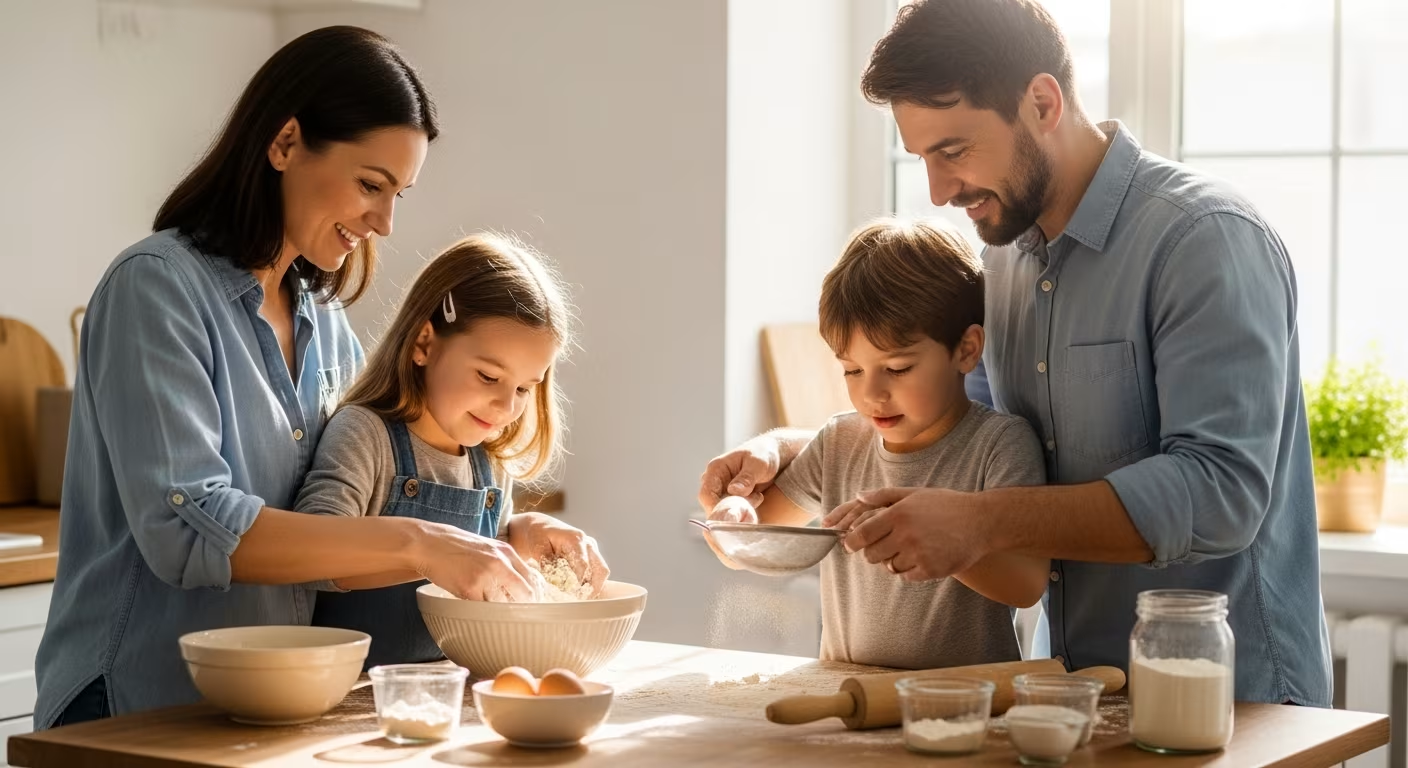
A tradition is a repeated practice that carries meaning through its repetition. The meaning isn't built into the practice itself — it accumulates through doing the same thing, the same way, at the same time, and through the memories that gather around it. Pizza on Friday night is just pizza. Pizza on Friday night that a family has shared every week for eight years is a touchstone of ordinary life that the kids will remember decades later.
The quality that matters most in a tradition isn't how elaborate or impressive it is — it's whether it actually gets kept. An elaborate tradition that needs real preparation, specific conditions, and considerable energy happens when circumstances line up and quietly disappears when they don't. A simple one that survives a bad week, bad weather, and general exhaustion racks up the repetitions that give it weight. Minimalist family traditions are defined by that durability: simple enough to maintain, which is exactly what lets them become genuine traditions instead of aspirational ones done twice and abandoned.
Weekly Anchors
Weekly traditions are the most powerful category because they compound roughly fifty repetitions a year. Something practiced every week feels genuinely established within a few months and carries real accumulated meaning within a couple of years — a pace no annual event can match.
A weekly family meal — a specific dinner on a specific night where everyone is expected to show up — is among the most consistently valued traditions across cultures and family structures, precisely because it's simple, regular, and reliably delivers shared time. The particular menu matters far less than the consistency. In fact, pinning it to a fixed, low-effort meal helps: "taco Tuesday" or "Friday pizza" survives a chaotic week in a way that an ambitious from-scratch dinner never does, because there's no version of the week too busy to keep it. A Sunday-morning walk, a Friday movie night, a Saturday building project: any recurring weekly practice simple enough to survive busy, sick, and difficult weeks earns its meaning through reliability. The tradition that happens even when nobody's especially in the mood is doing exactly what traditions are for — providing continuity that doesn't depend on conditions being ideal. The lower the bar to keep it, the more repetitions it collects, and the repetitions are where the meaning lives.
Seasonal Traditions
Seasonal traditions mark the passage of time and root family life in recurring rhythms. Their infrequency is part of the point — the first backyard fire of autumn, the annual apple-picking trip, a particular meal on the first cold day of winter, the end-of-school-year celebration all carry significance because they come around only once a year.
They work best when they're specific rather than vague. "We do something fun in the fall" doesn't function as a tradition, because its looseness means it may or may not happen depending on how the season goes. "We go to the orchard the first weekend in October" is a tradition, because the specificity makes it easy to keep and easy to anticipate. That specificity is also what lets children hold onto it: they know what's coming, they look forward to it, and they take part in the anticipation. A tradition a child can describe — "every year we do this exact thing" — is one that's genuinely working. Tying the tradition to a fixed marker rather than an open window is what protects it. The first cold weekend, the last day of school, the Saturday the clocks change: an anchor the calendar or the weather chooses for you removes the annual "should we still do this?" negotiation that quietly kills loosely defined plans.
When You Have Too Many
Families accumulate traditions the same way they accumulate possessions: each addition seems small and reasonable, and the total quietly grows past what can be maintained with any real presence. A family carrying fifteen holiday traditions may find the season exhausting rather than meaningful — not because any single one is wrong, but because the whole set is more than can be done with genuine attention. For more detail, it is worth checking SAMHSA's wellbeing resources.
An honest audit helps: which recurring practices does the family actually anticipate and enjoy, and which are kept out of obligation or habit? The tradition that's dreaded as it approaches, performed perfunctorily, and forgotten the moment it ends isn't doing a tradition's job, no matter how many years it's been running. It's worth naming, too, that traditions have seasons — the elaborate holiday production that delighted everyone when the kids were small may not fit a house full of teenagers, and that's a sign to let it evolve rather than a mark against it. Releasing one that has stopped serving its purpose — acknowledging that it fit an earlier stage of family life, or that it was tried and never took — isn't a failure. It clears room for the ones that carry real meaning to be experienced with more presence, and it keeps the season from becoming a checklist run on autopilot.
Starting One on Purpose
Traditions can be started deliberately instead of waited on to emerge. The pattern is simple: pick a specific practice, do it consistently for a defined stretch, and watch whether it's becoming genuinely valued. The clearest test is whether it's missed when it's skipped. A practice that produces "we should do this again soon" when circumstances get in the way has become a tradition; one that passes unnoticed when skipped hasn't.
The minimalist approach is to start with one simple, specific, regular practice rather than launching several at once. Launching five new traditions in a single ambitious January almost guarantees that most collapse by spring, and the failures make the whole idea feel forced. One at a time, each given room to prove itself, is how a family actually builds a set of practices that lasts. Let it gather enough repetitions to prove itself before you decide it has taken hold, and only then consider whether another one genuinely serves the family. Anchor it to a natural point in time — the same day of the week, the same moment in a season — because that temporal association is what turns a repeated activity into something that feels like a ritual. "Let's hike the first Saturday of each month" builds a habit in a way that "let's hike sometime" never will. The table below sorts a few common examples by how easily each one tends to survive a hard week.
| Tradition | Frequency | Why it tends to stick |
|---|---|---|
| Friday pizza night | Weekly | No prep, fixed day, works even on a tired week |
| Sunday morning walk | Weekly | Free, needs nothing, easy to anticipate |
| First-weekend-of-October orchard trip | Yearly | Specific date makes it easy to plan and expect |
| Elaborate multi-day holiday production | Yearly | Often abandoned — depends on ideal conditions |
Tradition Versus Obligation
Some practices a family calls traditions are really obligations wearing the label. The holiday gathering everyone dreads but no one cancels, the annual event kept out of inertia, the outing spoken of warmly but approached with mixed feelings — these have acquired the name of tradition without providing what a tradition is supposed to.
Telling the two apart means asking not "do we do this every year?" but "does this genuinely add to our family life?" The answer is sometimes no, even for something maintained for a decade. Letting an obligation go — recognizing that it mattered at an earlier stage and no longer does — isn't abandoning family culture. It's honest stewardship of the practices that actually make up family life, which leaves more room and more energy for the handful that carry real meaning. See our guide to intentional living: making choices that matter for the broader framework of applying deliberate choice to the recurring practices that shape a family over time.
Comments
No comments yet.