
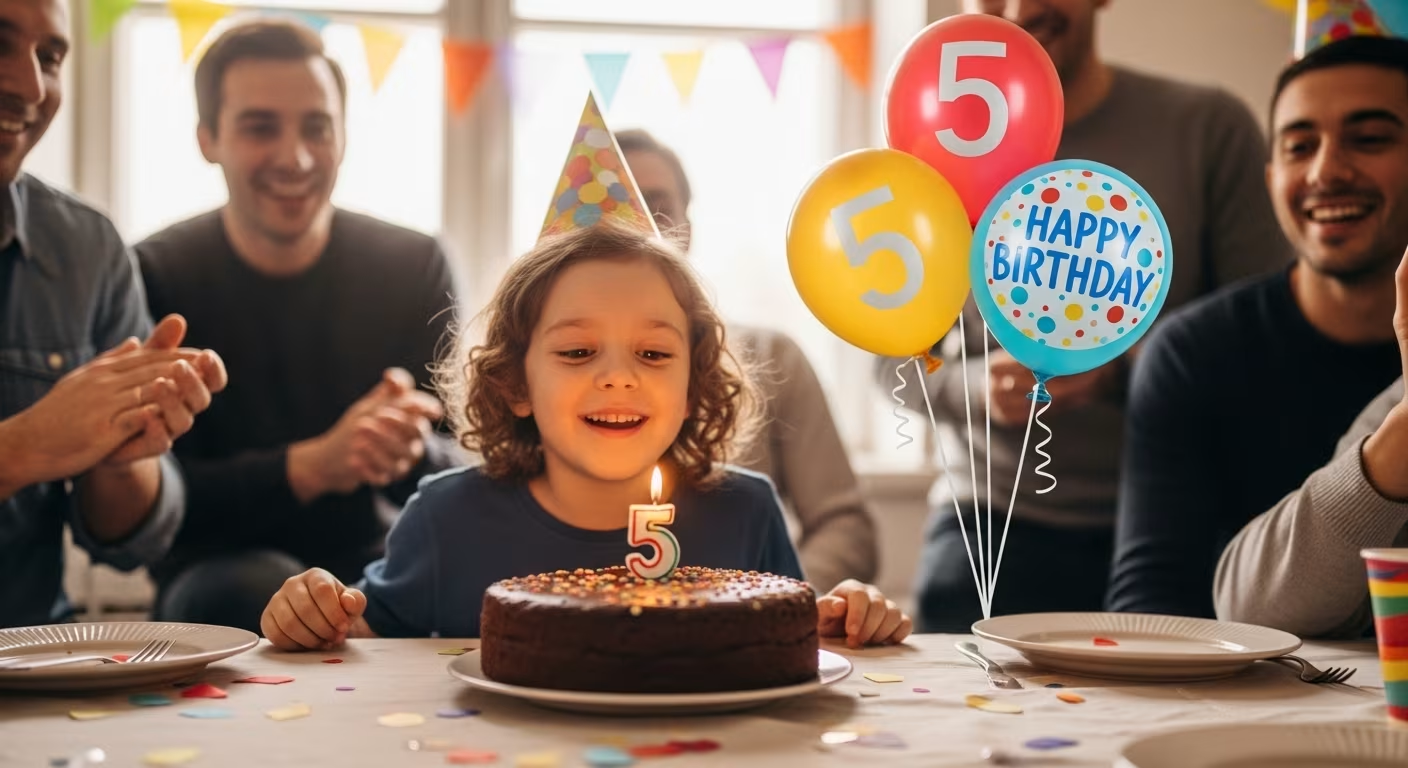

Somewhere along the way, the children's birthday party stopped being cake, balloons, and a pack of neighborhood kids tearing around a backyard, and became a production. Coordinated themes, a hired entertainer, custom cakes, activity stations, and favor bags that can cost more per guest than the gift each guest brings. The strange part is that the children rarely register any of it as more fun than the simpler version — the escalation is aimed, whether anyone admits it or not, at the adults.
The dynamic that drives it is a kind of quiet arms race. Each more elaborate party resets the reference point, and the next set of parents calibrates to match or edge past what they last saw. Kids attending do not weigh the decorations against some baseline; they are busy playing. What actually shapes a child's memory of a party is the time spent with friends and the specific things they got to do, but the social pressure keeps pushing effort and spending upward regardless.
What Children Actually Remember
Ask an adult about the best birthday of their childhood and almost nobody describes the décor or the sophistication of the entertainment. They describe moments: a game that dissolved everyone into laughter, a particular friend who was there, one activity that felt genuinely thrilling or delicious.
Cake flavor tends to stick in memory; the custom fondant design matched to a theme does not reliably outlast a plain grocery-store cake in the flavor the child asked for. The friend who showed up and played a specific game is remembered; the professional performer who ran a twenty-minute set is not reliably more memorable than a parent who set up a backyard treasure hunt. Design the party around what this child actually loves — the activities, the friends, the food — rather than around what looks impressive by current norms, and you tilt the odds toward the kind of memory that lasts.
Start With the Guest List
The variable most tightly tied to how much a child enjoys their own party is the guest list — who is there and how many. Up to about age eight, most children have a better time at a small gathering of real friends than at a big party where half the room barely knows them.
A useful rule of thumb is to match the number of guests to the child's age: five or six close friends for a five-year-old rather than twenty-five kids including classmates they hardly know. The smaller party lets the birthday child spend actual time with each guest. The large one often produces a wave of social overwhelm that plenty of children find genuinely stressful, even when they enjoyed parts of the day. Trimming the list also cuts cost and planning strain, and frequently delivers a more real celebration in the bargain.
The "whole class" invitation deserves a second look here, since it is often the single decision that inflates everything downstream. Twenty-five children means twenty-five places to seat, feed, and entertain, a favor bag times twenty-five, and a venue that a backyard can no longer hold. Cut the list to the handful of friends the birthday child names without prompting, and the cake, the food, the space, and the budget all shrink with it — not because you set out to spend less, but because a smaller party simply needs less.
A guideline used widely by parents and party venues alike is the age-plus-one rule: invite as many children as the birthday child's age, plus one. A 4-year-old has 5 guests, a 7-year-old has 8. It scales with what children can actually manage socially, and it keeps the arithmetic of a party in reach — 5 children means one adult can supervise, one cake serves everyone, and the whole thing fits in a living room.
Duration matters as much as headcount. Under 5, a party runs best at 90 minutes; ages 5 to 8, about 2 hours; older than that, 2 to 3 hours. Parties that run past those windows do not become more fun, they become the part everyone remembers as too long.
Activity Over Decoration
What a child takes away from a party is decided almost entirely by what they do there, not by how it looks. An outdoor party built around one game the kids find genuinely exciting will be remembered more warmly than a beautifully styled indoor party where children stood around with nothing to sink into.
The activities that land well tend to share a few traits: physical and active rather than passive, competitive without tipping into real conflict, simple enough to run without a hired professional, and pitched to the age range in the room. A backyard obstacle course, a water balloon game, a treasure hunt with small prizes, a dance contest to the birthday child's favorite songs — these generate the kind of shared, whole-group engagement that expensive entertainment often fails to spark. Money that would have gone to elaborate decorating almost always buys a better party when it is redirected toward one memorable thing to do. It is worth planning the activity first and letting the rest of the day follow from it, rather than treating the game as an afterthought once the theme and decorations are already locked in.
A simple structure holds a party together better than decoration does. For a 2-hour party: 20 minutes of arrival and free play, 30 minutes of one structured activity, 20 minutes for food, 15 minutes for cake and singing, 20 minutes of free play again, then 15 minutes of winding down and pickup. One structured activity is the number — two leaves no room to run over, and running over is normal.
Activities that need almost nothing and reliably work: a treasure hunt with 8 to 10 clues, decorating something edible (cupcakes, pizzas), an obstacle course from cushions and furniture, or one large sheet of paper on the floor with markers. Each of these costs under $20 and occupies the 30-minute slot without an entertainer.
The Party Favor Question
Favor bags — those little handfuls of cheap items sent home with each guest — have hardened into an expectation, despite the fact that most of what goes in them is low quality, briefly amusing, and discarded within days. They add cost for the hosting family and leave almost no lasting value for the children who receive them.
The alternatives that actually work: a single item of decent quality the child will genuinely use, like a paperback, a small art kit, or a seed packet to grow something; an edible treat, such as a box of good cookies or a bag of the candy the kids enjoyed at the party; or no favor at all — just a genuinely good party that doesn't need to buy its guests off on the way out. Any of these beats a bag of trinkets headed for the bin by the weekend. If you want to dig deeper, SAMHSA's wellbeing resources is a good starting point.
Where the Feeling Actually Comes From
The most durable thing a birthday party leaves behind is a feeling: the sense of having been celebrated by people who care, of real fun with friends, of a day that felt set apart from an ordinary one. None of that is produced by elaborateness.
It comes from attention. The parent who planned the one game their child specifically loves, invited the specific friends the child most wanted there, provided the cake in the flavor the child chose, and stayed genuinely present during the party rather than disappearing into logistics and setup — that is what produces the feeling. A simpler celebration, planned with real attention to what this particular child enjoys, consistently delivers more of what birthdays are for than an elaborate one built to impress the grown-ups watching. For the companion approach applied to the gifts themselves, see our guide to minimalist gift giving.
Managing the Pile of Gifts
A party with many guests brings a substantial pile of gifts, and the inflow is easier to handle with a couple of deliberate choices. The first is when to open them. Tearing through everything at the party tends to produce a chaotic, overstimulating stretch where the birthday child can't give any single gift real attention. Opening them later, at home, allows more genuine responses and a more considered decision about how each new thing fits into what the child already has.
The second is a one-in, one-out habit applied to the gifts: as a new toy joins the collection, the child picks something to release — to a younger cousin, to donation, or into the permanent retirement bin of their toy rotation system. Introduced once a child is old enough to grasp it, around age five, this keeps the collection at a sensible size without a major decluttering session after every birthday. It also quietly teaches that receiving and letting go are two halves of the same habit rather than opposites.
The Simplest Memorable Parties
Some of the most fondly remembered children's parties are the plainest ones: a small group of close friends, a single beloved activity, a good meal, cake in the right flavor, and parents who were actually present instead of running the show from behind the scenes. The party that generates genuine shared joy outlasts the one that was impressive to look at, every time — and it asks far less of the people throwing it.
Party math by age:
| Age | Guests | Length |
|---|---|---|
| 4 | ~5 (age + 1 rule) | 90 minutes |
| 5–8 | age + 1 | ~2 hours |
| Older | — | 2–3 hours |
| 2-hour shape | 20 arrival → 30 one activity → 20 food → cake + free play | treasure hunt: 8–10 clues |
Comments
No comments yet.