

Why Forcing Backfires
A parent decides the family has too much, and the children's rooms become the project. Toys are bagged while the kids are at school; the closet is culled without a conversation. It feels efficient, and it produces two reliable outcomes, neither of them the intended one. The first is open resistance: the child who guards every possession because the last cull happened without warning. The second is quieter and longer-lasting: scarcity anxiety, the habit of accumulating and clutching as soon as the child has their own money and their own space to fill.
Children do not build a calm relationship to their belongings by having belongings taken from them. They build it by watching that relationship modeled, by making real decisions about their own things, and by discovering firsthand that a room with less in it is easier to play in. That last part cannot be lectured into a six-year-old. It has to be felt.
What Children Learn From Watching You
Children track what adults actually do with objects far more closely than what adults say about them. They notice whether a new purchase arrives every week or every few months. They notice what happens to the coat that no longer fits — whether it goes to a cousin or into a growing pile in the garage. These observations teach more than any sit-down talk, because they are embedded in real behavior rather than delivered as a principle to memorize.
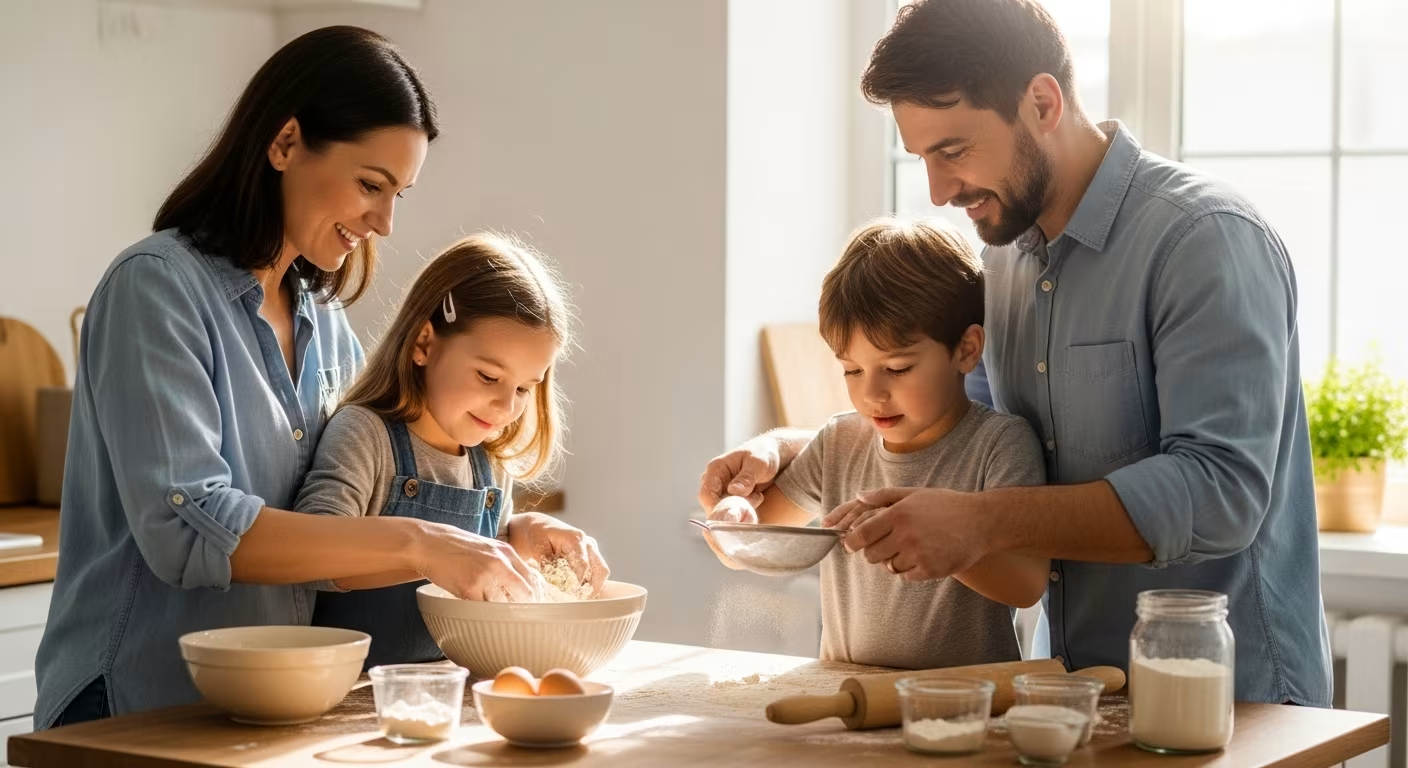
The parent who declutters a kitchen drawer on a Saturday and says, out loud, "I haven't used this in a year, so it goes to someone who will" is running a live demonstration. The parent who pauses over an online cart for a few days before deciding is teaching the waiting habit without naming it. Say "we keep what we use and love" once, then contradict it with impulse buys, and the sentence teaches nothing. The behavior underneath it is the lesson.
Letting Kids Make Real Decisions
Children can take part in these decisions earlier than most parents assume, and their participation only works when it is genuine rather than steered toward an answer you have already chosen.
From around age three, a child can answer two concrete questions: "Do you play with this?" and "Should we pass this to a younger kid?" Asked honestly, with the answer respected, these introduce the idea of judging an object by use rather than by an abstract rule. From five or six, a child can sort a bin of toys into keep and pass-on piles themselves. The rule that makes it real: you do not override the child's call on their own things. If they keep a broken toy you would have tossed, it stays. That authority is the entire point — without it, the exercise is a performance with a predetermined ending, and children detect the difference immediately.
By eight or nine, the conversations can get more explicit: what they actually want for a birthday, whether they would rather have one bigger gift than four small ones, what a wishlist looks like when it is edited. Handled as a real dialogue rather than a lecture, these are the years a child starts making the trade-offs on their own. It is worth cross-checking against Berkeley's Greater Good on mindfulness.
The Words That Make It Work
Small differences in phrasing produce large differences in response. "We're getting rid of your toys" frames the act as loss and reliably triggers a defensive grab for everything in reach. "These toys could make another kid really happy" frames the same act as generosity, and children as young as four respond to it differently — a donation box for a family shelter is a concept a preschooler can hold.
Ask "do you play with this?" rather than "do you like this?" A child who hasn't touched a toy in months still likes it in the abstract, but asked about actual play, they usually answer accurately. And connect the outcome to something they care about: "when your floor is clear, it's easier to build the whole track" lands better than any argument about consumption. You are describing a benefit they can see, not a value they are supposed to adopt.
The Incoming Tide: Gifts and Birthdays
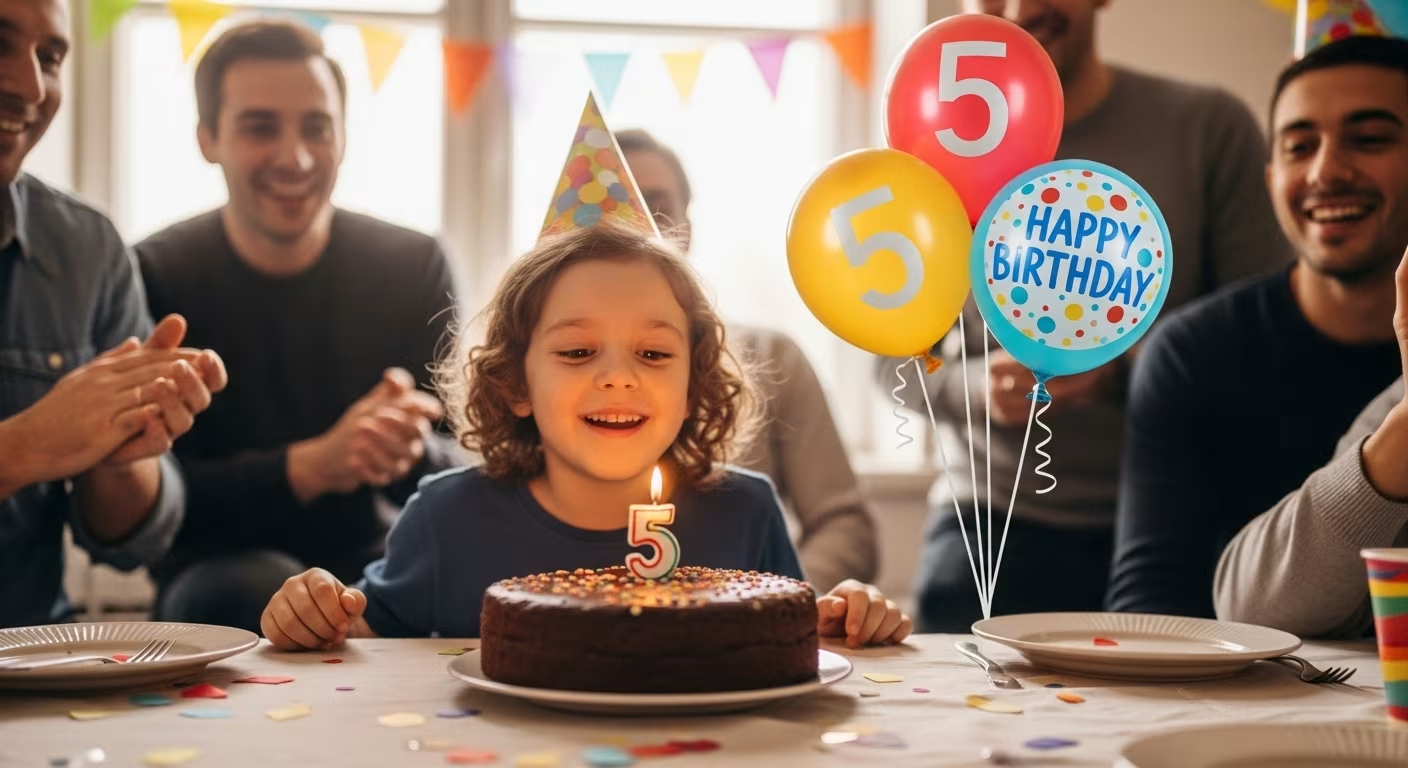
None of this holds if four birthdays and two holidays a year pour new plastic into the house faster than anything leaves. Grandparents mean well, party favors multiply, and the well-intentioned haul can undo a year of careful sorting in a single afternoon.
A one-in-one-out habit, applied gently, keeps the volume steady: the new building set arrives, and the child chooses one they've outgrown to pass on that same week — their choice, not yours. For relatives, a short pre-birthday note suggesting experiences, consumables, or a single wished-for item redirects generosity without rejecting it. Tickets, art supplies, a museum membership, or one thing off an edited list all count as gifts a grandparent is usually glad to give once they know it is wanted.
What actually shapes a child over the long run is none of these individual moves but the pattern across years — a home where thoughtful buying, regular re-sorting, and cheerful giving-away are simply how the household runs, not a special cleanup project. Kids raised inside that steady pattern tend to carry it into adulthood with less effort and less anxiety than those who only ever watched things accumulate. For the wider approach to running a family home this way, see our guide to minimalist parenting and raising kids with less stuff. The single most effective thing a parent can do is maintain that relationship visibly themselves, even on the days the children show no sign of absorbing it.
Modeling beats lecturing:
| Move | Age / detail | What it teaches |
|---|---|---|
| Declutter out loud | “Haven't used it in a year — it goes to someone who will” | a live demonstration |
| Pause the cart | a few days before deciding | the waiting habit, unnamed |
| Two honest questions | from ~age 3: “Do you play with this? Pass it on?” | judging by use |
| Never cull secretly | bagging toys during school | produces guarding + scarcity anxiety |
Comments
No comments yet.