


Why So Many Gifts Miss
Birthdays and holidays carry an expectation of physical objects handed over on a set date in a roughly expected quantity. That expectation pushes people to buy under deadline, from limited knowledge of what the recipient actually needs, and the result fills homes with things nobody chose. A candle set, a novelty mug, a gadget that seemed clever in the store aisle — these arrive well-meant and then sit unused in a cupboard. The gift that closes a real gap is the exception; the gift that adds to an existing pile is the norm.
The cost of the object has almost nothing to do with whether it lands. A $60 photo frame the recipient will never hang is a more expensive miss than a $12 jar of the specific hot sauce they have mentioned twice. The giver completes the transaction either way, but only one of the two is actually received as care rather than quietly absorbed into the clutter.
What Good Gifts Have in Common
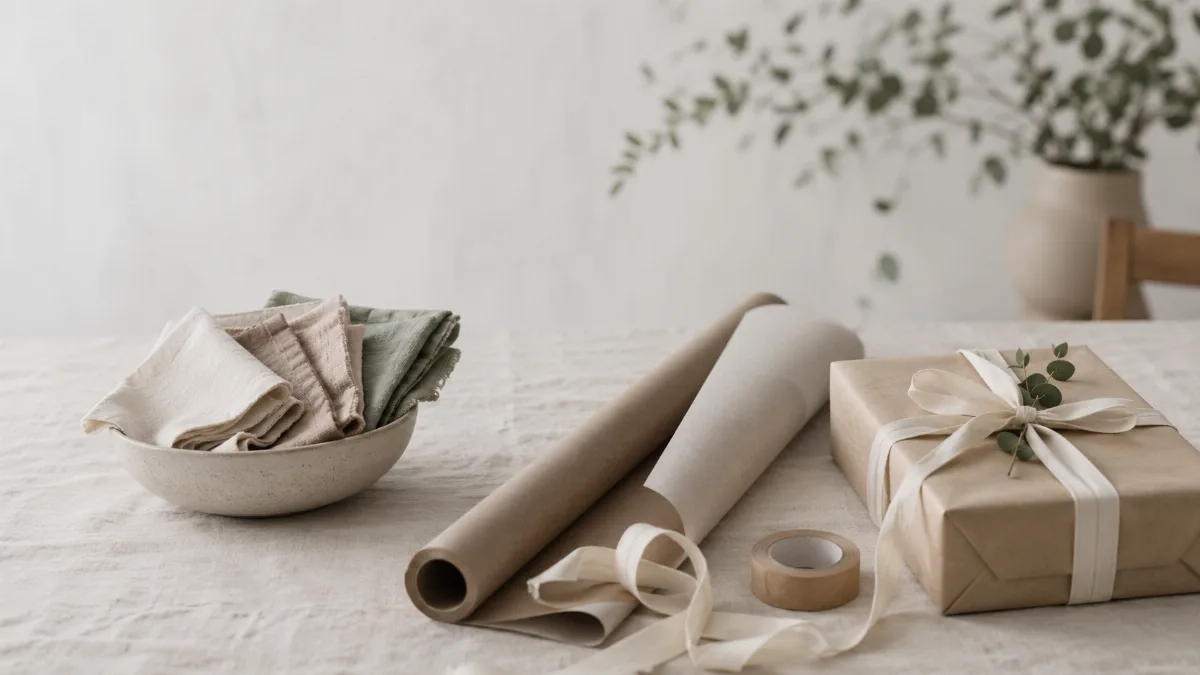
Gifts that work share three traits, none tied to price. They are specific to the person — chosen from real knowledge of what they use, read, cook with, or keep running out of. They don't duplicate something already owned. And they fit the life the recipient is actually living now, not a tidier hypothetical version of it.
Specificity is the trait that correlates most reliably with a gift being welcomed. A paperback by an author the person said they wanted to try beats an expensive hardcover by a name pulled from a bestseller table. A good chef's knife someone has openly complained about not owning beats a full knife block chosen because "kitchen stuff" felt like a safe bet. That specificity comes from paying attention across months — catching the offhand "I keep meaning to get one of those" — rather than reconstructing a wish list the week before.
Experiences and Consumables

For someone who already owns what they need, an experience usually outlasts an object. Dinner at the restaurant they've been curious about, two tickets to a show they mentioned, a $40 to $80 class in something they want to learn — these deliver real pleasure and leave nothing to store. The version that folds in your own time — going to the concert together, taking the class alongside them — tends to mean more than an object of the same cost, because the shared hours are half the gift.
Consumables run on the same logic. Food, wine, good coffee, a candle, nice stationery — used, enjoyed, and gone, with no storage decision left behind. A $15 bag of the single-origin beans someone actually drinks, or the specific dark chocolate they reach for, reads as attention precisely because it matches a real daily habit. Consumables also suit the person who has asked not to receive more objects, and the warm-but-not-close relationship where a personal object would overreach. For a child, an outing or an activity does the same work a toy does, without feeding the pile that overtakes most kids' rooms by age eight.
Time, Skill, and a Few Working Rules

In the right relationship, time and skill are the gifts hardest to buy and easiest to value. Helping someone move a heavy bookshelf, fixing the thing they've been avoiding for a year, spending a Saturday on a project they can't finish alone — none of it can be ordered online, and all of it serves a need that's real right now. Teaching a skill you have and they want works the same way: specific, useful, and impossible to duplicate with a boxed product. If you want to dig deeper, the federal MyMoney.gov toolkit is a good starting point.
A few practical habits keep gift-giving honest without draining the warmth out of it:
- Keep a running note in your phone of things people mention wanting, and shop from that note instead of from store displays.
- Default to consumable or experiential for anyone whose home already runs full.
- Ask directly in close relationships — a vague "surprise me" produces more misses than a shared shortlist ever will.
- Set a firm number per occasion so the pile doesn't grow simply because the calendar says it should.
Giving and Receiving Without Guilt
Stating your own preferences is the awkward part. "Please don't buy me things" can read as ingratitude; "here is exactly what to buy" can read as a demand. The workable move is to share preferences as positives rather than prohibitions — that experiences are the thing you value most, that a good bottle is always welcome, that a contribution toward one shared outing would genuinely make your month. Framed that way, it guides the people who want to give well instead of scolding them.
On the receiving end, thank the person for the thought regardless of whether the object fits your home, then make a quiet, separate decision about the object itself. A gift kept for a month and then passed on is not a gift dishonored: the relationship was honored in the giving and the receiving. Keeping every object forever confuses the object with the care it carried, and the care was already delivered. Over years, the surest way to shift your own gift relationships toward what people actually value is to model it — give thoughtfully, thank warmly for the non-object gifts, and the people around you quietly recalibrate. For the accumulation that even careful seasons still produce, our guide to applying one-in-one-out to holiday shopping covers the cleanup.
Attention beats price:
| Gift | Cost | Why it lands |
|---|---|---|
| The specific hot sauce they finished | $12 | proof you noticed |
| Single-origin beans they actually drink | $15 | consumable, no clutter |
| Experience: dinner, show tickets, a class | $40–$80 | time instead of objects |
| The miss | $60 photo frame never hung | expensive AND clutter |


Comments
No comments yet.