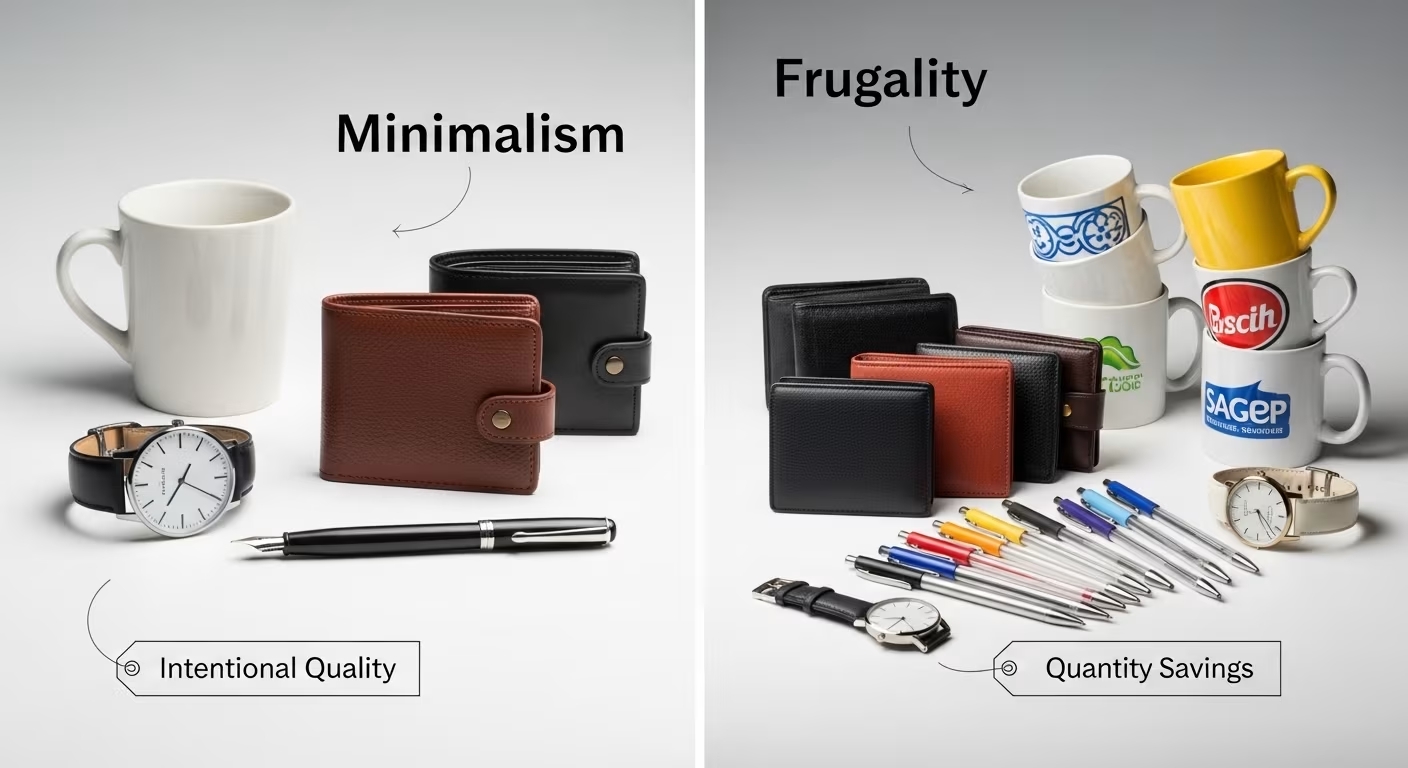


We live in a culture engineered to make us want more. Advertisements surround us. Shopping is entertainment. Buying promises happiness, status, and fulfillment. Breaking free from consumerism requires understanding its pull and deliberately building new patterns.
Understanding Consumer Psychology: Why We Buy Things We Don't Need
Breaking the buying habit requires understanding the psychological mechanisms that drive it. Consumer psychologists have identified several key triggers that retailers exploit:
The Six Triggers of Unnecessary Purchases
Trigger 1: The Diderot Effect Named after philosopher Denis Diderot, who received a beautiful scarlet robe as a gift and then felt compelled to replace everything in his study to match it. The Diderot Effect describes how one new purchase triggers a cascade of related purchases. A new sofa leads to new throw pillows, which leads to a new rug, which leads to a new coffee table.
Defense: When buying something new, commit to using it with your existing possessions. The new sofa works with the old pillows. Break the upgrade cascade before it starts.
Trigger 2: Social Proof "Everyone has one of these." Amazon reviews, social media unboxings, and friend recommendations create the perception that a product is essential. In reality, you managed without it yesterday and can manage without it tomorrow.
Defense: When social proof triggers desire, ask: "Did I want this before I saw someone else with it?" If the answer is no, the desire isn't genuine — it's manufactured.
Trigger 3: Loss Aversion "Sale ends tonight!" "Only 2 left!" These urgency triggers exploit our fear of missing out (FOMO). Behavioral economist Daniel Kahneman demonstrated that the pain of losing is psychologically twice as powerful as the pleasure of gaining. Retailers weaponize this by creating artificial scarcity.
Defense: If a deal is truly good, it will come around again. Black Friday prices appear throughout the year. "Limited edition" products are rarely limited.
Trigger 4: The Endowment Effect Once you touch or try something, you value it more. This is why stores encourage you to "try it on" or "take it for a test drive." The moment you interact with an object, your brain begins to treat it as yours, making the decision not to buy it feel like a loss.
Defense: Don't try things on unless you've already decided to buy. Don't add items to your online cart to "think about it" — the cart creates ownership feeling. If you need to deliberate, close the tab.
Trigger 5: Retail Therapy Shopping triggers dopamine release — the same neurotransmitter associated with gambling, social media likes, and recreational drugs. Stressed, sad, or bored people shop to feel better. The mood boost is real but temporary (averaging 20-30 minutes before guilt sets in).
Defense: Identify your emotional shopping triggers. Build a list of alternative dopamine sources: exercise, calling a friend, creating something, walking outside. These provide longer-lasting mood improvements without the financial hangover.
Trigger 6: Identity Shopping "I'd be the kind of person who uses this." The hiking boots for someone who hikes once a year. The art supplies for someone who hasn't painted since college. The kitchen gadgets for someone who orders takeout four nights a week.
Defense: Buy for who you are today, not who you imagine becoming. If you want to start a hobby, borrow equipment first or attend a class. Purchase only after you've practiced the hobby at least five times with borrowed or rented gear.
The 30-Day Rule for Breaking the Buying Habit
For one month, follow this protocol for every non-essential purchase:
- Day 1: Notice the desire. Write the item on a "want list" with today's date.
- Days 2-7: Do not visit the store (physical or online) where the item is sold.
- Days 8-14: If you still want the item, research alternatives and read negative reviews.
- Days 15-21: Calculate the true cost in work hours. Determine where the item will live in your home.
- Days 22-30: If the desire has survived three weeks of deliberation, you probably genuinely want it. Buy it thoughtfully — and apply one-in-one-out.
In practice, 80-90% of items don't survive the 30-day rule. The desires that persist represent genuine needs or values-aligned wants. These are purchases you'll feel good about.
Tracking Your Progress
Keep a simple spreadsheet or notebook:
| Date | Item Wanted | Cost | Survived 30 Days? | Actual Outcome |
|---|---|---|---|---|
| Jan 5 | Wireless earbuds | $79 | No (forgot about them by Day 12) | Saved $79 |
| Jan 8 | Running shoes (old ones worn out) | $110 | Yes | Bought; genuine need |
| Jan 15 | Kitchen organization set | $45 | No (realized I just needed to declutter) | Saved $45; decluttered instead |
After three months of tracking, you'll have a clear picture of your buying patterns and triggers, and you'll have saved significant money on purchases that would have ended up unused.
Understanding Consumer Culture
How We Got Here
Consumer culture didn't happen by accident:
- Post-war economies needed spending to grow
- Advertising became sophisticated psychological manipulation
- Credit made spending easier than saving
- Status became tied to possessions
- Shopping became recreation
We were taught to be consumers. Breaking the pattern means unlearning deep conditioning.
The Psychology of Wanting
Consumerism exploits human psychology:
Hedonic adaptation: The new thing brings temporary pleasure, then becomes normal, creating desire for the next new thing.
Social comparison: We measure ourselves against others' possessions, creating endless upgrading.
Identity through ownership: "You are what you own" becomes internalized.
Emotional regulation: Shopping becomes a coping mechanism for stress, boredom, and negative emotions.
Scarcity mindset: "Limited time!" and "Only 3 left!" trigger fear-based purchasing.
The Hidden Costs
Consumer habits have consequences:
- Financial stress and debt
- Clutter and chaos at home
- Environmental damage
- Time lost to shopping and maintenance
- Dissatisfaction that spending can't fix
Recognizing Your Patterns
Common Consumer Triggers
Emotional triggers:
- Stress or anxiety
- Boredom
- Loneliness
- Celebration
- Seeking comfort
Environmental triggers:
- Browsing online stores
- Walking through malls
- Seeing advertisements
- Sales and promotions
- Email marketing
Social triggers:
- Comparison to peers
- Social media showing others' purchases
- Keeping up with trends
- Group shopping activities
Your Personal Triggers
Identify yours:
- When do you tend to buy impulsively?
- What emotions precede unplanned purchases?
- Which environments lead to spending?
- What marketing is most effective on you?
Awareness is the first step to change.
Strategies for Breaking the Habit
Strategy 1: Create Friction
Make buying harder:
- Remove saved payment information
- Delete shopping apps
- Unsubscribe from retail emails
- Avoid stores unless necessary
- Implement waiting periods (24 hours for small, 30 days for large purchases)
Strategy 2: Understand Your "Why"
Every purchase has underlying motivation:
- "I need new clothes" might mean "I want to feel confident"
- "I want this gadget" might mean "I'm bored"
- "I need to shop" might mean "I'm stressed"
Address the underlying need without buying.
Strategy 3: Find Alternatives
For emotional needs shopping fills:
| Underlying Need | Alternative to Shopping |
|---|---|
| Boredom | Hobbies, walks, calling friends |
| Stress relief | Exercise, meditation, nature |
| Social connection | Actually seeing people |
| Excitement | New experiences, not new things |
| Comfort | Self-care that doesn't involve buying |
| Identity expression | Creating, not consuming |
Strategy 4: Change Your Environment
Remove consumer triggers:
- Unsubscribe from all marketing emails
- Unfollow brands on social media
- Use ad blockers
- Avoid malls and shopping centers
- Delete shopping apps
Strategy 5: Redefine Leisure
If shopping is entertainment:
- Find other activities
- Exercise, hiking, parks
- Creative pursuits
- Time with friends (not shopping)
- Learning and reading
- Community involvement
Strategy 6: Practice Gratitude
Focus on what you have:
- Daily gratitude practice
- Appreciating current possessions
- Recognizing "enough"
Wanting less comes from appreciating more.
Strategy 7: Question Everything
Before any purchase:
- Do I actually need this?
- What need am I trying to fill?
- Will this matter in a year?
- Could I borrow or rent instead?
- Am I being manipulated?
Most purchases don't survive genuine questioning.
Detoxing from Consumer Culture
The 30-Day Reset
Try 30 days of intentional non-consumption:
- No non-essential purchases
- Notice urges without acting
- Journal about what you learn
- Find alternatives to shopping
Digital Detox Components
Much consumption is triggered online:
- Social media breaks
- Limited browsing
- Email unsubscribes
- No online window shopping
Curate Your Inputs
What you consume influences what you want to consume:
- Stop reading lifestyle magazines
- Unfollow influencers selling things
- Avoid "haul" videos
- Seek content about simple living instead
Changing Your Relationship with Stuff
From Owner to User
Shift from owning to using:
- Library for books
- Rentals for occasional needs
- Borrowing from community
- Shared ownership options
From Consumer to Creator
Instead of consuming, create:
- Make instead of buy
- Write instead of read constantly
- Cook instead of ordering
- Build instead of purchasing
From Acquiring to Appreciating
Practice appreciation of what exists:
- Really see what you own
- Use what you have fully
- Find joy in existing possessions
Handling Specific Challenges
Online Shopping Addiction
The frictionless nature makes it dangerous:
- Remove apps and bookmarks
- Block shopping sites
- Don't browse "for fun"
- Cart waiting periods
- No saved payment info
Sales and Deals
"50% off!" is only a deal if you needed it at full price:
- Sales are marketing, not favors
- Calculate the actual spending, not the "savings"
- Question: Would I want this without the sale?
Social Pressure
When others are buying:
- You don't need to participate
- Suggest non-shopping activities
- Be comfortable with your choices
- Your finances are your business
Advertising
Ads work. That's why billions are spent on them:
- Recognize manipulation
- Use ad blockers
- Mute commercials
- Fast-forward through ads
- Limit exposure to advertising media
Building New Patterns
Create Positive Habits
Replace shopping with:
- Morning gratitude practice
- Evening review of what's enough
- Weekly "appreciation sessions" with possessions
- Monthly donation of items leaving your home
Celebrate Non-Purchases
Note when you successfully didn't buy something:
- "I wanted X but didn't buy it—and I'm fine"
- Track money not spent
- Celebrate the wins
Build Community
Connect with others who share values:
- Minimalism communities
- Buy nothing groups
- Simple living forums
- Friends who aren't focused on consumption
The Deeper Work
Examine Core Beliefs
Consumerism relies on certain beliefs:
- "More is better" (Is it?)
- "New is superior" (Is it?)
- "Stuff makes you happy" (Does it?)
- "You are what you own" (Are you?)
Question and revise these beliefs.
Define Enough
The consumer treadmill never ends because "enough" is never defined:
- What do you actually need?
- What is sufficient?
- At what point would you have enough?
Define it. Then stop at that point.
Find Identity Beyond Stuff
If you're not your possessions, who are you?
- Your relationships
- Your actions
- Your values
- Your creativity
- Your impact
These define you better than what you own.
Final Thoughts
Breaking consumer habits isn't easy. You're swimming against a cultural current designed by billion-dollar industries to keep you buying.
But it's possible. And it's worth it.
Freedom from consumerism means:
- Financial health
- Uncluttered spaces
- Clearer mind
- Time for what matters
- Identity not dependent on purchases
- Environmental impact reduced
Start with awareness. Add friction. Find alternatives. Question everything. Build new patterns.
You weren't born a consumer. You were made into one. You can unmake yourself.
That's the beginning of freedom.