

What One Bag Travel Really Means
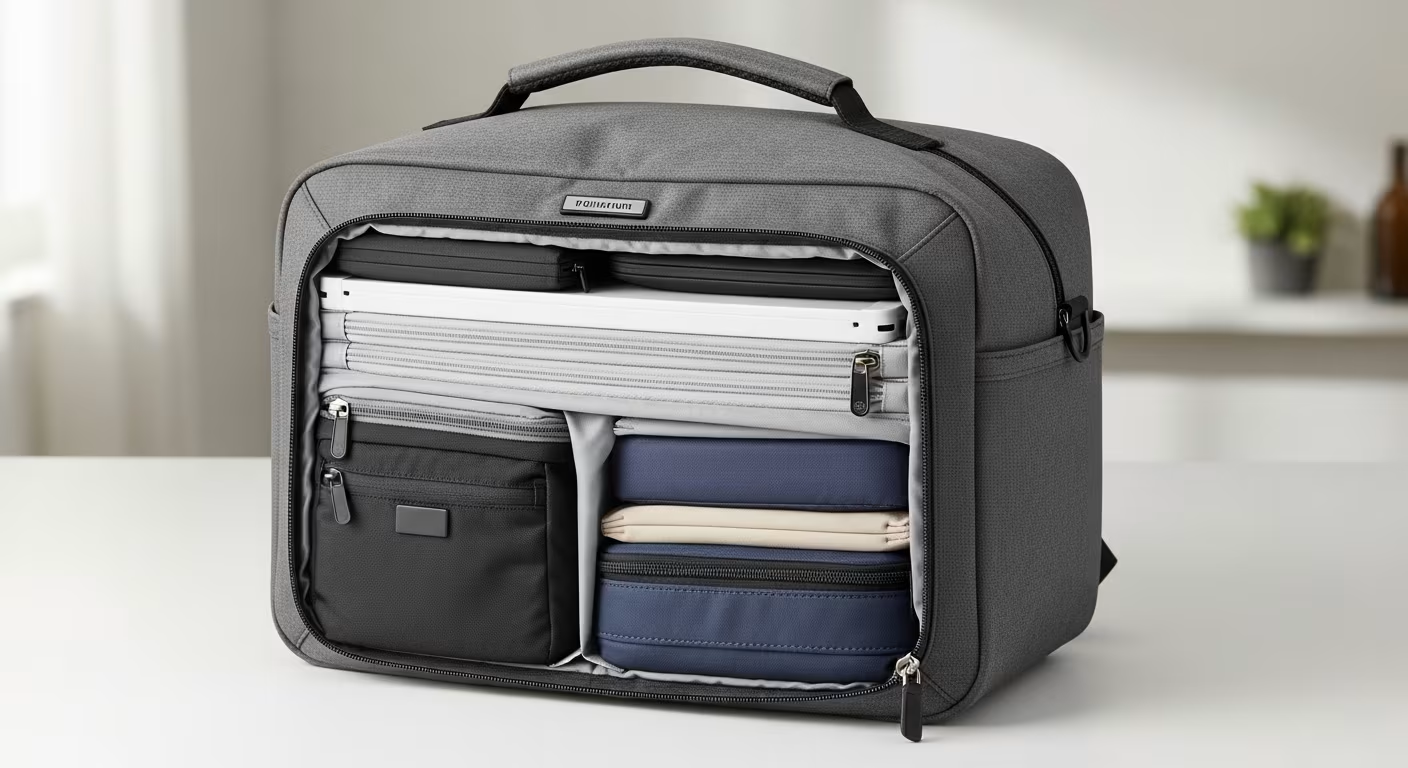
One bag travel means departing and returning with a single carry-on: no checked luggage, no separate personal item, no exception carved out because the trip runs longer. That constraint forces a different way of packing. Every item has to justify its place not only on its own merits but against the weight and volume it claims inside a fixed space.
The approach holds for trips of any length. A weekend and a three-week journey pack almost identically, because washing clothes on the road replaces carrying more of them. The bag stays the same size; the calendar does the changing. Once you accept that the wardrobe is finite and the laundry is recurring, the length of the trip stops driving the decision.
Choosing the Right Bag
The bag matters more here than in conventional packing, because it is the only container you get. Most major airlines allow a carry-on of roughly 22 by 14 by 9 inches, though the exact figure drifts between carriers and the budget airlines police it hardest, so it pays to check the specific airline's limit before every trip rather than assume last year's bag still qualifies.
A clamshell opening, where the main compartment unzips flat like a suitcase, is far easier to pack and dig through than a top-loading backpack. Internal compression straps stop clothing shifting in transit. Bags in the 26 to 35 litre range suit most one bag travellers: smaller forces sharper editing, larger tempts you toward the airline limit and invites overpacking. The bag should still work when it is only two-thirds full, because plenty of trips genuinely need less.
How the weight sits inside the bag matters once it is on your back. Heavy items, the shoes and the toiletry bag, ride low and close to the spine, with clothing packed around them, so the load carries over your hips rather than dragging at your shoulders. A bag that carries badly makes even a light kit feel heavier than a well-balanced one holding more, which is why a short loaded test walk at home tells you more than any spec sheet.
Building the Clothing Capsule
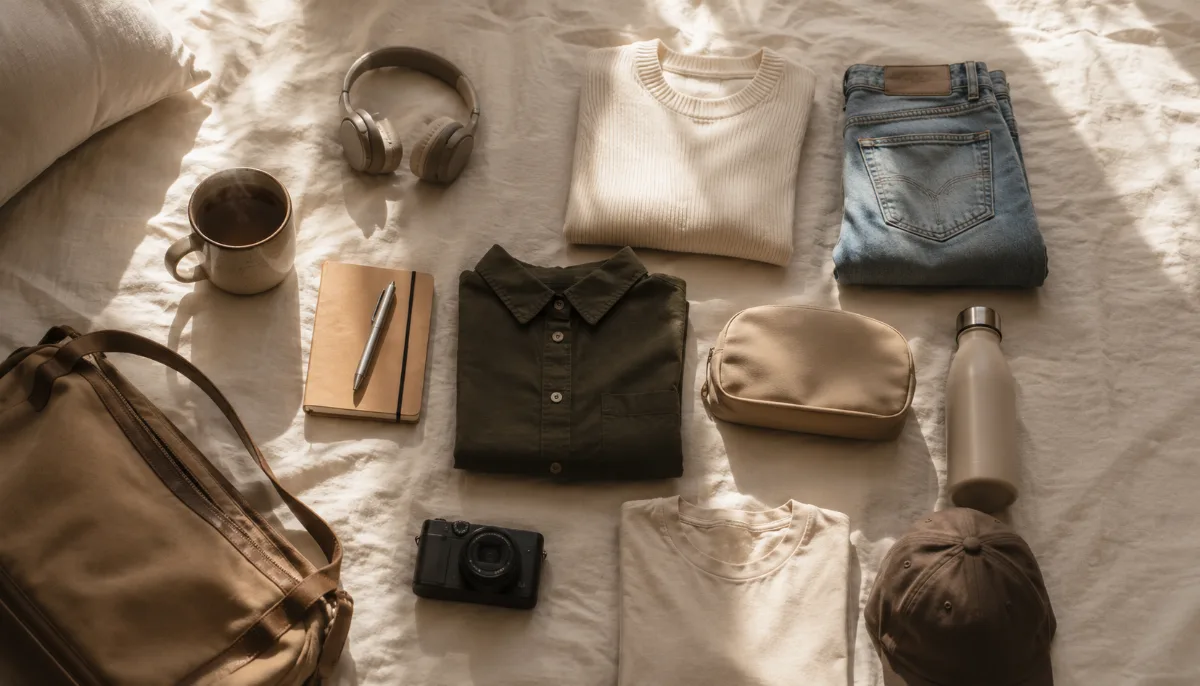
The clothing capsule is the core of the method. Eight to twelve pieces, chosen so that each one works with every other, cover any trip length when laundry lands every three to four days. A typical set runs to three or four tops, two bottoms, one versatile outer layer, one pair of shoes for most activities, and one dressier option if the itinerary demands it. Every bottom pairs with every top; every layer sits over every other. A single palette of neutrals with at most one accent colour makes that automatic instead of a morning puzzle.
The payoff is arithmetic. Three tops and two bottoms already yield six combinations before any layers; add a jacket that works over all of them and a dress or shirt that dresses the set up, and a nine-piece capsule covers a week of distinct outfits with room for a wash day. The discipline is being ruthless about coherence: one shirt that pairs with only one pair of trousers is dead weight, because it cannot join the rotation the rest of the pieces share.
Fabric decides how well the capsule survives real use. Merino wool resists odour far longer than cotton or most synthetics, so a merino shirt can be worn several days between washes without becoming unpleasant, which is exactly what a small kit needs. Quick-dry synthetics earn their place in humid climates where drying time is the bottleneck. Cotton is comfortable but slow to dry and quick to hold smell. Pack for the activities that will actually happen: a conference trip needs no hiking boots, and a trekking trip needs no dress shoes.
Managing Laundry on the Road
Laundry is what turns one bag travel from a stunt into a routine. Most hotels and hostels run a service or self-service machines, many apartment rentals include a washer, and in cities a drop-off laundry often returns a full load the same afternoon for a few dollars a kilo. None of it requires planning beyond knowing it exists.
Sink washing handles the gaps. A small tube of concentrated travel detergent in a leakproof bottle covers underwear, socks, and a quick-dry shirt; merino and synthetics wring out and hang dry overnight. Planning a wash every three to four days sets how many days of clothing the capsule has to hold: four days of clothes plus a day of margin keeps you comfortable across a trip of any length without carrying a single spare outfit.
Drying, not washing, is the real constraint. Merino and thin synthetics hang dry overnight, while jeans and thick cotton can take a full day in humidity, which is reason enough to leave them out of a wash-as-you-go capsule. When something has to dry fast, rolling the wrung garment inside a travel towel and pressing pulls out enough water to shave hours off the time on the line.
Eliminating the Just-in-Case Habit
Most overpacking traces back to just-in-case items: a formal outfit for a dinner that might materialise, warmer layers in case the weather turns, a second pair of shoes for an occasion nobody has confirmed. Each one occupies space that could hold something used daily, or nothing at all.
Weigh each candidate against two numbers: how likely it is to be used, and what it would cost to acquire locally if the need appeared. A rain jacket scores high on probability in most destinations and stays. A full suit scores low on a leisure trip and can be rented on the rare occasion it is required, so it goes. A redundant pair of shoes usually scores low and weighs a lot. Run honestly, this test clears out most of the pile, and what survives is genuinely worth carrying.
Toiletries and Liquids in a Carry-On

The liquids limit for carry-on bags, containers of 100ml or less inside a single one-litre bag under the TSA's carry-on screening rules, is easy to live within once you switch to solids. Shampoo bars, conditioner bars, solid deodorant, a bar of soap, and solid sunscreen all pass security without counting against the allowance and never leak into a packed bag.
For the liquids that stay liquid, decant into small reusable bottles before you leave; buying a full-size product once and refilling wastes less than buying travel sizes trip after trip. On longer journeys, simply buying toiletries at the destination removes the question altogether.
Backpack or Wheeled Carry-On
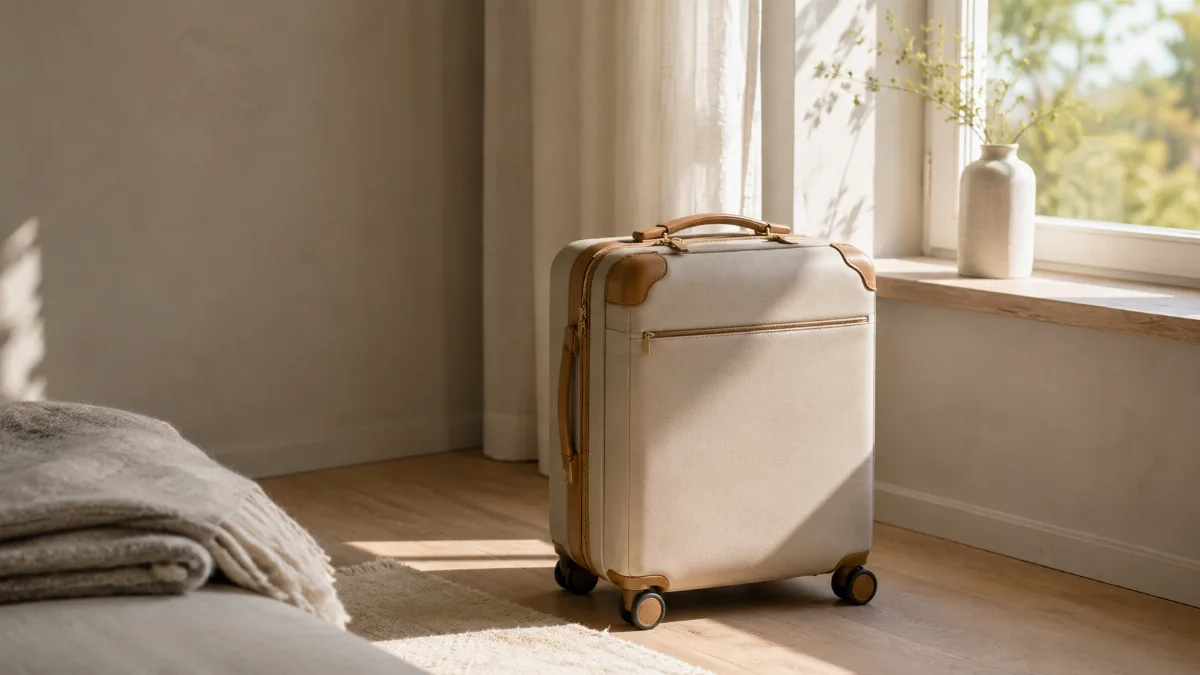
One bag travel works with either, and the right pick depends on how the trip moves. A backpack wins when you walk long distances between transit and accommodation, when public transport means stairs and turnstiles, or when the streets are cobbled and rough enough that wheels are useless. A wheeled carry-on wins in airports and flat, paved cities: it rolls beside you, stands upright while you handle documents, and spares your back on smooth ground.
Many committed one bag travellers settle on a hybrid, a structured carry-on with a proper harness that carries as a backpack when needed. It adds a little weight and buys the most flexibility across mixed environments. Whatever the shape, test it on a short trip of two to four days first: a quick outing reveals which pieces you actually use, which ride along untouched, and whether the bag suits your style, and you adjust before committing it to a longer journey.
The limits that define the bag:
| Constraint | Number | Note |
|---|---|---|
| Carry-on size | ~22 × 14 × 9 in | exact figure drifts by carrier — check yours |
| Sweet spot | 26–35 litres | smaller sharpens editing; larger tempts overpacking |
| Liquids | 100 ml containers, one clear bag | bars and tablets skip the rule entirely |

Comments
No comments yet.