

What Screens Actually Provide
Cutting children's screen time isn't mainly about finding substitutes for screens. It's about understanding what screens give a child that feels so compelling, and then making sure the alternative environment offers something genuinely absorbing on its own terms.
Screens deliver effortless stimulation, constant novelty, and instant reward. An alternative has to be interesting in itself, not merely not-a-screen. A child told to switch off the tablet and sit in a bare room will be bored and will say so. The same child turned toward a space stocked with interesting materials and given enough unstructured time to sink into them will often find real engagement — sometimes deeper than the screen was providing. The setup does more work than any particular activity. A room with open-ended materials — art supplies, building sets, natural objects, books, simple props for pretend play — creates the conditions for screen-free absorption far more reliably than a scheduled list of screen-free things to do. The American Academy of Pediatrics' family media guidance makes the same point from the health side: what matters is the balance of activities a child has access to, not a single magic number of minutes.
The Open-Ended Materials That Work Across Ages
Some materials hold up across a wide age range because they bend to the child's current interest and stage instead of dictating one use. These are the ones worth keeping stocked and within reach:
Art supplies in accessible storage. Paper in a few sizes, crayons, markers, a basic watercolor set, child scissors, and glue — kept where a child can reach them without asking — produce creative play across ages. Independent access is the whole point: a child who can pull out materials without permission uses them spontaneously far more than one who has to request an adult set something up.
Building materials. Wooden blocks, magnetic tiles like Magna-Tiles, and basic construction sets drive engineering and creative play from toddlerhood through middle childhood, growing more sophisticated as the child does. A single tile set runs around $40–$60 and gets used for years, which makes it one of the better-value open-ended investments precisely because it prescribes no outcome.
Natural materials. Sticks, rocks, leaves, sand, water — the original screen-free materials, and still among the most effective. Children engage with them at a depth and duration structured toys rarely match, because they're genuinely variable and never run out of interesting properties.
Books a specific child is drawn to. Not every book engages every child equally. Finding the genre, subject, or format a particular child gravitates toward and keeping those within reach beats a large shelf of books that don't especially compel them.
| Material | Works for ages | What it develops | Rough cost |
|---|---|---|---|
| Paper, crayons, watercolor | 2–10+ | Fine motor, creative expression | $15–30 |
| Wooden blocks | 1–8 | Spatial reasoning, balance | $30–50 |
| Magnetic tiles | 3–10 | Engineering, basic geometry | $40–60 |
| Natural materials | All ages | Sensory play, open imagination | Free |
| Well-matched books | All ages | Language, sustained attention | Library / low |
Why Unstructured Time Is the Real Ingredient
Screen-free time that's tightly scheduled — one organized activity handed off to the next — produces compliance without genuine engagement. Children moved through an adult-run sequence of screen-free activities aren't learning to occupy themselves; they're just moving through a screen-free schedule.
Real engagement with open-ended materials needs unstructured time: a stretch where nothing is planned, the materials are out, and the child decides what to do. It often opens with boredom — the child casting around, unable to settle — and that opening stretch is productive, not a failure. A child bored in a room full of interesting things will land on something, and the landing is itself the developmental work the time is meant to support.
The common misstep is stepping in too fast. A declaration of boredom isn't a problem to solve on the spot; it's the start of a process that, left to run, resolves into self-directed play. Waiting perhaps fifteen minutes before offering anything, and then offering materials rather than a specific activity, supports the process without short-circuiting it.
The Productive Side of Boredom
Boredom has been half-medicalized in current parenting culture, treated as a state to be relieved immediately rather than one children pass through on the way to genuine engagement. A child who announces boredom, if not instantly supplied with stimulation, will usually settle into self-directed play within fifteen to thirty minutes.
Holding back from solving it on the spot — not offering suggestions, not organizing an activity, not producing entertainment — is one of the harder and more genuinely useful things a parent can do here. The child who learns to move through boredom into engagement is building a capacity for self-direction and sustained attention that pays off well beyond childhood. It helps to say in advance that boredom is allowed and normal, so the wait doesn't read as a parent failing to respond.
Activities That Ask Almost Nothing
The most reliable screen-free activities tend to cost little or nothing, which is worth saying because the instinct when reducing screens is often to buy a replacement. A large cardboard box becomes a house, a car, a boat, or a fort depending on the week, and it holds attention in a way few purchased toys manage. A blanket draped over two chairs does the same. Water play at the kitchen sink — a few cups, a funnel, a dish of soapy water — occupies a young child for a surprisingly long stretch with materials already in the house.
Simple prompts extend materials that are already out. A drawing challenge ("draw the loudest thing you can think of"), a collection walk that fills an egg carton with different leaves or stones, a sorting game with a jar of buttons or coins — none of these need preparation or supervision beyond setting them in motion. The pattern is consistent: the less an activity dictates, the longer and more inventively a child tends to stay with it.
Outdoor Time as the Default
Outdoor time is the original screen-free default and the one with the widest range of benefits: physical movement, variable sensory input, social play when other children are around, and constant engagement with natural materials.
The space doesn't need to be elaborate. A yard, a park, a stretch of sidewalk — anywhere a child can move freely and interact with the physical world serves the purpose. A child sent outside into an ordinary environment finds things to do with a reliability indoor spaces don't always match, because outdoors supplies constant novelty through weather, light, the seasons, and whatever the plants and animals are doing. Making it daily, whenever weather allows and regardless of whether the child asks for it, turns outdoor play into a normal part of the day rather than a special event.
Simple Structures That Extend Outdoor Play
A few plain additions to an outdoor space stretch the length and variety of play well beyond what a bare yard offers. A sandpit gives years of sensory and creative play, needs no adult running it, and can be built from a few boards and a load of sand for a fraction of the cost of a molded plastic version. A rope swing or a simple climbing frame invites active play. A small garden bed a child can plant and watch provides engagement that unfolds across whole seasons.
None of it requires much money, and that's rather the point. The value is in the open-endedness, not in a specific prescribed use. A space that rewards exploration and varied use sustains screen-free play far better than an elaborate structure built for one activity.
Letting Kids Into Everyday Tasks
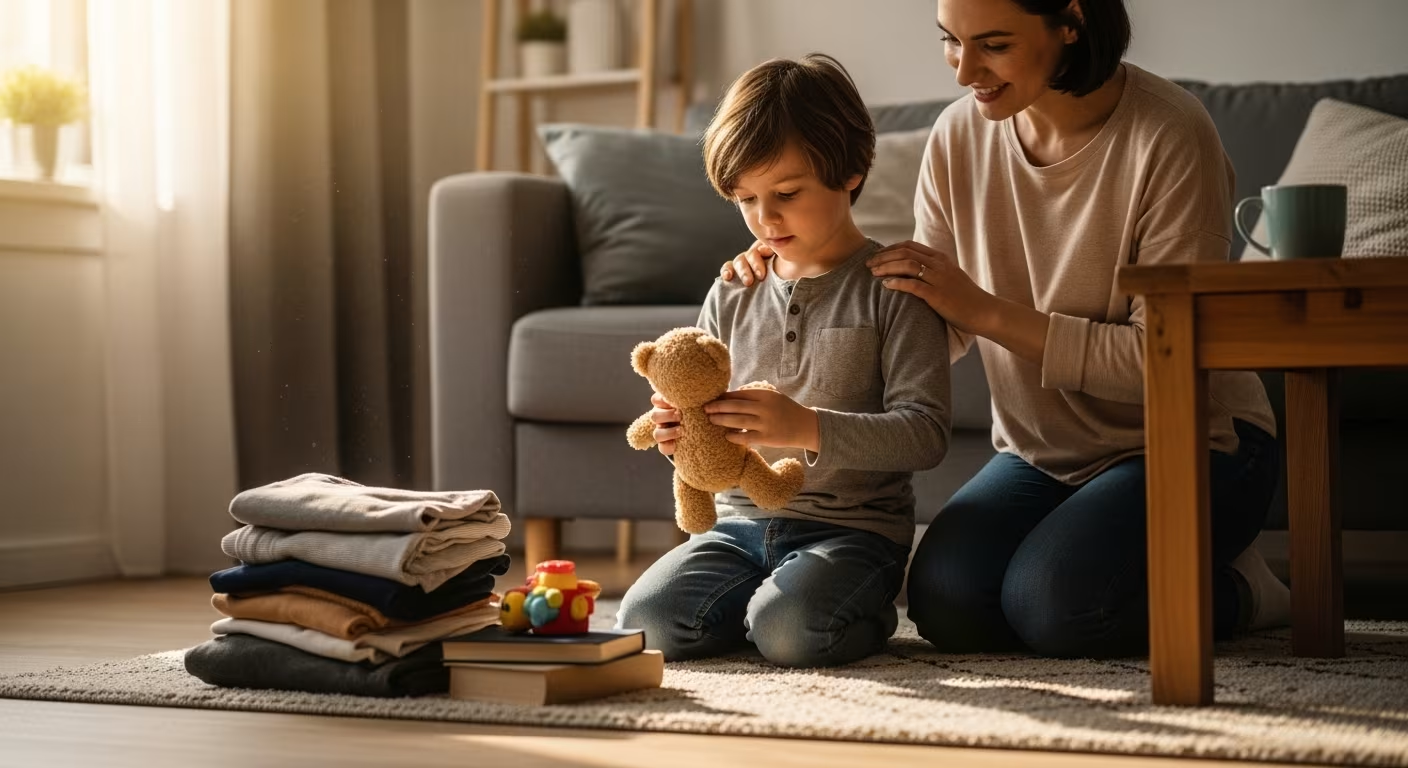
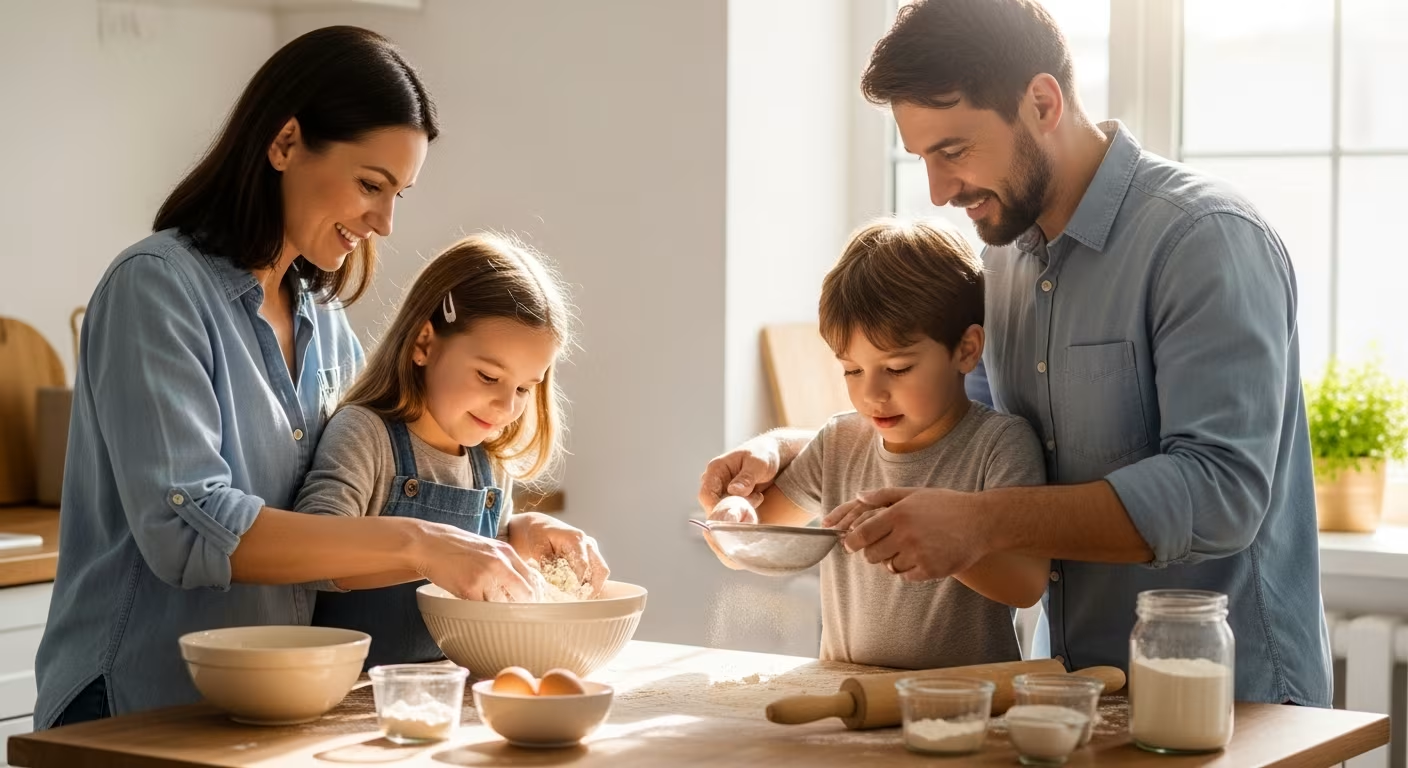
Children are often more drawn to the real work adults are doing than to activities designed for them, and the household chores of an ordinary day double as engagement when a child is allowed to take part. Washing vegetables, tearing lettuce, stirring batter, and spooning ingredients give a young child a genuine role in making dinner, and the appeal is precisely that it isn't pretend. Setting the table, matching socks from the laundry pile, and sorting recycling are tasks a preschooler can do with real competence.
The trade is patience for engagement: a child's help makes most tasks slower, and that is the cost of it. But the time spent is doubly useful — the task gets done, and the child is absorbed in something purposeful rather than waiting to be entertained. A child who grows up treated as a capable participant in the running of the home is also less likely to reach for a screen out of boredom, because there is usually something real going on to join.
Setting Up the Space
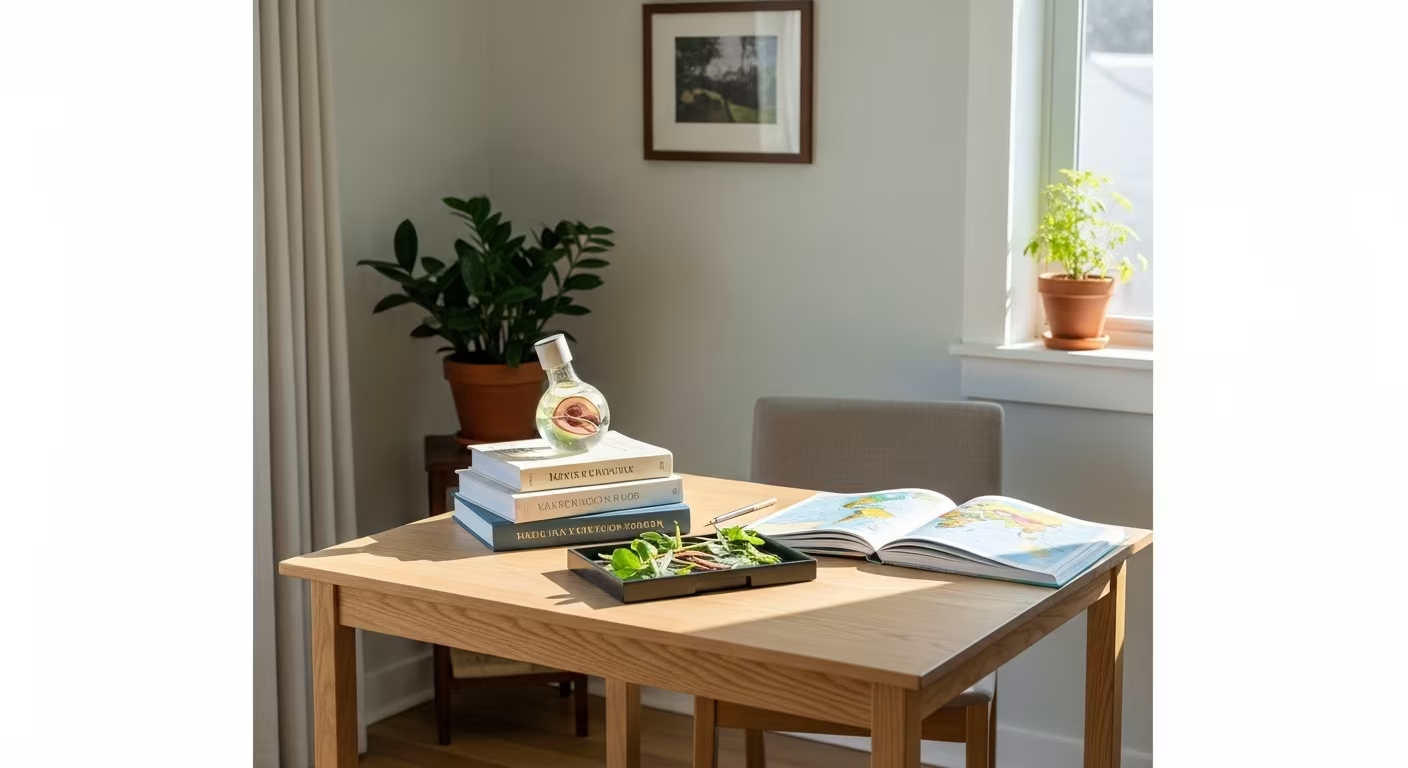
The environment does most of the work, so a little arrangement goes a long way. Keep the highest-value materials — art supplies, blocks, a basket of books — at child height and visible, because materials out of sight go unused. Rotate rather than display everything at once: a smaller set of materials in circulation, swapped every few weeks, tends to draw more sustained attention than a full shelf that reads as visual noise. And keep screens out of the default sightline, since a visible tablet is a standing invitation that competes with everything else in the room.
When Screens Come Back
Screen-free time doesn't mean eliminating screens; it means building real stretches of the day where a screen isn't the default. A household with genuine screen-free engagement for parts of each day tends toward a more balanced relationship with screens than one where a screen is simply the leisure activity that's always on.
That balance looks different across households and ages, and the goal isn't a fixed ratio. It's a home where both screen and screen-free play are genuinely available and genuinely used — not one where screens have quietly crowded out the alternatives by being constantly within reach and constantly more rewarding in the moment than anything else. Our guide to minimalist parenting: raising kids with less stuff covers the wider approach to a family setup that supports rich play without many possessions or elaborate plans.
Comments
No comments yet.