
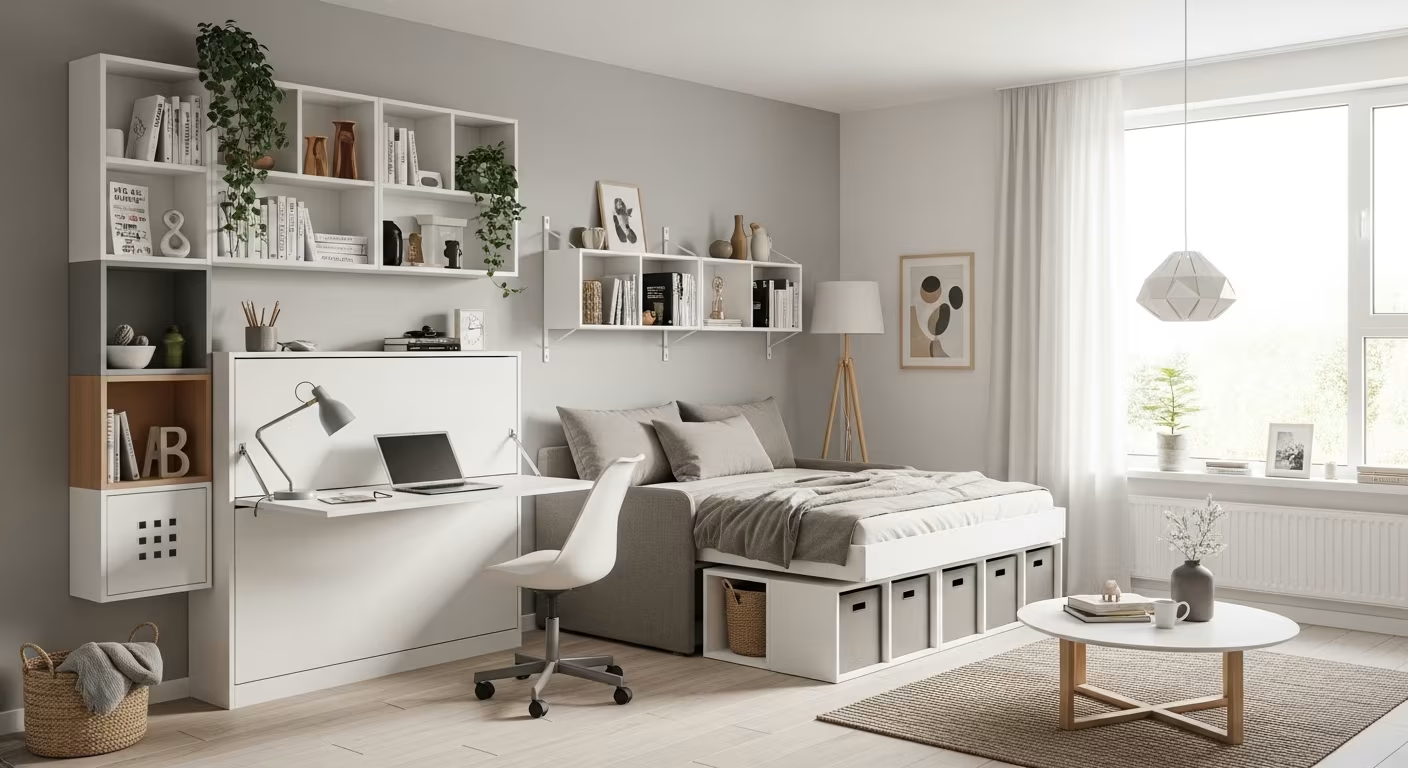

A 400-square-foot apartment defeats the person who treats it as a shrunken version of a bigger place — same amount of furniture, same volume of belongings, same habits, just squeezed. It rewards the person who treats it as its own kind of problem, where every square foot is spoken for and every piece has to earn the space it occupies. The shift is small to describe and large in effect: you stop asking "how do I fit everything in here" and start asking "what genuinely needs to be here." Those two questions furnish the same room completely differently.
Start With the Functions, Not the Furniture
Before a single piece goes in, name what the space has to do. In most small apartments that is four things: sleeping, eating, cooking, and — if the apartment is also where you work — a place to work. Everything else is negotiable and comes after these are handled well.
Then set the minimum kit for each function. Sleeping needs a bed the right size for the people in it. Eating needs a surface at the right height and seats for the household plus a guest or two. Cooking needs a clear patch of counter and the tools you actually use. Working needs a stable surface and a chair that does not wreck your back over six hours. Build up from that minimum rather than starting with a full house of furniture and trying to cram it in. The first approach gives you a room that works; the second gives you a room you edit down under pressure after the fact.
Scale Is the Decision That Makes or Breaks the Room
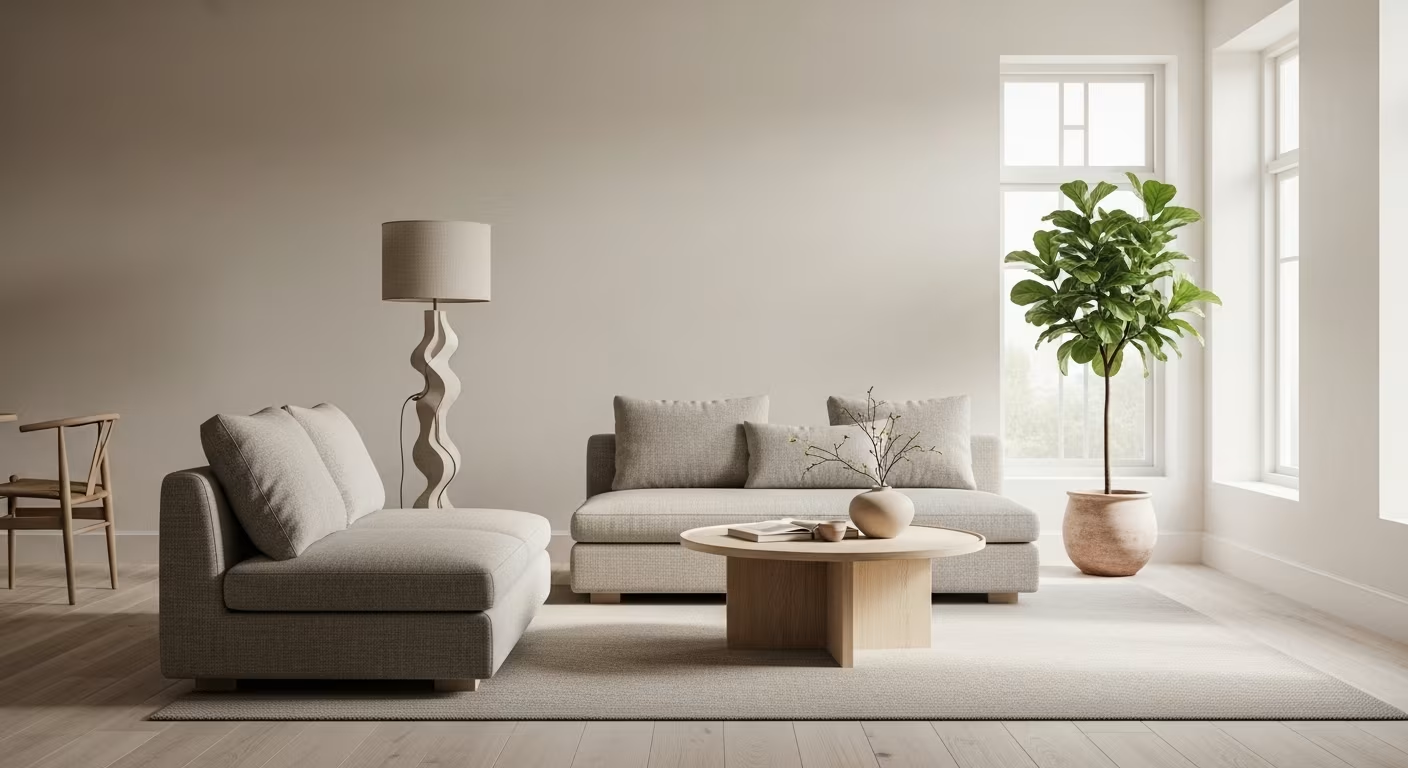
In a small apartment, the size of each large piece matters more than anything else you decide. A sofa that runs 90 inches in a room that is 11 feet wide swallows the wall and leaves a corridor too tight to pass without turning sideways. A dining table for six in a nook that fits four blocks the one clear path through the room. Drop to a 72-inch loveseat and a 32-inch round table, and the same square footage suddenly breathes — you changed the pieces, not the walls.
Measure before you buy anything big, and draw the floor plan to scale — graph paper or a free room-planning app both work. Cut the furniture to scale too and slide the shapes around on paper. The piece that looked reasonable in a cavernous showroom is a different animal in a 12-foot room, and paper catches that before the delivery truck does. Tape the footprint onto the actual floor and live around it for a day if you can; the tape tells the truth the catalog photo hides.
Buy Furniture That Does Two Jobs
When the functions outnumber the floor, a single piece pulling double duty is worth more than two dedicated ones. A storage ottoman is a coffee table and a bin for blankets and the extra pillow. A bed frame with drawers underneath replaces a dresser. A drop-leaf or gate-leg table seats two on an ordinary night and four when someone visits, then folds back to the width of a bookshelf. A daybed is a sofa six days a week and a guest bed on the seventh. For evidence-based guidance here, see Colorado State University Extension.
The catch is that a double-duty piece has to do both jobs honestly. A daybed too narrow to sleep on comfortably is just a hard sofa; a "desk" that only works after you clear a dinner's worth of dishes is not really a table. Test both functions before you commit, not just the one on the showroom tag.
Nesting and folding pieces deserve a mention here too. A pair of nesting side tables gives you one surface most days and two when guests arrive, then tucks back to a single footprint. Folding chairs stored flat behind a door handle seating for four in an apartment that only seats two day to day. A bar cart doubles as a mobile pantry shelf in a kitchen with no cabinet to spare. The principle running through all of it: a small apartment rewards furniture that scales up on demand and shrinks back when the demand passes, rather than furniture sized for its busiest hour and idle the rest of the time.
Store Up, Not Out
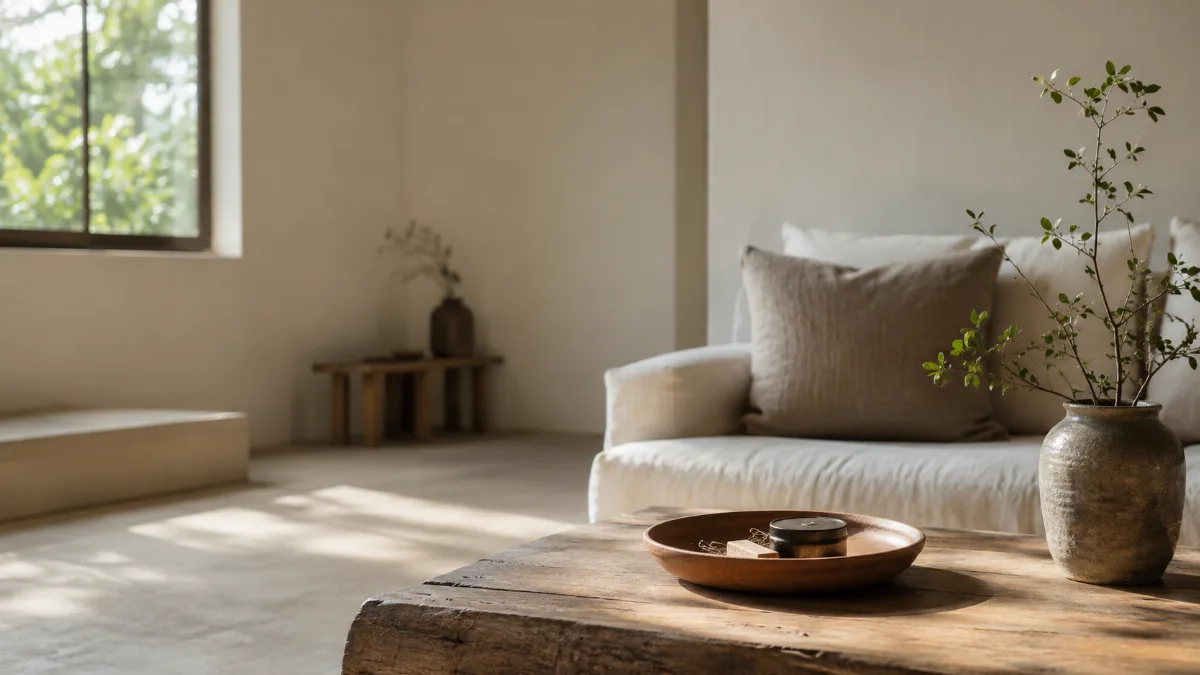
Every square foot of floor is worth more than the same area of wall or ceiling, so the storage that costs you least is the storage that climbs. Wall-mounted shelves, a tension rod in an unused vertical gap, over-the-door organizers, under-bed boxes on the six to nine inches of clearance most frames leave, a tall narrow bookcase instead of a wide low one — all of these add capacity without stealing the floor you walk and live on.
The pieces to be wary of are the ones that fight your circulation for floor space: the freestanding shelving unit that juts into the walkway, the storage bench that lands right where you need to pass. If a storage solution makes the room harder to move through, its real cost is higher than the shelf space it adds. Send that storage up the wall instead.
Two spots in a small apartment are almost always underused. The vertical strip above door height — the top foot or two of wall that runs all the way around a room — will hold a shelf for the things you reach for a few times a year: off-season gear, spare bedding, archive boxes. And the back of a door takes an over-the-door rack for shoes, cleaning supplies, or pantry overflow without touching the floor at all. Neither costs much, and both convert dead air into storage the room was giving away for free.
Use Light to Add Space You Do Not Have
Light is the cheapest way to make a small room feel bigger without moving a wall. Keep the windows as clear as you can, trade heavy drapes for sheers that hold privacy while letting daylight through, and hang a mirror on the wall opposite the window so it throws that light back across the room. None of this changes the dimensions; all of it changes how large the room reads.
Artificial light matters just as much after dark. A small apartment lit only by one fixture in the middle of the ceiling develops a cave effect — the center glows and the edges fall into shadow, which makes the room feel smaller and lower. Two or three lamps around the perimeter, ideally warm-toned, push light into the corners and lift the whole space. A floor lamp in the dead corner behind the sofa does more for the sense of size than most people expect from a $40 fixture.
Edit More Often Than You Would in a Big Place
In a small apartment the cost of accumulation shows up fast. A new gadget, a second coat, a stack of books — each one takes a bigger bite of a smaller pie, so the room tips from comfortable to cramped in weeks, not years. That argues for a shorter editing cycle than a big house needs: a monthly pass instead of an annual one.
The pass is quick — fifteen or twenty minutes. Look at what arrived in the last month, decide whether each thing earned its place, and check whether anything already there should now leave. Done monthly, it keeps the apartment from drifting past the line where comfortable density becomes daily friction. Skip it for a season and you feel the difference: the surfaces fill, the closet stops closing, and the room starts working against you.
Shared Small Spaces Need Explicit Rules
Two people in a tiny apartment cannot run on vague good intentions, because there is no slack to absorb the friction. The absence of an agreement about where things go and who resets what gets magnified by the closeness. What works is specific, not general: where the mail lands when it comes in, which surfaces stay clear no matter what, how the kitchen gets returned to neutral after cooking, what happens to things that arrive as gifts or impulse buys.
Set as shared norms both people signed up for — rather than one person's standards imposed on the other — these agreements let a small shared space run smoother than a large one with unspoken resentments. The square footage is rarely the real source of conflict; the unaddressed logistics are. A shared drop zone by the door — a hook, a small tray, a single basket — solves half of these before they start, because the friction usually begins with the things that have nowhere to land the moment two people walk in.
The Rest a Small Room Can Offer
A well-run small space can deliver a kind of visual calm that big, fully furnished rooms rarely manage. When the furniture is scaled right, the surfaces are clear, and only a few chosen objects are on display, nothing unnecessary is competing for your attention. Every element in the room is there because it belongs.
Large rooms tend to accumulate more, and more varied, stuff over time simply because they have the room to hide it. The small apartment's constraint — that each object has to justify itself because there is no surplus space to absorb it — produces, when you actually honor it, a room that reads as genuinely restful. The limitation is doing the work that discipline has to do consciously in a bigger home. Treat the constraint as the design tool it is, and 400 square feet stops feeling like a compromise and starts feeling like a decision. Pick the four functions that matter, size the pieces to the room, send the storage up the walls, and let the light do the rest.
The scale test, in inches:
| Piece | Wrong | Right |
|---|---|---|
| Sofa in an 11-ft room | 90 in — swallows the wall | 72-in loveseat |
| Table | showroom-sized | 32-in round |
| Dead corner | empty | a $40 floor lamp — outsized effect on perceived size |
| Before buying | tape the footprint on the floor | paper catches what showrooms hide |

Comments
No comments yet.