

The Principle That Applies to Every Room
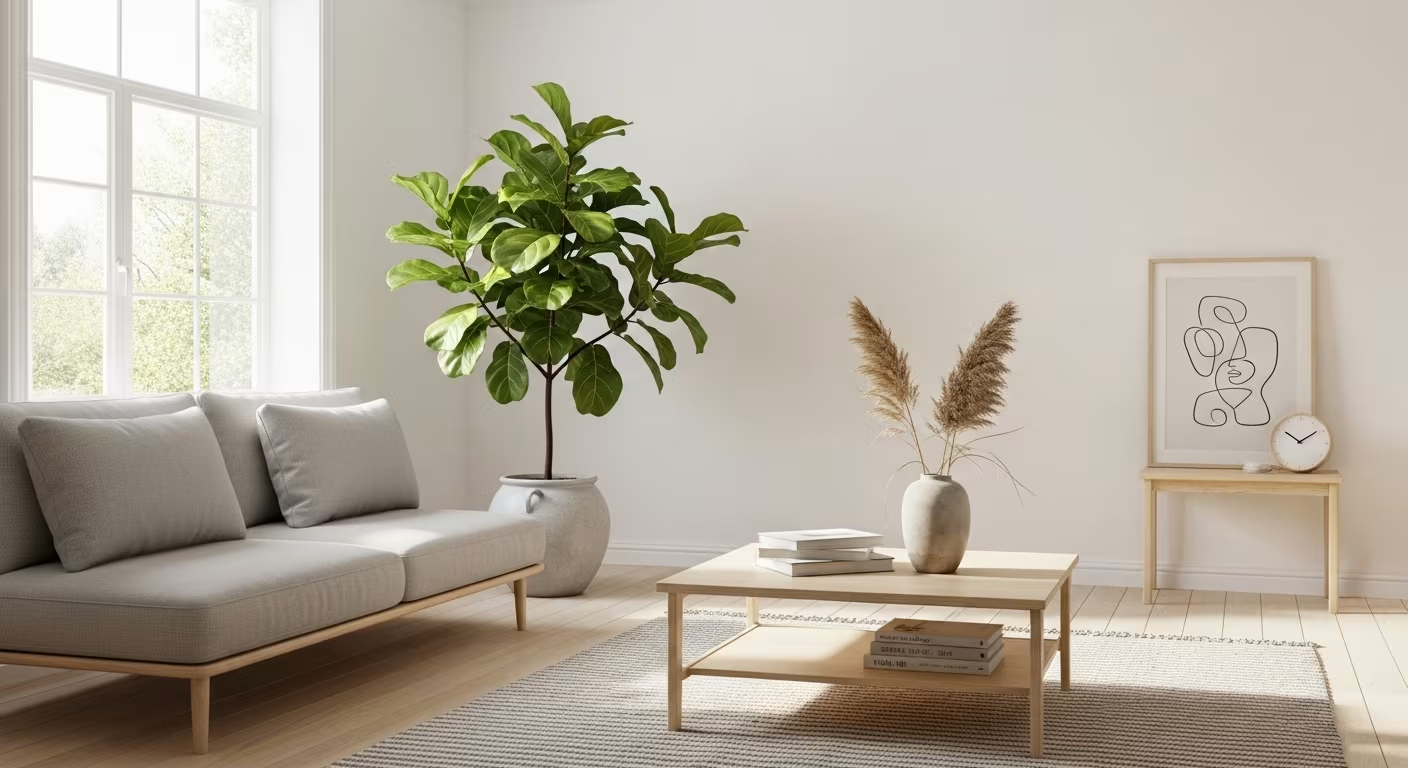
Minimalist home decor is not a single look — white walls, bare floors, industrial furniture — but a principle applied across any look: every object in the room was chosen deliberately and earns its place through function, genuine beauty, or both. A room can hold color, texture, plants, artwork, and collected objects and still be minimalist if each element was selected with intention rather than accumulated by default.
The opposite of minimalist decor is not maximalism; it is accumulated decor — objects present because they arrived and were never removed, because keeping them felt safer than releasing them, because the room drifted into its current state. The dividing line is intention versus accumulation, not quantity versus sparseness. One editing question carries across every room: if this object were removed, would the room be worse? If the honest answer is no, the object may not belong. Applied object by object over a few sessions, that question leaves a room where every remaining element earns the space it occupies.
Living Room: Anchor Around One Focal Point
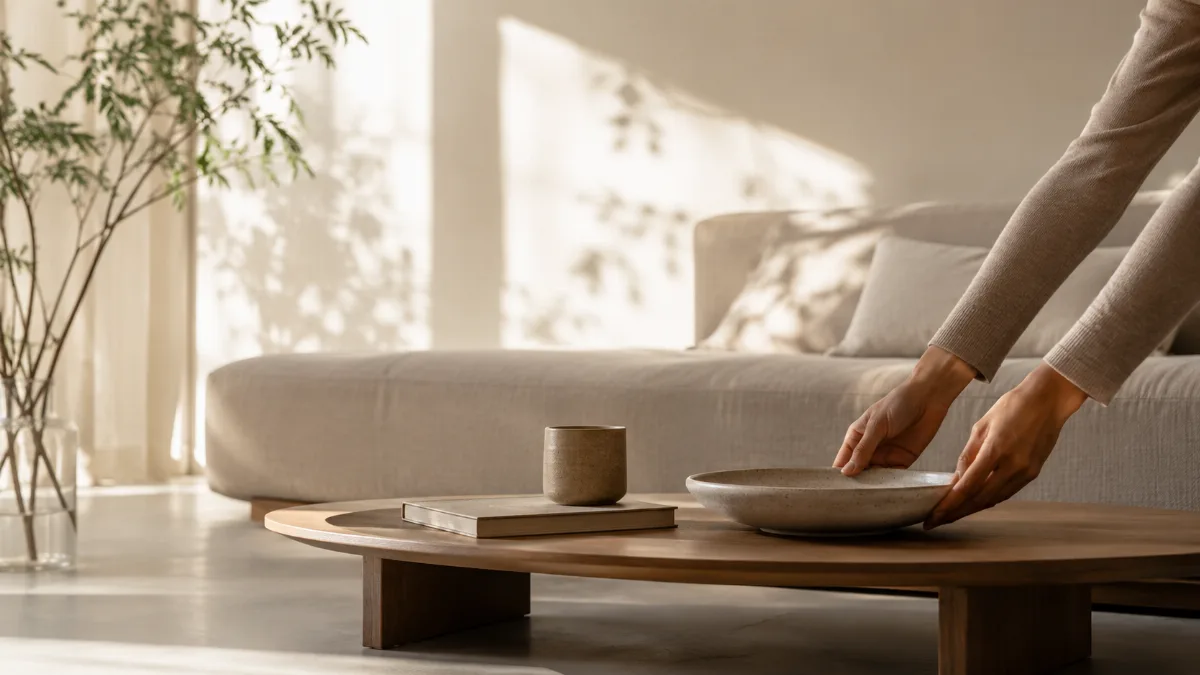
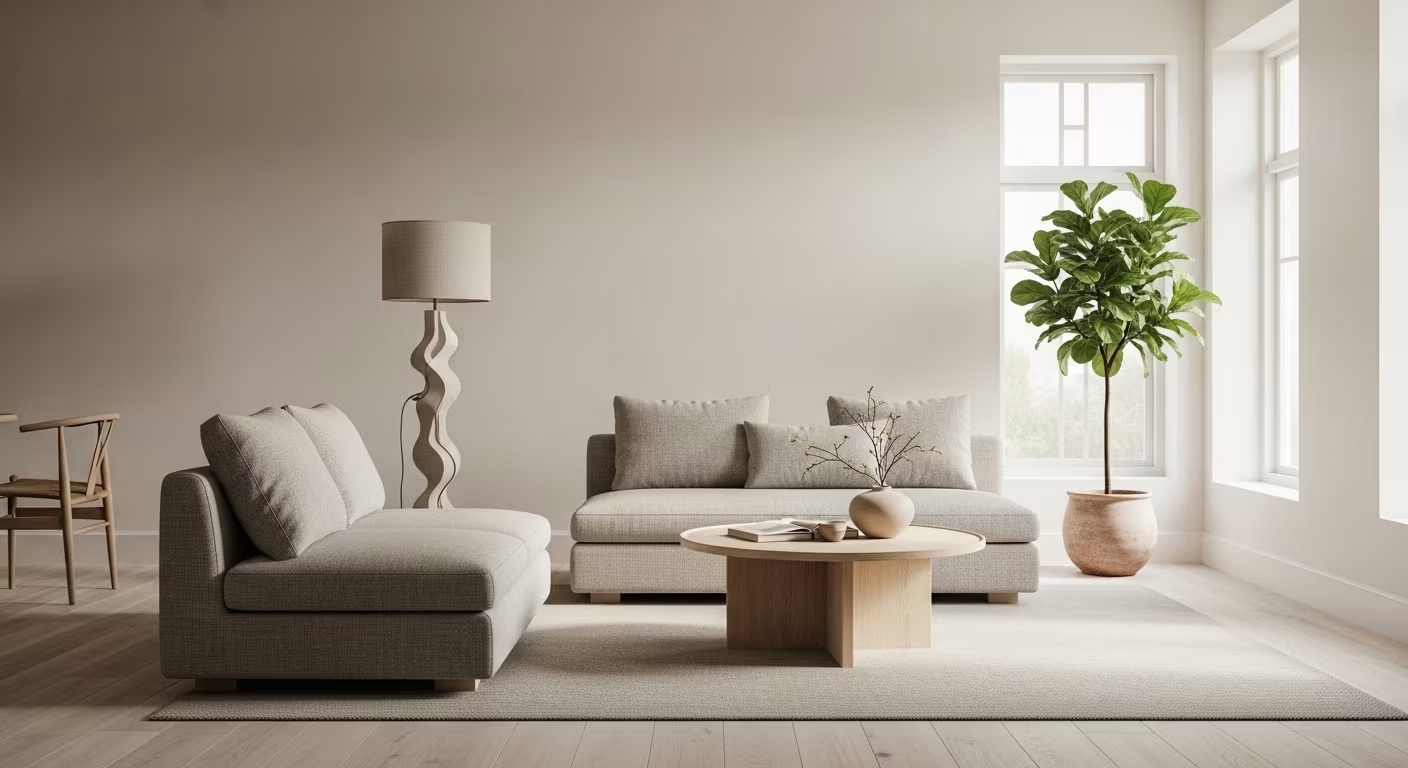
The most effective move in a living room is to anchor the whole arrangement around one focal point — the fireplace, a large window, a television, a significant piece of art — and place every other element in relation to it. The sofa faces the focal point. The coffee table sits at a usable distance from the sofa. The lighting serves the seating. Every other item earns its presence by supporting the room's core function, comfortable social seating, or the visual coherence of the arrangement.
Objects on surfaces — coffee-table books, decorative pieces, plants — should be chosen sparingly and with attention to visual weight. Three objects on a coffee table, varied in scale and coherent together, read as more restful than eight covering the same surface. The cleared space around an object is part of the composition; remove it and you diminish the object's presence as surely as removing the object itself.
Grouping helps as much as reducing. Three objects arranged as a deliberate cluster — a stack of two books with a small vessel on top, set toward one end of the table — reads as intentional, while the same three spread evenly across the surface read as scattered. The rule of odd numbers and varied heights that designers use is not decoration for its own sake; it gives the eye a clear composition to rest on rather than a row of items to scan. Leaving one full corner of the table empty is often what makes the grouping look chosen rather than left over.
Bedroom and Bathroom: Clear the Surfaces
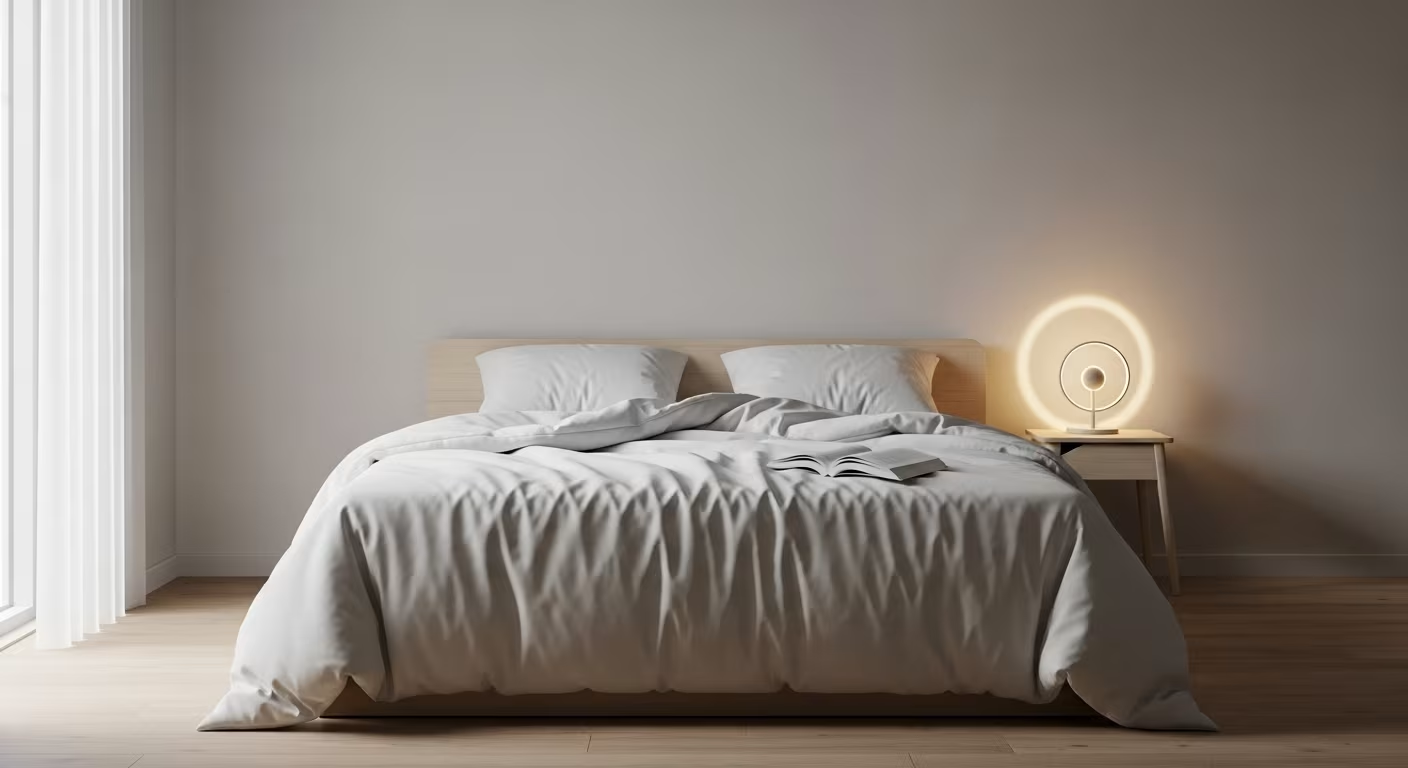
The bedroom serves rest and sleep, which are supported by visual quiet — a room without competing objects pulling at the eye. The most impactful change is almost always the surfaces: a nightstand holding only what is needed (a lamp, a phone charger, one book) and a dresser top that is cleared rather than covered reads as dramatically calmer than the same furniture buried under accumulated objects. The low-level restlessness of cluttered surfaces matters most in the one room built specifically for rest.
The bathroom accumulates products faster than most rooms because each one is small and individually justifiable, yet twelve items on the counter add up to a cluttered space. The minimalist bathroom counter holds only what the daily routine uses, with everything else in a cabinet or drawer. Moving four weekly-use products off the counter and under the sink produces a visual change out of all proportion to the small quantity involved. The test is simple: if a product is not part of the daily routine, it belongs in storage rather than on display.
Both rooms share a reason the surface strategy works so well: they are the spaces the eye takes in at rest or in transition, first thing in the morning and last thing at night, when there is no task to occupy attention. A cluttered nightstand or counter registers precisely because nothing else is competing for focus in those moments. That is why clearing four objects from a bedroom dresser can shift the whole feel of the room while the same four objects would go unnoticed on a busy kitchen counter mid-cook. The impact of an edit depends on when and how the surface is actually seen.
Kitchen: Countertops as the Priority

In the kitchen, the countertop is both the primary work surface and the primary visual field, which makes clearing it the priority. Appliances used daily — a coffee maker, a toaster, a kettle — may earn their spot if the space they occupy does not meaningfully impede food prep. Anything used less often belongs in a cabinet between uses.
Decorative objects in a kitchen — a cookbook propped open, a cutting board on display, a small plant — should be limited to one or two and chosen to give something back beyond decoration. A wooden cutting board leaned on the counter serves both prep and looks; a purely ornamental ceramic piece takes prep space with no functional return. In a working kitchen, that dual duty is the difference between an object that belongs and one that is merely in the way.
Entryway: First Impression and Daily Function

The entryway does two jobs at once: it makes the first impression and it handles daily transitions, the spot where outdoor items are stored and daily-carry items are staged. A minimalist entryway addresses both. Functionally it needs a place for coats, bags, shoes, and keys. Aesthetically it benefits from a single intentional element — a piece of art, a plant, a mirror — that gives the space a deliberate feel rather than a purely utilitarian one. Organized function plus one deliberate visual note produces an entry that reads as welcoming rather than merely tidy.
Room-by-Room Priorities at a Glance
The specifics differ by room, but the pattern is consistent: identify the surface or element that carries the most visual weight, clear it first, and let one or two intentional pieces do the decorating.
| Room | Decor priority | What earns a surface spot |
|---|---|---|
| Living room | One clear focal point | Three scale-varied objects, max |
| Bedroom | Cleared nightstand and dresser | Lamp, charger, one book |
| Bathroom | Cleared counter | Daily-routine products only |
| Kitchen | Open countertop | Daily appliances; one dual-purpose object |
| Entryway | Storage for daily-carry items | One intentional piece — art, plant, or mirror |
Choosing Art and Objects for Genuine Meaning
The objects and art that most consistently succeed in a minimalist room are chosen for genuine personal meaning or real aesthetic satisfaction rather than to fill a category. A piece bought because a wall needed something is rarely as satisfying as one bought because it produced an actual reaction in the moment of seeing it. University of Tennessee Extension makes a similar point.
The practical implication is patience: better to leave a wall empty while waiting for the right piece than to fill it immediately with something merely adequate. An empty wall does not carry the visual weight of a stopgap chosen because something was needed rather than wanted, and it leaves room for the piece that eventually earns the spot.
Bringing in Texture and Natural Warmth
Minimalist rooms risk feeling cold when every surface is cleared and no warmth is reintroduced. The fix is not more objects but the right ones: a wool throw on the sofa, a ceramic lamp base, a wooden bowl on a cleared surface, a plant that adds living presence. Natural materials — wood, linen, ceramics, stone — bring warmth without visual noise, because their texture offers interest up close without demanding attention from across the room.
A room furnished in materials with inherent texture reads as warmer and more lived-in than one built entirely from smooth synthetics, even at the same level of sparseness. That warmth is what keeps minimalist design from feeling sterile, and it takes fewer objects than it appears to — which is the whole point. The goal was never an empty room; it was a room where nothing present is accidental, and where the few things that stayed are the ones actually worth looking at.

Comments
No comments yet.