
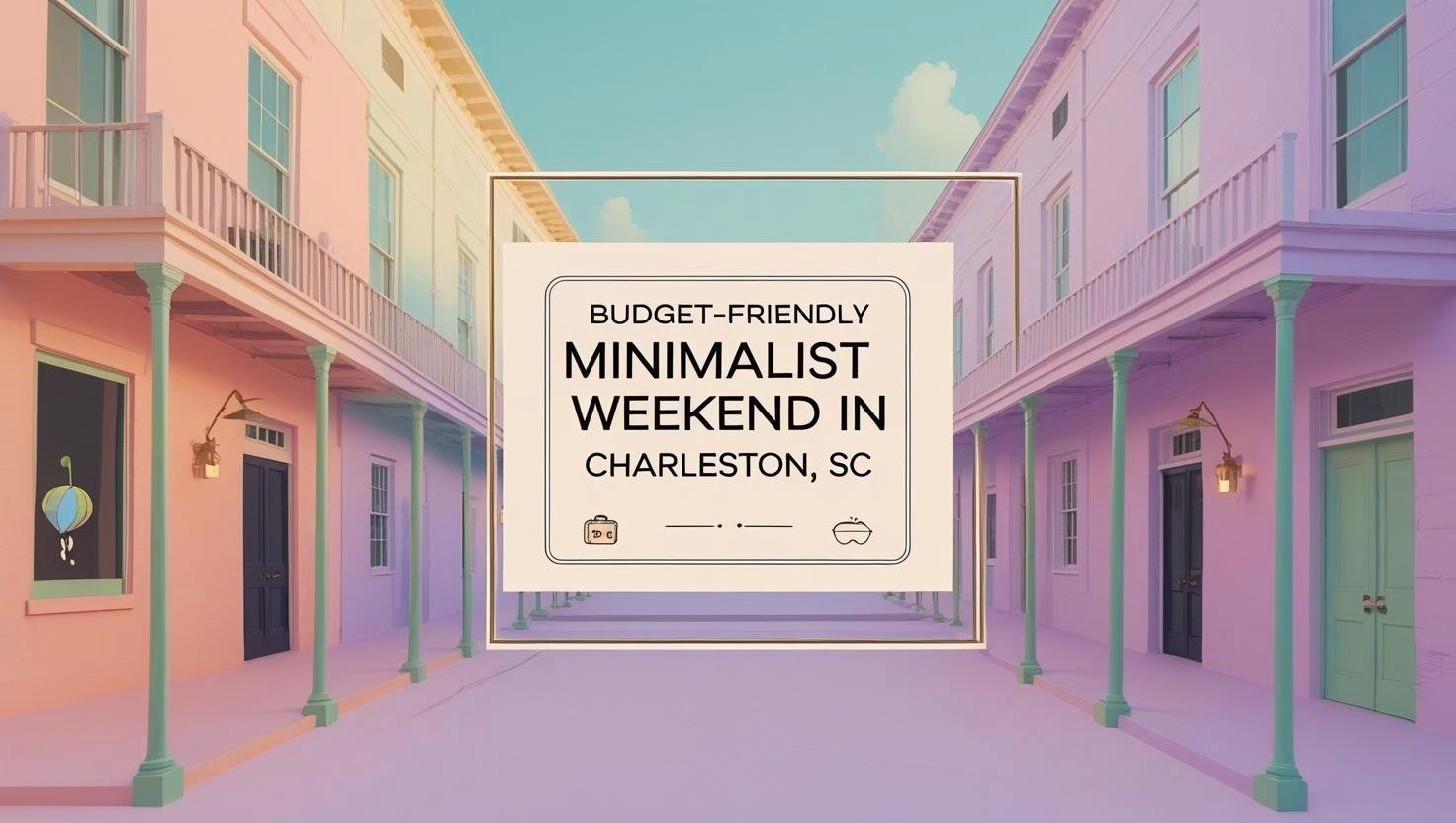

Charleston doesn't need a big budget to be worth the trip. The city's main draws — the French Quarter's antebellum architecture, the Battery seawall, Rainbow Row, the City Market, and the waterfront parks — all cost nothing to reach on foot. What costs money is accommodation and dining, and both run a wide range. The gap between a resort-priced hotel room and a hostel bunk ten minutes out is large, and the food gap is just as wide: King Street at dinner charges for its location, while the Saturday farmers market, the grocery delis, and the lunch service at those same restaurants price very differently. A budget weekend is mostly about knowing which side of each gap to stand on.
| Experience | Approximate cost |
|---|---|
| French Quarter, Battery, Rainbow Row walk | Free |
| Saturday Farmers Market meal | $6–$12 per person |
| King Street lunch (vs. dinner) | 30–40% below dinner prices |
| Hostel dorm bed | $40–$60 per night |
| Downtown hotel, peak season | $200–$400 per night |
| CARTA bus, flat fare | $2 |
The Free Walking City

The French Quarter — bounded by Broad, Meeting, and East Bay Streets and the waterfront — is what most visitors come for, and it's fully walkable in a morning at no cost. St. Philip's Church, in its current 1838 form, and St. Michael's, from 1761 and among the oldest buildings in South Carolina, are open to visitors during daylight, with churchyards of historically significant graves reachable from the street. The Nathaniel Russell House at 51 Meeting Street is a Federal-style house museum worth the $12 admission if historic interiors interest you; if not, its exterior is nearly as impressive from the sidewalk. The Battery, at the peninsula's southern tip, is a free seawall promenade with harbor views, Fort Sumter in the distance, and the antebellum homes along Murray Boulevard — walkable end to end in 20 to 30 minutes. Adjacent White Point Garden, a shaded public park under live oaks, adds benches and Civil War-era monuments at no cost and makes a natural resting point midway through the loop.
Rainbow Row, the pastel stretch of Georgian townhouses along East Bay Street, is the most photographed block in the city and charges nothing. Morning light is best, before the tour groups arrive and before the afternoon sun throws hard shadows on the south-facing facades. The quieter streets right behind it — Tradd Street, Longitude Lane, Chalmers Street — carry equally interesting architecture with far less foot traffic; Chalmers Street holds the Pink House, from around 1712, one of the oldest surviving structures in Charleston. These blocks reward slow wandering over a timed route.
Eating Around the King Street Premium

The Charleston Farmers Market runs in Marion Square from 8 a.m. to 2 p.m. on Saturdays, April through November. It's free to browse and covers regional produce, local goods, and prepared-food vendors — tamales, samosas, baked goods, smoked meats — at $6 to $12 a person, which makes it a better Saturday-morning meal than most nearby restaurants at that hour. Marion Square is a public park with room to sit, and arriving at 8 a.m. buys full vendor selection and an uncrowded lawn.
King Street dinner prices are the benchmark that makes Charleston feel expensive, but the lunch service at many of the same restaurants runs 30 to 40% lower for the same food. Husk, Slightly North of Broad, and Poogan's Porch all serve lunch below their dinner pricing. The downtown grocery delis, especially the Harris Teeter on King Street, offer prepared food at grocery rates for a casual meal after a morning walk. And about 20 minutes out, Bowens Island Restaurant serves oysters from its own beds well below downtown prices — cash only, industrial setting, no pretension, which is exactly the appeal. A simple money-saving move applies across the trip: eat your larger meal at midday when the same kitchens charge lunch rates, and keep dinner light with a deli plate or market leftovers.
Where to Sleep for Less
Downtown hotel rates in peak season — spring and fall — run $200 to $400 a night for a standard room. The Not So Hostel, Charleston's best-reviewed hostel, sits in a historic building near the core with dorm beds around $40 to $60 and private rooms below $150 (confirm current rates when booking). North Charleston, 15 to 20 minutes out by car, has chain hotels at standard chain pricing. The CARTA bus system links downtown to North Charleston and Mount Pleasant on a flat $2 fare, so staying in a cheaper area and riding in trades a little travel time for a significant cut in lodging cost. Booking a few weeks out and traveling midweek rather than on a weekend shaves the rate further, since downtown pricing swings hard with demand.
Beaches and Day Trips
Sullivan's Island, 20 minutes from downtown by car, has a free beach and Fort Moultrie, a federal historic site covered by the America the Beautiful pass. The beach faces north into the harbor rather than the open Atlantic, which means calmer water and thinner crowds than the Isle of Palms beaches next door. Isle of Palms County Park charges a day-use parking fee (verify the current rate at ccprc.com) but delivers direct Atlantic access at the same quality as the resort beaches to the north, without the resort overhead. Pack water and lunch from a downtown grocery run and the whole beach day costs little more than the parking.
Folly Beach, 11 miles out, is the budget beach that skips resort pricing altogether. The county runs a public parking lot for a nominal fee with beach access straight from it, and the restaurants on Center Street behind the sand charge well below the downtown tourist corridor. For a free half-day, arrive by 8 a.m. before the walking tours deploy, walk the Battery, Rainbow Row, and the French Quarter to Waterfront Park, then finish at the open-air City Market, operating since the 1790s, where Gullah Geechee weavers make sweetgrass baskets — from $30 to $50 for small pieces — and no purchase is required to watch. See also: minimalist Savannah weekend.

Comments
No comments yet.