
Why Seasonal Makes More Sense Than Annual
A wardrobe intended to cover the full year is a different problem from one intended to cover a single season. The clothing needs of January and July are sufficiently different that optimizing for both simultaneously produces compromises in each direction.
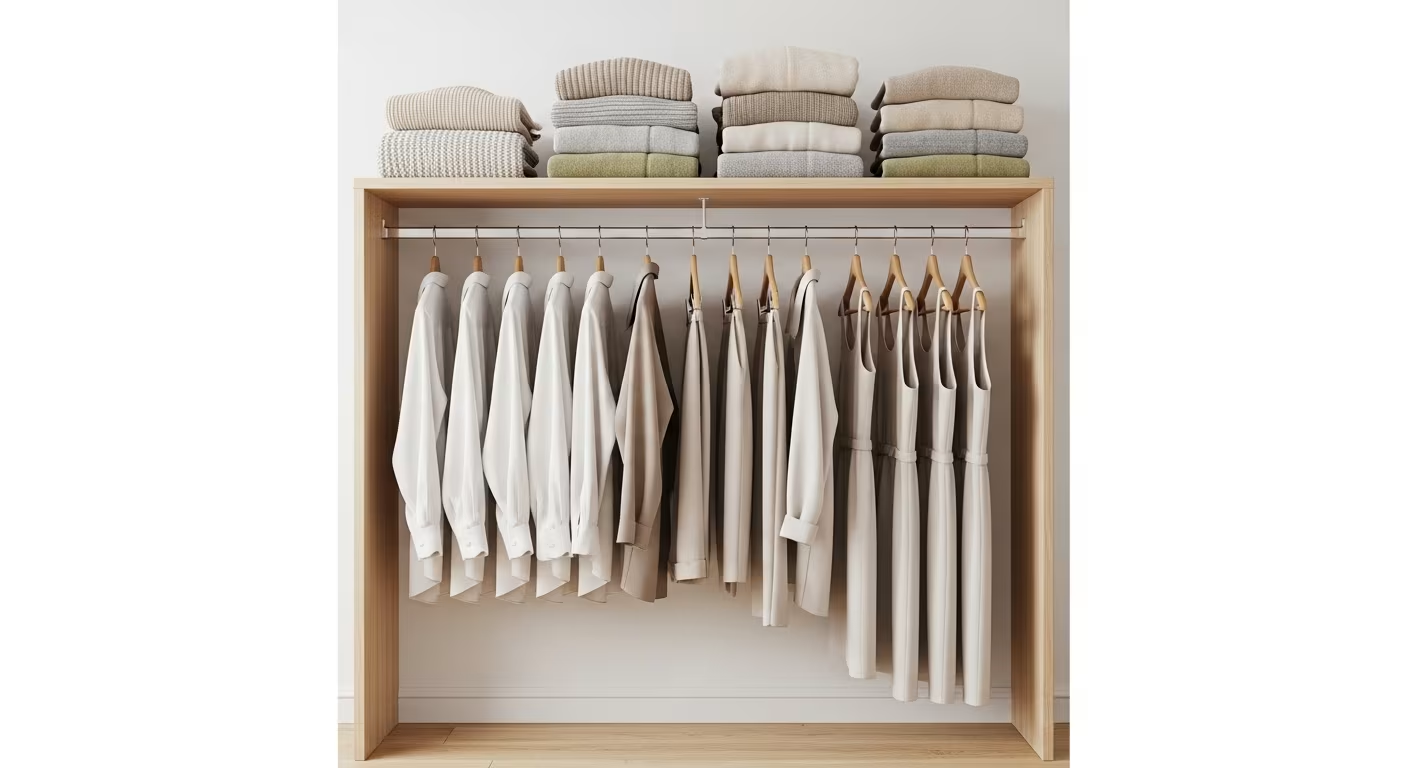
The seasonal capsule approach recognizes this by building and rotating deliberately. A winter capsule contains the pieces needed for the coldest months. A spring capsule contains the pieces needed as temperatures shift upward. The overlap between seasons is small and handled by a few transitional pieces rather than by a wardrobe designed to cover all conditions at once.
The practical benefits of this approach are several. Storage is simplified — only the current season's clothing is in active circulation. Decisions are simplified — all available pieces are appropriate for the current weather and context. And the wardrobe reflects actual current wear rather than accumulating pieces for every condition that might theoretically occur.
The Color Palette Decision

The most important decision in building a working capsule wardrobe is not which specific pieces to buy but which colors to build around. Pieces that share a color palette combine easily; pieces that do not share a palette require more deliberate outfit construction and produce fewer viable combinations from the same number of items.
A functional palette has two to three neutrals — shades that work with everything and with each other — and one to two accent colors that appear in a minority of the pieces. The neutrals are the backbone: every neutral piece can be worn with every other neutral piece, producing the combinatorial flexibility that makes a small wardrobe feel larger.
Common neutral families: navy-grey-white, camel-cream-brown, black-white-grey. The choice of neutral family should be based on which colors already dominate the pieces you wear most, rather than an abstract preference.
Building Versus Editing
Most wardrobe advice focuses on editing existing wardrobes — removing what does not belong, keeping what does. This is the right approach for an existing collection that has accumulated organically. For building a seasonal capsule from a cleared or nearly cleared starting point, the more productive approach is deliberate building.
Deliberate building starts from defined needs. For a professional context: the number of days per week at the office, the level of formality expected, the actual activities that occur during the week. From these needs, the number and type of pieces required becomes clear: a specific number of complete professional outfits, with enough variety to avoid repetition within a working week.
For a week of five professional days, the minimum viable professional wardrobe consists of five complete outfits. Adding a few pieces that combine multiple ways extends the effective variety while keeping the count low. Twelve to fifteen pieces can produce twenty or more distinct outfits if the piece selection is deliberate.
Quality Over Quantity in Practice

The capsule wardrobe philosophy consistently points toward fewer, better pieces rather than many cheaper ones. This recommendation is grounded in both economics and practicality. A piece worn three times per week over three years is worn more than three hundred times. The cost per wear of a more expensive piece worn three hundred times is typically lower than the cost per wear of a cheap piece worn twenty times before it deteriorates.
The practical test for quality: feel the fabric, check the seam allowances, examine the hardware on closures, and look at the stitching. These are the areas where quality differences appear. A slightly higher price for visibly better construction usually represents better value over the piece's full life.
The Transition Between Seasons

Transitioning between capsules — moving winter clothing into storage and bringing spring clothing into circulation — is also an audit opportunity. Pieces returning from storage can be assessed at the point of return: does this still fit? Was it actually worn last winter? Does it still belong in the next rotation?
Pieces that answer no to any of these questions can be released at the transition rather than returned to storage. The transition point is natural for this assessment because the pieces are already out and handled. A piece that was unworn last winter and is being returned to storage for next winter is worth questioning.
Maintaining the Capsule Over Time
The capsule approach requires occasional deliberate maintenance. Pieces wear out and need replacement. Needs change — a new job, a climate change, a change in personal style — and the capsule needs to adapt.
The maintenance habit is simpler than the initial build: when a piece is worn out, replace it with one piece that fits the existing palette and serves the same function, rather than with multiple alternatives. When a need changes, identify the specific gap and fill it deliberately rather than buying broadly in hope of covering the change.
This maintenance approach prevents the gradual reaccumulation of clothing that happens when replacements are made without reference to the existing system.
The Capsule Wardrobe and Personal Style

A concern sometimes raised about the capsule wardrobe approach is that it constrains personal style — that building around neutrals and a small piece count produces clothing that is conservative and uniform rather than expressive. This concern reflects a misunderstanding of how the system works.
The neutrals form the foundation, not the complete picture. Within a neutral palette, texture, silhouette, proportion, and fit provide substantial differentiation. A navy-and-white capsule can express many different aesthetics through the specific silhouettes and textures of the pieces: structured or relaxed, classic or modern, minimally detailed or distinctively designed.
Accent pieces carry personal style most directly. A single piece in a distinctive print, an unusual texture, or a color outside the neutral palette can express aesthetic identity more effectively than a closet full of undifferentiated pieces. The capsule approach, by limiting the number of accent pieces, may actually sharpen personal style by requiring it to be more deliberate.
Reviewing and Refreshing the Capsule
A seasonal capsule is not permanent. Needs change, bodies change, work contexts change, and the capsule should reflect actual current life rather than the life that existed when it was built. A brief annual review — at each seasonal transition — assesses whether the capsule still accurately serves current needs.
The review asks simple questions: what was worn most? What was not worn at all? What was consistently reaching for but missing from the rotation? The answers guide the next iteration of the capsule — not a complete rebuild but small, targeted adjustments that keep the wardrobe aligned with actual current use.
A well-maintained capsule wardrobe that accurately reflects current life requires less daily decision-making and less money spent on clothing that does not actually get worn.