

What a Capsule Wardrobe Actually Is
The term "capsule wardrobe" often arrives attached to a number — thirty-three pieces, ten pieces, some fixed count that supposedly defines the system. The count matters less than the principle. The idea traces back to London boutique owner Susie Faux in the 1970s, who used it for a small set of essential, well-made pieces you'd wear season after season; the popular Project 333 challenge later pinned it to a concrete rule of 33 items worn for 3 months. Both are useful framings, but the target underneath them is the same: a collection in which every item is worn, every item works with the others, and the whole thing meets the actual demands of your real life.
By that measure, a wardrobe of twenty-five pieces where all twenty-five are in regular rotation is a more functional capsule than one of thirty-three where six are rarely touched. The goal isn't hitting a specific number — it's a closet with no dead weight, where opening the doors reveals only clothes that belong to the current version of your life and taste rather than an archive of past selves and good intentions.
Starting With an Honest Assessment
Building a capsule starts not with shopping but with an audit of what you already own. Put every current item to two questions: Does it fit well right now? Is it actually worn in the life I'm living now? Anything that fails either one is a release candidate regardless of what it cost, its imagined future use, or the fact that it was a gift. A well-made piece that no longer fits or never gets reached for isn't serving the wardrobe. Its quality isn't a reason to keep it — it's a reason to be honest about why it's sitting unworn and to pass it to someone who will actually wear it.
What survives both filters is your real starting point: a smaller set of pieces that already work. From there the question becomes concrete — what does this collection already have that earns its place, and what specific gaps does it still need to fill?
Building on a Neutral Foundation
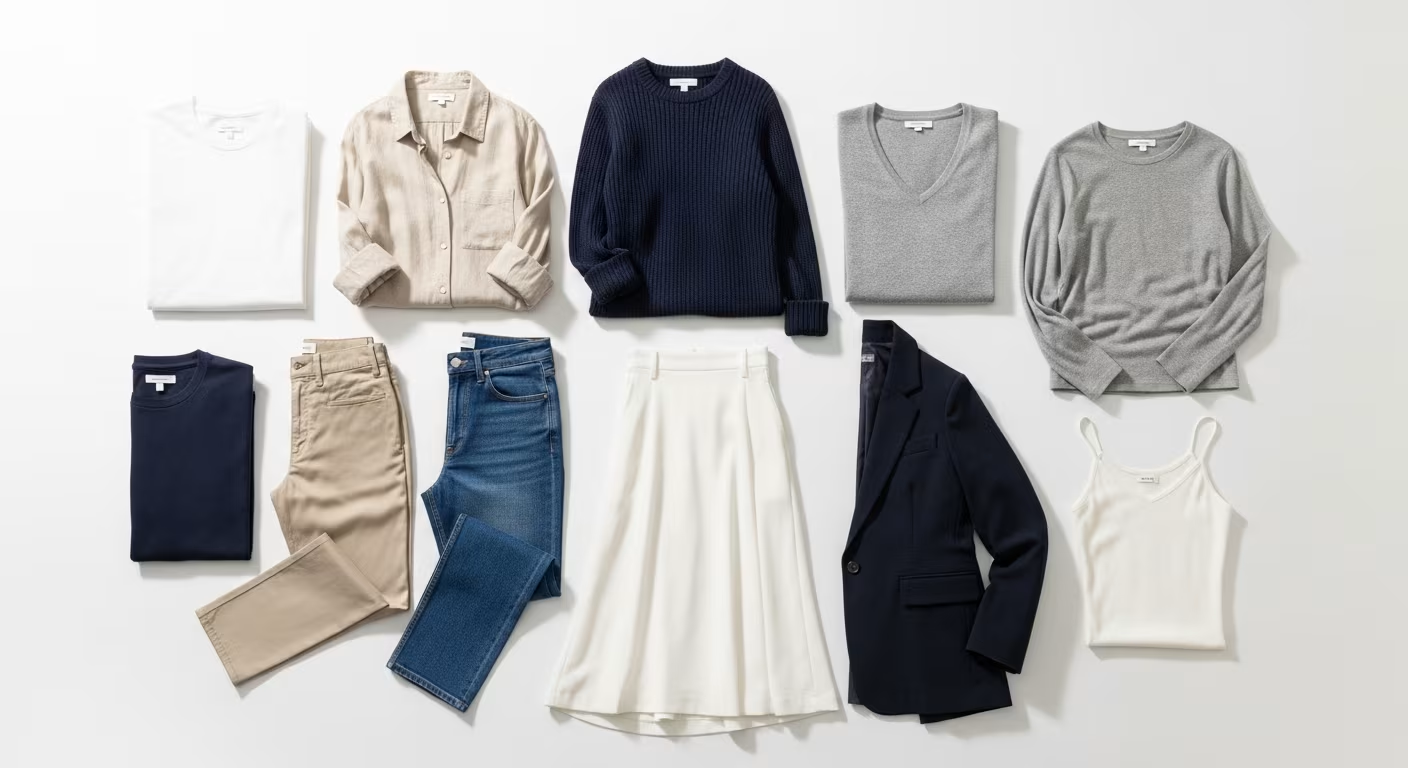
The most functional capsules rest on a base of neutrals — black, white, grey, navy, tan, camel — that combine freely with each other and with color pieces. A pair of navy trousers that pairs with three different tops delivers more outfits per item than brightly patterned trousers that only work with one or two coordinating pieces. That's the mechanism behind the whole approach: when most items work with most other items, getting dressed takes fewer decisions, and the morning "what goes with this" problem largely disappears.
A concrete starter frame shows how far a small neutral base stretches. Two pairs of trousers in navy and charcoal, one pair of well-fitting jeans, four or five plain tops in white, grey, and black, a neutral knit, a versatile jacket, and one pair of shoes that reads dressy-casual will already generate dozens of workable combinations before a single patterned piece enters the mix. Because each item coordinates with nearly every other, adding one new top multiplies outfits rather than just adding one — the return on each purchase compounds instead of sitting isolated.
Color and pattern still belong — they give a wardrobe character — but they work best as additions to a functioning neutral base rather than as the structure itself. A capsule of roughly twelve neutral pieces plus four or five more distinctive ones produces more workable combinations than sixteen equally bold pieces that each constrain what they can sit beside. Build the frame in neutrals first, then add personality on top.
The Role of Fit

Fit is the single biggest factor in whether a garment gets worn. A well-fitting item in a modest fabric beats a poorly fitting one in expensive material every time. Most people's unworn clothing, assessed honestly, is off in at least one specific way: a shoulder seam that sits wrong, a waist that pulls, a hem length that throws off the proportions. Clothes that fit — that need no tugging or adjusting through the day and move comfortably rather than only looking fine while you stand still — get pulled from the shelf. Clothes that don't get passed over every morning, no matter how much you liked them in the store. For more detail, it is worth checking University of Arizona Cooperative Extension.
This is where a tailor earns their fee. Hemming trousers to the right length or taking in a shirt at the waist turns a borderline piece into a regular one, and basic alterations on a handful of high-use items usually run modest — often ten to thirty dollars per fix — and repay the cost fast in how much more those items get worn. It's frequently a better use of money than buying something new to replace a piece that was almost right.
Seasonal Versus Year-Round Approaches
Some people run a single year-round wardrobe; others find it easier to keep two seasonal capsules — summer and winter — with a few transitional pieces bridging both. The seasonal split works well where temperatures swing hard between seasons and less well in mild, stable climates where the variation is modest enough that one wardrobe covers the whole year.
If you go seasonal, off-season storage is part of the system, not an afterthought. The summer capsule, boxed away out of the main closet in winter, stops creating visual noise and decision friction among clothes you can't wear yet. Whatever's hanging in front of you at any given time should hold only what's actually wearable in the current season's conditions — the point of the whole exercise is to make the choice in front of you smaller and clearer.
Maintaining the Capsule Over Time
A capsule holds its shape over time through two habits: one-in, one-out for new additions, and a periodic reassessment as pieces age or your life shifts. Something that fit and worked two years ago may not fit the same way now, or may no longer suit a changed job, a changed body, or a changed sense of style. An annual review — a deliberate session of trying pieces on, checking what still fits and still gets worn, and noting what needs replacing — keeps the capsule accurate instead of letting it drift back toward the accumulated-but-unused closet it replaced.
That review is not a rebuild. The core neutrals — trousers, plain tops, good outerwear — typically carry across multiple seasons with only minor changes. A seasonal refresh is an assessment, not a replacement: which pieces still work for the season ahead, what genuinely needs retiring, and whether one or two additions would close a real gap. Most well-kept capsules shed one to three items a season to wear and replace them with one to three chosen specifically to fill those slots — buying to maintain a system rather than buying to grow a pile. Our guide to building a minimalist wardrobe without spending a fortune covers the buying decisions that sustain a capsule over the long run.
Quality Versus Quantity: The Practical Trade-Off
A well-made pair of trousers that costs more but lasts five years instead of one is genuinely more economical over that span. But a premium piece chosen badly — wrong fit, wrong color for what you already own — that hangs unworn is neither economical nor well-chosen, whatever its construction. The useful guideline is to invest where the per-wear return is highest. For most people that means quality footwear, which takes heavy use and strongly shapes how an outfit reads; quality outerwear, which shows in every cold-weather look; and quality trousers or jeans, the foundation of most daily outfits. High-turnover basics like plain t-shirts wear out regardless of price, so paying a premium there buys less clear advantage — spend the saved money on the pieces that carry the wardrobe, and let the disposable layers be disposable.
Where the idea comes from:
| Fact | Detail |
|---|---|
| Origin | Susie Faux, London boutique owner, 1970s |
| Original meaning | a small set of essential, well-made pieces |
| The point | a wardrobe you use fully, not a number to hit |


Comments
No comments yet.