
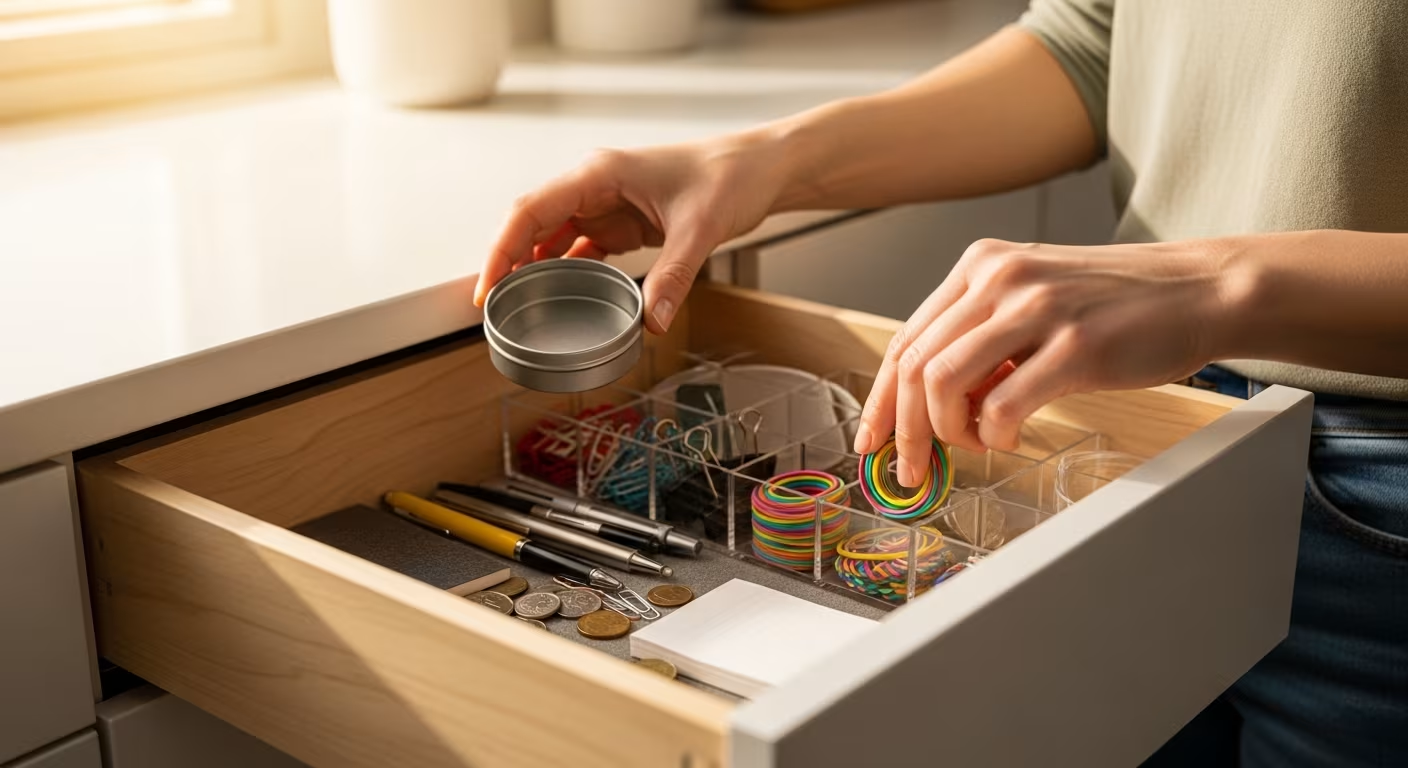

Most people who start decluttering and quit did not run out of willpower. They started in the wrong place. Opening the project with a closet full of clothes that carry memories, a storage unit from a former chapter of life, or a late relative's belongings puts the hardest decisions first — the ones that need decision-making skill and emotional stamina that the early sessions have not built yet. The result is predictable: an hour of agonizing, one bag donated, and a quiet decision never to do that again.
The order is not a matter of taste. It reflects how the skill of assessment actually develops and how much emotional fuel each category burns. Begin with the easy, low-stakes stuff and you build the confidence, speed, and judgment that make the hard categories possible later. Below is the sequence that works, from the first bag of obvious trash to the last box of photographs.
Why the Order Matters More Than the Pace
Decluttering is a skill, and like any skill it improves with reps. Each decision — keep, release, relocate — is practice, and early decisions should be the ones with an obvious answer so the practice accumulates without cost. A dried-out pen is a free rep. A grandmother's teacup is not. Sequencing the work from free reps toward expensive ones means that by the time genuinely hard choices arrive, you have made several hundred easy ones and know your own judgment holds up.
Speed is beside the point. Someone who clears the easy categories in a focused week and then works steadily will finish; someone who opens with the sentimental shelf and stalls will not, no matter how fast they meant to go.
The Full Sequence at a Glance
| Stage | What you tackle | Emotional difficulty | Typical time |
|---|---|---|---|
| Session 1 | Expired and broken items | None | 1–2 hours |
| Session 2 | Duplicates | Low | 1–2 hours |
| Session 3 | Outdated and unused | Low to moderate | 2–3 hours |
| Middle stage | Room by room, one room at a time | Moderate | A few weeks |
| Late stage | Garages, attics, storage units | Moderate | Several sessions |
| Final stage | Sentimental items | High | Slow, no deadline |
Session One: Expired and Broken

The first session targets everything that requires no real decision at all: expired food and medication, personal-care products past their date, batteries that no longer hold a charge, burned-out bulbs, dried-up pens, anything broken beyond practical repair. There is nothing to weigh here — the item has disqualified itself. You are not deciding whether to keep it; you are just noticing it is already gone.
This pass takes one to two hours in most homes and fills a bag or two. The volume released is small and the house will not look transformed, but that is not the goal. The goal is to establish the loop — look, assess, release — on items where it costs nothing, and to end the session with a home that is visibly, if modestly, different.
Session Two: The Duplicates
The second session goes after everything owned in quantities no one could realistically use: twelve spatulas for a kitchen that needs two, six sets of earbuds when two ever run at once, three corkscrews, four umbrellas by the door, a drawer holding thirty working pens next to the twenty dry ones you already cleared in session one. Duplicates carry no emotional weight — the decision is purely arithmetic — and almost every home hides real volume in them.
Keep the best one or two of each and release the rest. Because the choice is functional rather than personal, this session moves quickly and produces a satisfying pile, which is exactly the momentum you want heading into the third pass.
Session Three: The Outdated and Unused
The third session addresses items clearly tied to a past version of life: gear for a sport no longer played, supplies for a hobby that ended, work clothes for a job left behind, toys the kids have outgrown, equipment for a pet no longer in the home. Sports and exercise equipment for an abandoned routine is the classic example — the treadmill turned coat rack, the tennis racket from a phase that lasted one summer.
These need slightly more thought than expired food or duplicates, but not much. The gap between what the item represents and the life you actually live now is usually obvious once you look at it directly. If the honest answer to "am I this person anymore?" is no, the item can go, and it can go to someone who is that person now.
A simple staging system keeps the session moving: three containers labeled keep, donate, and undecided, plus a bag for outright trash. Anything that triggers hesitation goes into undecided rather than stalling the whole pass — the point is to keep deciding, not to agonize over one racket. Seal the undecided box, write the date on it, and set it aside. If six months pass without needing anything inside, the box can leave unopened, which tells you the answer you could not reach in the moment.
The Middle Stage: One Room at a Time
Once the three easy categories have built the habit, the room-by-room stage puts it to work. Finish one room completely before starting the next — scattered half-progress across five rooms is what makes decluttering feel endless and unrewarding. Completion is the reward that keeps the project alive.
Within each room, work in three passes: first pull out everything that does not belong in the room at all, then release the unused and outdated items that do belong to the room's category, then judge the quality and condition of what survives. Three focused passes beat one exhausting attempt to make every kind of decision at once. Start with the kitchen if you want the strongest middle-stage result — it holds a high volume of plainly functional or non-functional things, the gadget used twice since purchase is not sentimental, and the room tends to yield more releasable items per hour than anywhere else in the house.
The Storage Areas Where Everything Hides
Garages, attics, basements, and rented storage units are where things go when they have left daily use but were never officially let go. Every home has some version of this holding pen — the place things get put "just in case" instead of used. These come after the main living areas on purpose: by the time you reach them, the assessment skill built over every earlier session is sharp enough to handle the volume.
Two questions clear a storage area fast: when was this last used, and what would actually happen if it were gone? For most of what lives in long-term storage, the honest answers are "years ago" and "I would be completely fine." This is also the stage that exposes items effectively donated to the storage unit itself — carried in once and never touched again. Because the contents tend to be large and long unexamined, storage areas are often the single most volume-productive stage of the whole process. Iowa State University Extension's home resources makes a similar point.
Sentimental Items Come Last for a Reason
Sentimental items — photographs, inherited objects, keepsakes from significant people and periods — are deliberately last. They are the most emotionally complex category, and by the time you arrive the practice is established, the confidence from clearing everything else is real, and your judgment has been tested on hundreds of easier calls.
Even then, these need a different question. Not "do I use this?" but "does keeping this serve me well?" An inherited object that gives genuine pleasure every time you see it earns its place. One kept purely out of obligation serves neither you nor the memory of the person it came from. And releasing does not mean discarding: photos can be digitized, meaningful objects can go to a relative with a real connection to them, and usable things can be sold to someone who will actually use them. The release is a decision about where the item does the most good, not an erasure of what it meant.
Keeping the Home From Refilling

The first full pass — expired items through sentimental ones — is the beginning of the practice, not the end. Without attention to what comes in, a home drifts back to its old state over months as new purchases arrive and old keeping habits reassert themselves. Three habits hold the line: a one-in-one-out rule for each category, a regular reassessment on a monthly or seasonal rhythm, and a moment of resistance at the point of purchase, before the item ever enters the house. The guide to maintaining a clutter-free home covers the specific daily and weekly moves that keep a home in the state the first decluttering produced.
When a Second Person Helps
Some people move through this far more easily with a partner — a friend, a relative, or a professional organizer — who lends perspective on the decisions that feel heavier when made alone. The partner's job is not to decide. It is to ask the assessment questions cleanly: is this used, when was it last used, what would happen if it were gone? Those questions land differently coming from someone with no stake in the answer.
A partner is not required — plenty of people complete a thorough declutter solo — but for anyone who finds the decisions hard or has repeatedly started and stalled, a single session with someone who asks good questions often produces more than several frustrated attempts alone. Pick the easiest category, set a timer for an hour, and let the first bag of expired odds and ends prove that the process works before you ask anything harder of yourself.
Comments
No comments yet.