

A Definition That Actually Helps
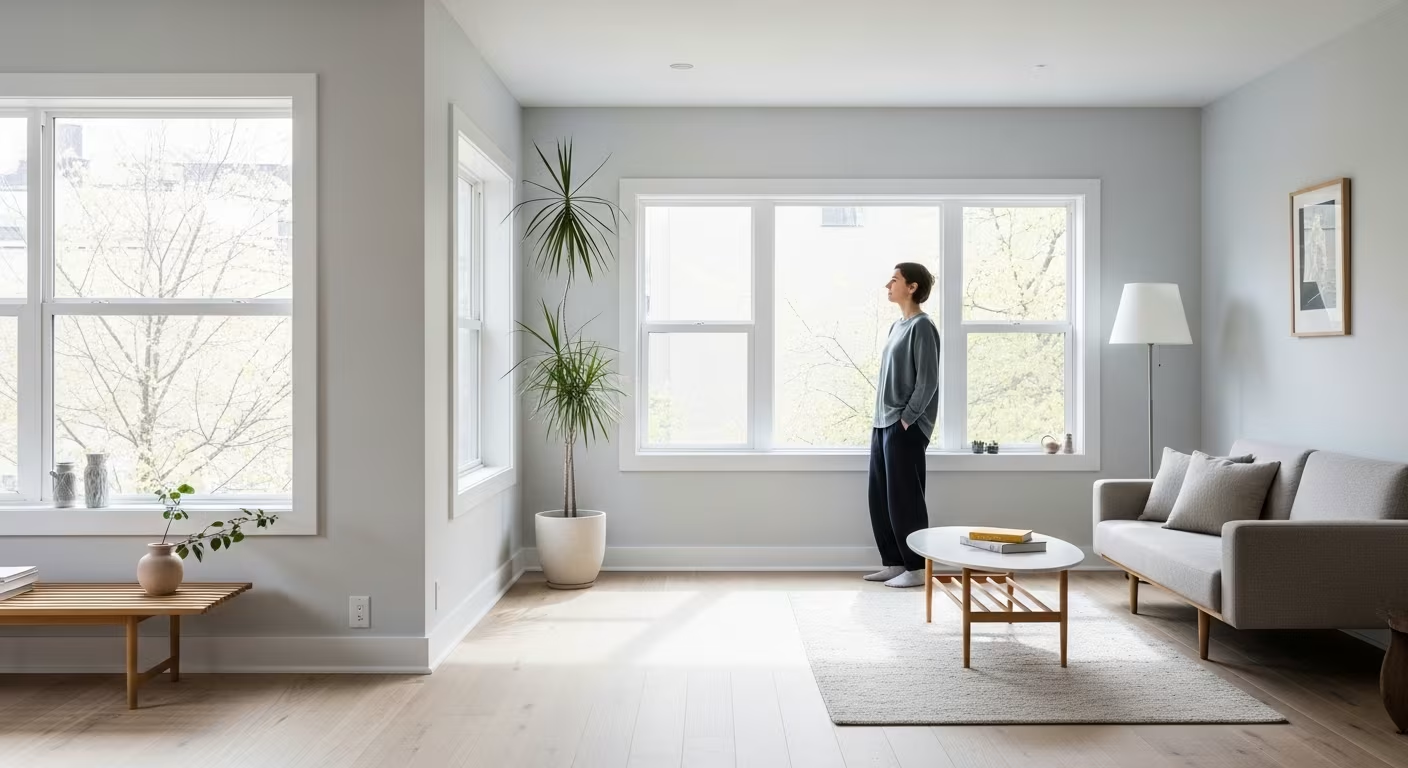
Minimalism is usually defined by how it looks: white walls, bare shelves, a handful of objects arranged with intention. That's a description of one possible outcome, not the practice itself, and defining it that way does real damage. It makes minimalism sound like an aesthetic reserved for people with specific taste and enough money to buy the empty, curated look.
A more useful definition: minimalism is the practice of keeping only what genuinely serves your current life and releasing what doesn't. It's a decision framework for possessions, time, and commitments, not a style and not a rule about how many things a person should own. That version is available to anyone regardless of income, square footage, or family size. A household of five with three kids can practice it. So can someone in a studio, and so can a person who owns more than average and is at peace with that. The question isn't "do I own few things?" It's "does what I own serve my life?" The answer guides the decision without dictating the result.
What Minimalism Is Not
Minimalism gets misrepresented in ways that make it seem extreme or beside the point, so it's worth clearing a few away. It is not about owning a specific number of things; the "100 things" challenge is a game, not a definition. The right number for any person is whatever serves their life without piling on maintenance, storage cost, or mental load beyond what they'll tolerate.
It is not poverty. Someone with plenty of resources can accumulate far past what serves them, and choosing not to is an entirely different act from being unable to afford things. It is not deprivation either; the practice doesn't ask you to give up what genuinely works in your home, only to tell apart what works from what has quietly piled up without ever earning its place. For most households that honest sort reveals a wide gap between the two, and clearing the gap feels like relief, not loss. And it is not a single look. The person with a warm, textile-heavy, plant-filled home who has released what they don't use is practicing minimalism just as much as the person with bare walls and a capsule wardrobe.
Why People Come to Minimalism
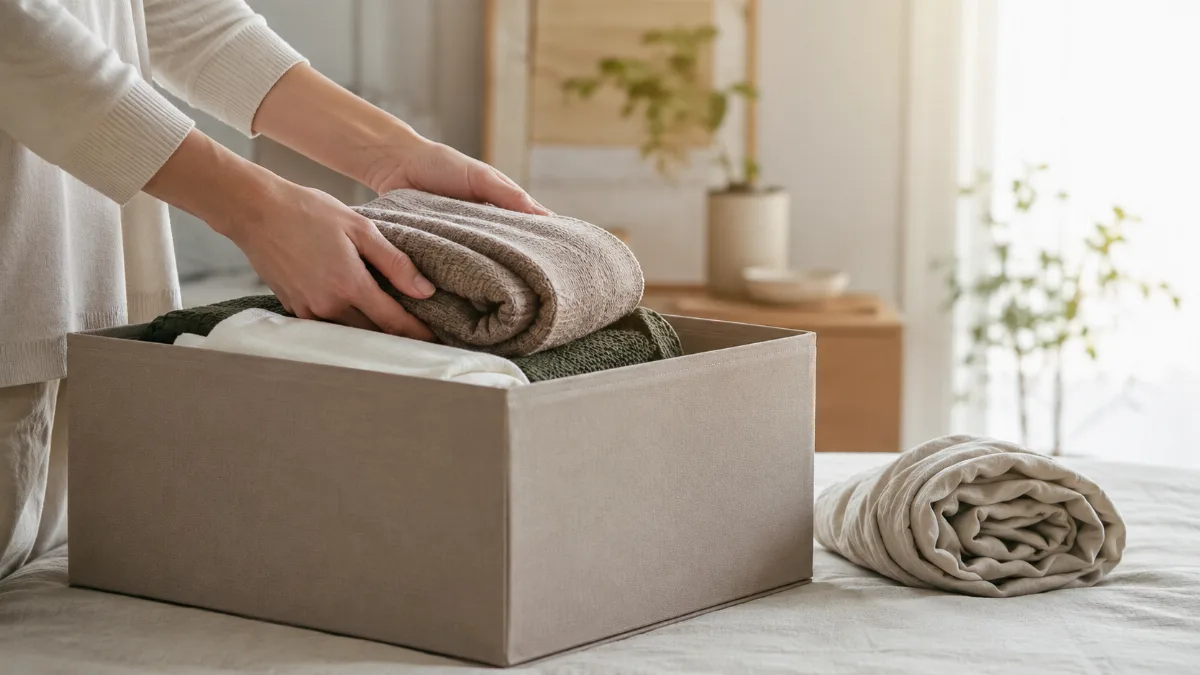
People arrive from a few recognizable starting points. The most common is that the accumulation has simply become unmanageable: the home eats more upkeep than feels reasonable, the closet won't close, the rented storage unit is full and still costing money every month. At some point the volume crosses from serving the household to burdening it, and noticing that crossing is what sparks the change.
A second path is a life transition. Moving to a smaller place, the end of a relationship, a new baby, a job change, a loss, any of these creates a natural moment of reassessment, because what the next chapter needs is often genuinely different from what the last one did. A third is financial: the storage fees, the replacements bought because the original was lost somewhere in the clutter, and the impulse purchases that started as shopping-for-fun become visible as a number, and the number motivates. For others it's the environmental cost, the resources burned making things that get used briefly and tossed, that pushes them to acquire less and keep only what earns its keep.
These paths tend to overlap in practice. The move to a smaller apartment exposes the storage-unit bill, which surfaces how much was bought and forgotten, which raises the environmental question all at once. That's part of why the shift often feels sudden even though the accumulation was gradual: one trigger makes the others visible in the same week. It also means there's no single "correct" reason to begin. Whatever gets you to pull the first drawer is enough, because the practice teaches the rest on its own once you're actually making decisions instead of reading about them.
Where Beginners Should Start
The most common beginner mistake is opening with the hardest category. Starting on sentimental items (photographs, inherited objects, gifts from people who matter) forces the most emotionally loaded decisions before you've built any decision-making muscle. The calls are harder, the second-guessing is louder, and the session usually ends with no momentum and a lot of doubt. It helps to cross-check ideas like these against Purdue University Extension.
Start instead where the decisions are obvious and the reject pile is deep: expired bathroom products, kitchen gadgets untouched for years, clothes that genuinely don't fit. These build the habit of assessment and hand you visible progress before the complicated stuff. The goal of session one is momentum, not completion; a single cleared drawer is enough to make the next session easier to begin. One rule protects all of it: release to a real destination rather than shuffling items around the house. Donate to an organization that will pass things to people who need them, sell through a secondhand marketplace, or hand items directly to someone who wants them. Moving a box from the bedroom closet to the garage isn't releasing it, it's relocating the problem. See our companion guide to minimalism for beginners: where to start for a step-by-step first week.
Starting order matters, and the usual advice to begin with sentimental items is exactly backwards. A sequence that works: bathroom cabinet and expired products first (fast, unambiguous, finishes in under an hour), then the junk drawer, then duplicate kitchen tools, then a single wardrobe section, then paperwork, then digital files, and sentimental categories last — often months later, once the decision-making has become practised.
Two ground rules keep the first attempts from collapsing. Cap sessions at 45 to 60 minutes, because decision quality drops sharply beyond that. And finish one contained area completely rather than starting several — one emptied drawer is worth more as evidence than four rooms half-sorted, and the evidence is what makes the second session happen.
What Changes, and the Financial Upside
The changes people report most after reducing to what serves them aren't mainly visual, though the look often shifts too. They're experiential. Cleaning gets faster because there are fewer surfaces to wipe and fewer objects to move and put back. The feel of the home changes, since rooms holding enough to function rather than more than they should read as calmer and more spacious. And daily decision fatigue drops: a capsule-sized closet takes less mental energy in the morning than a stuffed one, and a right-sized kitchen doesn't make you dig for the one tool you need. These compound as maintenance habits keep the slow re-accumulation from creeping back.
The financial side is the underrated part. A household that runs new purchases through a simple filter (does this meet a real current need something I own doesn't already cover?) spends noticeably less than one buying on habit, impulse, or social pressure. You don't need to study minimalism for weeks before starting; the first drawer teaches more than any amount of reading. Begin with the easiest decisions, send the results to a real destination, and let the savings accumulate month over month into a difference that's genuinely worth having.
The financial effect comes from three places rather than from selling possessions. Reduced buying, which is the largest and slowest to show. Reduced storage costs, immediately measurable if a storage unit is being rented. And a shift in where money goes rather than how much is spent — the same monthly figure redirected from acquiring things toward experiences, savings or debt.
The non-financial changes are easier to notice within the first month: less time spent looking for things, faster cleaning because there is less to move, easier decisions about what to wear or cook, and fewer maintenance obligations. Those four show up long before the money does, which is why they are the more honest reason to start.
What it is and is not:
| Claim | Reality | |
|---|---|---|
| “Own under 100 things” | a game, not a definition | |
| Session length | cap at 45–60 minutes — decision quality drops sharply | |
| The core | keep what serves, release what does not | — |
Comments
No comments yet.