


Why Sentimental Items Are Uniquely Hard
Every decluttering guide saves sentimental items for last, and the reason is practical rather than arbitrary. These objects carry emotional weight that makes the usual questions — is this used, does it serve a purpose — feel inadequate or beside the point. A sweater that belonged to someone who has died is not judged on whether it fits or gets worn. It is judged on what it holds, and what it holds has no clear measure.
The difficulty compounds because sentimental items tend to sit in concentrated collections: the memory box, the inherited chest of drawers, the photographs, the keepsakes from a relationship that ended. The accumulated weight of all those individual decisions feels enormous before a single one is made. Working through a box of a parent's things is not the same kind of task as clearing a junk drawer, and treating it that way leads either to abandoning the job or to rushing decisions that bring regret later.
Naming the real nature of the difficulty is the starting point. The struggle is not about the objects themselves; it is about what the objects are standing in for. Once that is clear, the work becomes approachable in a way it never is when every keepsake is treated as one undifferentiated emotional mass. Iowa State University Extension's home resources is a useful outside reference here.
The Object Is Not the Memory

The most useful reframe is also the most basic: the object is not the memory. The memory lives in the person who holds it. The object may be linked to the memory — it may trigger it reliably and vividly — but removing the object does not remove the memory it triggers.
This distinction matters in practice because so much of the reluctance to let go rests on an unspoken assumption that keeping the object equals keeping the memory, and releasing it equals losing the memory or the relationship behind it. Examined directly, that assumption does not hold. The person who releases a parent's sweater does not thereby lose their memory of the parent. The person who releases a gift from a friendship that has faded does not lose the years that friendship held.
Because object and memory can be separated, the decision about the object is a separate decision from how you hold the memory. Keeping every object that carries an association means keeping a physical trace of every significant person and every chapter of life — which, over decades, turns a home into a storage facility for accumulated meaning rather than a place to actually live now.
Three Kinds of Sentimental Item
Not all sentimental items carry the same weight or offer the same clarity. Sorting them into a few groups before deciding on any single one takes the edge off the sense of facing one giant, complicated pile.
The first group is items that bring genuine pleasure every time you encounter them: the photograph that reliably produces a warm response, the object from a beloved person that actually enriches the room it sits in, the keepsake from a chapter you look back on with real satisfaction rather than guilt. These earn their place through the value they give, and they stay.
The second group is items kept mostly from obligation rather than connection: the expensive gift that was never wanted, the inherited piece that does not suit the current home but feels wrong to release, the object from an ended relationship that stays because getting rid of it seems like a statement. These are strong candidates for release, and the sense of obligation often lifts noticeably once the release actually happens.
The third group is items that hold genuine significance but whose current storage serves no one: the fifty photographs in a box that never opens, the letters kept but never read, the childhood objects filling a bin in the attic, last seen three years ago. These may well be worth keeping — but in a different form. Curated, displayed, or digitized, they can finally deliver the value they were meant to hold instead of sitting sealed away.
A practical way to use the three groups is to make the sort a separate task from the deciding. Empty the collection onto a table and place each item into one of the three piles without judging any of them yet — pleasure, obligation, or significant-but-stored. The sort alone often makes the obligation pile visibly larger than expected, and seeing it as a group rather than as individual guilt-laden objects makes the release far easier than confronting each one in isolation. Only after everything is sorted do you make actual keep-or-release calls, group by group, starting with the pleasure pile where the answers are effortless and building momentum toward the harder ones.
Digitizing What Deserves Keeping
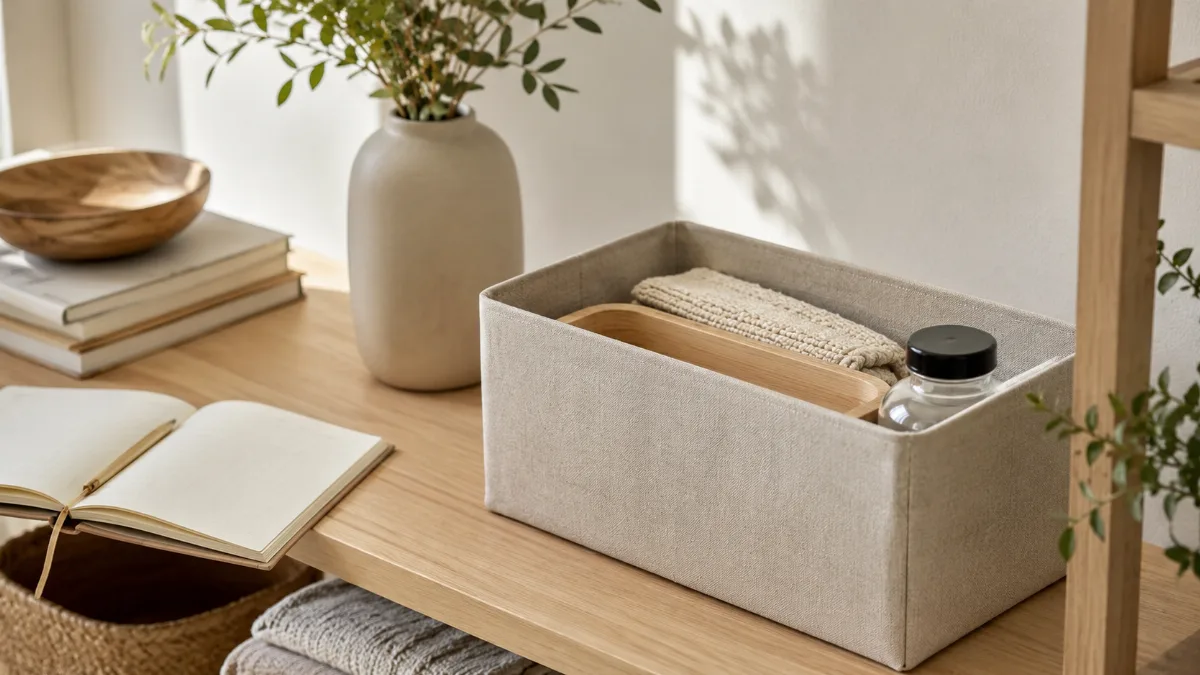
For photographs, letters, and documents with real sentimental value, digitizing creates a preserved version that is searchable, shareable, and takes up no physical space. A photograph scanned and stored on a well-organized drive or a cloud account is more accessible than the same photograph buried in an attic box, and it occupies nothing on a shelf.
The process itself carries value beyond the storage win. Reviewing photographs or documents to choose which ones genuinely merit preservation — and releasing the duplicates, the near-misses taken seconds before a better shot, and the papers that no longer mean anything — is an act of active curation. It produces a smaller, more meaningful collection than keeping everything by default ever could, and the collection you actually revisit is worth more than the archive you never open.
One caution is worth stating: digitizing is not a loophole for avoiding decisions. Scanning every object and keeping the original as well simply doubles the storage. The point is to preserve the memory in a usable form and then release the physical item whose only job was to carry that memory — the ticket stub, the printed photo you now have as a file, the letter you have read into a recording. Where the physical object itself has value beyond the image it holds, such as a handwritten note in someone's own hand, keeping the original is a genuine choice rather than a default, and it belongs in the first group.
Digitising removes most of the difficulty from the decision, and the settings matter if the file is meant to last. Photographs and documents: scan at 600 dpi for anything you might reprint, 300 dpi for reference. Save as TIFF or PNG for archival copies and JPEG for everyday use. Children's artwork photographs well on a plain floor in daylight — flat, no flash, phone directly above.
Three-dimensional objects are photographed rather than scanned: 3 or 4 angles on a plain background, with something for scale. And the file is only safe if it exists in more than one place — a single hard drive is not a backup. Two copies in different locations, one of them off-site or in cloud storage, is the minimum for anything that cannot be replaced.
Passing Things to People Who Want Them
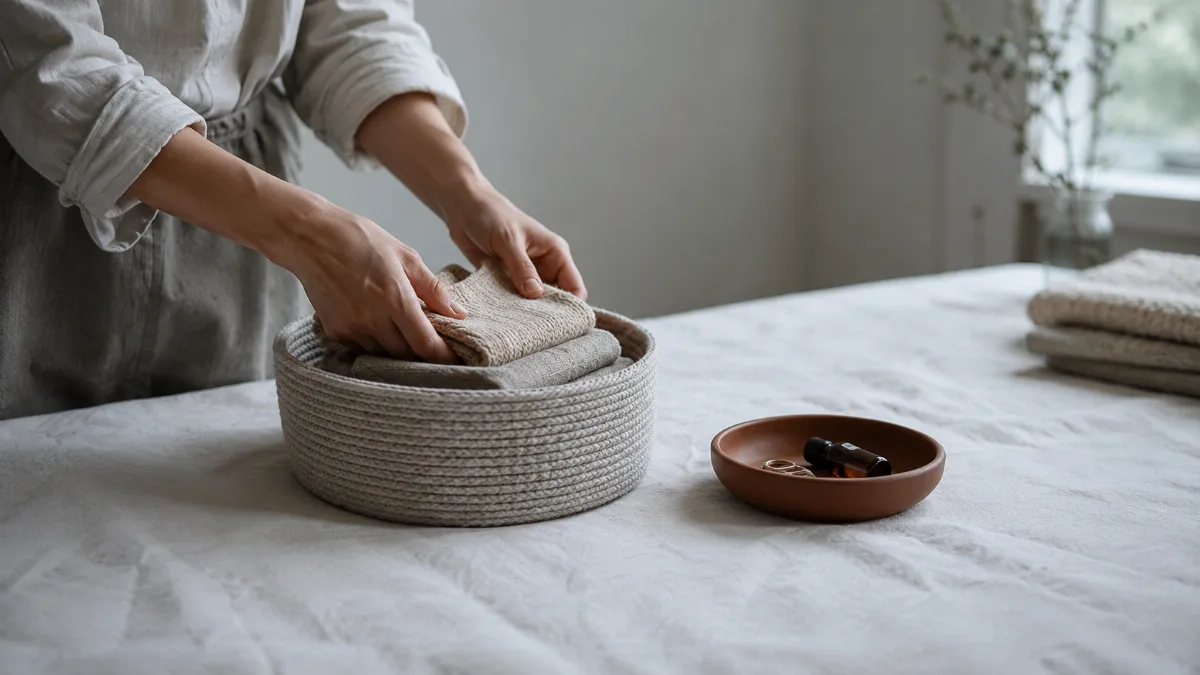
For sentimental items with genuine value — inherited objects, keepsakes from significant relationships, things carrying family history — passing them to someone who truly wants them is a release that honors the item's meaning rather than diminishing it.
The cousin who always admired the grandmother's dining set, the friend of the deceased who would genuinely use and appreciate the tools, the family member with the context to understand what the documents mean: these are destinations that give the object a next chapter instead of quietly handing it to a secondhand store where its history is lost. Deliberately passing something to a person with a real connection can make release possible in cases where donating or selling to a stranger felt like too little.
The Difficult Middle: A Holding Box
Plenty of sentimental items fall into an awkward middle: not clearly keepers, not clearly ready to go. For these, a physical holding period is more honest than forcing a premature call. Set aside a designated box, kept for a defined stretch — three months, six months, a year — and put the genuinely unresolved items in it.
At the end of the period, decisions that felt impossible at the start are often obvious. Anything you reached back into the box for during those months has proven it earns keeping. Anything that stayed untouched the whole time has answered the question on its own. The holding box works because it swaps a hypothetical — "would I miss this?" — for the real experience of having lived without access to it. For the broader approach to categories where the standard questions never quite produce a clean answer, see our guide to decluttering when it feels impossible.
The holding box handles the items that are neither clearly keep nor clearly release. Put them in a labelled box, write the date on it, seal it, and store it out of daily sight. Open it in 12 months. Anything retrieved during that year stays; anything untouched leaves without opening the box, because opening it restarts the decision you already made.
One box per person, with a fixed size, is the constraint that keeps this from becoming permanent storage. Without a size limit the holding box becomes an annexe of the loft, which is the outcome it was meant to prevent.
Digitizing specs:
| Item | Spec |
|---|---|
| Reprintable photos/documents | 600 dpi |
| Reference-only | 300 dpi |
| 3D objects | photograph 3–4 angles, plain background, scale object |
| The maybe-box | sealed, dated, opened in 12 months |
Comments
No comments yet.