
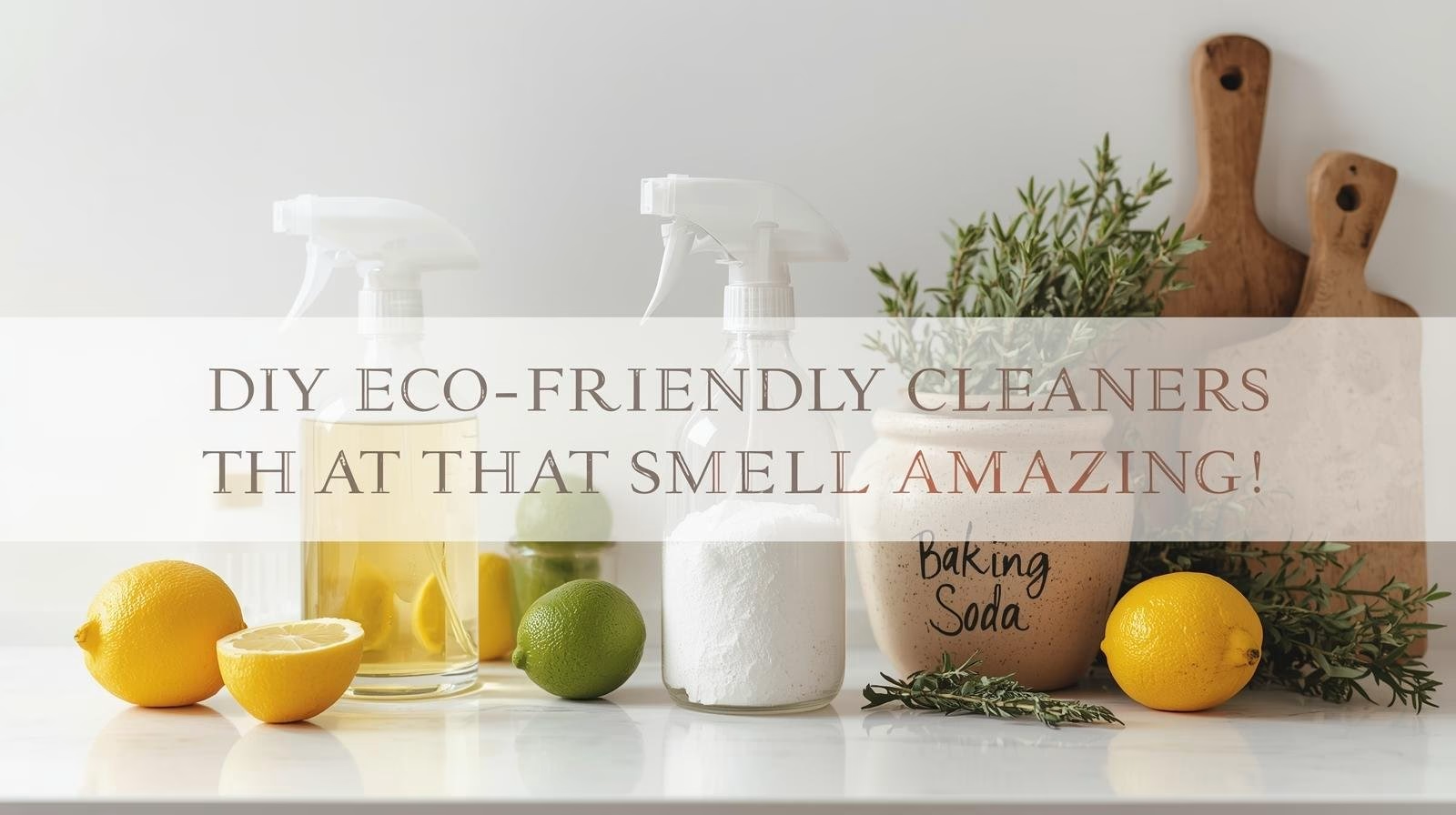

The average cleaning cabinet holds 10 to 15 products, most of them solving the same two or three problems, cutting grease, lifting soap scum, deodorizing, disinfecting, with chemistry you can reproduce at home from three ingredients: white vinegar, baking soda, and liquid castile soap. This isn't purity for its own sake. The plain case is that those three, in different combinations, cost less per use, work on most surfaces, throw off no harsh fumes, and cut packaging waste, since one jug of soap and a big bottle of vinegar replace a shelf of single-purpose bottles. One caution before the recipes: "natural" does not mean safe on every surface, and the exceptions are covered below.
The Three Core Ingredients
White vinegar is mildly acidic, usually around 5%, which lets it cut mineral deposits, soap scum, and many grease films, and it deodorizes by neutralizing alkaline odor compounds. It is not a clinical disinfectant, it doesn't meet the standard for killing pathogens like Salmonella, so for counters that regularly meet raw meat it isn't the right tool, but for everyday kitchen and bathroom surfaces it's adequate.
Baking soda is mildly alkaline and slightly abrasive, which makes it a gentle scrub for sinks, tubs, and grout without scratching most finishes. It deodorizes acidic smells, the opposite of vinegar, which is why the two foam when combined but aren't actually more effective mixed than used separately.
Liquid castile soap is a plant-oil soap, typically olive or coconut, that works as a surfactant, breaking water's surface tension so it can lift grease and grime. It's concentrated: 1 tablespoon in 500ml of water makes a solid general cleaner. Dr. Bronner's is the most widely stocked brand, but any liquid castile soap does the job.
The Core Recipes
Three recipes cover the overwhelming majority of household cleaning. The all-purpose spray is the workhorse: 500ml water, 1 tablespoon castile soap, 1 teaspoon vinegar, optionally 10 to 15 drops of tea tree, lemon, or lavender oil. Shake before each use, since soap and water separate slightly, and it handles counters, stovetops, tile, and sinks, leaving no residue when wiped with a damp cloth and then a dry one.
For the bathroom, make a paste of half a cup of baking soda with enough castile soap to bind it (2 to 3 tablespoons) plus 10 drops of tea tree oil; the baking soda abrades, the soap lifts scum, the tea tree adds antifungal punch. On grout, let it sit 5 to 10 minutes before scrubbing with a stiff brush. For the toilet, pour in half a cup of vinegar followed by 2 tablespoons of baking soda, let it fizz 10 minutes, then scrub and flush.
Glass and mirrors need the simplest mix of all: 250ml water and 250ml vinegar in a spray bottle, wiped with a microfiber cloth. Skip newspaper (it leaves ink) and paper towels (they streak); the cloth is what actually makes any glass cleaner work. Mirrors cleaned with commercial sprays for years may streak on the first pass or two until the old residue lifts.
| Cleaner | Mix | Best for |
|---|---|---|
| All-purpose spray | 500ml water + 1 tbsp castile soap + 1 tsp vinegar | Counters, stovetops, sinks, tile |
| Bathroom scrub | 1/2 cup baking soda + 2–3 tbsp castile soap + 10 drops tea tree | Tubs, grout, bathroom sinks |
| Toilet fizz | 1/2 cup vinegar + 2 tbsp baking soda | Bowl stains and odor |
| Glass cleaner | 250ml water + 250ml vinegar | Windows and mirrors |
What Vinegar Cannot Clean
The one limitation that matters most: vinegar damages natural stone. Granite, marble, travertine, and limestone are calcium carbonate, which reacts with acid and etches. Even diluted vinegar used repeatedly will dull a polished granite counter and can ruin marble permanently. On stone, use only pH-neutral options, plain water, dilute castile soap, or a cleaner formulated for stone. Vinegar also shouldn't touch cast iron or hardwood floors, and prolonged contact is hard on rubber gaskets. None of this is theoretical; on stone in particular the damage is real and irreversible, so the all-purpose spray above stays off any stone surface. It helps to cross-check ideas like these against the American Lung Association's indoor-air guidance.
Scent, Storage, and Shelf Life
Much of a commercial cleaner's appeal is its scent, and synthetic fragrance is a common source of indoor air irritation for people with respiratory sensitivities. Essential oils give real scent without those compounds: lemon reads as "clean" and adds mild degreasing, tea tree extends the soap's antibacterial reach, lavender is milder, peppermint carries strongly from a small dose. Fifteen to twenty drops per 500ml is plenty; more than that and an oily film shows on surfaces.
Homemade cleaners don't keep as long as store-bought, which lack the stabilizers that extend shelf life. Castile soap mixed with water starts to separate and can grow bacteria after a few weeks, while plain vinegar is shelf-stable indefinitely. Store anything combining the two in small batches (500ml or less), use it within two to three weeks, and keep it in dark or opaque bottles, since oils degrade in clear containers exposed to light. Label each bottle with contents and date so an off-smelling batch is easy to spot and refresh, and mix from the base ingredients as you go rather than making large quantities at once.
The Cost, Roughly
A large bottle of castile soap concentrate (around 946ml) dilutes into roughly 30 to 40 batches of all-purpose cleaner. A big bottle of vinegar covers a year of glass and toilet cleaning, and a 1kg bag of baking soda lasts months of scrubbing. The upfront outlay is modest and the per-use cost drops sharply against buying separate kitchen, bathroom, glass, toilet, and scrubbing products. For a household currently paying for all five, the switch typically pays back its ingredient cost within a month or two. The single most useful recipe for most people is the all-purpose spray, which handles the bulk of daily cleaning and costs under $0.10 per refill once the base ingredients are on hand. If you want to shrink the cabinet even further, pair it with a capsule cleaning routine built on those same three ingredients.



Comments
No comments yet.