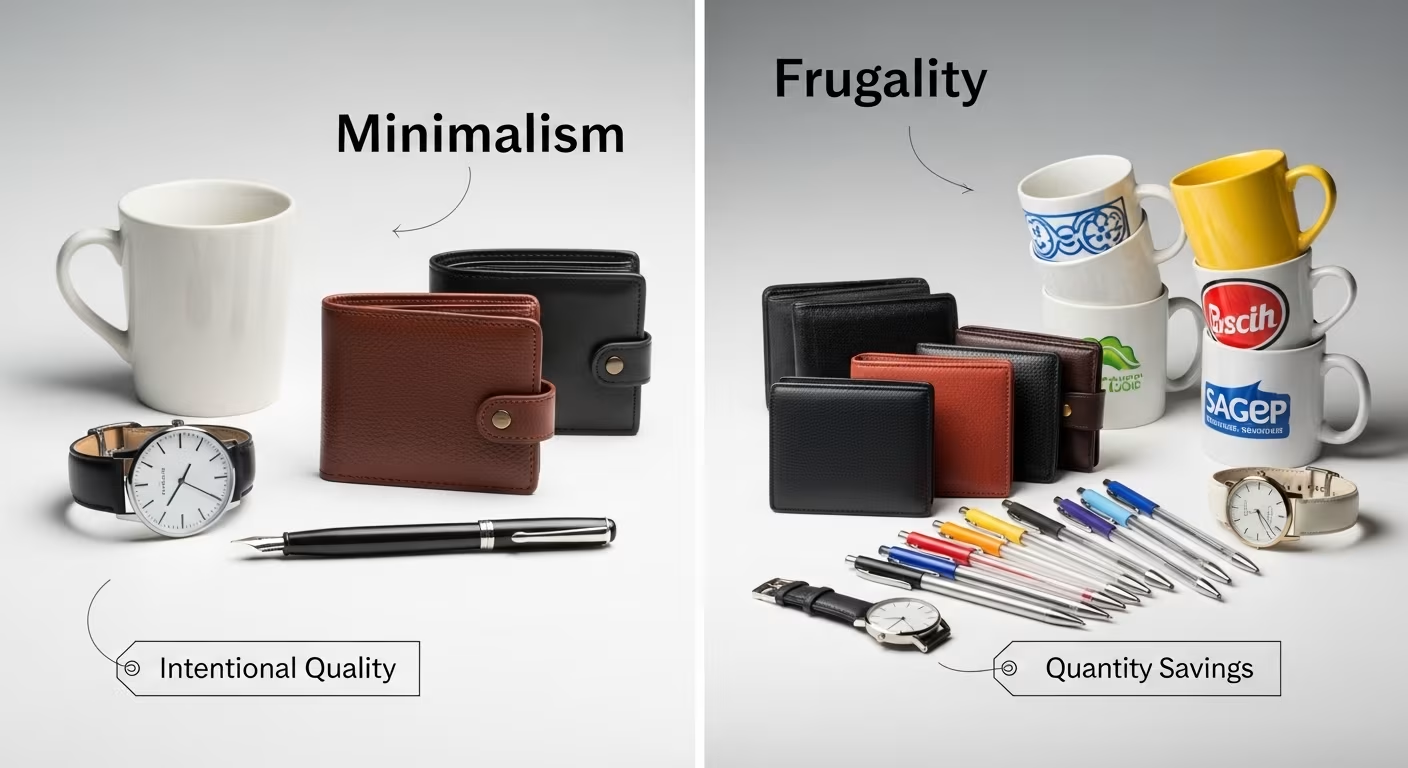


How to Stop Impulse Buying With the 30-Day Waiting Rule

Okay, raise your hand if you’ve ever opened an Amazon box and thought, "Wait, what the hell is this? Did I even order this?" 👋

Or maybe you've got a pile of "just in case" items in the garage, or a closet full of clothes you wore once, because they "were on sale!" Sound familiar?

Girl, me too. For years, my house was basically a monument to my excellent impulse control... not. I was constantly buying stuff I didn't need, then feeling guilty about it later.

That endless cycle of "buy, regret, clutter" was seriously sucking the joy out of everything. So, I needed a damn plan.

Today, I'm going to walk you through the 30-Day Waiting Rule. This simple little trick has seriously changed how I spend my money and, more importantly, how much junk ends up in my house.

We'll talk about why it works, how to actually implement it when you're exhausted, and how to avoid the common pitfalls. Let's get into it.

Why This Actually Matters

Look, we live in a world designed to make us buy stuff. Our phones buzz with notifications, our social media feeds are curated ads, and every store is set up to tempt you.

For moms, it's even worse. We're constantly bombarded with "must-have" items for babies, toddlers, and ourselves. It's easy to get sucked into the cycle.

I remember feeling like I needed every single baby gadget out there for Leo. "This swing will solve everything!" "This special bottle dryer is a game-changer!"

Guess what? Most of it just added to the mountain of stuff I had to trip over. The mental load of managing all that crap was honestly crushing.

Beyond the clutter, impulse buying hits your wallet hard. Think about it: a "small" $20 purchase here, a $50 "deal" there.

Before you know it, you've blown hundreds of dollars a month on things you don't even remember buying. That's money that could go towards debt, savings, or even just a damn spa day.

When I tracked my impulse buys for one month, I was horrified. I spent nearly $300 on things like fancy coffee mugs, a specific type of kitchen gadget I already owned, and "cute" clothes for the kids that they never wore.

It wasn't just about the money, though. It was the feeling of being out of control. Like my brain was constantly being hijacked by the next shiny object.

This rule isn't about deprivation or being super strict all the time. It's about taking back control. It's about being intentional with your money, your space, and your precious mental energy.

It's about making sure that the things you bring into your home truly add value, instead of just adding to the mess. You deserve a home that feels like a sanctuary, not a storage unit for your regrets.

Imagine if your mental inbox wasn't constantly full of "should I buy this?" questions. Imagine what you could do with that extra brain space. Or that extra cash.

The Basics of the 30-Day Waiting Rule

Alright, so what exactly is this magical rule? It's pretty straightforward, honestly. Any time you feel the urge to buy something non-essential, you simply put it on a list and wait 30 days before making the purchase.

That's it. No complicated apps, no fancy formulas. Just a pause button between the "want" and the "buy."

It's about giving yourself some breathing room, some time to really think about whether that item is something you genuinely need or want, or if it's just a fleeting desire.

I stumbled upon this concept when I was at my wit's end with baby gear. I’d buy something, use it twice, and then it would just sit there, taking up space and staring at me with its judgmental plastic eyes.

I realized I needed a circuit breaker for my spending habits. The 30-day rule was that circuit breaker.

Why This Actually Works

So, why is a simple waiting period so effective?

  • It creates a crucial buffer zone. Most impulse buys are driven by emotion – boredom, stress, the thrill of getting something new, or even just seeing a "great deal." That 30-day period gives your emotions time to cool down and your rational brain to kick in. You're no longer operating purely on impulse.
  • It allows for true reflection and research. When you're not in the heat of the moment, you have time to ask yourself some important questions. Do I already own something similar? How often will I actually use this? Is this the best quality or price for what I need? This research helps you make a truly informed decision.
  • It clarifies needs versus wants. After a few weeks, many of the items on your list will seem completely irrelevant. That immediate "gotta have it!" feeling often fades, revealing that it wasn't a genuine need at all, just a fleeting desire fueled by clever marketing or a bad mood.
  • It saves you money. A lot of money. This is the big one for many moms. By eliminating those "just because" purchases, you'll be shocked at how much extra cash you have at the end of the month. That money can go towards something meaningful, like a family trip or paying down debt. Or, let's be real, a really good bottle of wine.
  • It significantly reduces clutter. Less impulse buying means less stuff coming into your home in the first place. This is huge for minimalist-minded moms. Every item that doesn't make the cut is one less thing to organize, clean around, or eventually declutter. Your future self will thank you.

I can't tell you how many times I've added something to my list, thought about it for two weeks, and then completely forgotten it was even there. That tells you everything you need to know, doesn't it?

This rule isn't about never buying anything fun again. It's about being deliberate. It's about choosing joy and purpose over fleeting satisfaction.

How To Actually Do It

Implementing the 30-Day Waiting Rule isn't rocket science, but it does require a bit of discipline at first. You're essentially retraining your brain, so be patient with yourself.

Here’s the step-by-step breakdown of how to put this into practice in your real, messy, mom life.

Step 1: Get Your List Ready

First things first, you need a designated spot for your "wait list." This is crucial. Don't just rely on your memory, because I promise you, with mom brain, that's just not going to happen.

It could be a simple notebook by your computer, a note in your phone, or even a shared Google Doc if you're doing this with a partner. I use a specific page in my daily planner – it’s always open, so it's hard to miss.

Make sure it’s easily accessible from wherever you do most of your online browsing or physical shopping. The easier it is to add to the list, the more likely you are to stick with it.

Step 2: The "Want It" Moment

This is where the magic (or the frustration) begins. The second you feel that familiar tug – "Oh, I really want that new sweater!" or "This toy would be so great for the kids!" – you stop.

Do not pass go, do not collect $200. You immediately add the item to your 30-day waiting list. Write down the item, the store, and the date you added it.

It helps to also jot down why you think you want it right now. Are you stressed? Bored? Did you just see a friend with one? Understanding your triggers can be super insightful.

Step 3: The Waiting Game

Now comes the hardest part for many: the actual waiting. For 30 days, that item just sits on your list. No buying it, no sneaky peeks online, no adding it to your cart "just to see."

This period is designed to let that initial craving subside. Often, after just a few days, you'll completely forget about the item, which is a pretty good sign you didn't really need it.

Try to redirect that energy you usually spend shopping. Read a book, go for a walk, play with your kids – do anything that brings you genuine joy and distraction.

Step 4: The 30-Day Check-In

When those 30 days are up (set a calendar reminder if you need to!), it's time to revisit your list. Look at each item and ask yourself a few honest questions.

Do I still really want this? Do I need this? Will this item genuinely improve my life, or just add to the clutter? Is there something I already own that can serve the same purpose?

Be brutal with yourself here. You've waited this long; don't give in to pressure just because the 30 days are up. The whole point is conscious spending.

Step 5: The "Buy It" or "Bye-Bye" Decision

After your check-in, you have two choices for each item. If you genuinely still want and need it, and you've decided it will add real value, then go ahead and buy it.

You'll likely feel much better about this purchase because it was intentional, not impulsive. If you decide you don't need it, or the desire has faded, then cross it off your list. Celebrate that non-purchase!

Honestly, crossing things off feels just as good, if not better, than buying them. It’s a win for your wallet and your mental peace.

Step 6: Handle Online Shopping Traps

Online shopping is a beast when it comes to impulse control. Those "one-click buy" buttons are designed to make you spend without thinking. This is where you need extra vigilance.

Unsubscribe from marketing emails that constantly tempt you with sales. Remove your credit card info from websites that store it. Put items in your cart, but then close the browser window for the day.

Out of sight, out of mind, right? Make the process of buying something just a little bit harder so you have more time to think.

Step 7: Get Your Partner Onboard (If Applicable)

If you share finances and a home, this rule works best when both partners are on board. My husband, Mark, was initially skeptical. He's a gadget guy, and "waiting" wasn't exactly his strong suit.

But when I showed him how much money we saved in just a couple of months, he became a believer. We now have a shared note on our phones for things we're considering.

It's not about policing each other; it's about supporting a shared financial and decluttering goal. Plus, it's easier to resist when you know someone else is cheering you on.

Making It Stick / Common Mistakes

Alright, so you’ve got the basics down. But like any new habit, the 30-Day Waiting Rule can have its tricky spots. It's totally normal to mess up, especially in the beginning.

I still occasionally get caught by a really good sale or a particularly cute kid's outfit. The key is to acknowledge it, learn from it, and get back on track without beating yourself up.

Here are some common pitfalls and how to navigate them.

The "Emergency" Exception Trap

This is probably the biggest one. You'll convince yourself that this item is an "emergency" and can't possibly wait 30 days. "Oh, but the kids need this specific thing for school tomorrow!" or "This sale is only for 24 hours!"

Be really honest with yourself. Is it a genuine emergency (like replacing a broken fridge), or is it FOMO (fear of missing out) talking? Most things can wait. Seriously, most things can.

If it's truly essential and urgent, you'll know. Otherwise, it goes on the list. My rule is: if the house isn't on fire, it probably isn't an emergency.

Forgetting or Ignoring the List

Life gets crazy, and it's easy to just forget about your list or, worse, just decide to bypass it because you really, really want that thing right now. That's why step one, "Get Your List Ready," is so important.

Keep your list in a prominent place. Revisit it regularly, maybe once a week, just to see what's on there and how you feel about those items. Make it part of your routine until it becomes second nature.

Giving Up Too Soon

You might try this for a week, make an impulse buy, and then think, "Well, this clearly doesn't work for me." Don't give up! Habit formation takes time, usually weeks or even months.

Think of it like learning to walk after having a baby. You're wobbly, you stumble, but you keep going. Every time you successfully wait, you're building a stronger "intentional spending" muscle.

Feeling Deprived

Sometimes this rule can make you feel like you're missing out or depriving yourself of fun things. This is a mindset shift that needs some work.

Instead of thinking, "I can't buy this," reframe it as, "I'm choosing to be intentional with my money and space." You're not denying yourself; you're choosing what truly matters.

When you do buy something after 30 days, it feels so much better because it's a conscious decision, not a knee-jerk reaction. That's a powerful feeling.

Ignoring the "Why" Behind Your Buying

If you're constantly adding things to your list, take a moment to reflect on why you're always looking to buy. Are you bored? Stressed? Feeling inadequate? Trying to fill a void?

Sometimes, impulse buying is a symptom of something deeper. Recognizing those emotional triggers can help you address the root cause, rather than just treating the symptom with more stuff.

"True freedom isn't about buying whatever you want; it's about not needing to buy anything you don't truly value."

Frequently Asked Questions

What about small, cheap things? Like a new lipstick or a cute pen?
Okay, this is a tricky one because it feels less impactful, right? But those small purchases add up fast. I apply the rule to anything non-consumable over $10. If it's under $10 and genuinely useful (like a replacement for a broken pen), I might let it slide, but I try to keep it minimal. The point is to practice intentionality, even with the small stuff.
What if it's on sale and the sale ends before 30 days are up?
This is where the rule can feel tough, but trust me, it’s often a test. Most sales cycle. Another sale will come along, or a similar item will go on sale. If you really need it, the money you save by waiting and not making other impulse buys will more than make up for missing one specific discount. Don't let FOMO drive your decisions!
Does this apply to groceries or other household essentials?
No, absolutely not! This rule is strictly for non-essential items. You still need to buy food, toiletries, and things your kids actually need for daily life. The 30-day rule is for those "nice-to-have" items, the wants, not the necessities.
My partner won't do it. What then?
That's totally fine! You can still implement this rule for yourself and your own personal spending. You might even inspire them by showing them the positive changes in your finances and the decreased clutter. My husband was a skeptic, but seeing the actual results eventually got him on board. Start with yourself and lead by example.

What if I really need something for the kids right away, like a specific craft supply for a school project due tomorrow?

There's a difference between a genuine, time-sensitive need and an impulse. If it's truly essential for an immediate, unavoidable event (like that craft supply for the project that just got sprung on you), then go for it. But pause for a second and ask yourself: is this a recurring "emergency" that I could plan better for next time? Often, the answer is yes.

How long does it take for this to become a habit?
Like any habit, it varies for everyone. For me, it took about two months of consistent effort to really feel like it was ingrained. The first few weeks are the hardest, but once you start seeing the benefits – more money, less clutter, peace of mind – it gets easier. Give yourself at least 60 days of really trying before you judge its effectiveness.
Is this worth it for a really busy mom who barely has time to think?
Oh, hell yes. Especially for a busy mom! Your time and mental energy are finite resources. Every impulse purchase creates more decisions, more clutter, more things to manage. This rule frees up your brain space and your time by reducing the sheer volume of stuff you have to deal with. It's an investment in your sanity, honestly.

The Bottom Line

The 30-Day Waiting Rule isn't a magic bullet that will instantly solve all your financial and clutter problems. But it is a damn powerful tool in your arsenal against the constant pressure to buy.

It's about being more intentional, more mindful, and ultimately, more in control of your spending and your home. It’s about creating space – physical and mental – for what truly matters.

You don't have to be perfect from day one. Just pick one thing you're tempted to buy today, add it to a list, and see what happens in 30 days. I bet you'll be surprised. You've got this, mama. ❤️