
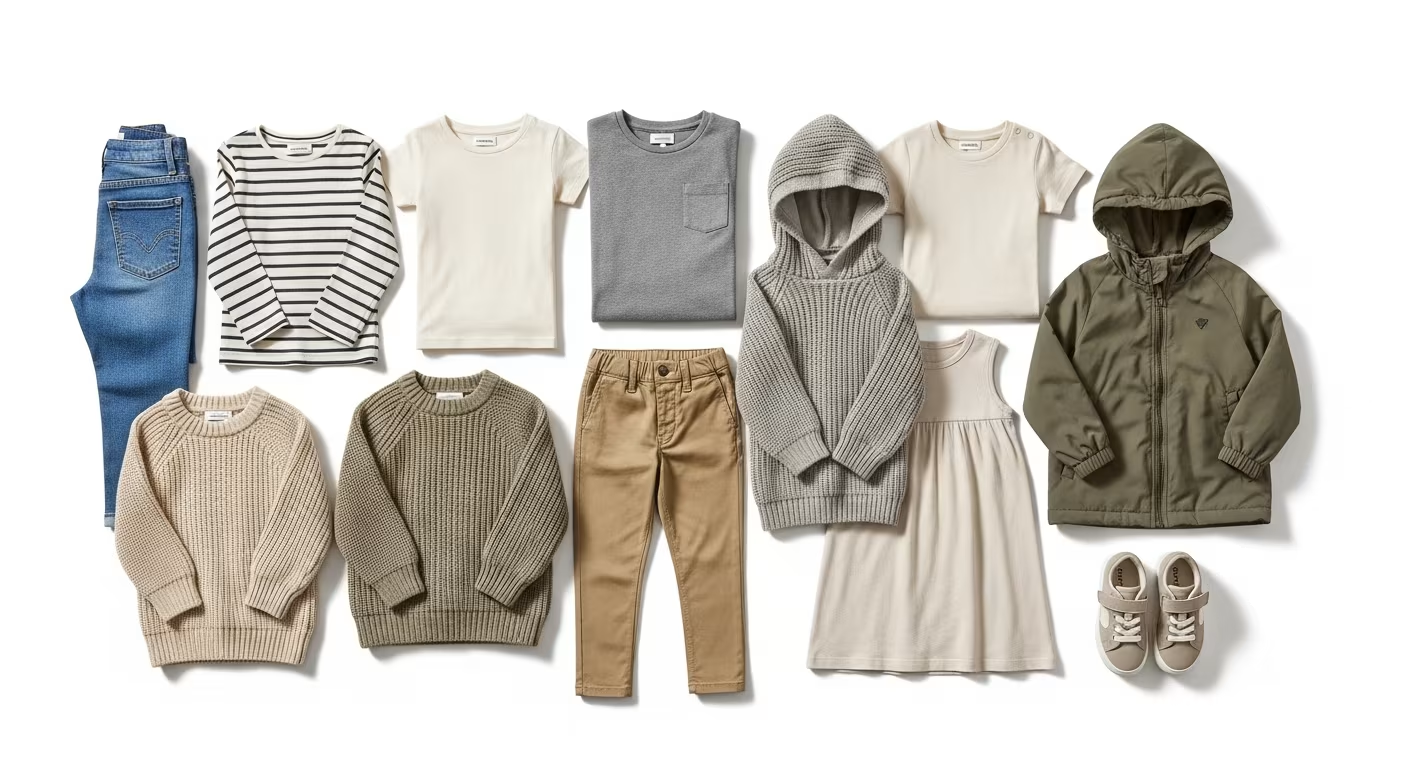

A child's wardrobe grows faster than an adult's for a reason that has nothing to do with the child: it arrives from more directions. Parents buy clothes, grandparents buy clothes, aunts and uncles buy clothes, friends with slightly older kids pass down bags of them, and every birthday and holiday reliably adds another layer. Even a parent who is scrupulous about their own closet can look up and find a dresser that will not close, none of it the result of any single decision they can point to.
Growth makes it worse. In the early years a child can move through a whole size in six to eight weeks, which means clothing is outgrown long before it is worn out. The typical outcome is a drawer holding far more than the child can cycle through, much of it worn only a handful of times. A capsule approach tackles this on three fronts at once: how much stays in active rotation, how much gets stocked ahead of need, and how the steady inflow from everyone else gets managed.
Right-Sizing by Age and Season
The right quantity shifts with age and laundry frequency, but the underlying rule holds steady: enough to cover a week or so between wash cycles, not so much that a child could go a month without laundry. Beyond that point, extra items are simply outgrown before they are ever worn.
Infants and toddlers run through more outfits per day thanks to feeding and diaper mishaps, so their per-day count runs higher. Even so, ten to fourteen complete outfits in the current size covers most laundry rhythms comfortably. School-age children are simpler to calculate: count the days between washes and the changes per day — school clothes, after-school clothes, sleepwear — and size the collection to that. A closet of forty items serves a seven-year-old no better than a well-chosen fifteen. For evidence-based guidance here, see SAMHSA's wellbeing resources.
| Stage | Everyday outfits in current size | Notes |
|---|---|---|
| Infant / toddler | 10–14 | Higher per-day use from feeding and diaper changes |
| School-age (uniform) | 4–5 uniforms | Covers the week with margin for laundry timing |
| School-age (no uniform) | 5–7 school + 5–7 casual | Plus sleepwear and one season's outerwear |
Seasonal changeovers are the natural moment to reassess. Pull out what was stored, check what still fits, note what actually got worn last year and what did not, and release the unworn before adding anything new for the coming season.
Counts that cover a week without a laundry emergency, per season:
| Item | Ages 2 to 5 | Ages 6 to 10 |
|---|---|---|
| Tops | 8 to 10 | 7 to 8 |
| Bottoms | 6 to 7 | 5 to 6 |
| Underwear | 10 to 14 | 8 to 10 |
| Socks | 10 to 12 pairs | 8 to 10 pairs |
| Pyjamas | 4 | 3 |
| Outerwear | 2 | 2 |
| Shoes | 3 pairs | 3 pairs |
The younger column is higher for a reason that has nothing to do with taste: children under 5 change clothes more often, and a wardrobe sized for an older child produces a laundry crisis by Wednesday. Growth rates matter too — most children move up a size every 6 to 9 months between ages 2 and 6, and roughly annually after that, so buying ahead more than one size wastes both money and drawer space.
Managing the Inflow From Others
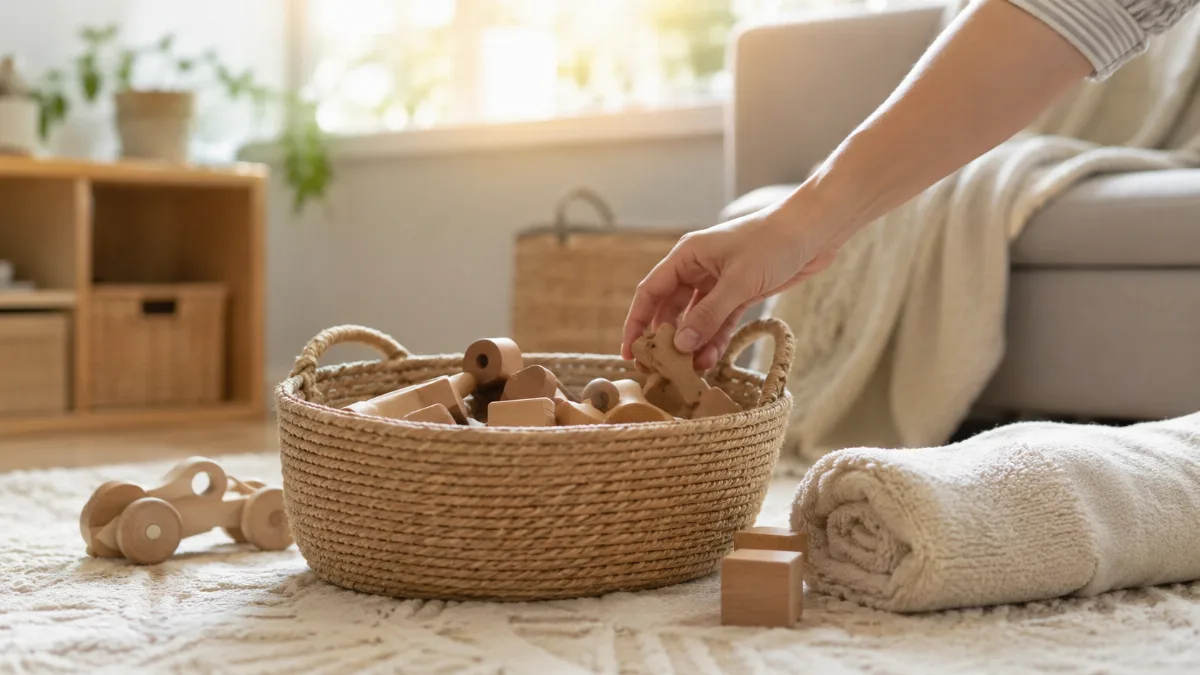
The hardest part of a child's clothing accumulation is the stream coming from people outside the household, whose generosity you cannot direct at the source. Grandparents, relatives, and family friends reach for clothing because it feels like a practical, manageable gift for a child — easier to choose than almost anything else.
A few low-friction moves keep that inflow useful rather than overwhelming. Share the child's current size clearly, and mention that the next size up is where new items will actually get worn, which steers some giving toward things the child will grow into instead of past. A simple wish list of the specific pieces genuinely needed makes it easy for a relative to give something that fills a real gap. And hand-me-downs from friends can be curated before they enter the closet: keep what is in good shape and right for the current or upcoming season, and pass along the rest without guilt rather than absorbing every bag whole.
Involving the Child in the Choices
From around four or five, children can genuinely take part in wardrobe decisions, and doing so pays off two ways. It hands them appropriate agency over something in their own life, and it surfaces real information about what they will actually wear — which is often not what an adult would have picked for them.
A child who helped identify the clothes they like and feel comfortable in tends to fight the morning routine less and to wear more of the wardrobe rather than orbiting the same three favorites while everything else hangs untouched. The habit also lays groundwork: a child who learns to notice what they truly use, instead of accepting everything on offer, carries a workable framework into their adult closet.
What to Do With Outgrown Clothing
Outgrown children's clothing still holds real value for families with younger kids, and passing it on beats letting it pile up. In good condition and sorted by size, it moves easily to friends with smaller children, to community clothing swaps, or to organizations that get it to families who need it.
The system that makes this painless is simple: as items are outgrown, drop them into a labeled bin by size. When a bin fills, it goes to its next home — a specific family, an exchange, a donation site — rather than lingering in a closet. That one habit prevents the classic outcome of storing bulging bags for years, only to donate them long after the clothes would have been most useful to someone else. For the companion approach to a child's other possessions, see our guide to toy rotation: fewer toys, more play.
Sorting the outgrown pile at the moment it comes off, rather than into a bag "for later", is what keeps it from becoming its own storage problem. Good condition items in common sizes sell reasonably on resale platforms; worn but wearable items go to charity or a local parent group; stained or damaged cotton goes to textile recycling rather than general waste, which most municipalities now accept.
Keep one labelled box per size for a sibling if there is one, capped at a fixed volume — one box, not "whatever fits". Storing three sizes ahead for a child who may grow differently is the most common way a capsule wardrobe quietly turns back into a full one.
Uniforms and Seasonal Storage
Where schools require uniforms, the requirement is a ready-made capsule: enough sets to cover the week with a little slack for laundry, and the daily what-to-wear decision disappears entirely. Where uniforms are not the norm, a defined rotation of school-appropriate outfits gets close to the same simplicity without the decision fatigue that a crammed closet creates for children and parents alike.
Storing off-season clothing separately from what is in use sharpens the whole system. A child who sees only their current-season clothes can find what they want without digging past a winter coat in July, and the visible collection stays right-sized for the weather. Pulling the next season's bin a few weeks early doubles as a fit-and-condition check — catching that last winter's coat is now two sizes small while there is still time to find a replacement. For the wider frame these clothing decisions sit inside, see our guide to minimalist parenting: raising kids with less stuff.



Comments
No comments yet.