

Why Full Access Backfires
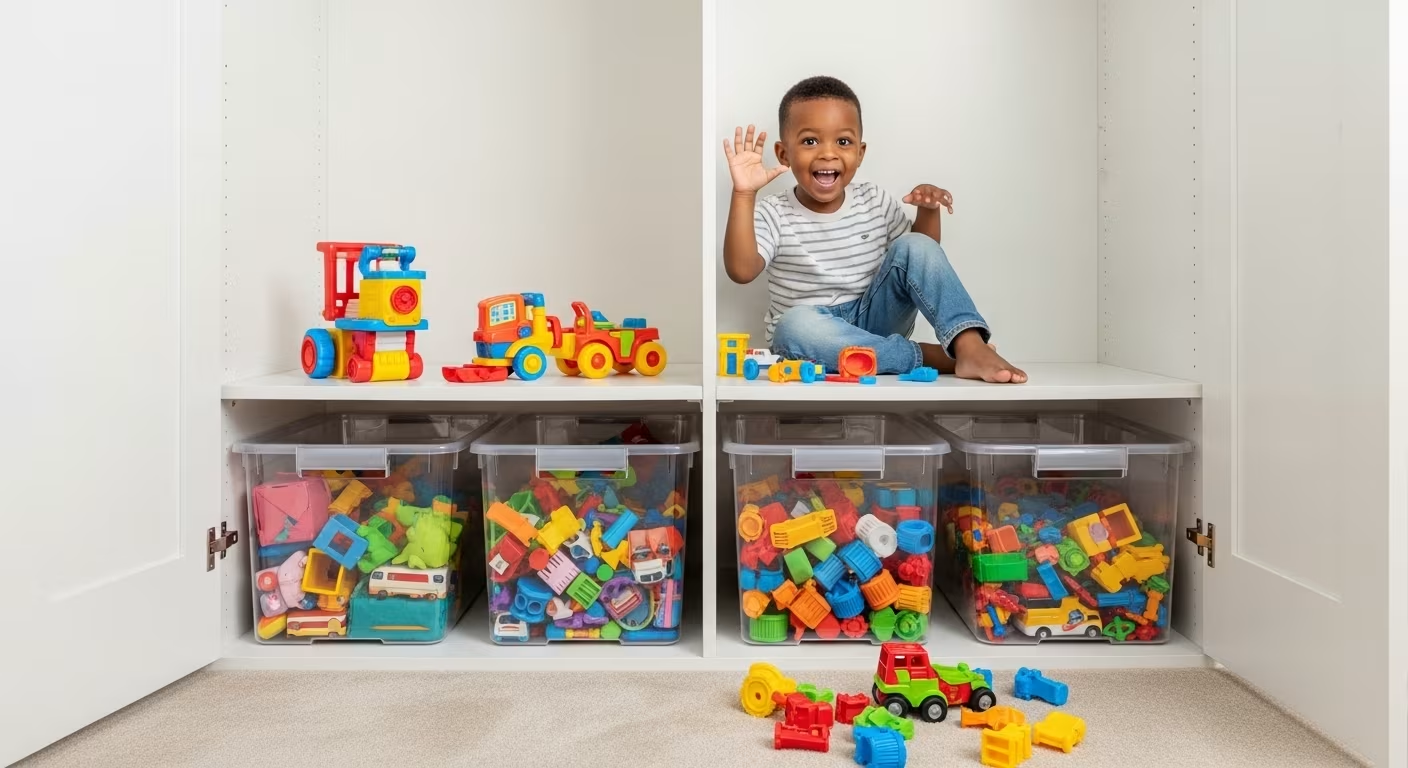
A child with the entire toy collection available at all times usually plays with a small slice of it and ignores the rest. The ignored toys aren't bad toys, and the child doesn't dislike them. They are ignored because they are always there, which turns them into background furniture rather than something worth reaching for. A shelf holding forty toys reads to a young child roughly the way a crowded junk drawer reads to an adult: too much to scan, so nothing gets chosen.
Toy rotation fixes this by controlling availability. Instead of putting everything out, you keep one portion accessible and store the rest out of sight. Every week or two — or whenever engagement with the current set starts to fade — you swap the accessible group for a stored one. Toys that have been gone for a stretch come back with the pull of something new, and the same collection produces more focused, sustained play than it ever does when it's all dumped on the floor at once.
Setting Up the Rotation
The setup is short. Sort the full collection into two to four groups of roughly equal interest and variety, keep one group out, and store the others where the child can't see them. For a child with 40 toys, that means about 10 to 15 in rotation at a time — enough to cover a play session without overwhelming the shelf.
Storage needs nothing special. Three labeled bins in a closet, a bin in the garage, or a lidded box on a high shelf in another room all work; clear bins are fine as long as they live behind a closed door. The single rule that matters: stored toys have to be genuinely out of view, not moved to a higher shelf in the same room. If the child can still see them, their absence isn't real and their return produces no renewed interest. A closet door or an opaque bin is the whole trick, and labeling each bin by set makes the weekly swap a two-minute job rather than a re-sorting project.
The right interval depends on the child. A two-year-old may want a fresh set weekly; a five-year-old can stay happy with the same rotation for three or four weeks. The signal to swap is the same at any age — engagement is clearly fading, but the child hasn't yet gotten restless or started asking for something new.
What Goes in Each Set
Each set works better with variety across play types than with similar toys clumped together. A good rotation set holds something to build with (blocks, magnetic tiles), something for pretend play (figures, a play kitchen piece), art or creative materials, and one active or outdoor option. Cover those four modes and whatever kind of play the child is drawn to on a given day is already within reach, which cuts down on requests to dig into the stored bins.
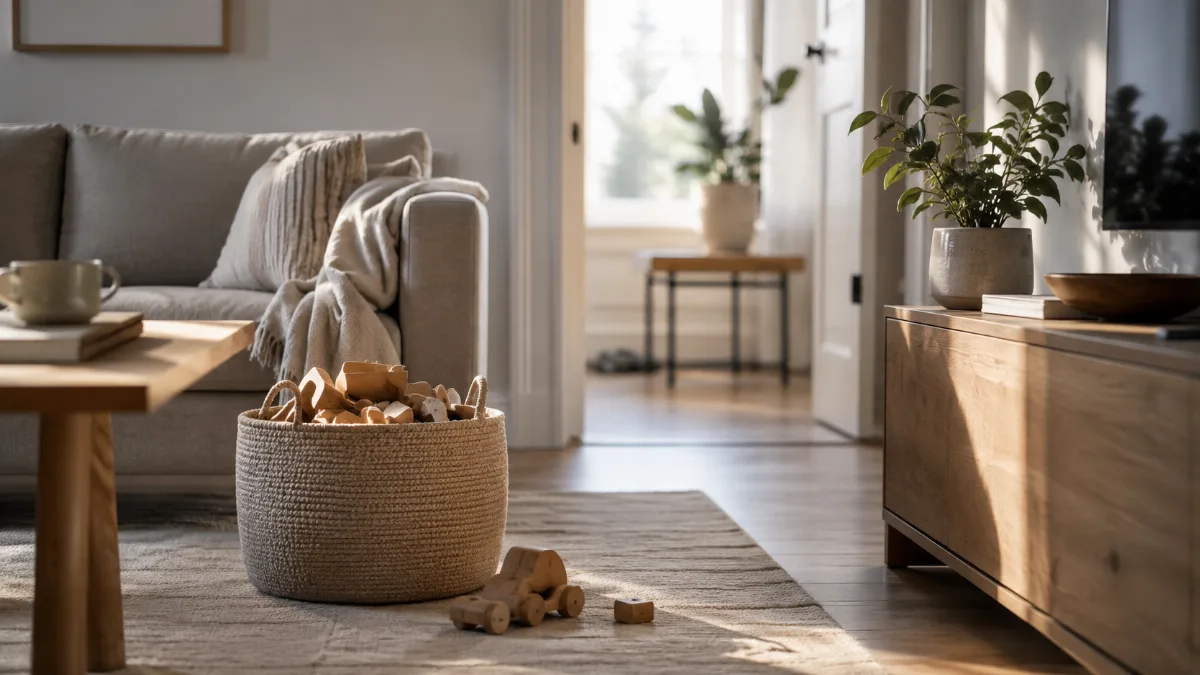
Open-ended toys rotate best. Blocks, art supplies, simple vehicles, and figures offer different possibilities every time they reappear, so they renew their appeal readily. A set of wooden blocks becomes a tower one week and a garage the next; a bin of animal figures anchors a farm, a zoo, or a rescue mission depending on the child's mood. Single-function toys — the gadget that does one thing when you press one button — rotate poorly, because they deliver the identical experience on every return and the novelty runs thin fast. When you build sets, weight them toward the open-ended pieces and spread the single-function ones thin.
Bringing Kids Into It, and Absorbing Gift Season
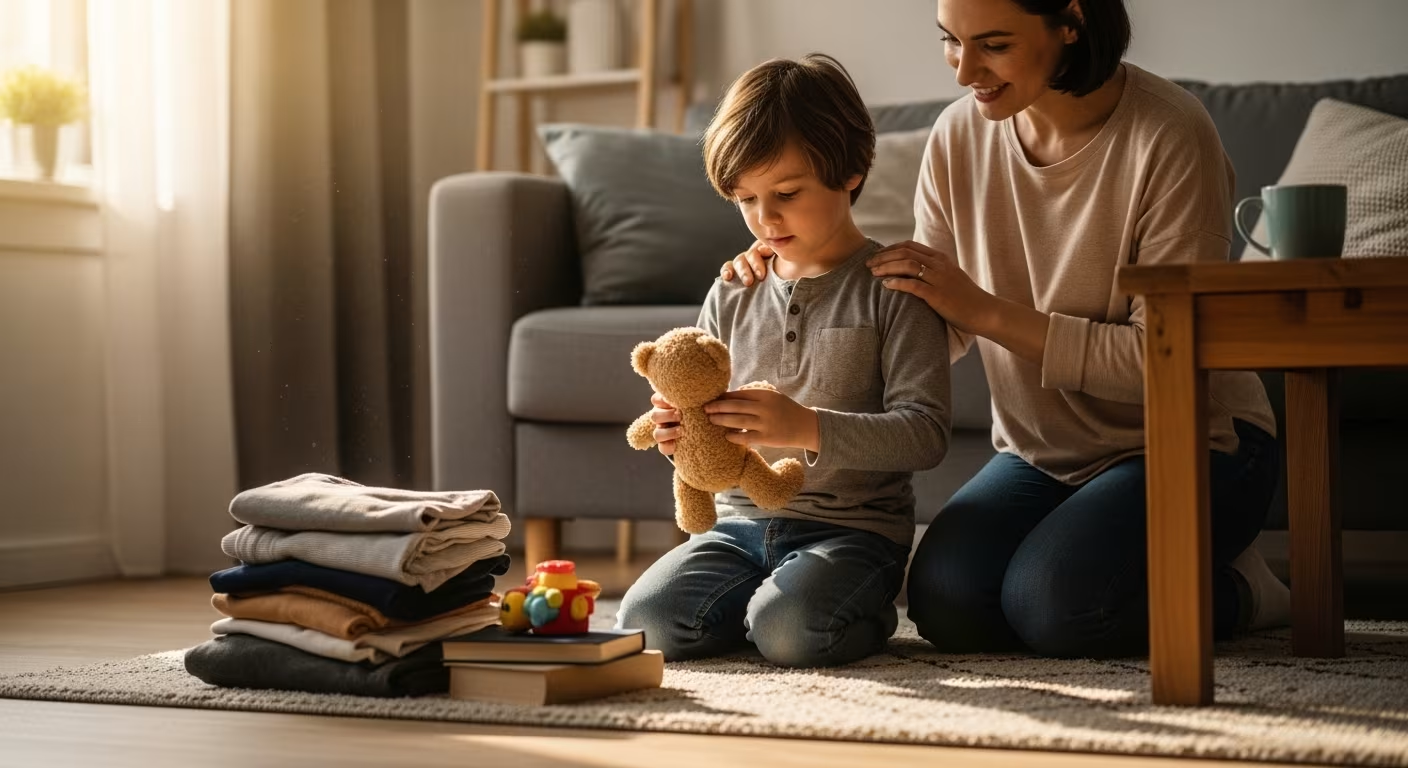
From around age three or four, children can take part in the swaps. Framing it as toys that "go on vacation and come back" usually lands well, and letting the child help pick what goes into the next set makes them more invested in playing with what they chose. Ownership of the decision is itself a form of engagement. MedlinePlus from the National Library of Medicine is a good place to verify the details.
Rotation also gives birthdays and holidays a place to land. A gift season can drop half a dozen new toys into a home in one afternoon, and the usual result is a shelf so overloaded that none of the new gifts get real attention. Rather than adding all of them to the open shelf at once, new toys enter the rotation system: put one out now, hold two for the next swap, and let one replace something being retired. The collection absorbs the inflow without expanding indefinitely to hold every year's haul, and each new toy gets its own moment of novelty instead of being lost in a pile the day it arrives.
Reading Rotation History to Declutter
Rotation quietly makes decluttering honest. A toy that has cycled through two or three rotations, been available each time, and drawn little play is telling you through behavior that it isn't part of the child's real play life. That is far more reliable than the hypothetical "would she miss this?" — a question children almost always answer yes to, because the asking itself primes a sense of loss over a toy they haven't touched in months.
Letting those demonstrated non-favorites go — donated, sold, or passed to a friend with a younger child — keeps the collection right-sized without the periodic all-day purge. In a household with more than one child, run the rotation at the household level: a set for the younger child can include toys the older one has outgrown, and a single well-made toy can serve a first child at three, get stored, return for a second child at two, and come back again years later. That is a lot of play from one purchase. See our guide to minimalist parenting with less stuff for the broader approach to keeping a family home functional as kids grow.
Why the Novelty Holds Up
The renewed interest is the novelty effect at work: attention sharpens toward things that haven't recently been in the visual field. A toy in view continuously for three months becomes wallpaper; the same toy back after a month away registers as new and pulls genuine attention. Children respond to novelty especially strongly, which is why the effect is so pronounced in their play.
The practical payoff is that a rotated collection delivers excellent play from the exact set of toys that would sit mostly ignored if it were all out at once. Nothing about the toys changes — only how much is visible at a time. There's a quieter benefit for the adults, too: fewer toys out means faster cleanup, a floor that resets in minutes instead of a half-hour, and a play space that doesn't feel like a losing battle every evening. Start this week by boxing up two-thirds of what's currently on the shelf; within a few days the third that remains will get played with harder than the whole pile did, and the nightly tidy will take a fraction of the time.
The rotation ratio:
| Fact | Number |
|---|---|
| Toys out at once | 10–15 of a 40-toy collection |
| Everything else | stored out of sight, swapped on a schedule |

Comments
No comments yet.