

Why Most First Attempts Stall
The most common reason a first decluttering attempt stalls is starting with the wrong category. Someone sits down on a Saturday morning determined to sort through old photographs, childhood keepsakes, and inherited belongings — and has picked the most emotionally demanding pile in the house. Every item carries associations, history, and the fear of regret, so the decisions are genuinely hard. The session usually ends with the items back in storage, unresolved, and the person more discouraged than before they opened the box.
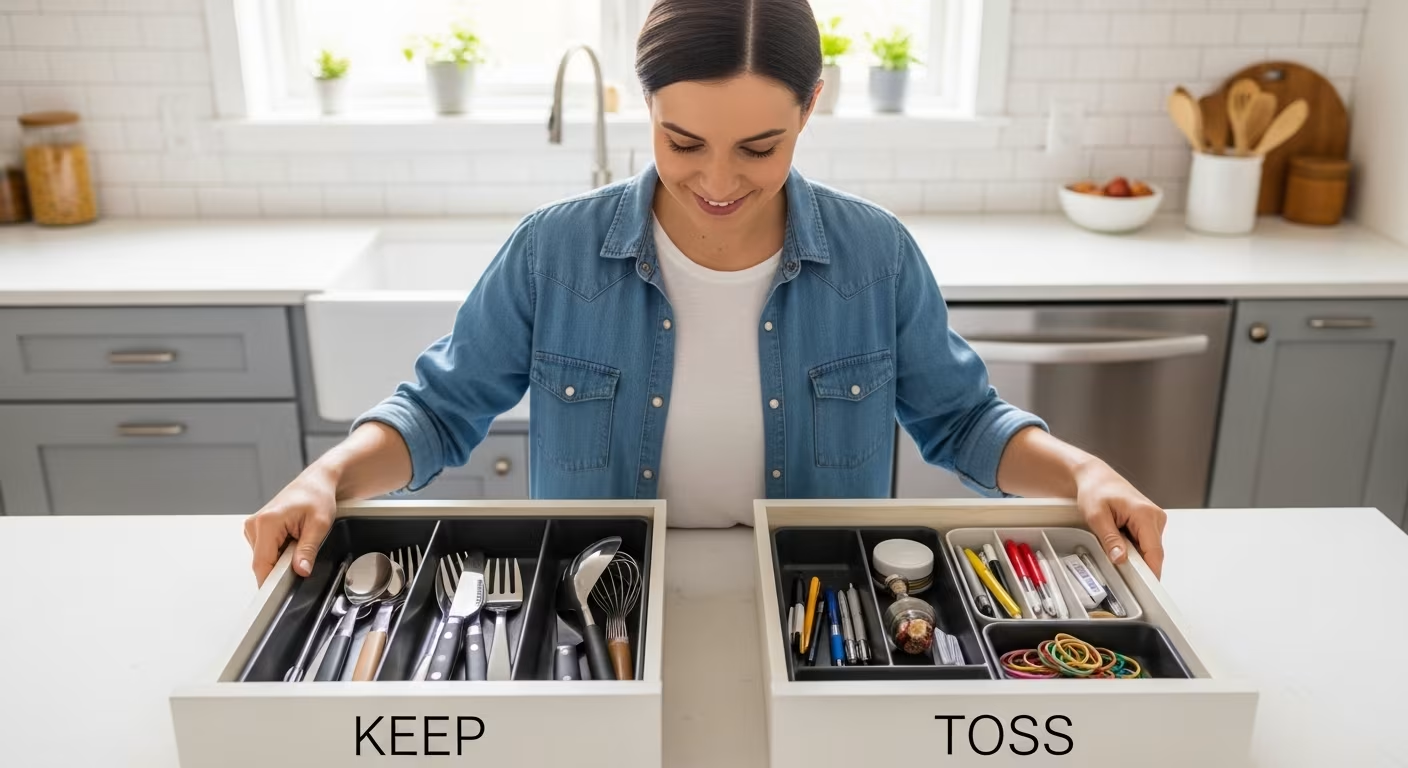
The approach that works inverts the order: begin where decisions are fast and the payoff is immediate. The bathroom cabinet full of expired products and hotel samples. The junk drawer. The gadget drawer nobody has opened in months. These areas produce quick, clear calls and a visible result inside a single short session, and that visible result is what builds the habit and the confidence for the harder categories later.
The mechanism matters more than it looks. A finished bathroom cabinet in twenty minutes gives you evidence — proof that a session ends in a cleared shelf rather than a stalled pile. Keepsakes offer no such feedback loop; an hour with a box of old letters can end with the box exactly as full as it started. Starting easy is not avoidance of the hard categories. It is building the skill and the momentum on material that rewards the effort, so the hard categories meet a person who already knows what a completed decision feels like.
The Trash Pass Comes First
The first pass through any space is the trash pass: remove only the obvious discards — broken items, expired consumables, empty packaging, duplicates of common household goods — without making a single judgment call about anything else. It requires no difficult decisions and clears a surprising amount of space in most rooms. You can find authoritative guidance on this from University of Arizona Cooperative Extension.
A kitchen junk drawer worked this way usually gives up a large share of its volume immediately: dead batteries, dried-out pens, receipts from three years ago, takeout menus for restaurants that have closed, cables for electronics long since replaced. The trash pass never asks whether something is wanted or needed. It asks only whether the item still works and whether future use is genuinely plausible. That narrow question is what makes it fast.
Move On to Low-Attachment Items
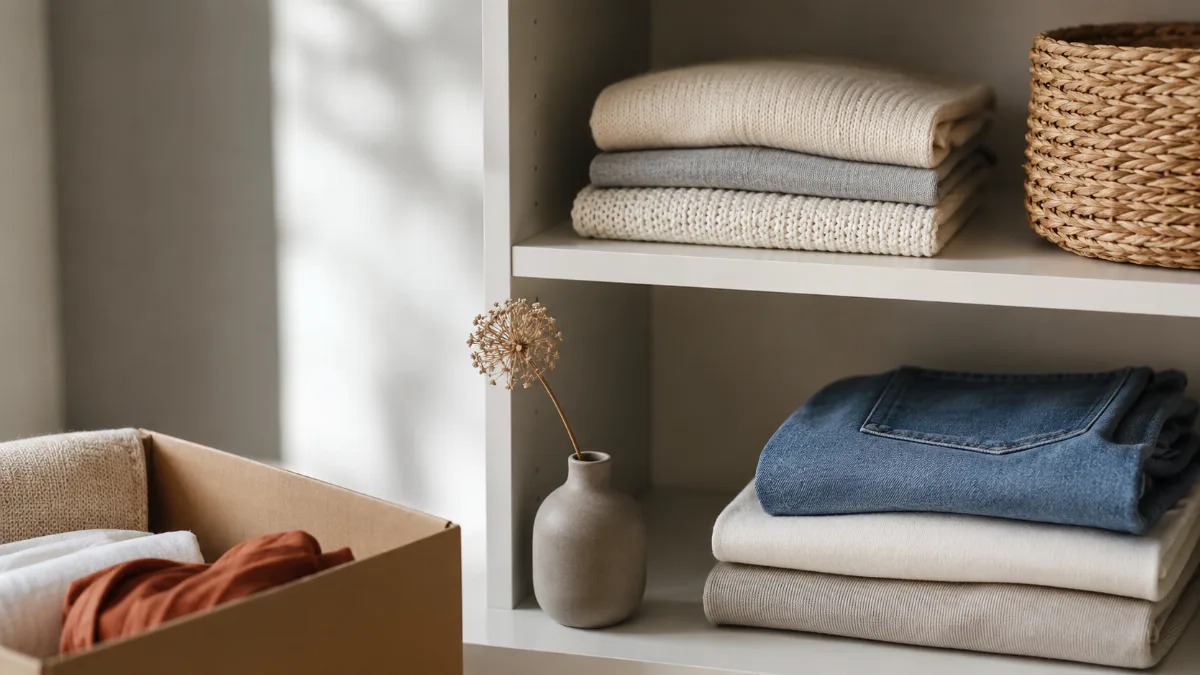
After the trash pass, the strongest beginner strategy is to work through items with low emotional weight: clothing not worn in the past year, books that will not be reread, kitchen tools unused in six months, and products bought with good intentions and never opened.
These decisions are relatively easy because the attachment is thin. The shirt unworn for eighteen months because the fit was never quite right is a straightforward release — it is not tied to a person, a memory, or a real financial stake. The impulse-bought book still in its shrink wrap is a clear candidate. Releasing this category first trains the reflex before it has to face the hard items. Aim to keep the criterion concrete: a one-year line for clothing, a six-month line for kitchen tools. A rule you can answer in two seconds keeps the session moving instead of turning every item into a debate.
Watch for the two traps that stall low-attachment sorting anyway. The first is the sunk-cost pull — keeping the $60 gadget because it cost $60, even though it has sat unused for a year. The money is already spent whether the gadget stays or goes; the only live question is whether it earns its space now. The second is the hypothetical-future keep — the item retained for a scenario that has not arrived in years. Both dissolve under the same test: has this been used in the window you set? If not, its value to the household is already zero, and storing it only adds cost.
The One-Box, One-Bag, One-Area Session

A practical structure for a first session: set up one donation box, one trash bag, and a relocate pile before you begin. The donation box takes items that still work but are no longer needed here. The trash bag takes actual discards. The relocate pile takes things that belong in another room and get carried there when the session ends.
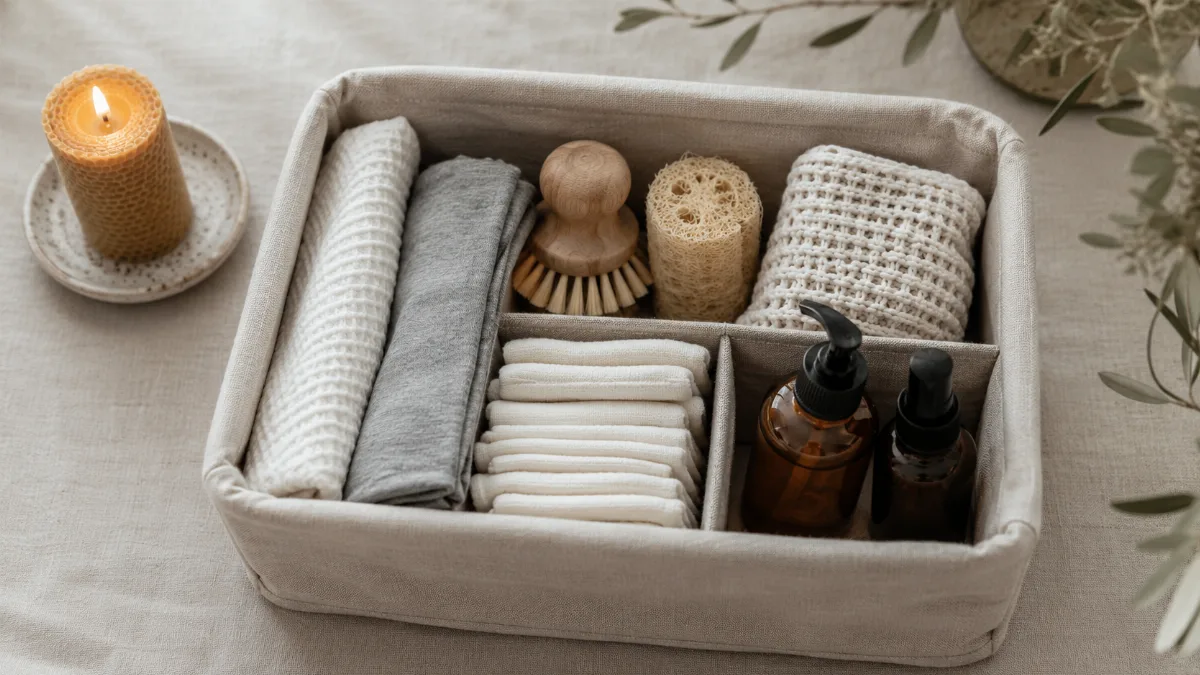
Contain the session to one area — one drawer, one cabinet, one shelf — not the whole room and definitely not the whole house. Scoping it to what can genuinely be finished in the time you have produces a completed result instead of an overwhelming work in progress. One box, one bag, one area is typically completable in thirty to sixty minutes, which is the right size for a first attempt.
Then get the donation box out of the house within twenty-four to forty-eight hours. A box that lingers for weeks becomes a standing reminder of an unfinished task and an open invitation to retrieve items as second thoughts arrive. Deciding on a specific drop-off point before you start — a particular charity, a specific location — makes the follow-through far more likely. The session ends with the box going straight to the car; the drive happens within a day or two.
Build the Habit With Short Sessions
The first session's most important outcome is not the volume released but the experience of finishing one. Having done it once, found it manageable, seen the improved result, and gotten the box out of the house, the second session is easier to start and the third easier than the second.
Scheduling the next session before the current one ends is the most reliable way to hold momentum. Fifteen-minute sessions several times a week beat an occasional all-day marathon, and for concrete reasons. The short session is easy to start because fifteen minutes feels low-stakes. It is completable because its scope is one drawer or one shelf. And it is repeatable because it never generates the decision fatigue and exhaustion a multi-hour push produces. A household that declutters for fifteen minutes on three evenings a week makes more real progress over a month than one that plans, and occasionally executes, all-day sessions. For a structured way to work through the whole home once the habit holds, see the guide to decluttering one room at a time.
What to Do When You Feel Stuck
Every session runs into moments of real uncertainty: the item that might be useful, the gift that carries obligation, the object from a chapter of life that is not fully resolved. The move for those moments is to set uncertain items aside in a designated holding box, finish the session with the clearer decisions, and return to the box at the end. Completing the easy calls often shifts your perspective on the hard ones.
Items still sitting in the holding box a month later, never once retrieved, are strong candidates for release. A month of living without them has shown that the hesitation was about the decision itself, not about any genuine need for the item. That is the same room-by-room logic worth carrying into decluttering one room at a time once these first beginner sessions are behind you — start small, keep the scope finishable, and let each completed session make the next one easier.
The starting order that works:
| Step | Target | Why |
|---|---|---|
| 1. Trash pass | broken, expired, empty, duplicate — no judgment calls | clears volume with zero hard decisions |
| 2. Easy zones | bathroom cabinet, junk drawer, gadget drawer | a cleared shelf in 20 minutes = proof |
| 3. Hard categories last | photos, keepsakes, inherited things | they meet a person who knows how finishing feels |
| Never start with | the emotional box | it ends full, and you end discouraged |
Comments
No comments yet.