

Edisto Island is the kind of place protected by its own inconvenience. It sits about 45 miles south of Charleston at the end of a two-lane road that winds through salt marsh and live oak canopy, with no bridge to a resort strip, no high-season airport shuttle, and no chain hotel waiting at the other end. What is there instead is a South Carolina barrier island that looks much as it has for the past 50 years: a small commercial block, a state park, miles of open beach, and a community of people who came once and kept coming back. For a budget weekend, the pieces line up well, since a stay here leans on state park camping, free beach access, and a short list of things to actually spend money on.
Why Edisto Stays Quiet
Most of the Southeast coast has been developed toward the highest-paying visitor. Edisto went the other way, largely because it is genuinely hard to reach on a whim. There is no interstate exit that dumps traffic onto the island, no cluster of high-rise rentals, and no boardwalk economy built to separate tourists from their money. The result is a beach town that still runs on porches, coolers, and tide charts.
That quiet is the entire product. Visitors who arrive expecting an itinerary tend to run out of planned things to do by the second afternoon. Visitors who arrive expecting to read, walk, fish, and cook find that the island supplies exactly enough and no more. Deciding which of those two travelers you are, before booking, matters more than any packing detail.
Edisto Beach State Park
The state park occupies the southern tip of Edisto Beach and anchors most stays. It offers direct beach access, a maritime forest trail running through Spanish moss-draped live oaks, and a tidal creek with its own small ecosystem. The main recurring cost is the day-use parking fee; overnight camping and a limited number of cabins are available at rates set by the South Carolina Department of Natural Resources. Fees and availability shift seasonally and the campground books out well ahead for summer weekends and holidays, so it is worth checking current rates and reserving early rather than assuming a site will be open on arrival.
The maritime forest loop earns the short walk even on a weekend visit. The landscape shifts from open, wind-scoured beach to the deep shade of old live oaks over a remarkably short distance, and the two environments feel like different places entirely. Early morning and the hour before sunset are the best windows for the trail, both for light and for the birds moving through the canopy.
The Beach and Shelling
Edisto's beach faces east and south, which shapes the shelling. Shells washing in from offshore, rather than tumbling out of an inlet or sound, tend to arrive in better condition, and the island has a long-standing reputation among shell collectors for both variety and quality. The best hunting is the first hour after sunrise, before foot traffic works the wrack line over. Wentletraps, moon snails, and an assortment of clamshells turn up regularly, and fossils surface here more often than on most Southeast beaches, including shark teeth, ancient shell, and the occasional weathered bone fragment older than any human settlement on the coast.
Beyond the shells, the beach itself is walkable and free at every public access point, and it stays uncrowded by mid-Atlantic or Florida standards even in July. A morning walk of a mile or two in either direction usually passes only a handful of other people, most of them also looking down at the sand.
Eating on the Island
The commercial area around the Whaley Street block holds a grocery store, a few restaurants, and not much else. That is the island's entire food infrastructure. The grocery is small and island-priced, meaning noticeably higher than a mainland supermarket, and the restaurants are casual, serving locals alongside the summer crowd.
The budget approach is to bring most of the food. The drive down from Charleston passes several full-size grocery options, and loading a cooler before crossing onto the island cuts the per-day food cost sharply. Plan on cooking most meals in the rental or at a campsite, and treat one restaurant dinner as a deliberate splurge worth the experience. Three restaurant meals a day on Edisto adds up faster than the same habit on the mainland, precisely because there are no cheap fallback options once you are on the island.
What to Pack for a Low-Spend Weekend
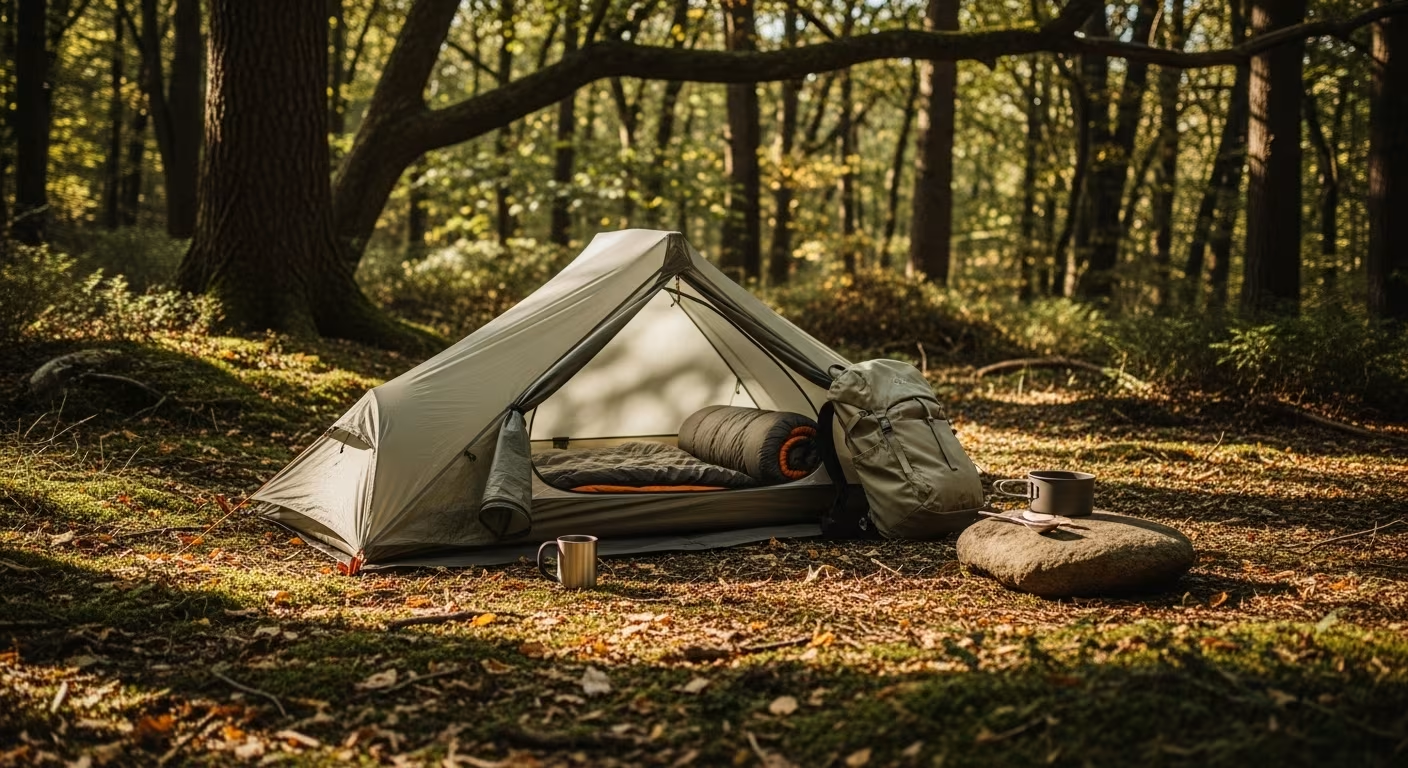
Because the island sells so little, what you bring largely determines the trip. A well-stocked cooler and a box of pantry basics cover the food side. Beyond that, the useful list is short and specific: reef-safe sunscreen and a wide hat for the exposed beach, a mesh bag or bucket for shells, a small tackle setup if anyone plans to fish, bug spray for the marsh edges at dusk, and a stack of books or cards for the porch hours. Anyone hoping to get on the water should bring a kayak or paddleboard, since on-island rentals are limited and not guaranteed to be available.
A second cooler for drinks and ice keeps beach days self-sufficient, and a headlamp is worth packing given how dark the island gets away from the small commercial block. None of this is expensive gear, and most households already own it; the point is that Edisto rewards arriving prepared and punishes assuming you can buy what you forgot.
What the Island Is, and Is Not
Edisto is not built for travelers who want activities, nightlife, planned entertainment, or resort amenities. The absence of those things is the whole appeal. What is here instead: the marsh views from the causeway on the approach, the old houses under the oaks along Palmetto Boulevard, the tidal creek at the state park draining out at low tide, and the beach with no wall of hotels behind it.
That makes the island specifically good for trips whose purpose is slowing down rather than doing things. A family content to fill a day with beach exploration, a marsh walk, porch sitting, and meals from the cooler has found the right destination. A family that needs organized daily activities or a reliable dinner reservation will find the island short on both within about a day.
Getting There Without a Wrong Turn

From Charleston, the route runs south on US-17 and then onto SC-174, which is straightforward but deserves attention. SC-174 cuts through the ACE Basin, one of the largest undeveloped estuarine watersheds on the East Coast, and the drive is worth taking slowly rather than rushing. There is no fast food and no gas station between the highway and the island, so filling the tank and grabbing any last supplies on US-17 before the turn onto SC-174 prevents an annoying backtrack later.
Cell service thins out in parts of the island, which reads as a feature or a bug depending on what the weekend is for. Downloading maps and any needed reservations before losing signal is a small step that saves frustration once you are past the marsh. The drive itself runs a little under an hour from Charleston with no traffic, longer on a summer Friday when everyone is heading down at once, so leaving early or arriving after the mid-afternoon rush makes the last stretch calmer. It helps to cross-check ideas like these against the National Park Service's trip-planning resources.
Beyond the Beach
The beach is the main draw, but it is not the only one. The tidal creek inside the state park behaves differently at each tide stage: low tide exposes mud flats, fiddler crabs, and shorebirds working the edges, while high tide fills the creek enough for calm-water kayaking or canoeing. The ACE Basin surrounding the approach is open to birding, fishing, and paddling, and migratory birds use it seasonally, making the early-morning causeway edges productive for anyone carrying binoculars and a little patience.
Fishing works from the beach or the creek without a boat. Saltwater fishing in South Carolina requires a license, which is inexpensive and available online, and it is worth confirming current requirements before casting a line. Rod-and-reel fishing from the beach or dock edges turns up flounder, red drum, and spot through the warmer months, enough to justify bringing gear even for a short stay. For pairing this with nearby stops, see our writeups on a budget weekend in Charleston and on longer budget travel planning for families.
The Pace Question
Edisto ultimately asks you to accept that nothing in particular is going to happen. There is no planned entertainment and no itinerary beyond the natural structure of tides, meals, and daylight. For the right visitors, whose idea of a good weekend is finishing a book, cooking in a rental kitchen, and watching the marsh go gold at sunset, that emptiness is the point. For visitors who fill time with experiences, the island will feel too quiet inside 24 hours.
The families and couples who return year after year share one trait: comfort with unplanned time. They know what to bring, they know the weekend will be shaped by the tides and the weather and the people they came with rather than a list of attractions, and they treat that uncertainty as the reason to come. That is not for everyone. For the people it is for, it is worth every mile of SC-174.
Edisto, practically:
| Fact | Detail |
|---|---|
| Distance | ~45 miles south of Charleston, end of SC-174 |
| The route | through the ACE Basin — one of the East Coast's largest undeveloped estuaries |
| Supplies rule | no fast food or gas between highway and island — fill up first |
| The island | looks as it has for ~50 years; that is the point |


Comments
No comments yet.