
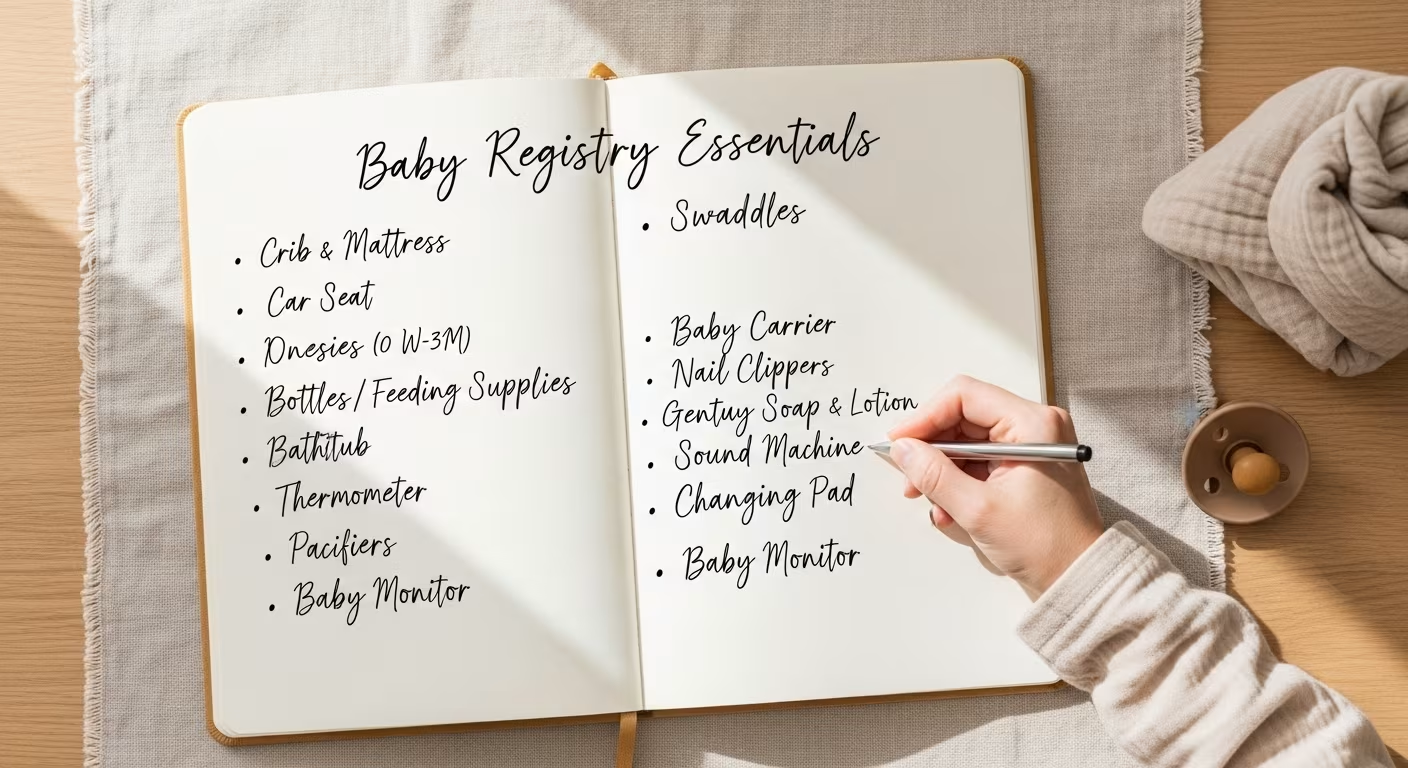

A baby registry is one of the few shopping lists a person builds for a job they have never done, using tools designed by the companies that profit from the list being long. That combination almost guarantees excess. First-time parents have no direct experience of what a newborn actually consumes in the first year, so they lean on the registry app's suggestions, on other people's registries, and on marketing — none of which has any reason to talk them out of a purchase.
The predictable outcome is a list holding three kinds of items mixed together: things nearly every baby genuinely needs, things some babies need under some circumstances, and things almost no baby needs at all. Gifts arrive from all three piles, and the family sorts out which was which through lived experience — by which point the money is spent and the nursery is full. Building the list so those three categories stay visibly separate, starting from the known essentials and adding only what a specific situation calls for, produces both a saner nursery and a genuinely useful guide for the people who want to give something that gets used.
Why Registries Drift Toward Too Much
The registry tools themselves nudge toward volume. They organize by category and prompt you to fill each one, which quietly implies that an empty category is a gap to close rather than a line you might skip entirely. A "bath" category wants bath products; a "feeding" category wants a dozen accessories; a "nursery" category wants furniture and décor. Fill every prompt and the list balloons before you have made a single deliberate decision.
Add the social layer — other registries as reference points, and the general cultural sense that preparing well means acquiring a lot — and restraint becomes the harder path. The antidote is not willpower but structure: decide up front that the list starts empty and each item has to earn its way on by answering a plain question. Will this baby, in this household, actually use this?
The Core Essentials Every Baby Actually Needs
The list of genuinely essential gear is shorter than almost any registry suggests. These are the items nearly every baby in nearly every home will need.
A firm, appropriately sized sleep surface with a mattress that meets current safety standards. This is the single most important purchase and the one place not to economize — the American Academy of Pediatrics maintains detailed guidance on creating a safe sleep environment, and the surface and mattress should conform to it before anything else goes in the crib.
An adequate supply of diapers in the right sizes. Diapers are the highest-volume consumable of the first year by a wide margin. The practical move is to stock lightly in newborn size — most babies pass through it in a matter of weeks — and to keep more of size one on hand, since that is where a baby settles for a while.
Feeding equipment matched to the feeding method. A breastfeeding parent may need little beyond, at most, a pump; a family using formula needs a small starter set of bottles in one style and the formula itself, expanding only once the baby shows a preference. A nursing pillow helps many parents but is not strictly essential.
Clothing in a sensible quantity — and the sensible quantity is smaller than registries imply. Newborns need onesies, sleepers, and enough layers for the season, roughly a week's worth of each given normal laundry rhythms. Babies grow faster than new parents expect, so overstocking any single size is one of the most common and avoidable wastes.
A way to carry the baby hands-free. A carrier or wrap is among the most consistently valued pieces of gear across wildly different households. Carried babies often settle and sleep more easily, and a parent with both hands free can get on with the day while still meeting the constant need for closeness.
Notice how short that list is. A firm sleep surface, diapers, a feeding setup, a modest run of clothes, and a carrier — five categories cover the genuine floor of what a newborn requires. Everything a store will try to add sits on top of that foundation, and most of it is optional. Building outward from these five, rather than inward from a category checklist, keeps the whole list honest.
The Useful-But-Not-Universal Middle
A second tier of items genuinely helps many families without being necessary for all. These belong on a registry, but flagged as conditional rather than core.
A bassinet or bedside sleeper suits families who want the baby close to their bed in the early weeks without sharing it. For a family planning to use the crib from night one, or one intending to bedshare, a bassinet may not do enough to justify the floor space and the few short months of use.
A stroller matched to the family's actual life. This one rewards patience and research, because the right stroller depends heavily on where you go and how — city sidewalks, suburban parking lots, or dirt trails each point to a different model, and the wrong choice sits unused in a hallway. Waiting until after the baby arrives allows a far more informed decision.
A white noise machine. Many babies sleep noticeably better with steady sound masking the ordinary bumps of a household. It is inexpensive and compact, which makes it low-risk to try: if it works it earns its keep, and if it doesn't it is easy to return or pass along.
A video baby monitor. Useful for keeping an eye on a sleeping baby from elsewhere in the home. Small apartments may not need one at all, but for a larger home, or for a parent who wants the reassurance of a picture rather than guessing at sounds through an audio monitor, the video version is a real comfort.
What to Leave Off Entirely
Some items get bought constantly and used rarely. The categories most reliably regretted by experienced parents include wipe warmers; diaper pails that lock you into proprietary refills; elaborate changing tables when a changing pad on top of a dresser does the identical job; bottle sterilizers when a dishwasher with a sanitize cycle already sterilizes; baby food makers when an ordinary blender handles purées perfectly well by the time solids begin; and infant bath seats when a clean sink or a small basin works just as fine.
None of these is useless in every possible household, and any given family might find one of them genuinely handy. But they are the items most consistently found unnecessary in hindsight. Adding them to a registry mainly because they appear on other registries — rather than because there is a concrete reason to expect this household will use them — loads the list with things likely to sit unopened or be outgrown before they are needed.
Structuring the List for Gift-Givers
A well-built registry does a favor to the people shopping from it. Clearly mark the consumables — diapers in the larger sizes for when they will be needed, wipes, detergent formulated for baby laundry, swaddle blankets that will genuinely get used. Consumables are chronically underrepresented on registries and yet are among the most appreciated gifts, precisely because they never go to waste.
For anything with a wide price range, include options at several price points. A spread lets a coworker giving $20 and a close relative giving $150 both find something that fits their budget without awkwardness. Leaving a few affordable items on the list is a genuine kindness to gift-givers who want to take part but cannot stretch to a big-ticket purchase.
Gift Cards and Cash as Real Options

For parents who have already received a great deal of gear — from older children, from friends clearing out their own supply, from family who jumped in early — gift cards and cash toward a larger purchase serve the household better than another physical object. Putting these options on the registry states a preference plainly and spares everyone an uncomfortable conversation.
Gift cards to the places that matter in a newborn's first weeks — a baby supply store, a grocery delivery service, a meal kit — are especially valuable in the stretch right after birth, when nobody has the energy to shop but specific needs keep surfacing. A cash contribution toward one named larger purchase gives relatives a clear, meaningful way to help without having to guess at sizes or preferences.
Update the Registry After the Baby Arrives
Most registry platforms let you keep editing after the birth, and this is an underused feature. Once the baby is home, add the things that are proving genuinely necessary and remove what has already arrived or turned out to be unneeded. A registry that reflects reality at three weeks postpartum — this specific pump part, this particular size, more of these, none of those — is far more useful to anyone still planning to give a gift than the original list built entirely on guesswork.
Treat the registry, in other words, as a living document rather than a one-time act of preparation. The list you can revise in light of a real baby will always beat the one you finalized while imagining one. For the companion piece covering the room itself rather than the gift list, see our guide to what you actually need for a baby in the first year.
The registry that works:
| Principle | How |
|---|---|
| Three visible tiers | true essentials / situational / almost-nobody-needs |
| Price spread | the $20 coworker and the $150 relative both find a fit |
| Category trap | an empty registry category is a line to skip, not a gap to fill |



Comments
No comments yet.