

Why a Carry-On Beats a Checked Bag
Checked luggage costs more than the fee printed on the ticket. You wait at the carousel, you gamble that the bag makes your connection, and you have to reach the counter early and leave the airport last. Travel with a carry-on and you clear arrivals in minutes, step straight onto a train or bus without wrestling a large case, and know your belongings are with you regardless of how the connections behave.
The real question is whether one bag holds enough. For nearly any trip up to two weeks, and with a single laundry stop far longer than that, it does. The limit is almost never the bag. It is how the packing decisions get made, and most of them can be settled before you touch a zipper. The same coordinated approach carries over to packing for a minimalist road trip, where boot space is generous but clutter still slows you down.
A Capsule That Multiplies Outfits
The single most useful packing habit is choosing clothes that all work together. When every top pairs with every bottom, a handful of pieces produces a week of distinct outfits. Three tops and two bottoms already give six combinations; add one jacket and a versatile dress and the count climbs well past seven days of unique looks from nine garments.
A workable seven-day capsule for a mild climate stays under ten pieces:
| Category | Pack | Why |
|---|---|---|
| Tops | 3 | Each pairs with every bottom |
| Bottoms | 2 | One casual, one smarter |
| Layer | 1 jacket | Warmth without bulk |
| Dress or versatile piece | 1 | High outfit multiplier |
| Underwear and socks | 3–4 days | Plan a mid-trip wash |
| Shoes | 1 worn, 1 packed | Second pair only if types differ |
Neutrals do the heavy lifting. Navy, grey, white, black, and khaki combine without thought, and one accent colour that works with all of them widens the range without adding weight. Skip prints that only pair with a single other item. For trips past a week, one laundry session extends the same capsule indefinitely: fifteen minutes of sink-washing socks and a shirt with a travel soap bar, dry by morning, or a hotel service that turns clothes around in a day.
Fabric choice quietly decides how far the capsule stretches. Merino wool shrugs off odour and can be worn three or four days between washes, which is why it dominates travel wardrobes; a quick-dry synthetic shirt rinses in a sink and dries by morning in a humid climate where cotton would still be damp at breakfast. Choosing two or three fabrics that recover well from a suitcase means the capsule looks presentable straight out of the bag rather than needing an iron you will not have.
Cutting the Just-in-Case Pile
Most first-pass packing includes a stack of just-in-case items: a formal outfit for an event that might happen, medicine for an illness that probably won't, a third pair of shoes, a second book beyond the one already in the bag. This pile routinely fills a third to half of an initial attempt.
Sort it with one question: how likely am I to need this, and what does it cost me if I don't have it? Prescription medication and a charger for an essential device carry a high cost of absence, so they stay. A spare pair of shoes or a backup jacket carries a low one: a chemist sells the forgotten item, layering what you already packed covers an unexpected cold snap, and most so-called formal dinners accept the same clothes you wore to lunch. Those come out.
Electronics, Cables, and Toiletries
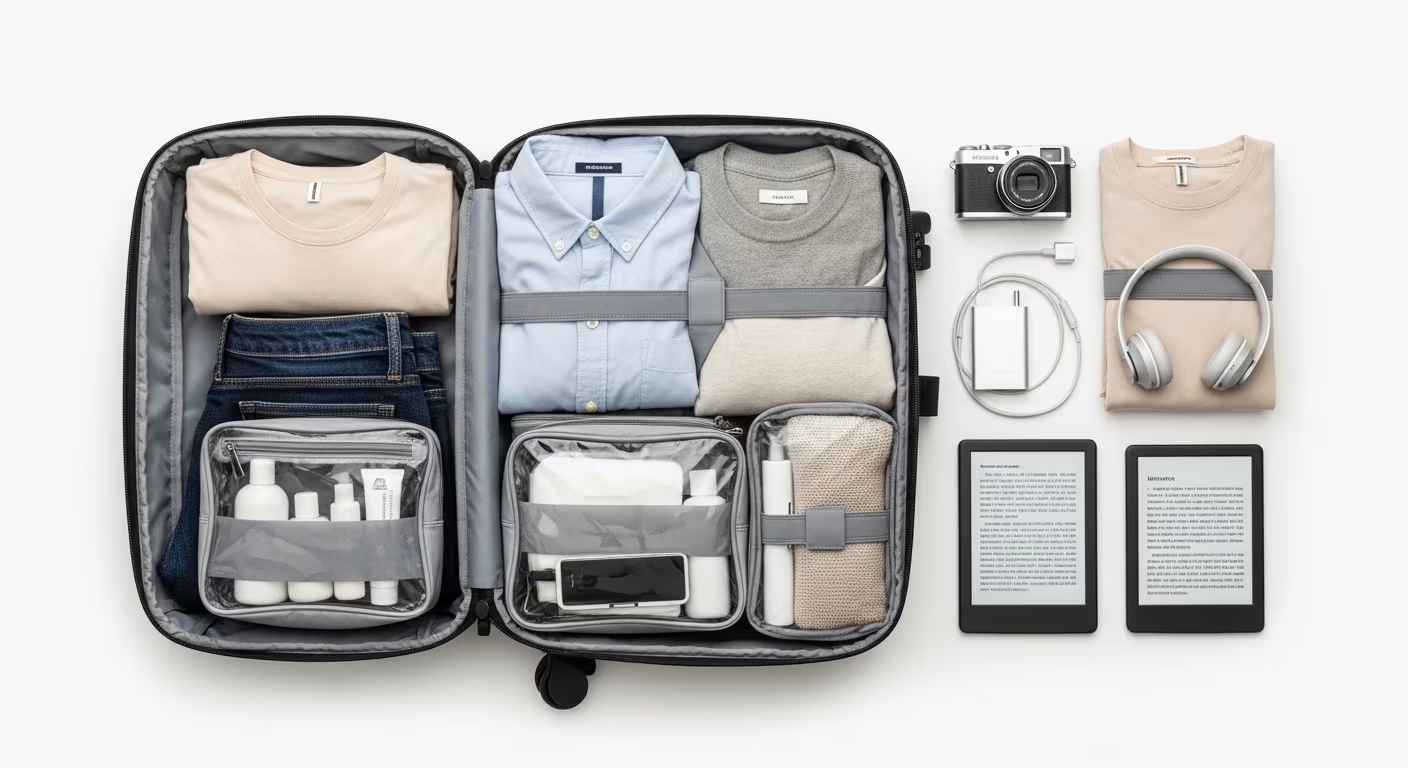
Electronics are the second-largest volume category after clothing. A smartphone already covers camera, maps, entertainment, and torch, so a dedicated camera earns its place only on a photography-focused trip. A laptop and a tablet overlap heavily; carry the one you will actually open. On cables, USB-C now charges most devices from a single cord, one multi-port plug replaces a separate charger for each device, and a single universal adapter covers international sockets.
A quick test settles the pile: lay every cable and charger on the bed and pair each one with the exact device it serves. Anything without a match, and there is almost always one, stays home. For most travellers the tech kit collapses to a phone, its cable, one multi-port plug, a slim power bank, and a single adapter, which together weigh less than a paperback.
Toiletries fall under the TSA's rules on liquids in carry-on bags: containers of 100ml (3.4oz) or less, together in one quart-size bag. Solid versions sidestep the limit entirely: shampoo and conditioner bars, solid deodorant, a bar of soap, and toothpaste tablets pack in any quantity and never leak. For anything that stays liquid, decant into small bottles or buy full size on arrival.
Packing, Compression, and a Test Run
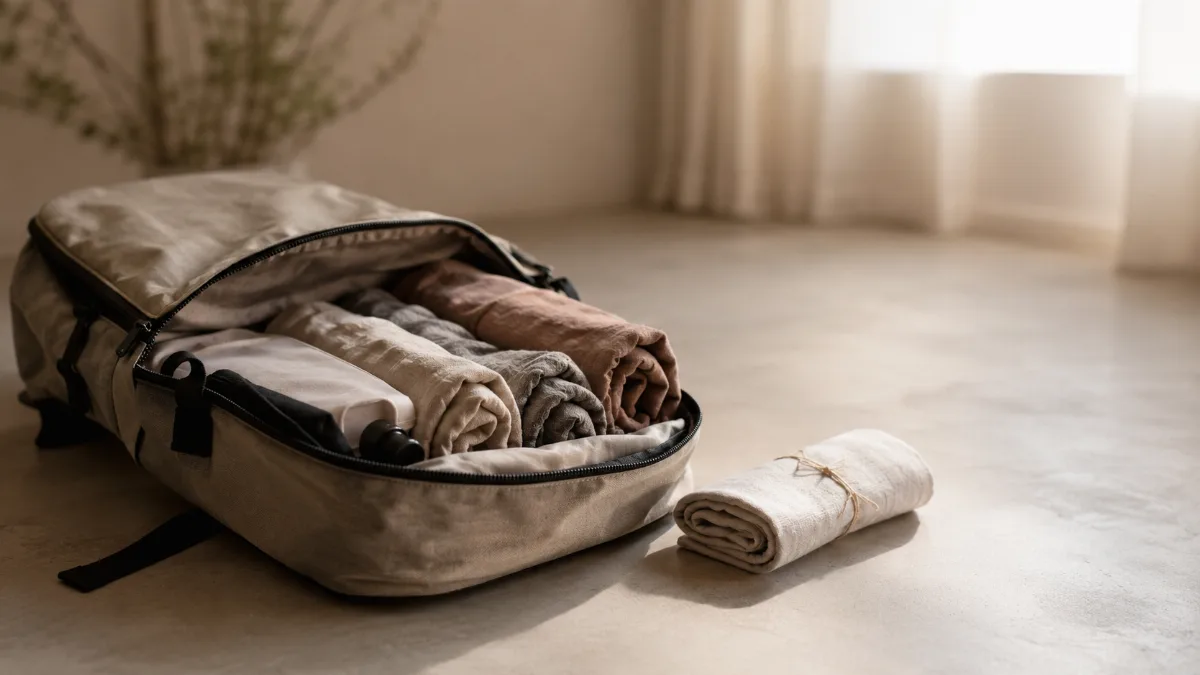
Technique changes how much fits. Rolling most fabrics saves space and cuts wrinkles, stuffing socks and small items inside shoes uses dead space, and heavy items packed against the back panel keep a backpack balanced when you carry it. Packing cubes help you compress and separate categories, but they are optional rather than essential.
Before a real trip, do a test pack: fill the bag completely, then live out of it for twenty-four hours. Whatever you reach for that isn't there gets added; whatever stays untouched comes out. After a few trips this settles into a personal list you can pack from in twenty minutes, and carry-on-only stops being a project and becomes the way you travel by default.
Comments
No comments yet.