

Why Road Trips Invite Overpacking
No other travel format tempts overpacking like the road trip. The car looks like unlimited capacity — no baggage fee, no weight limit, no overhead bin forcing a decision. That absence of any constraint is exactly the condition that fills a trunk with things that never get used and still have to be hauled into every motel.
A minimalist road trip packs for what the trip actually involves, and the cleanest way to think about that is to split the load in two. The drive needs comfort, safety, and navigation gear that stays accessible. The destinations need what any travel needs — clothing for the planned activities, toiletries, and any specific equipment those activities demand. The car bag lives in the vehicle the whole trip; the destination bag is the only thing that comes out at each stop.
The Two-Bag System

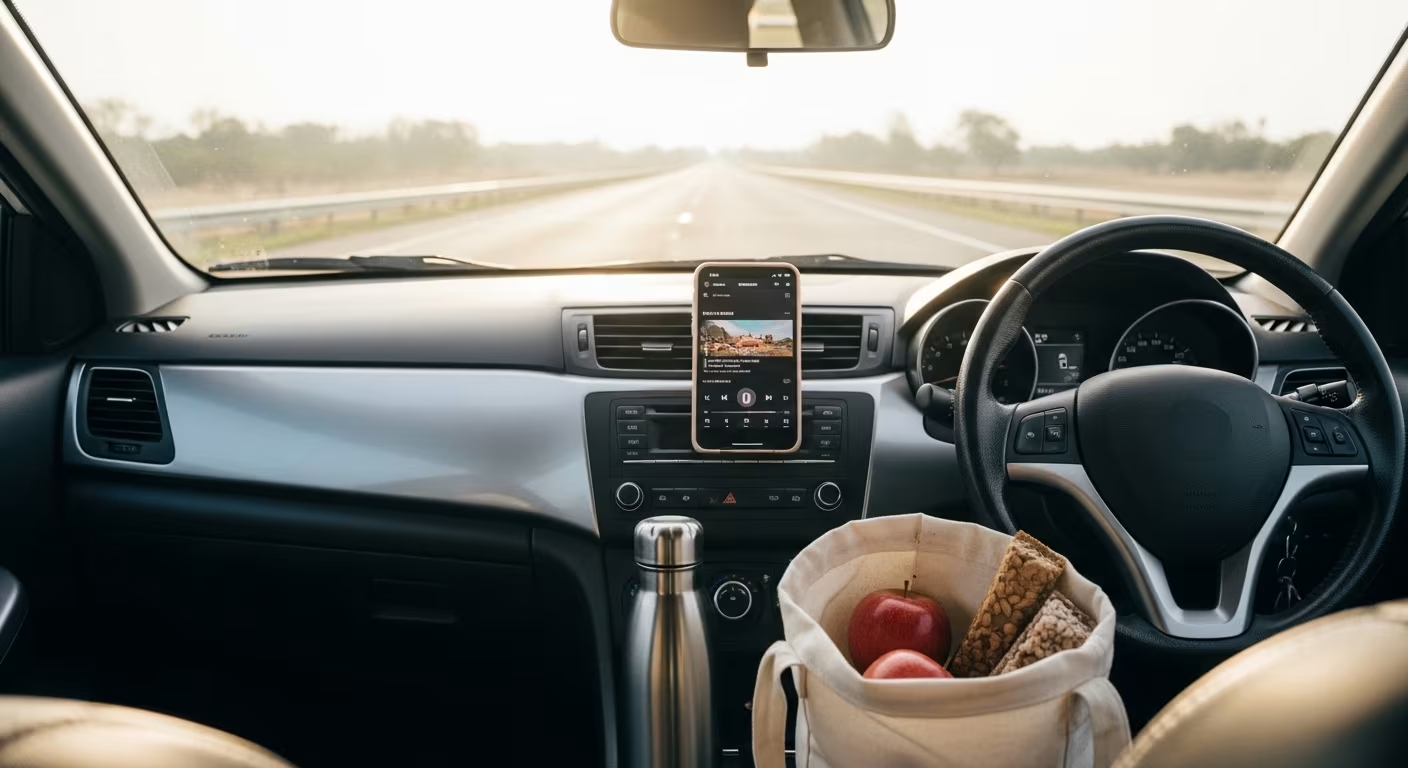
The car bag holds the small set of things used while driving that should never end up buried under luggage: a phone mount and a downloaded offline map, sunglasses, a refillable water bottle, snacks for the long stretches, a compact first-aid kit, and the car documents. A modest roadside kit rides in the trunk alongside it — a folding warning triangle, jumper cables or a jump-starter pack, a tyre inflator, and a torch cover the great majority of real roadside situations without an expensive shopping trip. A small cooler rounds it out: stocked with water and a few perishables at the start of each driving day, it stretches the distance between stops and hands you control over when you eat.
The table below sorts the common items so the split is obvious at a glance.
| Car bag (stays in the vehicle) | Destination bag (out at each stop) | Leave home |
|---|---|---|
| Phone mount + offline maps | Clothing for planned activities | "Just in case" third outfit set |
| Water bottle, snacks, cooler | Toiletries | Duplicate chargers |
| First-aid + roadside kit | Two or three pairs of shoes | Fourth and fifth pairs of shoes |
| Paper route map | Simple food/coffee kit | Full kitchen box |
| Emergency contact card | Activity-specific gear only | Speculative hobby equipment |
Footwear is where the destination bag bloats first. A comfortable walking pair, a pair for any hiking you have actually planned, and one dressier option is three at the outside — and most trips never need more than two. The same discipline applies to clothing: pack for the activities you will actually do most days, and handle the rare exception with a single versatile layer rather than a separate outfit for every hypothetical. the U.S. Fish & Wildlife Service is a good place to verify the details.
Food That Travels
Road trips offer more food flexibility than any other format because the car carries far more than a bag. A small food kit — a cutting board, one good knife, and a pot if the accommodation has cooking facilities — makes simple meals at the destination realistic, and it usually pays for itself within the first two or three stops in avoided restaurant bills. A loose plan that keeps driving-day meals basic (sandwiches, fruit, nuts) and leaves destination meals to whatever the place offers cuts decision fatigue without forcing rigidity. The worst road-trip food moment is arriving hungry at a rural stop after every restaurant has closed; carrying one simple meal's worth of food at all times quietly prevents it. Coffee gear matters more here than on other trips — a compact pour-over kit and a bag of ground coffee, or a small French press, earns its space when remote lodging has nothing open before 9 a.m.
The cooler is worth a second thought because it changes the shape of the whole day. Stocked at the start of each driving morning, it means you stop when the scenery is good rather than when hunger forces a detour to the nearest chain off the highway. A day's worth of water, a couple of pieces of fruit, some cheese and bread, and a few snacks covers most of the driving hours and keeps the fuel-station food aisle from becoming the default lunch.
Safety That Matches Real Risk

A road-trip safety kit is not about dramatic emergencies. It is about the mundane failures that actually happen: a flat tyre, a dead battery, getting lost where there is no mobile signal. A properly inflated spare, the knowledge of how to fit it, and a portable pump handle the most common problem outright. A charged battery pack covers the next one — a phone dying mid-navigation. A paper map of the general route covers the third, when digital navigation drops in a low-signal stretch. One more low-tech safeguard belongs in the glovebox: a written list of emergency contacts, roadside-assistance membership details, and the phone numbers of your booked accommodation. A dead phone takes every contact stored only on it with it.
Plan Loosely, Leave Room to Change
Route planning wants just enough structure to guarantee a bed each night and enough slack to follow what the drive reveals. Booking one or two nights ahead rather than the whole trip at once preserves the freedom to linger where a place earns it and push through where it does not. A rough daily target of 200 to 300 kilometres leaves time to stop, eat, and arrive before dark instead of turning the trip into a transit exercise, and topping up the tank at the end of each driving day rather than the start saves time every morning. Urban stops need their own quick check — many European city centres restrict parking to residents or short windows, and congestion schemes in places like London, Stockholm, and Milan charge to enter at peak hours, so a park-and-ride at the edge is often cheaper and far less stressful than fighting for a central space. The trips that go best tend to run on this budget-friendly logic; a road trip through the Smoky Mountains near Franklin, North Carolina works precisely because the route stays loose enough to chase a better side road. One last constraint keeps the return trip sane: pack the outbound bag with deliberate empty space so that anything acquired along the way has to fit — and anything that does not has to genuinely be worth shipping home.

Comments
No comments yet.